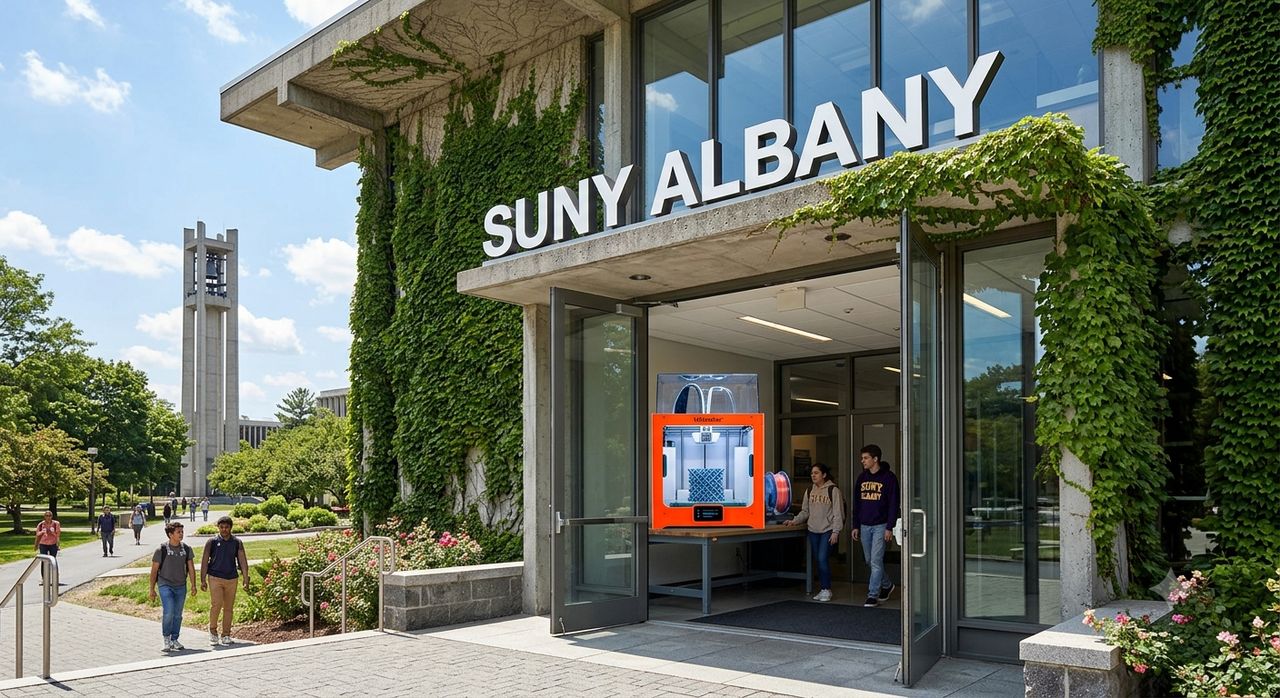
Charles R. Goulding and Preeti Sulibhavi take a closer look at how SUNY Albany’s cutting-edge work in nanotechnology and life sciences is helping drive the innovations that could shape the next generation of 3D printing and advanced manufacturing.
The University at Albany (SUNY Albany) has quietly become one of America’s most influential research universities, particularly in the fields of nanotechnology, semiconductor research, and life sciences. While many people know the university for its academics, industry leaders recognize it as a major innovation hub where breakthroughs move from the laboratory to real-world applications.
Located in Albany, New York, the university’s 610-acre Uptown Campus serves approximately 17,400 students and is home to more than 170 research labs and centers. As an R1 research university, UAlbany generated US$471.6 million in research and development activity during FY2024, making it one of the nation’s leading public research institutions without a medical school. It was also the first college in the United States dedicated to nanotechnology, a distinction that continues to influence its research priorities today. (University at Albany)
For our readers, these developments are especially relevant. Nanotechnology, biotechnology, and additive manufacturing are increasingly intersecting, opening new possibilities for medical devices, advanced materials, tissue engineering, and precision manufacturing.
Nanotechnology: Building at the Atomic Scale
Few universities have invested as heavily in nanotechnology as SUNY Albany. The university’s College of Nanotechnology, Science and Engineering (CNSE) has long been recognized as one of the world’s premier research centers for semiconductor and nanoscale engineering.
Its work extends far beyond computer chips. Researchers investigate nanoscale materials, nanoelectronics, sensors, photonics, energy systems, biomedical devices, and advanced manufacturing processes. These technologies are finding applications in healthcare, aerospace, defense, communications, and clean energy.
One of the university’s flagship initiatives is the Center for Advanced Technology in Nanomaterials and Nanoelectronics (CATN2), which recently received a US$10 million New York State grant to continue research partnerships with industry. The center supports collaborative R&D involving semiconductor manufacturing, nano-enabled biomedical technologies, microsystems, and smart infrastructure while giving students hands-on experience working alongside industrial partners. (Times Union)
The university also benefits from its close relationship with Albany NanoTech, one of the world’s premier semiconductor research ecosystems. Through these collaborations, students gain experience in cleanroom environments, microfabrication, chip design, and nanoscale characterization that few universities can match.
For manufacturers, this research matters because nanotechnology is rapidly becoming integrated into production. Nano-engineered materials improve strength while reducing weight. Nanoscale coatings increase durability and corrosion resistance. Semiconductor advances enable smarter manufacturing equipment and AI-powered automation. Many of these innovations begin with the type of fundamental research taking place at UAlbany.
Educating Tomorrow’s Nanotechnology Workforce
Research is only one part of the equation.
SUNY Albany has built educational programs specifically designed to prepare students for careers in nanotechnology and semiconductor manufacturing. Students study nanoscale engineering, materials science, electrical engineering, and related disciplines while participating in laboratory research that mirrors industrial environments.
The university’s renewed investment in nanotechnology aligns closely with New York’s growing semiconductor industry, strengthened by federal CHIPS Act investments and expanding partnerships with companies developing next-generation microelectronics. (University at Albany) This combination of classroom instruction and real-world research experience helps graduates enter the workforce with practical skills that are immediately valuable.
Life Sciences: RNA Research Takes Center Stage
If nanotechnology represents one pillar of UAlbany’s research enterprise, life sciences represent another.
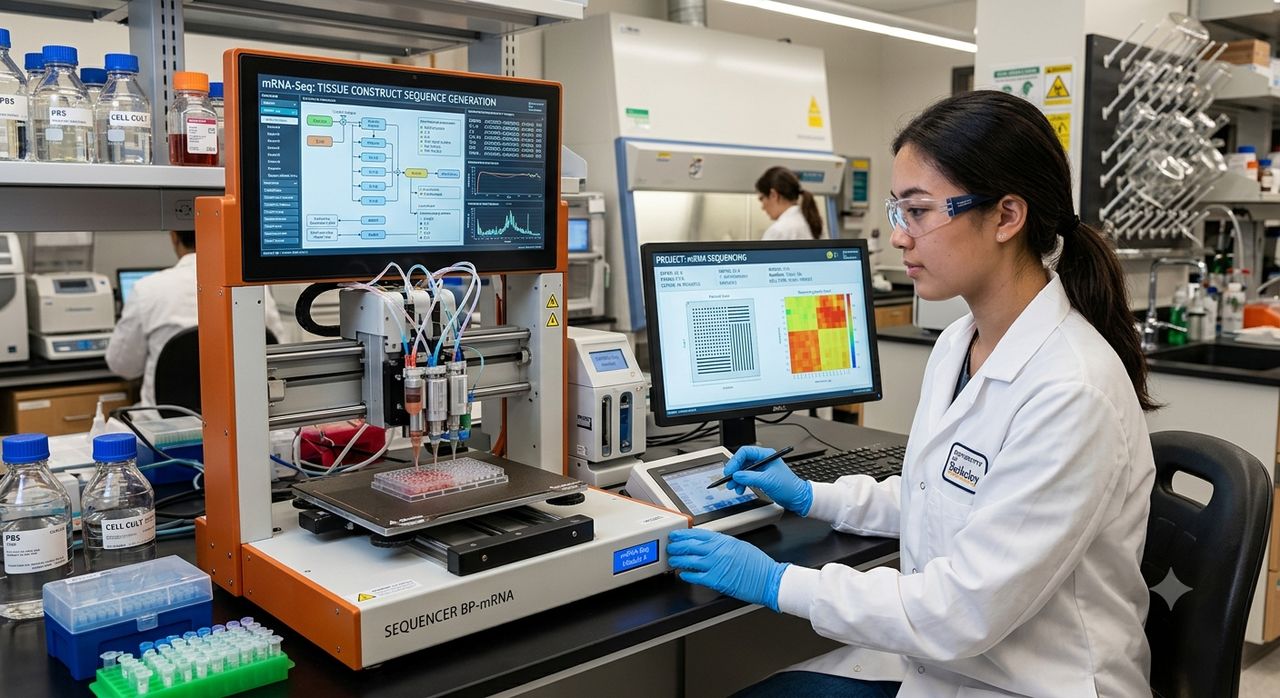
The university’s RNA Institute has emerged as one of the country’s leading centers for RNA biology and therapeutics. Long before RNA became a household term during the COVID-19 pandemic, UAlbany researchers were investigating how RNA influences gene expression, disease mechanisms, and potential new treatments.
Today, the institute brings together more than 50 faculty researchers from biology, chemistry, engineering, biomedical sciences, structural biology, physics, and nanobiosciences. Their work focuses on understanding RNA’s role in human health while developing new RNA-based diagnostics and therapeutics. (University at Albany)
The institute houses numerous specialized laboratories covering:
- Structural biology
- Cell and developmental biology
- RNA chemistry
- Bioinformatics
- Disease-focused therapeutics
- Nanobiosciences
Its interdisciplinary approach allows researchers from different scientific backgrounds to collaborate using advanced instrumentation housed in a dedicated LEED-certified research facility.
The RNA Institute is also expanding rapidly. New investments include a US$50 million expansion that will add research space, clean rooms, and biopharmaceutical manufacturing capabilities designed to accelerate the transition from laboratory discoveries to commercial therapies. Students will gain valuable experience in bioprocessing and pharmaceutical manufacturing, helping bridge the gap between academic research and industry. (Times Union)
Beyond RNA: A Growing Life Sciences Ecosystem
The RNA Institute is only one component of UAlbany’s broader life sciences strategy.
The university’s research network also includes organizations such as the Center for Functional Genomics, the Institute for Health and the Environment, and numerous interdisciplinary laboratories studying genetics, environmental health, biomedical imaging, and molecular biology. Together, these centers encourage collaboration across traditional academic boundaries to solve complex health challenges. (University at Albany)
Recent NIH funding continues to support research into aging, cancer biology, environmental toxicology, and precision medicine. These projects reinforce UAlbany’s growing national reputation in biomedical research while creating additional opportunities for undergraduate and graduate students to participate directly in cutting-edge science. (Times Union)
Where Nanotechnology Meets Additive Manufacturing
Although SUNY Albany is not widely known as a dedicated 3D printing research institution, its work strongly complements many of the technologies driving additive manufacturing today.
Nanomaterials are increasingly incorporated into printable polymers, ceramics, and metal powders to improve mechanical strength, conductivity, thermal performance, and biocompatibility. Likewise, advances in RNA science and biomedical engineering are expanding opportunities for bioprinting, tissue engineering, personalized medicine, and microfluidic devices.
The university’s expertise in nanoscale materials, semiconductor fabrication, biomedical research, and advanced manufacturing creates an environment where future additive manufacturing innovations can emerge. As industries continue combining nanotechnology with additive manufacturing, institutions like UAlbany will likely play an increasingly important role in supplying both new discoveries and the highly trained workforce needed to commercialize them.
Why It Matters to the 3D Printing Industry
The convergence of nanotechnology, life sciences, and additive manufacturing is accelerating across numerous industries.
Medical device manufacturers are exploring nano-enhanced implants. Researchers are developing printable biomaterials that interact more effectively with living tissue. Semiconductor companies are investigating advanced manufacturing methods for microscale components. Every one of these developments depends upon scientists and engineers who understand multiple disciplines simultaneously.
This interdisciplinary philosophy is exactly what SUNY Albany has been cultivating through its research institutes and collaborative laboratories.
Our readers may also recognize these trends from the work of R&D Tax Savers, which has covered the growing impact of 3D printing in both nanotechnology and life sciences for years. As additive manufacturing continues moving beyond prototyping into production, the intersection of these technologies is becoming increasingly important for companies pursuing innovation and claiming valuable R&D tax incentives.
Assuming the applied research collaborations are with SUNY Albany, those developments could support IRC § 41 research credit opportunities for companies that participate in or fund projects intended to develop or improve products, processes, software, techniques, formulas, or inventions. For company-sponsored university work, the key is to distinguish a qualifying research arrangement from a mere purchase of finished results. Under IRC § 41, contract research expenses generally include 65% of amounts paid to non-employees for qualified research, with special higher percentages for qualified research consortia and certain energy research payments to universities or federal labs.
R&D Tax Savers has been helping companies navigate the complexities of this tax benefit since the inception of the Research and Development Tax Credit in 1981.

Where Academia Meets Industry
The future of manufacturing will depend on more than faster machines or better software. It will require scientists who understand biology alongside engineering, materials science alongside computing, and nanotechnology alongside manufacturing.
SUNY Albany is positioning itself at exactly that intersection.
By combining world-class research facilities, interdisciplinary education, strong industry partnerships, and extensive laboratory experience, the university is preparing students to solve some of tomorrow’s most complex technological challenges. Whether those graduates develop next-generation semiconductors, RNA-based therapeutics, nano-engineered materials, or entirely new additive manufacturing applications, they will leave UAlbany with both the knowledge and practical research experience needed to make an immediate impact.
As nanotechnology, life sciences, and 3D printing continue to converge, institutions like SUNY Albany will help train the innovators who turn groundbreaking research into real-world solutions. That investment in education, discovery, and hands-on experience promises not only stronger industries, but also healthier communities, more sustainable technologies, and ultimately a better future for us all.