Charles Goulding and Aaron Rofe examine how 3D printing is quietly transforming sports medicine by making braces, facemasks, and orthopedic implants faster, lighter, and more precisely tailored to individual athletes.
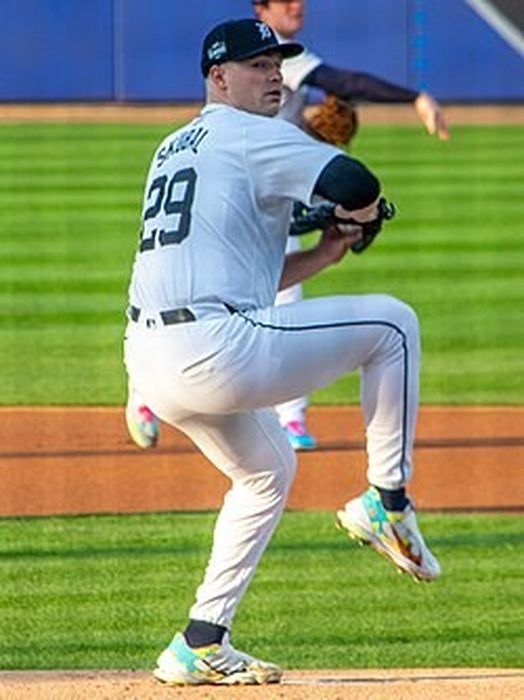
Pro sports are living through a strange paradox. Athletes are throwing harder, jumping higher, and cutting faster than ever before – and their bodies are paying the price. A recent New York Times feature on the state of professional sports medicine laid out the tension bluntly: injuries are surging across baseball, basketball, and beyond, even as medicine gets dramatically better at fixing them. Newly acquired Los Angeles Dodgers ace pitcher Tarik Skubal is the poster child. A bone fragment lodged in his elbow this spring looked like it might end his season – instead, a next-generation arthroscopic tool got him back on the mound through 99.9 mph fastballs just six weeks later.
The Times piece frames this as an “injury epidemic” paired with a “recovery revolution,” and its focus is mostly on surgical technique and the economics of modern sports contracts. But there’s a third leg of that revolution that doesn’t get nearly enough credit: 3D printing. While surgeons get smaller scopes and better technique, the equipment, protective gear, and even implants that gets athletes through — and back from — injury has quietly gone from generic and hand-molded to digitally scanned and precisely fabricated. It’s a shift happening in facilities from Durham to Auburn to New York City, and it’s worth putting alongside the headline-grabbing surgical breakthroughs.
One detail buried in the Skubal story is easy to miss: the difference between a good outcome and a great one increasingly comes down to millimeters. A spur that’s 1.9mm instead of 4mm causes meaningfully less tissue damage. The same logic applies to everything an athlete wears while healing. A brace, splint, or facemask that’s even slightly off in fit can restrict motion, undermine confidence, or simply get left in a locker because it’s uncomfortable. That’s the exact problem companies like PROTECT3D and XO Armor set out to solve, and it’s the same logic driving the broader adoption of 3D printing across sports medicine.
PROTECT3D
PROTECT3D got its start in a Duke dorm room, when co-founders Kevin Gehsmann and Clark Bulleit — both Duke football players — began scanning teammates’ injuries to build custom protective pads, starting with a defensive back’s broken arm and quarterback Daniel Jones’s fractured collarbone. The company’s pitch is straightforward: traditional hand-molded facemasks are slow, expensive, and inconsistent, while cheap off-the-shelf alternatives compromise fit and visibility. A 3D scan captured on a phone or tablet lets clinicians generate an anatomically exact, lightweight mask tailored to an athlete’s specific injury.
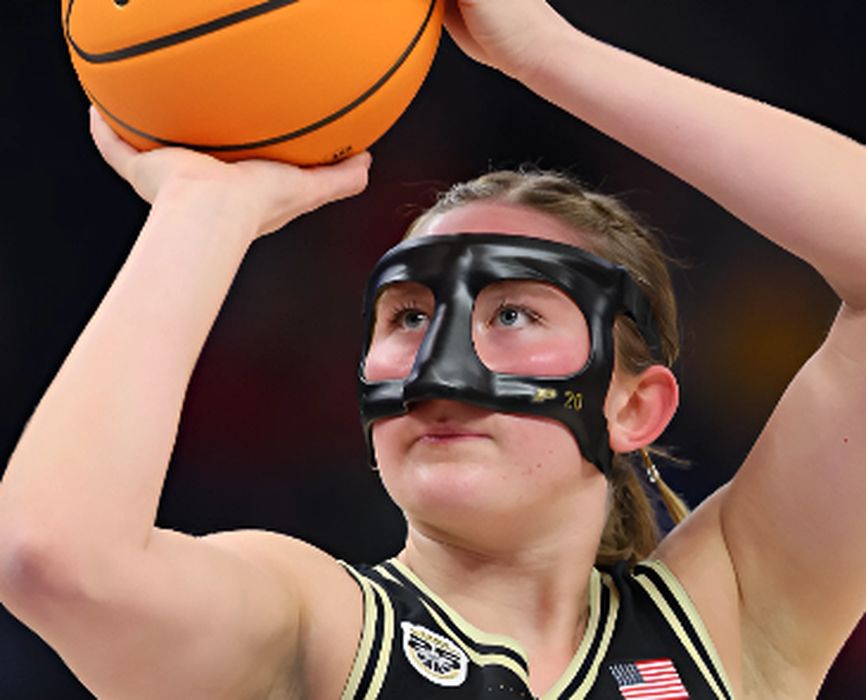
The approach has since spread well beyond Duke’s campus. NBA players like Jaylen Brown and Bradley Beal, and USMNT/MLS forward Diego Luna, have all worn PROTECT3D masks to get back on the field or court. On the college side, NC State defensive lineman Isaiah Shirley credited a custom PROTECT3D ankle brace – 3D scanned and delivered within a day – with letting him finish his freshman season despite a painful, unusual foot condition (an extra bine, called an accessory navicular, that was tearing into his posterior tendon) before ultimately having surgery in the off-season.
What stands out in the trainers’ own accounts is less about the technology’s novelty and more about workflow. Athletic trainers who once had to physically mold each device now scan and iterate digitally, producing a sequence of braces – large, then medium, then small – as an athlete progresses through recovery. Carolina Hurricanes athletic trainer Doug Bennett put his finger on the real payoff: athletes actually wear the gear consistently, because it’s contoured closely enough to their own anatomy that they step noticing it’s there.
XO Armor
XO Armor traces a similar origin story to PROTECT3D – a collaboration between an Auburn athletic trainer and an engineering professor to protect two injured football players, both of whom scored touchdowns wearing their custom devices soon after. What differentiates XO Armor is its delivery model: rather than shipping finished devices, the company provides trainers with an integrated scanner, software, and printer package for a flat monthly fee, letting teams produce wrist splints, thumb spica splints, and AC guards in-house.
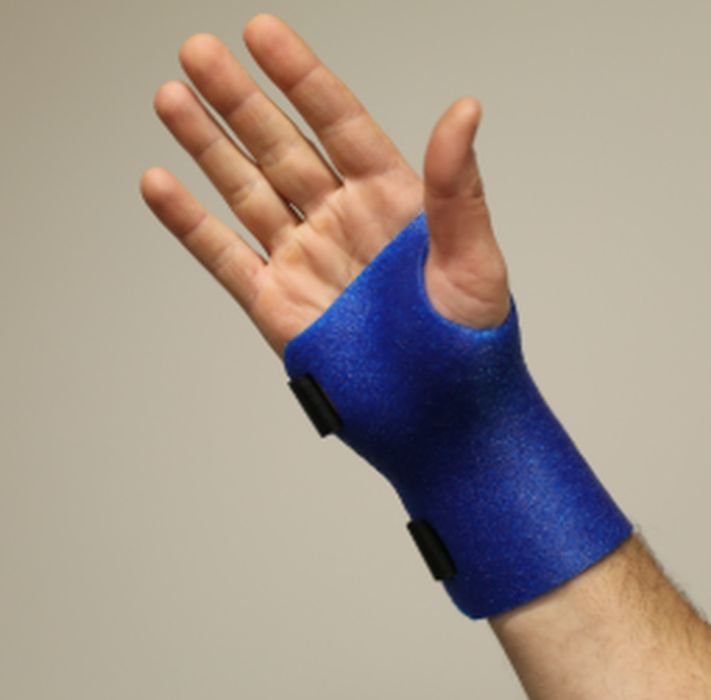
That model is now expanding past athletics into orthotics – fitted braces for a much broader patient population, including elderly patient whose thin, fragile skin make generic devices painful to wear. It’s a useful reminder that the underlying technology serving elite athletes has a direct, near-term application in general healthcare, where turnaround times for custom orthotics have traditionally been measured in weeks rather than hours.
Lindsey Vonn
Braces and facemasks are the most visible application of 3D printing in sports medicine, but the technology is also working its way into something far more permanent: the implants themselves. When Olympic ski champion Lindsey Vonn underwent a robotic-assisted partial knee replacement in 2024 at age 40, surgeons used titanium and polyethylene components custom-positioned according to detailed imaging of her own knee joint. It’s worth being precise about what that procedure actually involved, though: there’s no indication that 3D printed components were used in Vonn’s surgery specifically. The breakthrough there was the precision of robotic-assisted placement and implant positioning, not the fabrication method behind the implant itself.
Still, her story is a useful entry point into a facility that’s become a genuine bellwether for where implant technology is headed: the Hospital for Special Surgery in New York, whose main campus has become known both for elite surgical outcomes and for its early, aggressive adoption of 3D printing in orthopedics. HSS partnered with implant maker LimaCorporate to build the first on-hospital-campus design and additive manufacturing facility for complex custom implants — a setup that lets patient-specific hardware be designed and printed on-site rather than outsourced and shipped in. That capability matters most for patients who don’t fit a standard mold at all: those with severe bone loss, unusual anatomical deformities, or a previously failed joint replacement. For them, a 3D printed implant can be engineered to match their exact anatomy and even tuned for a specific surface porosity that helps it bond more securely to surrounding bone, something an off-the-shelf implant simply isn’t built to do.

That implant work sits inside a much larger operation. HSS’s Sports Medicine Institute is a dedicated, multidisciplinary unit – doctors, surgeons, therapists, and researchers working together specifically on athletic injuries, from diagnosis through treatment, rehab, and prevention. It’s a high-volume operation by any measure: HSS treats more than 95,000 patients and performs over 10,000 surgeries a year across common sports like torn ACLs, rotator cuff tears, and meniscus tears, backed by physical therapy and rehab teams focused on getting patients back to full activity rather than just repaired. The institute also has deep ties to professional sports itself, serving as team physicians for more than 30 professional teams, colleges, and organizations – including a New York Giants partnership stretching back over three decades – across locations in New York, New jersey, Connecticut, and South Florida area, and it has trained more than 100 sports medicine specialists now working at institutions worldwide.
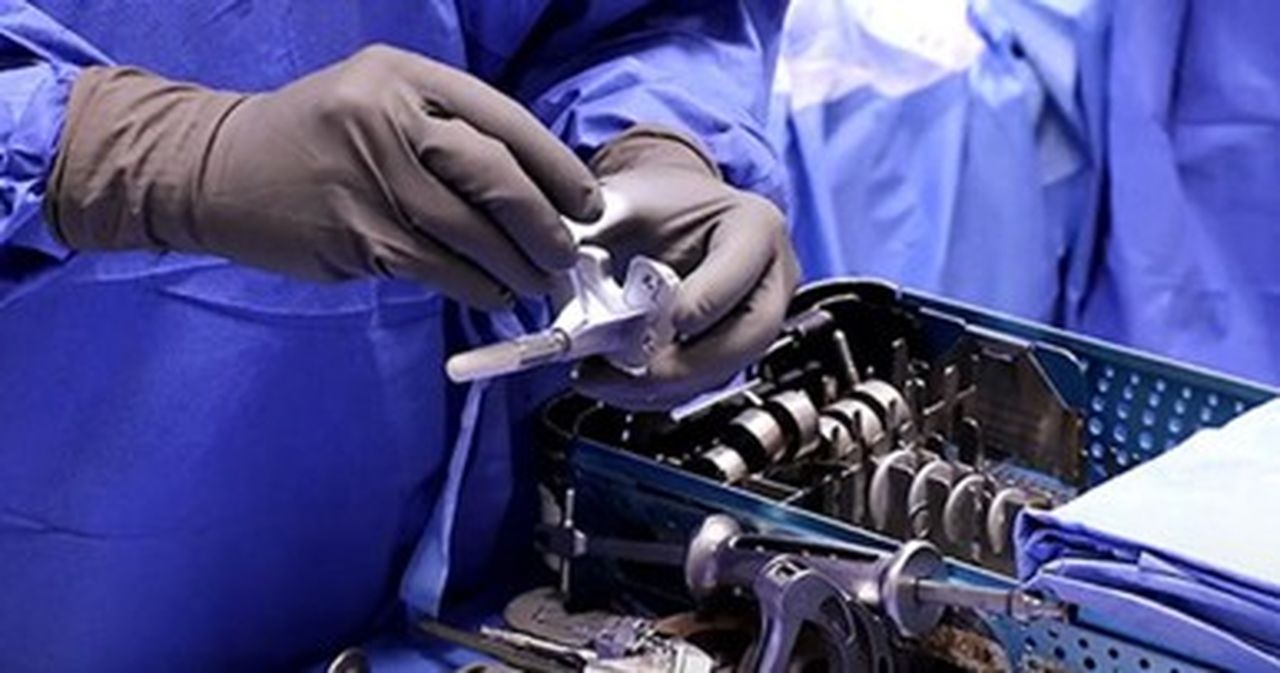
It’s a natural extension of the same idea running through PROTECT3D and XO Armor’s work: standard, off-the-shelf hardware is a compromise, and additive manufacturing lets clinicians close that gap, whether the device in question is worn for six weeks or implanted for life. HSS’s roster of high-profile patients — spanning basketball, football, tennis, baseball, and MMA — combined with an in-house sports medicine institute built to handle the full arc of athletic injury, suggests elite athletics is increasingly the proving ground where these custom implant techniques get refined before spreading into more routine orthopedic care.
The Bigger Picture
Zooming out from any single company, additive manufacturing offers sports medicine a few specific advantages that traditional fabrication methods struggle to match:
- Speed – same-day scans can turn into ready-to-wear devices within days, compressing a process that used to take weeks.
- Precision fit – generative design allows engineers to dial in flexibility stiffness, and breathability for an individual athlete’s exact anatomy and injury profile, rather than sizing up or down from a generic mold.
- Iterative Design – because devices are digital files rather than physical molds, trainers can adjust and reprint a design in response to clinician feedback almost immediately and can print progressively smaller braces as healing advances.
- Lightweight materials without sacrificing protection – advanced biomaterials let designers hit a strength-to-weight ratio hand-molded materials can’t touch, which matters enormously to athletes worried that protective gear will slow them down.
- Anatomical Performance – for implants specifically, printed titanium components can be engineered with porosities and geometries designed to encourage bone to grow into the device itself, something a mass-produced implant can’t offer.
Beyond wearable protection, the same scanning-and-printing pipeline is being extended toward custom insoles, mouthguards, scoliosis braces, and even titanium orthopedic implants printed directly from CT scan data – suggesting that what starts as a sideline solution for pro athletes is on a fairly direct path toward mainstream orthopedic care.
The Research and Development (R&D) Tax Credit
These developments may fit the IRC § 41 framework when companies are resolving technical uncertainty in how to design, scan, model, print, and validate protective equipment. Domestic engineering work to determine materials, lattice structures, fit tolerances, impact resistance, ventilation, weight, and print parameters may satisfy the domestic IRC § 174A research requirement if it is research or experimental activity connected to the company’s trade or business. The work is also technological in nature because it relies on engineering, biomechanics, materials science, software modeling, and additive manufacturing.
The business component requirement may be met where the company is developing a new or improved brace, splint, facemask, pad, scanning workflow, print process, or related software. Iterating prototypes from athlete scans, testing alternative geometries, refining millimeter-level tolerances, and improving lightweight biomaterials are aimed at function, performance, reliability, and quality rather than appearance alone. These activities may constitute a process of experimentation when the company evaluates alternatives through modeling, prototype printing, field testing, clinician feedback, and redesign.
Companies like PROTECT3D, XO Armor, and similar innovators may have strong IRC § 41 opportunities where their 3D printed sports-equipment projects involve domestic technical experimentation to create or improve protective products or production processes. Potential qualified research expenses include engineering and design wages, prototype materials, qualifying computer-use costs, and eligible contract research. The claim should be supported by project-level documentation distinguishing experimental development from routine production, customer-specific adaptation, cosmetic revisions, and other excluded activities.
Where This is Headed
The Times article ends on an ambivalent note: modern medicine keeps getting better at fixing athletes, and athletes keep pushing their bodies harder as a result, in a kind of arms race between injury and recovery. 3D printing doesn’t resolve that tension, but it does make the “recovery” side of the equation faster, cheaper, and more precise — and it’s doing so at a pace that outstrips the surgical advances getting most of the headlines. A custom brace that ships in a day instead of weeks, a facemask that fits within a millimeter instead of an inch, an implant engineered for one specific joint rather than pulled off a shelf. And as companies like PROTECT3D and XO Armor push this technology past pro locker rooms and into everyday clinics, and as hospitals like HSS bring point-of-care implant printing into mainstream orthopedics, the real story may not be how 3D printing changed elite sports — it may be how sports proved the concept for everyone else.