
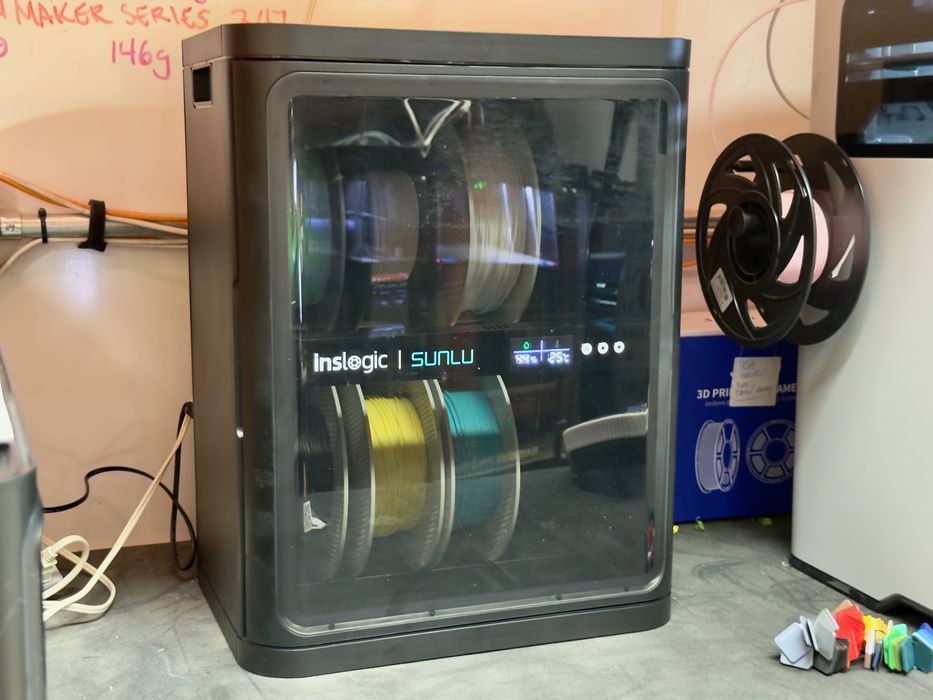
We’re now testing the huge ten spool SUNLU FilaDC i10 filament dehumidifying cabinet.
As if one filament conditioning review wasn’t enough, today we have another SUNLU product on test, following yesterday’s SUNLU S4 Pro review.
We have a lot of dry spools now.
The FilaDC i10 seems to be a collaboration between SUNLU and Inslogic, as that’s on the product’s nameplate. Who exactly is Inslogic? It turns out they are a brand within the SUNLU group, focused on professional materials, whereas the SUNLU brand is more focused on consumer level products. The FilaDC i10 is being sold to both markets via each brand, and it seems to be the same machine.
At first you’d think the major feature of the FilaDC i10 is that it can hold a whopping ten spools at once. That’s quite good, but the real hidden feature is that the FilaDC i10 does not use heating to dry filament!
Most filament dryers use a simple principle:
- Heat up a chamber
- Water evaporates at the higher temperature
- Moist air is vented from the sealed chamber
That works very well, and usually quite quickly, too. However, it does tend to eat up some energy. That’s because heat is the engine that makes the process work, and resistive heat takes a lot of electricity.
The FilaDC i10 takes an entirely different approach. Instead of a heat cycle, it uses molecular sieve dehumidification.
What the heck is that? It’s basically a highly specialized filter that is designed to capture water molecules. The filter’s gaps match the size of water molecules, so they can be adsorbed — leaving the interior a little bit drier. Over time the chamber becomes sufficiently dry, and any moisture leaks out of the spools inside.
This takes far, far less energy than heating.
But does this filter not get clogged up after a while? It does, but it can be regenerated by a little bit of heating. That is included in the FilaDC i10, and as the machine runs you can feel a very slight amount of heat at the back from this process.
This is a brilliant concept for drying filament, and it’s so simple I believe it will quickly catch on in the industry.
This is also why SUNLU refers to the product not as a “dryer”, but instead as a “filament dehumidifying cabinet”. And that’s exactly what it is. It will dry filaments eventually, but it’s best for storage. If you want to quickly dry a “wet” spool, use a dryer, not this cabinet.
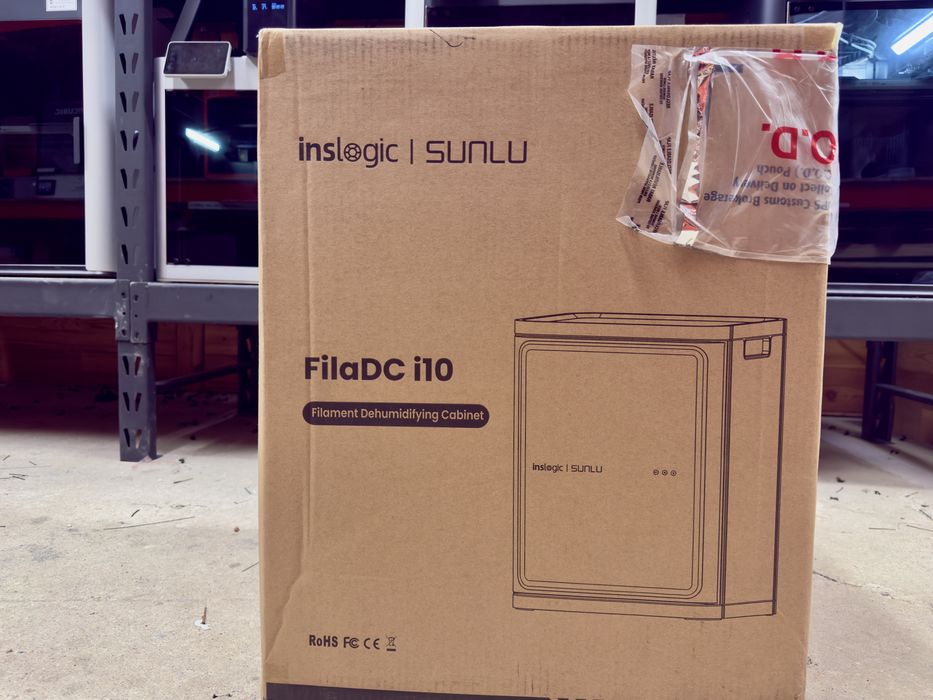
But what about the machine? How does it work? Let’s take a look.
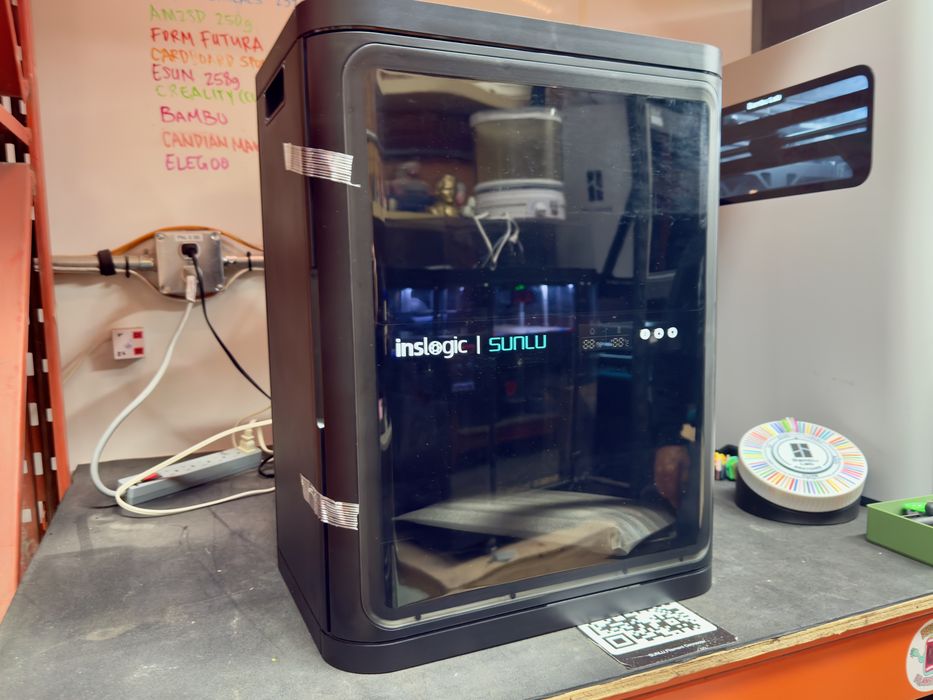
The FilaDC i10 is a ridiculously simple machine. It’s literally a box with a very small filter/heater/fan apparatus at the rear.
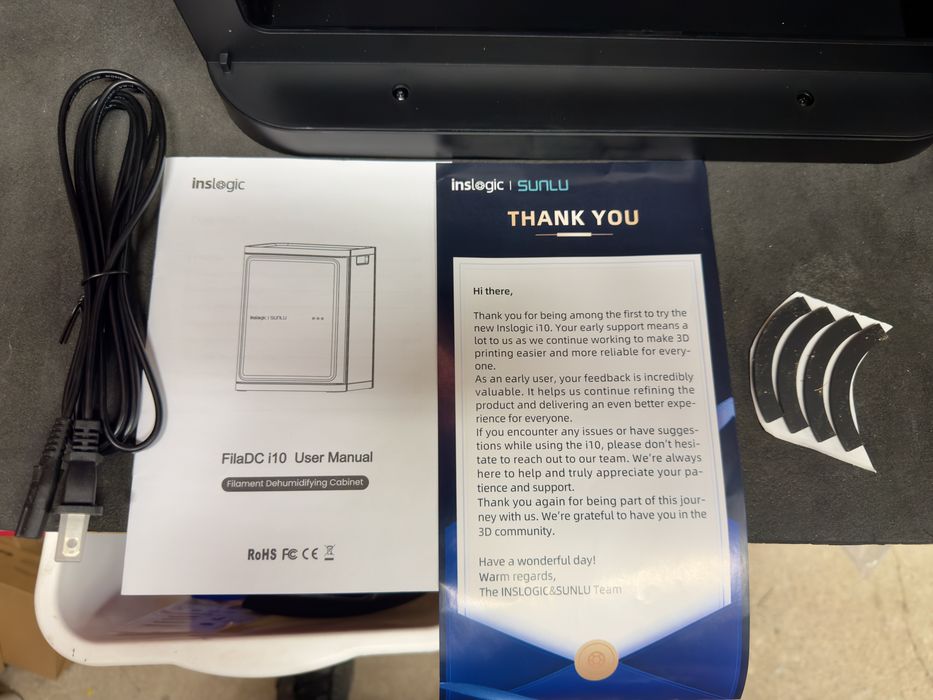
Inside the chamber you’ll find a small bag with basically nothing inside except a rather thin power cord and what looks like some rubber feet, which are not mentioned in the brief instructions.
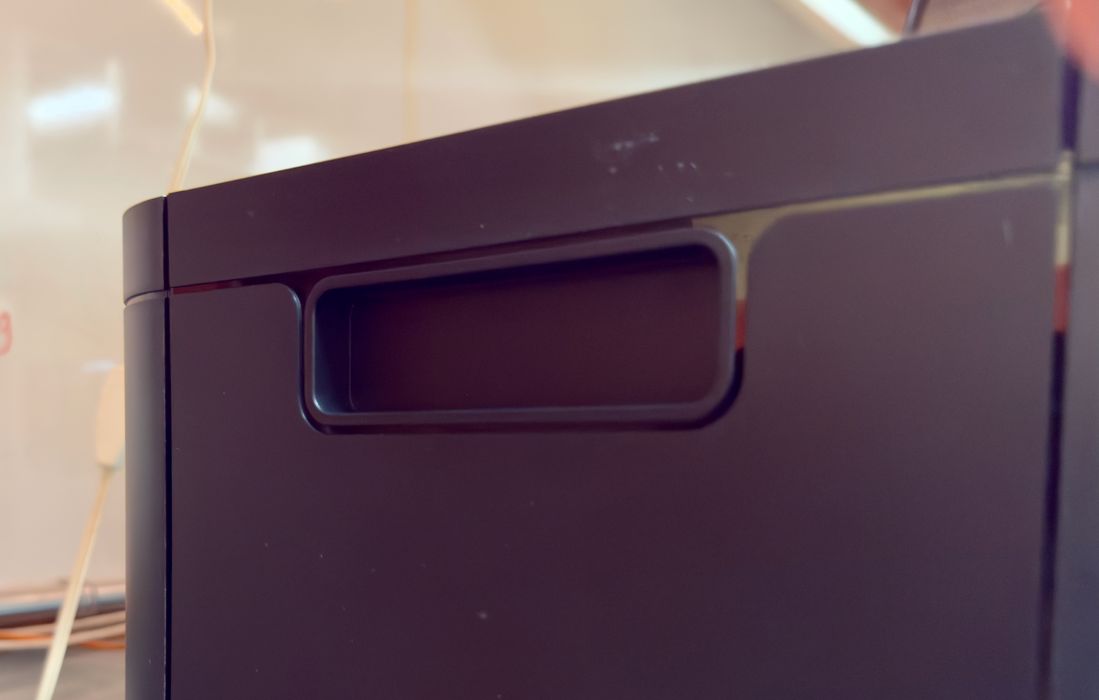
On the top sides of the machine are some embedded handles. This makes the device extremely easy to move around. In fact, it is also quite light. SUNLU says that you can actually stack these up, maybe four units high, if you dare.
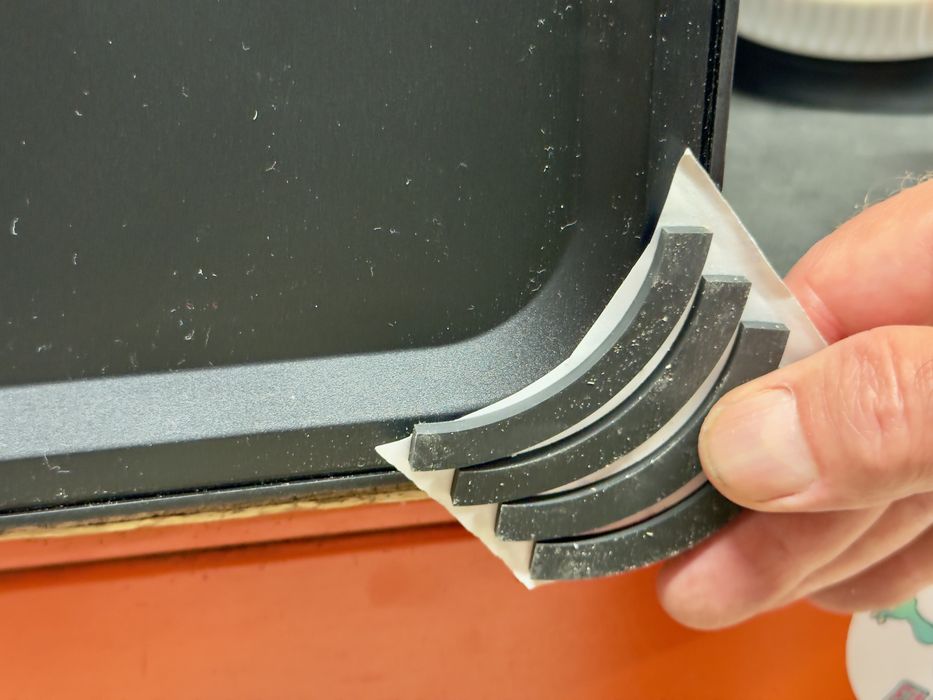
Perhaps that’s what the feet are for: stacking. We had only one unit and it works perfectly without the feet. But if we were stacking them together, we might want the feet to avoid scratches.
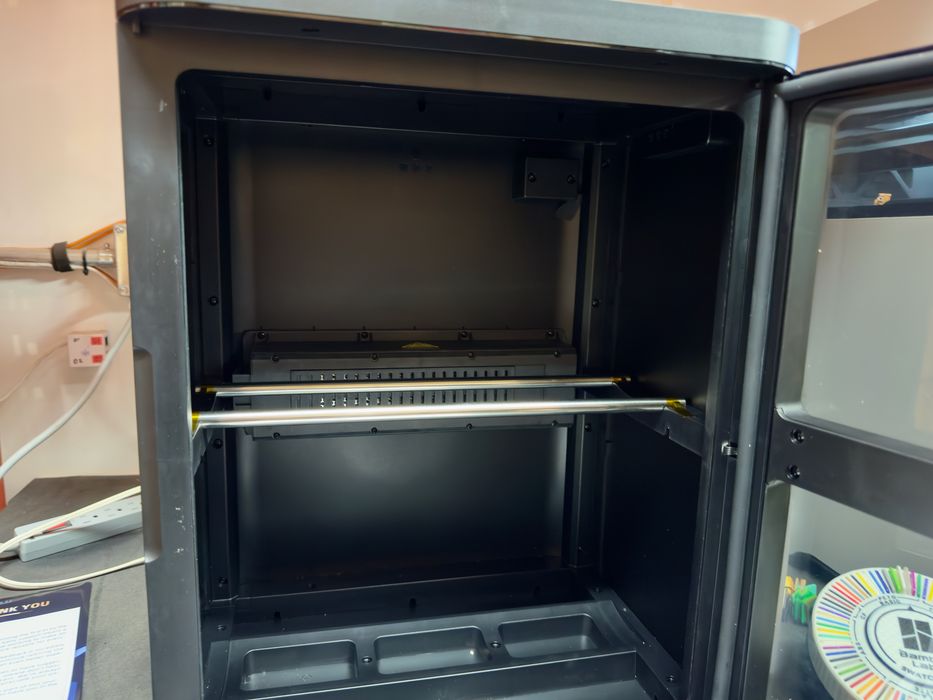
Inside the chamber it’s pretty empty. I do note that the doors are actually quite tightly sealed. They do not easily swing open as those on lesser dryers might do. Here you have to actually pull with a bit of force to overcome the air seal.
Also not that there are four steel rods in place to hold the spools. These rods are just taped down, presumably to avoid having them smash around during shipping. We decided to leave the tape on because we might be moving the device later, too.
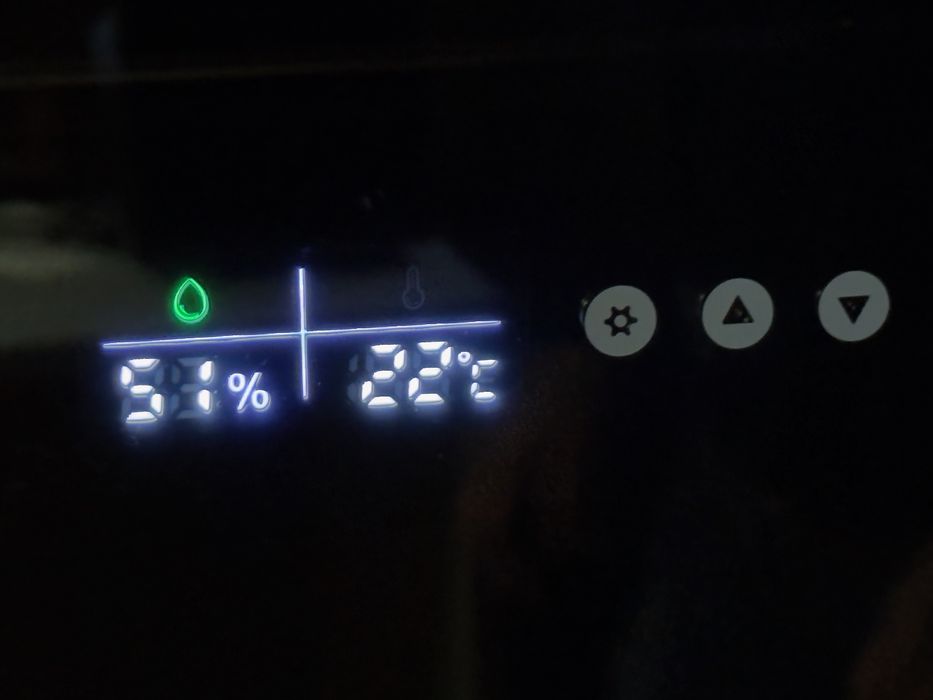
This very simple display is the operating panel for the FilaDC i10. There’s not much there: you just set the desired humidity level and walk away. The machine runs continuously afterwards, consuming very little energy.
In a way, this is exactly what many 3D printer operators would want: a large capacity to cheaply store a lot of spools. This approach is only possible with the unusual dehumidification method, because otherwise running a heat-driven dryer continuously is just wasting electricity.
I am very impressed with the FilaDC i10. It delivers a lot of function with extreme simplicity and very low cost.
The MSRP on the device, which is to be released in a few weeks, is apparently US$199, or about US$20 per spool, if you’re counting that way. However, your savings on electricity could be much higher, depending on how much drying you do.
At launch there will be a discount, but we don’t know what that will be as of this writing.
If you are looking for an effective large quantity filament drying/storage solution, the FilaDC i10 could be what you’re looking for.
Via SUNLU
