
Two veteran American 3D printer manufacturers seem to be finding remarkably similar ways to stay in business.
MakerGear and LulzBot are names that go way back in desktop 3D printing. Both were producing machines when today’s enormous consumer 3D printer market barely existed, and both built reputations around durable equipment manufactured in the US.
Neither company has had an easy time recently.
In 2022, MakerGear founder Rick Pollack announced that severe supply chain problems had forced the company to scale back operations, and that he was looking for someone to acquire the business. At the time, things looked pretty grim, and we wondered whether MakerGear would survive at all.
It did.
Pollack later explained that MakerGear managed to work through most of its supply problems without being acquired, and once again became busy producing machines.
But MakerGear today looks quite different from the desktop 3D printer company of years ago.
The company’s M2 and M3 machines are currently listed as sold out. The main machine still actively promoted is the much larger Ultra One, priced at US$15,600 and available by contacting MakerGear directly.
One reason MakerGear is apparently able to continue with this approach is government business.
In 2023 the US Army sought 75 Ultra One systems, with an option for another 25, for an existing additive manufacturing program. Then in July 2026 the Army again announced plans for a sole-source purchase of Ultra One machines and associated tactical accessories.
LulzBot appears to be following a somewhat parallel path.
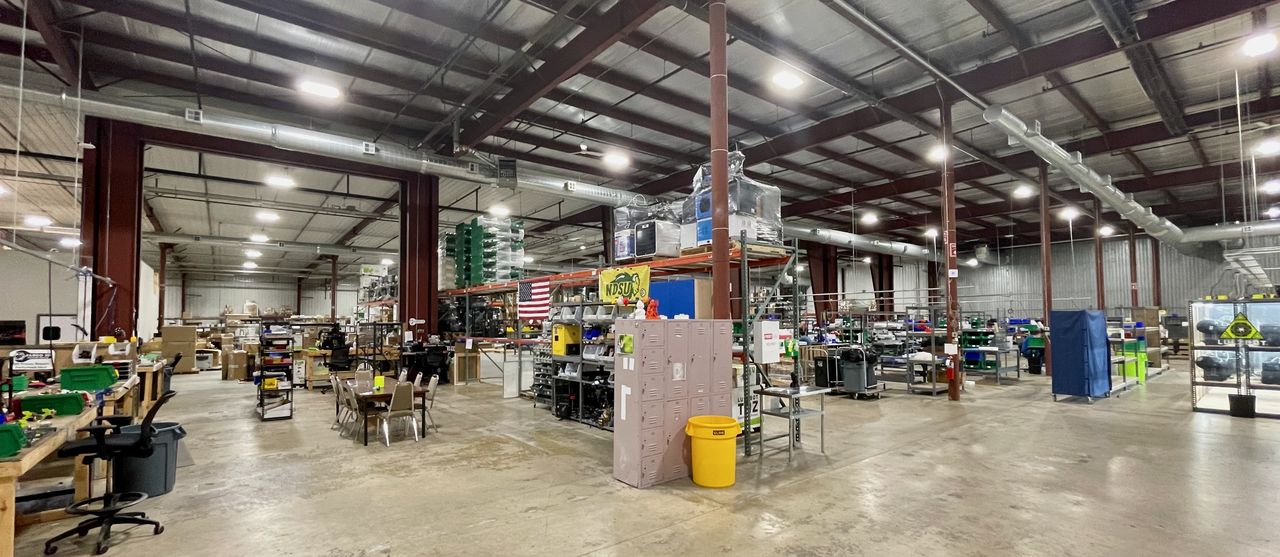
After the collapse of Aleph Objects, LulzBot was acquired by FAME 3D and moved from Colorado to Fargo, North Dakota. The company continued developing machines, most recently launching the TAZ 8 in March 2025.
Since then, however, there have been some substantial management changes, including the departure of CEO John Olhoft, who is now working for another US 3D printer venture.
LulzBot hasn’t stopped selling 3D printers. In fact, the US Navy recently announced plans to purchase 61 Workhorse+ upgrade kits from FAME 3D for existing LulzBot systems. The justification specifically cites compatibility with equipment already deployed in Navy XFAB and TACFAB facilities.
But FAME 3D has also found another use for its manufacturing equipment.
The company helped develop Tic STACK Toe, a physical game created by FAME 3D co-founder Ron Bergan. More notably, LulzBot’s Fargo print farm is now manufacturing the game in production quantities.
According to LulzBot, the farm can produce hundreds of complete Tic STACK Toe sets per day. The project involved product design, prototyping and eventual production, all using the company’s own 3D printing equipment.
That’s a considerable change from the traditional 3D printer manufacturer model.
For years, companies such as MakerGear and LulzBot made money primarily by building machines and convincing customers to buy them. Today they face competitors capable of producing increasingly sophisticated desktop equipment at prices that would be very difficult for a smaller US manufacturer to match.
Both companies seem to have responded by moving toward customers and applications where low purchase price isn’t necessarily the deciding factor.
Government customers may care considerably more about domestic production, existing equipment compatibility, support, known workflows and long-term availability. Once dozens of identical machines are incorporated into a program, replacing them with a cheaper printer isn’t necessarily cheap at all.
FAME 3D has added another possibility: don’t just sell the manufacturing equipment. Use it.
A large 3D printer farm sitting in Fargo can produce inventory whether outside customers are buying new printers that month or not. Tic STACK Toe provides an unusual example of a 3D printer manufacturer becoming a customer of its own technology.
MakerGear and FAME 3D haven’t abandoned 3D printing. They may simply have discovered that surviving in 3D printing no longer requires selling large numbers of desktop 3D printers.
