
Charles R. Goulding and Kate Esposito reveal how additive manufacturing could help the Air Force break free from lengthy casting and forging bottlenecks while powering the next generation of drone swarms and uncrewed aircraft.
Ranked number one as the strongest and most capable air service in the world, the United States Air Force (USAF) dominates the aviation industry and has an unmatched capacity. Despite this, however, the Air Force’s jet engine manufacturers are plagued by significant challenges, including systemic, technical, and supply chain issues. As a result, flightline readiness is hindered and critical modernization programs are delayed.
Major engine contractors have struggled to consistently deliver systems on time and to exact specifications, contributing to major cost overruns. To overcome these problems, the Air Force is embarking on a multiyear fighter engine procurement project that includes a massive push for thousands of cheap, disposable engines for uncrewed drone swarms.
As part of its mission to rapidly produce new jet engines, the Air Force is turning toward additive manufacturing. This technology offers a fundamental paradigm shift in how these engines are designed, produced, and sustained. By moving away from subtractive manufacturing and specialized casting, the Air Force can collapse production timelines, accelerate prototyping, mitigate supply chain risk and material shortages, and rapidly fabricate components. The U.S. Air Force has encountered a major manufacturing problem, and additive technologies offer the perfect solution.
Traditional Manufacturing Fails to Deliver
Fighter jet engines are among the most complex machines ever built, requiring single-crystal turbine blades, advanced nickel-based superalloys, titanium forgings, and ceramic thermal barrier coatings. Furthermore, internal engine temperatures often exceed the melting point of the metal itself, requiring sophisticated precision-manufactured internal cooling systems. Because of these extreme demands, the smallest quality defect can dramatically reduce engine life and reliability.
As a result, it is extremely difficult to produce jet engines that meet the Air Force’s precise specifications and are delivered on time. Pratt & Whitney, which supplies engines for the F-35 program, has faced persistent sustainment and production issues. In a report from 2025, the Government Accountability Office noted that the company “is still not delivering engines to contract specifications after 20 years of production.” This has contributed to long delays and cost overruns, and the F-35 program is now estimated to cost US US$2 trillion.
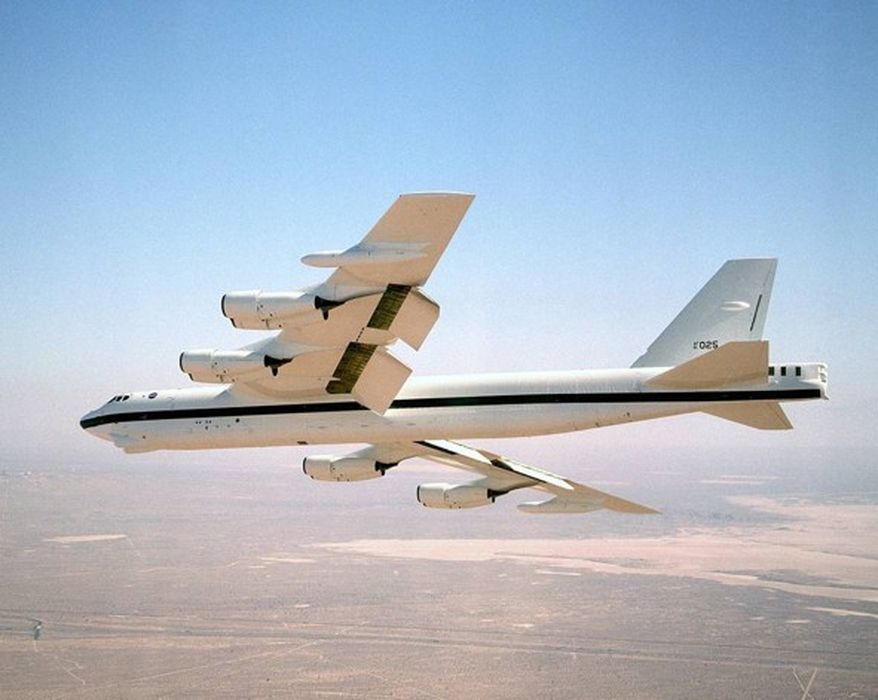
The USAF has also faced issues with modernizing existing jet engines. Introduced in 1955, the B-52 bomber was created with a projected lifespan of 20 years. Despite this, the Air Force wishes to modernize the aircraft for operation through 2050. To achieve this goal, the Air Force aimed to spend US US$21 billion. Unfortunately, the program has been stalled by engine issues that have raised costs by US$3 billion dollars and delayed initial operational capability by 15 months. The modernized B-52s will feature the new Rolls-Royce F130 engine, but wind tunnel tests revealed that it experienced variable and distorted air flow when integrated into the B-52 airframe. Engine troubles continue to cost the Air Force inordinate amounts of time and money.
Traditional jet engine manufacturing is heavily dependent on a concentrated and fragile network of specialized casting and forging operations. Sourcing key turbomachinery components through standard investment casting and forging routinely takes up to 18 months.
Because these traditional processes are lengthy and highly concentrated, the industrial base has virtually no ability to rapidly surge engine production in response to sudden national security demands or geopolitical emergencies.
Furthermore, conventional engine designs are highly fragmented, leading to incredibly complex assembly lines and massive bills of materials. A conventionally manufactured small turbine engine can require a parts list of over 600 distinct components. Preparing these components requires extensive assembly time, highly intensive labor, and a larger workforce footprint per engine unit produced.
Supply chain issues are crippling USAF engine production because of severe shortages in specialized raw materials, manufacturing bottlenecks, and a strained industrial base. Production relies heavily on high-grade titanium and nickel superalloys that are extremely difficult to source and are largely imported.
China controls sensitive strategic material supplies and has restricted the export of rare earths, giving foreign adversaries the power to stall U.S. engine production and highlighting the vulnerability of Western aerospace supply chains. Stabilizing these supply chains is no longer a mere business consideration, but a matter of national security.
The Air Force Turns to Additive Manufacturing
To solve its jet engine production issues, the USAF is pursuing a strategic competition to guarantee supply chain resiliency and innovate manufacturing. The Air Force issued a Request for Information (RFI) to completely restructure how it buys engines, with a target procurement of 180 engines per year by 2034. The service’s performance-based competition is built on five foundational pillars: performance, affordability, reliability, supportability, and producibility.
To ensure quality engine production, the Air Force will hold vendors contractually accountable to deliver higher combat capability at a lower acquisition price. The service will evaluate manufacturers on the total lifecycle cost of the engine rather than just the initial price, forcing them to reduce long-term maintenance and supply part issues. The USAF will also enforce strict manufacturing requirements, guaranteeing companies can rapidly scale production to meet national security surge demands.
The Air Force is working with established contractors to integrate 3D printing into both modern and older engine fleets, bypassing tooling delays and global material shortages. Pratt & Whitney, a global leader in propulsion technology and long-term partner of the USAF, began using additive manufacturing in the 1980s.
Since then, the company has integrated the technique throughout the entire lifecycle of their military engines. Pratt & Whitney says additive manufacturing allows for better design flexibility, easy replacement of rare parts, simplified supply chains, and reduced production time and cost. In 2023, the company worked with the Air Force to completely redesign and 3D print a flightworthy loop clamp gearbox bracket, which was developed in under nine months.
Today, Pratt & Whitney is partnering with GKN Aerospace to additively manufacture a large structural engine case for the F135 engine. The program aims to complete a full-scale demonstrator component by 2027 and achieve military certification by the end of 2028. As a result of the Air Force’s RFI, Pratt & Whitney will likely further expand its use of AM to meet the service’s strict requirements.
Recognizing that conventional engines cost millions of dollars and take months to assemble, the Air Force is shifting toward cheap, single-mission jet engines for cruise missiles, uncrewed wingmen, and drone swarms. This transition is spearheaded by the Family of Affordable Mass (FAMM) program, which was given US$620 million in funding for fiscal year 2026 and has a requested US$973 million for fiscal year 2027.
To spur development of these disposable engines, the Air Force is backing startups that design their technology specifically for 3D printing. This approach allows manufacturers to bypass the traditional 18-month casting and forging bottleneck, reducing manufacturing timelines to just a few weeks and lowering engine part lists from over 600 components to roughly 50 unitized parts. One of the main engine makers the USAF is working with is Beehive Industries, which uses additive manufacturing to produce jet engines for aerial defense systems.
Beehive Industries
Beehive Industries is an American defense technology and advanced propulsion manufacturer founded in 2020. The company specializes in high-volume, low-cost jet engines built specifically to address the Pentagon’s “affordable mass” strategy for uncrewed drone swarms and precision munitions. In under six years, Beehive has grown to over 400 employees and operates 300,00 square feet of facilities across several strategic U.S. hubs.
The company’s quick growth is in part due to its use of additive manufacturing, which allows for rapid prototyping and product development while cutting lead times and production costs. The core of Beehive’s methodology is a strict distinction between “additive-first” and “additive-enabled” design.
The company believes that substituting 3D printed duplicates of parts into a conventional engine architecture is counterproductive, resulting in a more expensive engine with identical performance. Instead, Beehive designs propulsion systems from scratch to leverage complex geometries that are physically impossible to manufacture via traditional casting or machining. This method has helped the company create revolutionary drone-jet technology that could completely transform the defense industry.
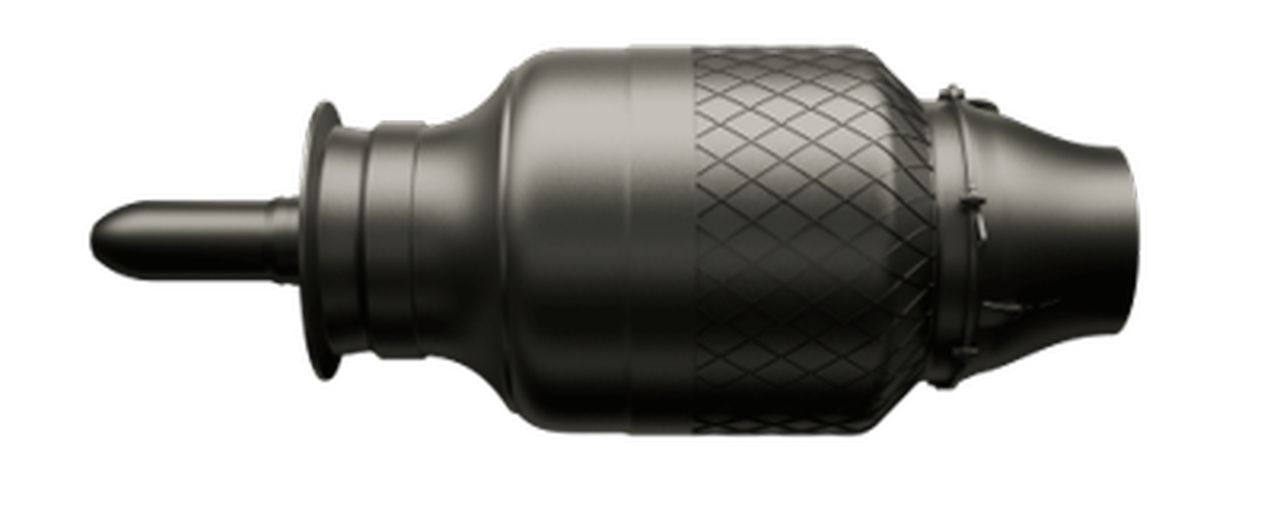
On April 9th, 2026, the USAF awarded Beehive a US$29.7 million contract to complete vehicle integration, flight testing, and qualification of the company’s 200 lbf Frenzy 8 engine. The award also includes funding to advance the 100 lbf Frenzy 6 engine, starting with production of a First Engine to Test (FETT) asset and options for further testing, integration, and demonstrations.
The funding was granted as part of the FAMM program’s prototyping efforts, led by the Air Force Life Cycle Management Center (AFLCMC). Beehive’s Frenzy engines are specifically designed for mass-produced munitions and swarm-class drones, with additive manufacturing used to reduce costs and speed up production.
This aligns perfectly with the Air Force’s plan to overwhelm adversaries through scale by fielding massive numbers of cheap, uncrewed wingmen, swarm drones, and loitering munitions. Beehive’s engine family currently spans 100 to 5,000 lbf of thrust, with AM operations scaled for each power level. While manufacturing methods differ based on engine size, Beehive has a core design philosophy of employing quality materials, using AM to differentiate technically, and scaling independently of traditional supply chain constraints.
In response to growing military demand for the Frenzy 8, Beehive has committed more than US$50 million to expand its fleet of EOS metal additive manufacturing systems. The purchase covers 30 EOS M4 ONYX systems, which will be added to the 20 EOS metal AM machines Beehive already employs across its facilities. Beehive stated this investment will significantly increase its production while reinforcing its commitment to delivering scalable propulsion systems.
The company will also use EOS software for real-time process monitoring, production data tracking, and quality management. To further scale its manufacturing capabilities, Beehive is executing a US$70 million capital expansion in Southwest Ohio. This growth will enable the company to increase its production capacity from 2,000 to more than 8,000 engines per year and will establish an end-to-end manufacturing system. Beehive’s low-cost, high-production technology offers a perfect solution to the Air Force’s jet engine supply challenges. Because of this, it is highly likely that the company will continue to work with the USAF, using additive manufacturing to produce more groundbreaking technologies in the future.
The Research and Development Tax Credit
The internal revenue code allows companies leveraging additive manufacturing, custom propulsion architectures, or single-mission disposable engine technologies – similar to those referenced in the article – to qualify for the research and development tax credit under IRC Section 41. To satisfy the statutory four-part test at the discrete business component level, the research must serve a permitted purpose aimed at creating or improving a component’s function, performance, reliability, or quality, such as converting high-part-count conventional engines into simplified 3D printed units. Furthermore, the company must evaluate technical alternatives to eliminate uncertainties regarding capability, methodology, or optimal design, such as resolving engine-frame air flow distortions or determining thermal limits for nickel superalloys, through a technological process of experimentation relying on hard sciences like engineering and materials science.
Further activities that qualify for the R&D credit may include, but are not limited to, designing or developing new and/or improved products or processes, developing or upgrading software, or testing new manufacturing methods to increase efficiency. R&D Tax Savers has helped hundreds of companies navigate the complexity of the R&D tax credit since it was signed into law in 1981.
Conclusion
Traditional jet engine manufacturing methods have led to significant challenges across the U.S. Air Force, including production delays, quality control issues, and critical obsolescence. To overcome these manufacturing issues, the Air Force is considering small, disposable jet engines, an overhaul that is enabled by modern manufacturing technology. Additive manufacturing allows engine components to be produced with fewer parts, less machining, and shorter lead times, offering the perfect solution to the Air Force’s supply problems. Traditional manufacturing represents the past, while additive manufacturing is paving the way for the future.