
A tiny slicer setting may have a big large effect on FFF surface quality.
Researchers at Universiti Teknikal Malaysia Melaka examined how three retraction settings affected surface roughness on parts printed from ABS-M30i. They produced 27 test cubes on an open source Folgertech machine, varying retraction length, retraction speed and Z lift.
Retraction is normally used as a way to control stringing. Before a non-printing travel move, the extruder pulls filament backward to reduce pressure at the nozzle, then pushes it forward again when extrusion resumes. This prevents drips from becoming strings.
Z lift, often called Z hop in slicers, adds another movement. The nozzle rises before the travel move, crosses to the new position, then drops back to the printing height. Many users enable it mainly to avoid the nozzle dragging across an already printed area.
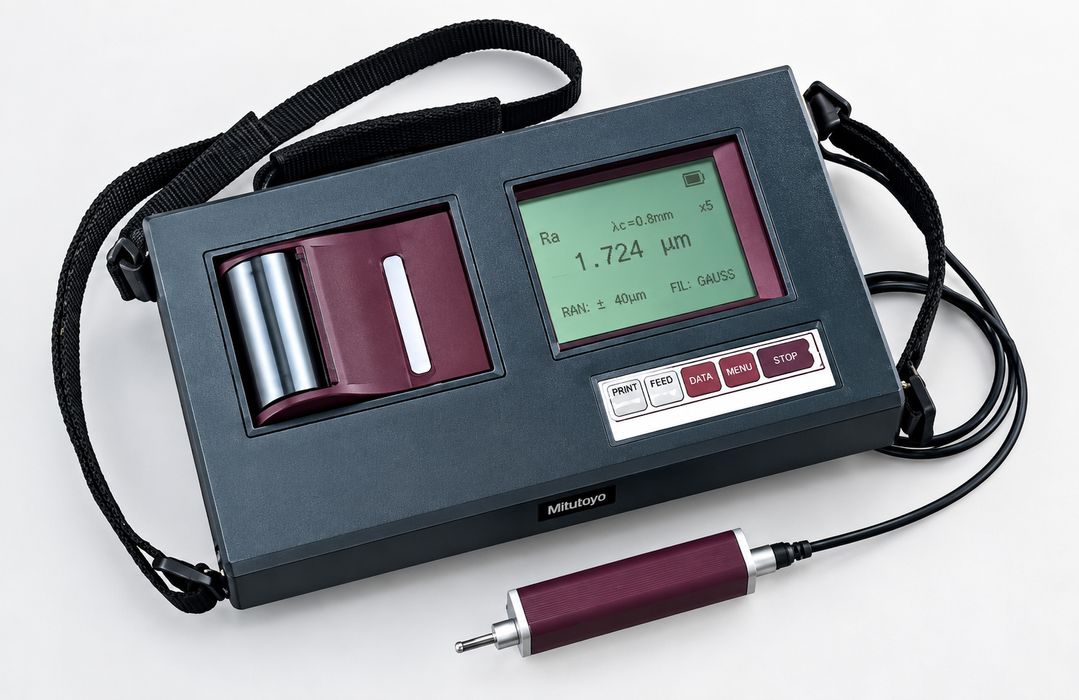
The researchers tested Z lift values of 0, 1 and 2 mm, retraction speeds of 20, 40 and 60 mm/s, and retraction lengths of 1, 3 and 5 mm. Surface roughness was measured as Ra using a Mitutoyo Surftest SJ-301, with microscopy used to examine the printed surfaces.
The best result came from a combination of 1 mm Z lift, 20 mm/s retraction speed and 1 mm retraction length. That sample produced an Ra value of 1.33 micrometers.
At the other end, the roughest sample used 2 mm Z lift, 40 mm/s speed and 5 mm retraction length, producing an Ra of 5.93 micrometers.
The most interesting finding appeared in their statistical analysis. The researchers calculated that Z lift accounted for 90.11% of the observed variation in surface roughness. Retraction speed accounted for 7.34%, while retraction length contributed only 1.76%.
Only Z lift was statistically significant in their analysis.
That is a pretty curious result because retraction tuning usually begins with length and speed. Those are the settings users adjust when strings appear between features. This experiment suggests the vertical motion accompanying those travel moves may deserve a lot more attention when surface finish is required.
The result also isn’t simply “use more Z hop.” The middle setting, 1 mm, appeared in the three smoothest samples, while both 0 and 2 mm appeared among poorer results. In this setup, there seems to have been a sweet spot.
Microscope images provided another clue. The researchers reported voids of about 0.01 mm in the best sample, compared with about 0.04 mm in their worst sample. They associated the smaller gaps with improved surface quality and better bonding between adjacent extrusion lines.
What this study provides is a good reason to include Z lift when tuning for appearance. It costs nothing to change, requires no printer modification and can be tested quickly along with the usual retraction settings.
Does this really work? We’ll have to give it a try.
