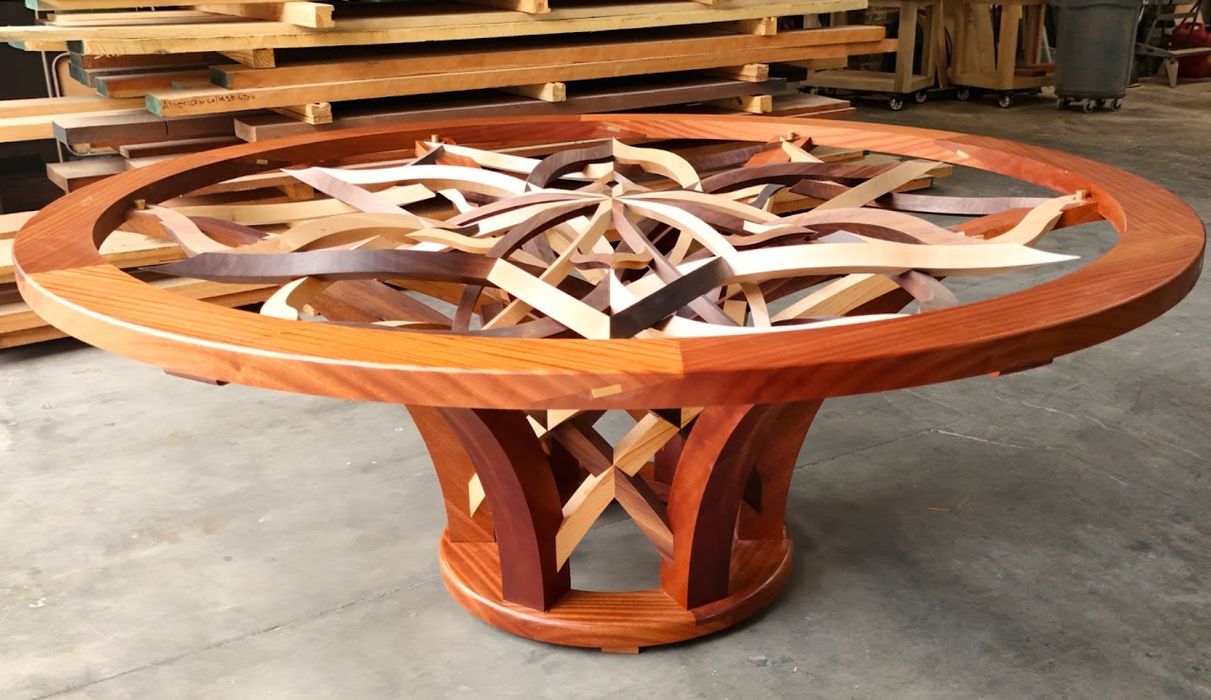
This week’s selection is the astonishing Dining Table by maker Trey DeWolf.
You might notice that this item does not appear to be 3D printed. It absolutely isn’t. It is entirely made from wood.
But then, how on Earth could you possibly cut wood into those intricate curves? How could you match the segments so that they touch perfectly?
The answer, it turns out, is 3D printing. DeWolf, based in North Carolina, was a student project. DeWolf explains:
“This is my senior capstone project that I built prior to graduation at the American College of the Building Arts. This piece is a 78-inch round table, constructed with three contrasting hardwoods: mahogany, walnut, and Maple, all beautifully visible through a glass top. The main inspiration for this table. The lower half of the table is inspired by vaulting found in many cathedrals; the upper half of the table is inspired by a combination of beautiful geometric patterns and different flower petal and leaf shapes. This piece consists of only curves (not a single straight element), which gives the table a beautifully natural and organic form.”
In this detailed video, DeWolf shows how the table was made.
As you will see, a significant amount of effort was eliminated by using highly complex 3D-printed jigs. These would hold the curved wooden pieces in exactly the correct position to allow a perfect cut by the table saw.
You’ve probably seen 3D-printed jigs before, but those made by DeWolf are incredibly complex. They involve chutes for curved pieces, specific measurements, and even 3D-printed bolts to hold the wood in place.
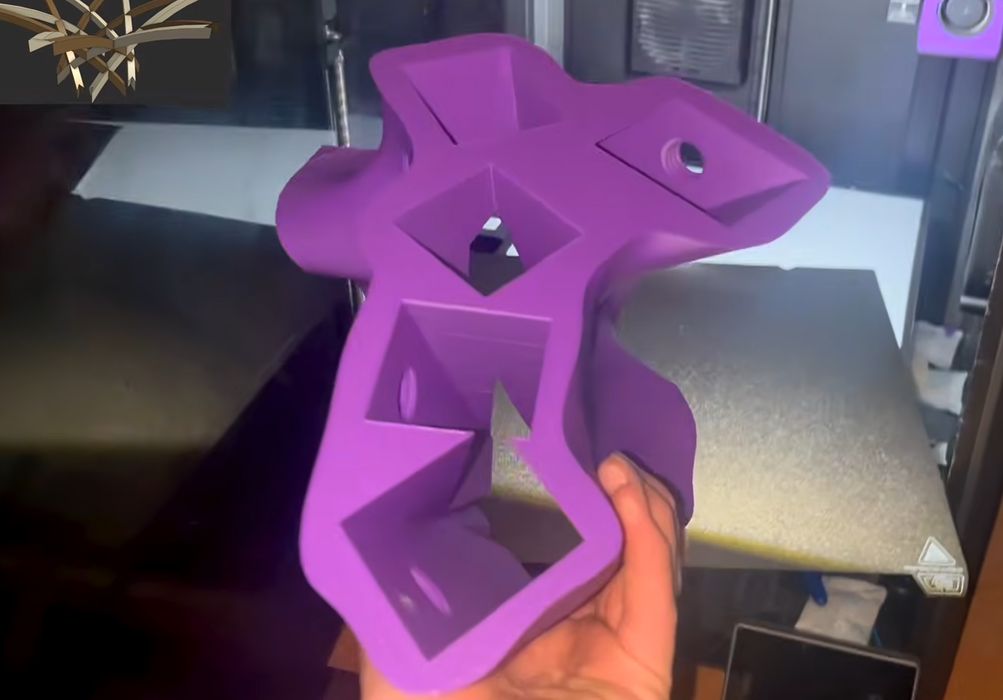
The jigs were so effective that hardly any measurements had to be done: just put the wood in the jig and run it through the saw. Amazing!
The video goes through the entire process of making the table, but unfortunately does not explain in detail how the jigs were designed. That, apparently, would require another 30-minute video on its own. Hopefully, DeWolf will produce it.
The completed table is actually for sale. DeWolf has listed it at US$58,000 on his website, a tremendous sum of money for an incredible work of art.
The moral of the story here is simply this: when multiple making technologies are combined, interesting results occur. And one of those technologies is 3D printing. If you have a 3D printer, there may be ways your system could assist other projects.
Via YouTube and DeWolf Studios