
What if a rocket motor could change the way it burns after manufacturing?
That is the unusual concept inside US20260309106A1, a patent application from X-Bow Launch Systems titled “Modulating Internal Ballistics in a 3D-Printed Rocket Motor and an Additive Manufacturing Process.” Their filing describes a multi-grained fuel grain made with 3D printing, with internal voids and sensors deliberately printed into the fuel.
“Fuel grain” is the solid propellant inside a solid rocket motor. Its shape determines how much surface area is burning at any moment, and that surface area controls the pressure and thrust produced by the rocket motor.
Normally, that internal geometry is fixed. Once the grain has been manufactured and the motor is ignited, the burn follows the geometry that was designed into it. X-Bow’s proposal is far more flexible: use additive manufacturing to build multiple regions, include one or more voids, and integrate sensing elements that can monitor what is happening inside.
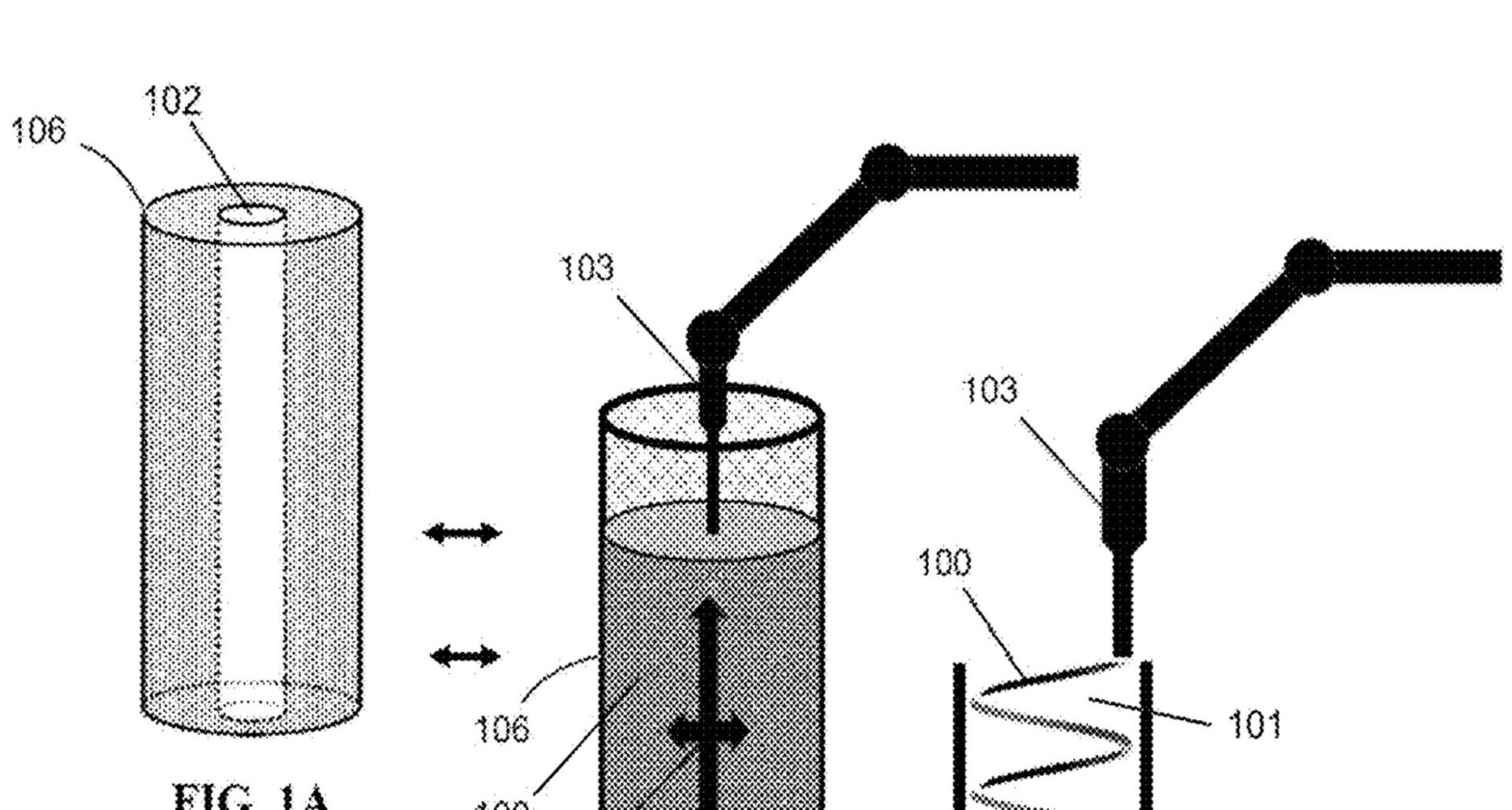
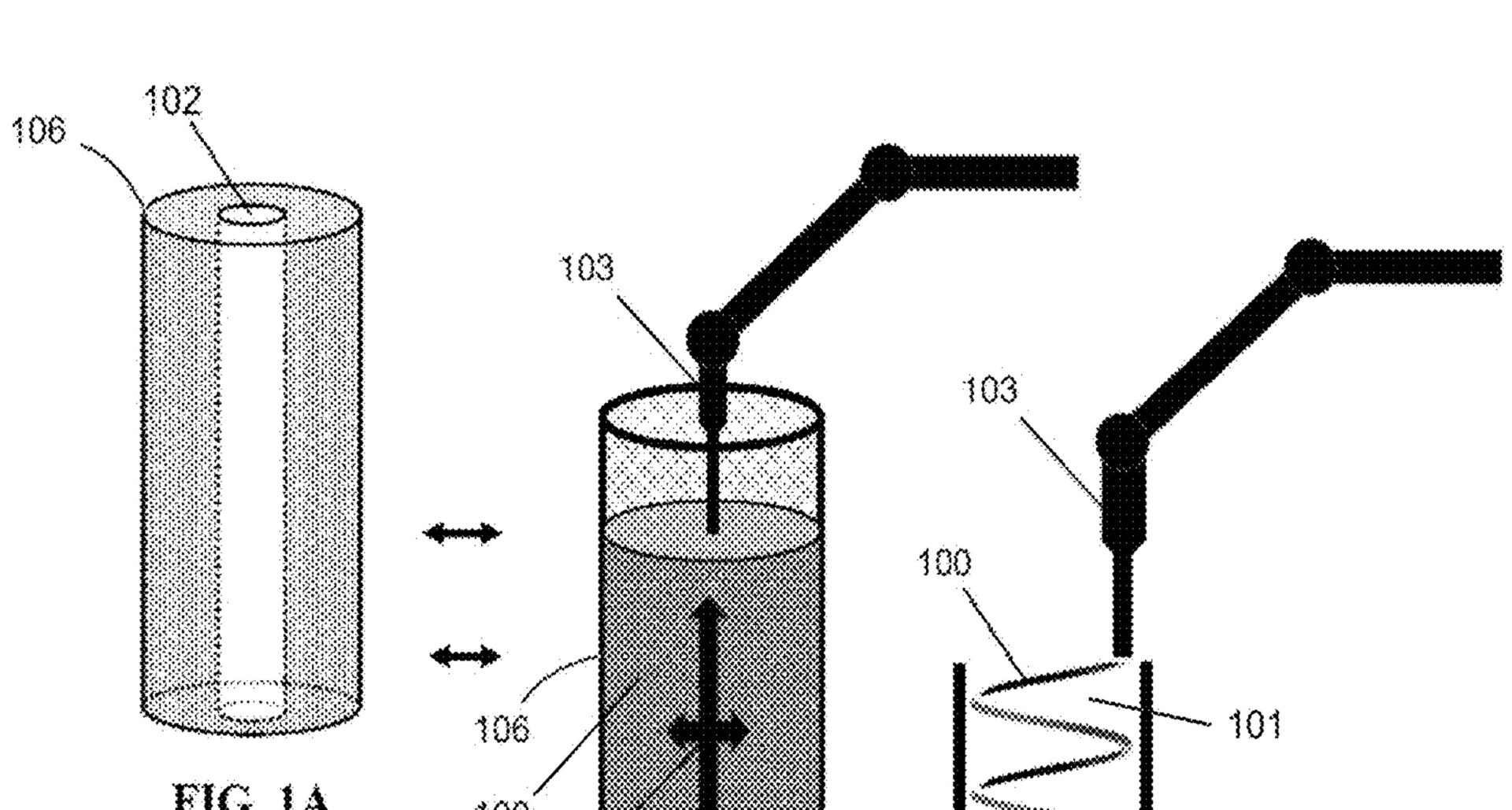
The drawings in the patent show a cylindrical motor component with a central opening and separate internal regions. They also show a nozzle depositing material into a cylindrical form, including a helical-looking path. The illustrations are simplified, but their concept is pretty clear: The internal fuel architecture is part of the printed object.
Why add voids? A void changes the exposed burning surface. As combustion progresses and the void expands or connects with other geometry, the motor’s internal pressure and thrust profile can change. In principle, that gives the designer another way to shape the burn over time, instead of relying only on the outside dimensions of a solid grain.
The application goes further. Its abstract describes sensors formed in the grain and a second propellant in contact with, and electrically coupled to, those sensors. The sensors would permit continuous monitoring and continuous modification of the rocket motor’s ballistic profile.
That wording raises the most interesting question. Is the motor simply reporting its condition, or can the control system actively alter the burn while the rocket is operating? The patent hints at the latter, although they does not establish how much adjustment is achievable or how quickly the system could respond.
Additive manufacturing can place different materials and purposely-shaped voids in locations that would be difficult to create with conventional casting or machining. A nozzle can deposit the propellant geometry directly, potentially combining fuel regions, voids, and conductive or sensing features in one manufacturing sequence.
This is all very interesting, but it just occurred to me that they have another issue to solve: accidental ignition when printing. They would have to ensure the printer itself had no possibility of introducing sparks or heat to the material, which is obviously quite explosive.
I suspect the commercial value, if they can make the engineering work here, would come from customizing motors for specific missions without changing the entire manufacturing platform. This could lead to printing custom rockets on demand.
Via Espacenet