
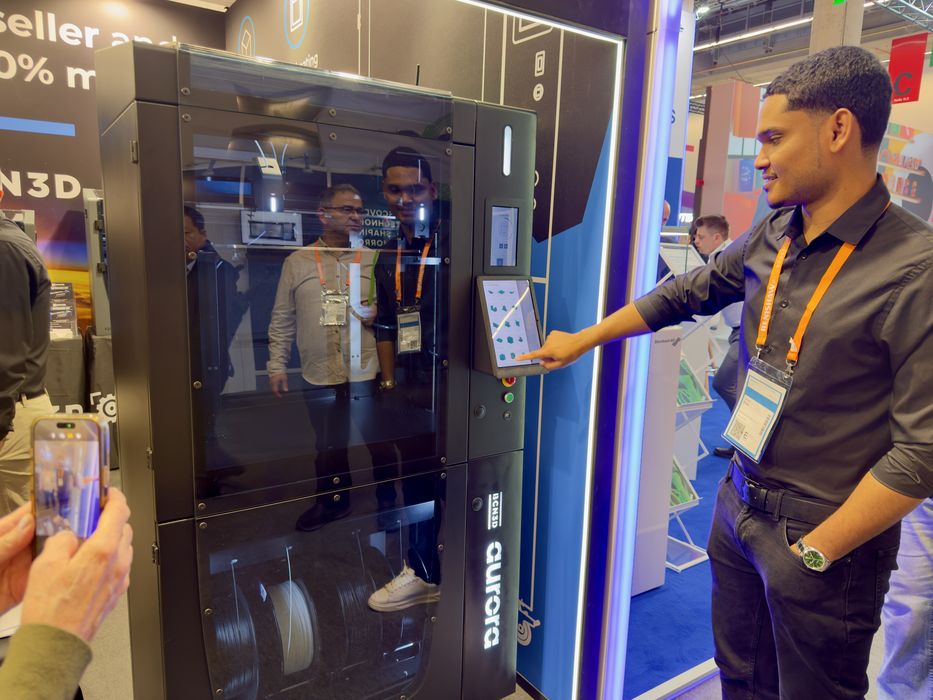
BCN3D may be onto something with their new Aurora system.
While stumbling through Formnext, we came across BCN3D. The Spanish company has gone through some corporate troubles recently, but now seems to have stable ownership.
I asked them what’s new.
Their excited representative said, “We have a printer you can talk to.”
What?
After I regained my senses, I thought, “Isn’t that a feature for a kid’s 3D printer?”
Indeed it is.
Several small children’s 3D printers now have AI-powered options to allow the six-year-old operators to ask directly for a plastic dragon with four wings. The machine will generate a suitable 3D model, using voice-to-text, text-to-image, and image-to-3D processes in sequence. It works well.
It works well if you are printing plastic dragons, that is. But what if you are using an industrial machine from BCN3D, hoping to produce some mechanical parts? The machines have a microphone, and maybe you could ask it to “Make me a bolt, with wings?”
What is going on here?
After a lengthy discussion with BCN3D, it turns out their Aurora system is AI-powered, but in a manner that is quite different from the plastic dragon systems for kids.
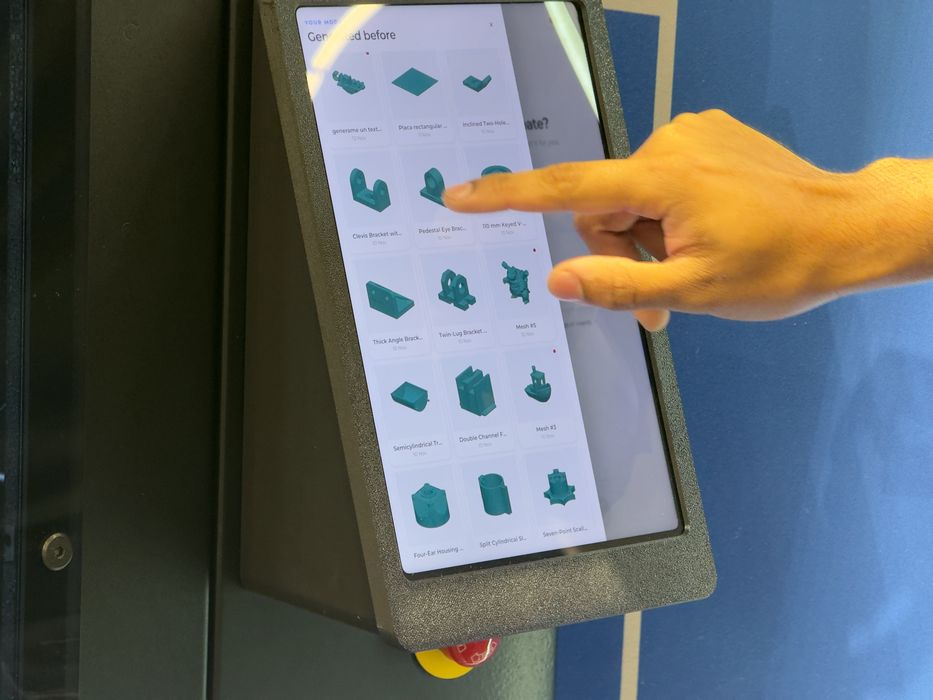
Instead of generating mesh geometry that is good for decorative shapes, Aurora instead uses CAD AI to create part designs. The machine can then slice the generated 3D model and print it immediately. It even stores useful 3D models in a library on board so you can print them again later.
The voice interface allows the operator to tweak the design: “Make those bolt holes aligned, thicken that wall by 2mm,” etc.
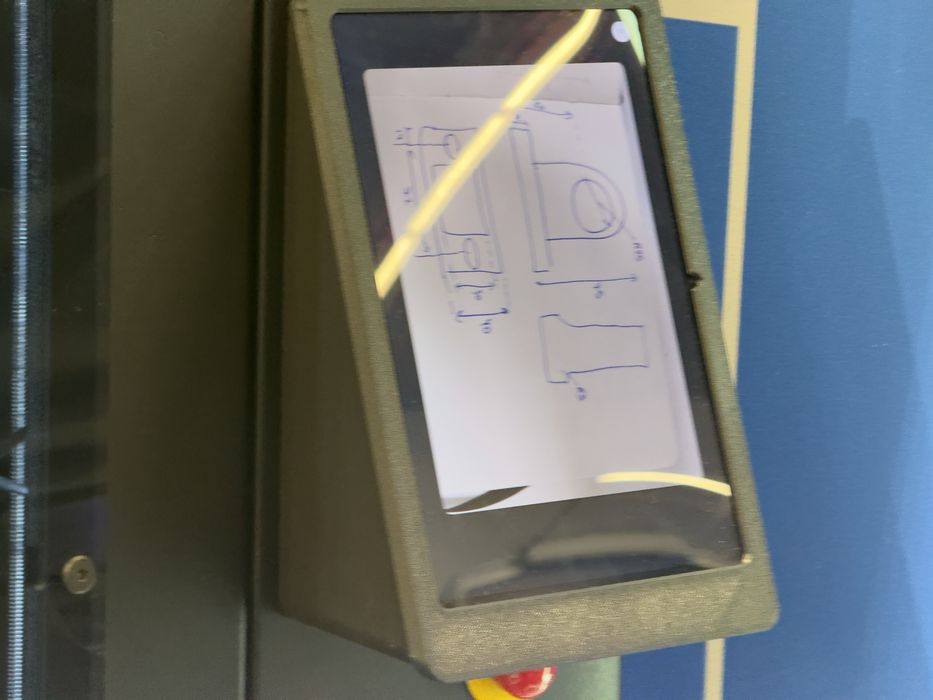
You can also present a 2D image for sketch to the machine, and it will attempt to generate a 3D model for it. This again can be modified later if required (probably).
There’s even a way to use the onboard webcam. You can put an existing object on the build platform, and the system will take pictures of it and then generate the corresponding 3D model.
“Scan this, and make me three copies. Oh, and make one copy double-sized.”
Yes. It can actually follow those instructions, according to BCN3D.
Does this really work? Could you actually make proper mechanical parts with Aurora?
I am not sure, and there was considerable discussion among attendees and media about whether this approach could work.
Myself, I am looking to the future. We have constantly seen how AI tools get increasingly more powerful, so it seems to me that even if this doesn’t work perfectly today, it will almost certainly work correctly in the very near future.
The ideal use case for this system might be on the factory floor, where workers are looking to make jigs and fixtures for their operations. They could literally walk up to the machine, show it parts or ask for a specific item, and it would be made. No need to ask for someone in the CAD department to handle their request.
This seems so practical that perhaps it might become a standard feature on desktop 3D printers, just like the ubiquitous color touchscreen.
Then had a nightmarish vision. Imagine a factory with, say, a hundred of these machines. You walk in and look at them. You say:
“Hello everyone. Each of you is to build a full plate of golf ball holders, each with a unique design. Get started now!”
That is the first time reality has exceeded the Star Trek replicator scenario, where Captain Picard asks a machine to build something.
Here you could ask a FACTORY to build you something.
Via BCN3D