
Perhaps the biggest deal in 3D print history took place this past week.
And it’s a pretty weird deal, when you think about it. But I’ll get to that later.
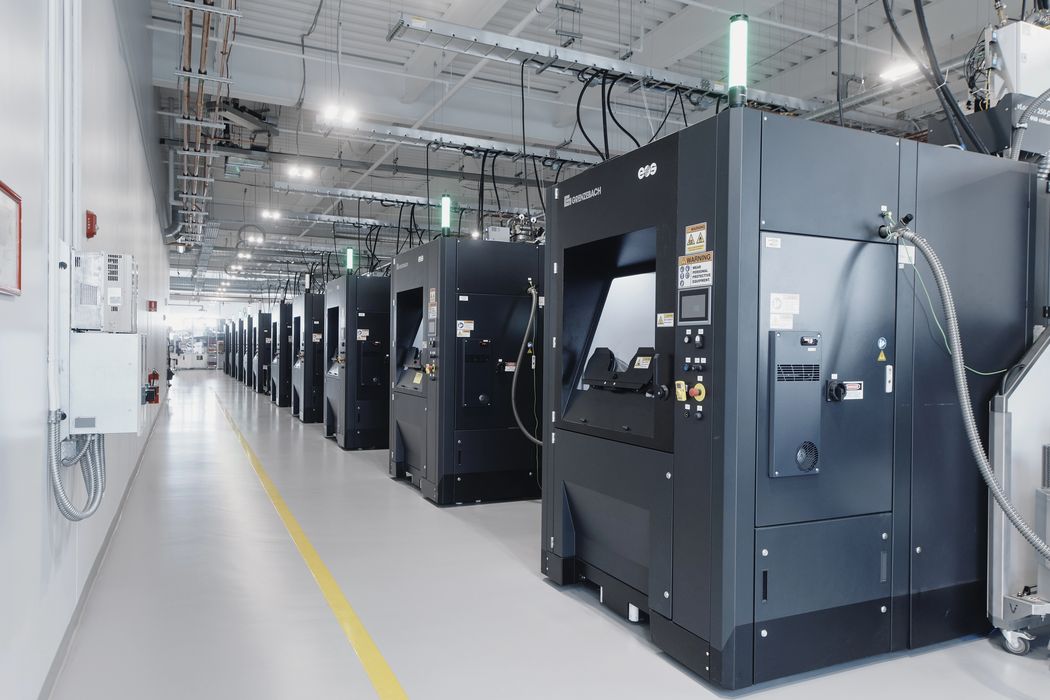
The deal was VulcanForms agreeing to purchase a number of metal 3D printers, the Onyx M4 ONYX model, from EOS. How many did they purchase?
Well. 200. TWO HUNDRED!
That is a staggering figure, because the M4 ONYX is a large-scale metal 3D printer used for production. Its purchase price typically exceeds US$1M.
Each.
This means that VulcanForms is dropping somewhere between US$200-300M on metal 3D printers. And that doesn’t even count the facilities, other equipment and software required to run all those machines. Oh, and the engineers, too.
Why is this a bit strange? It’s not only a large deal, but it’s also strange because VulcanForms already has their own advanced metal 3D printing system.
VulcanForms’ business model is a bit different than other 3D printer manufacturers. Instead of selling the machines to customers, they instead simply take orders for part manufacturing. They operate all the machines themselves in their own factories, and ship printed parts to the customers. That approach simplifies field maintenance, training and generally increases part quality.
So why didn’t they use their own equipment? Why did they have to purchase machines from others? Isn’t that less cost effective than using their own gear?
We don’t know the specific reasons behind this unusual decision, but let’s do some speculation.
Unlike most 3D printer manufacturers, the fact that VulcanForms does not sell equipment means they are by default far more connected with the customers on their applications. That’s the only thing they need to talk to them about.
VulcanForms’ main job is to create business, and evidently they did that so well that they outran their own capacity for building equipment. Thus, they filled in the blanks by buying equipment from someone else. In this case, EOS.
If you look at it in a different way, VulcanForms is extending their own capacity by “buying” some capacity from EOS to build equipment. Perhaps eventually their own capacity will catch up, and the “black box” print service approach would let them swap equipment behind the scenes without customers needing to know much about it.
Then there’s the question of finances. This is a rather large deal, and how could VulcanForms, a relatively new startup company, afford this purchase? The answer is in the venture capital market.
The company has raised a whopping US$1.1B, with some US$500M arriving just this month. And then they spent it.
Money is easy to get if there is a sales commitment present, and that is very likely the case here. VulcanForms sold parts services to someone (likely military applications) at high costs, and if you have orders, someone will certainly give you money to fulfill those orders and take a cut.
This acquisition signals the importance of metal 3D printing: a company needs MORE than 200 metal 3D printers to meet demand over the next few years. Perhaps they may even buy more.
This also shows the critical importance of sales. This deal took place only because VulcanForms was able to produce a compelling case to sell parts to customers.
And finally, perhaps there’s some light here for other metal 3D printer manufacturers who were not involved in the deal: find the VulcanForms sales team, and poach them.
Via VulcanForms