
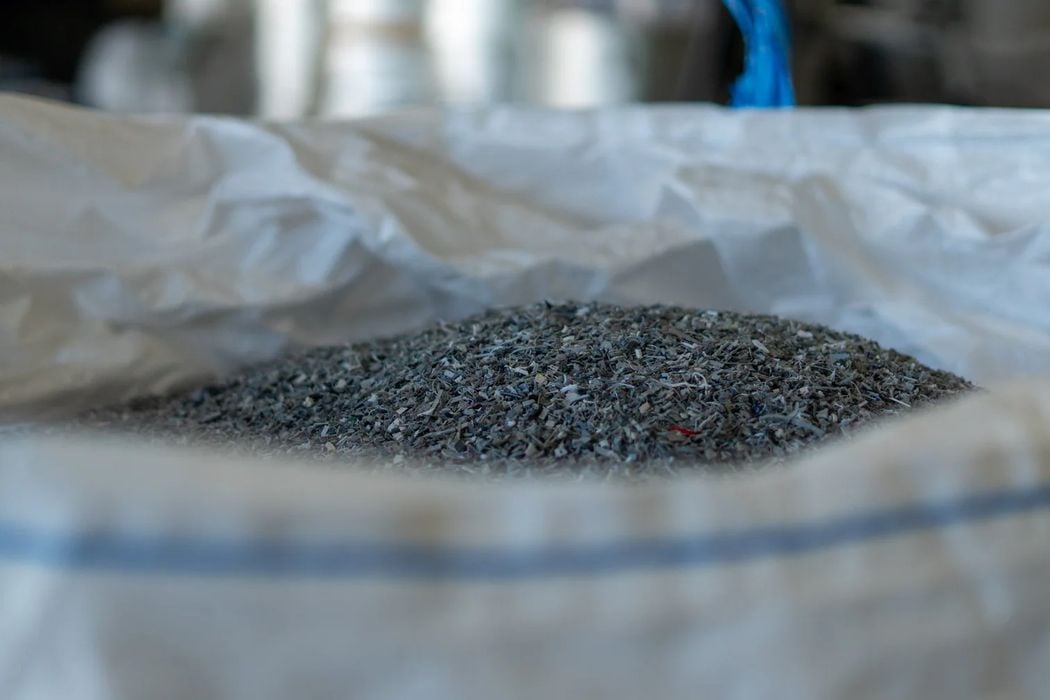
RecyclingFabrik is expanding.
Readers might recall our story about RecyclingFabrik a few years ago. They are a German 3D print recycling firm, which accepts 3D print scraps and remakes them into usable filament.
They are notable because they seem to be one of the very few 3D print scrap recycling operations in existence. There have been several attempts previously, but all have failed.
There are tons of problems in setting up a recycling operation for 3D print scrap. Among the most challenging:
- You need a reliable, consistent source of identical scrap material (e.g. cannot mix ABS, PLA, PLA-Tough, TPU, etc.)
- Recycled filament is almost always more expensive than fresh filament
- Each cycle through weakens the material’s molecules, necessitating new print parameters
- Shipping scraps around adds to the cost of operations
Somehow RecyclingFabrik has figured out solutions to most of those issues and has kept up operations since 2021.
In fact, they have been so successful that they are now scaling up, it appears. In a recent post, they said they have been processing 1200 packages per month and have 80 tonnes of material in stock.
It seems they’ve grown far larger than they had anticipated. They write:
“The program has surpassed itself. What was well-intentioned has reached its limits – logistically, financially, and qualitatively. Individual transports, complex sorting, rising costs: all this binds resources that we would rather put into a better system.”
Because of this, they are temporarily pausing acceptance of new scraps as they are now building “cycle 2.0”. This is presumably a more efficient and scalable process for their recycling business.
What will that look like? They’re not quite saying yet:
“We are building the recycling program from scratch. Bigger, more efficient, fairer. We can’t say in detail what exactly that means – much is still open. But we are committed to one thing: transparency.”
I’m optimistic that they can remake their success into something that can be much larger. As increasing numbers of 3D printers are sold worldwide, so does the amount of scrap.
So far, RecyclingFabrik has been a local operation. If they can figure out how to put their process in a can, then perhaps it could be deployed in many more areas and capture some of those scraps before they hit the landfill.
Via RecyclingFabrik (German)
