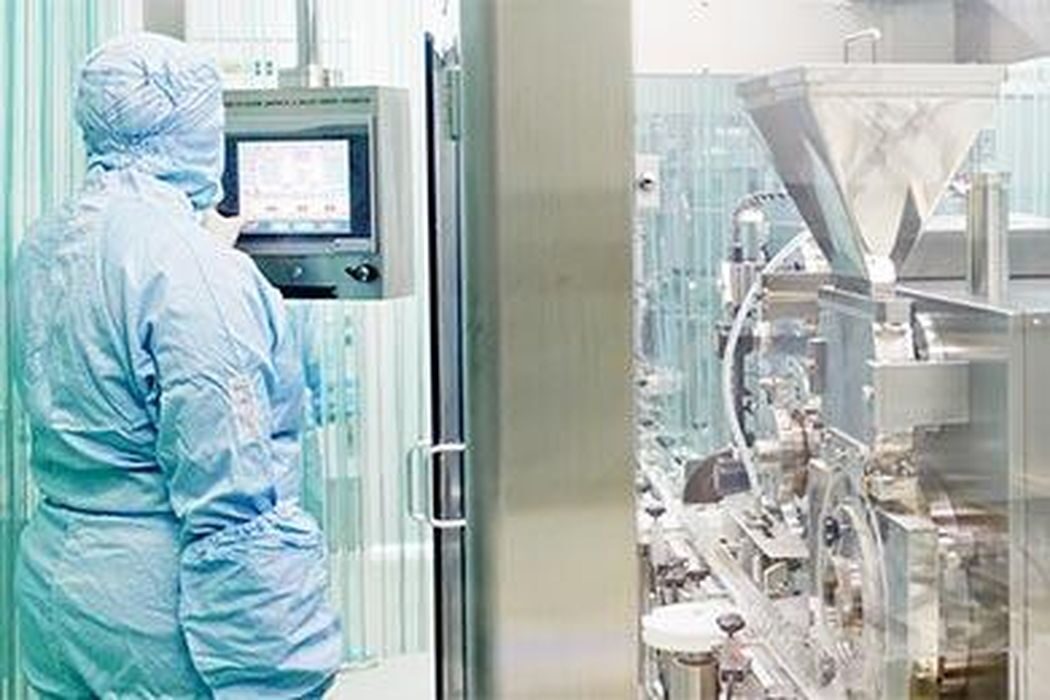
Charles R. Goulding and Preeti Sulibhavi discover how 3D printing is transforming laboratories into agile, automated powerhouses—pushing facility design, scientific speed, and R&D incentives into the future.
The Rise of Automated Facilities: From Factory Robots to 3D Printed Labs
The drive for facility automation has always mirrored the demand for making spaces work harder, especially during peak usage. Whether it’s automotive plants running around the clock, warehouses moving at e-commerce speed, or laboratories racing to keep up with biotech innovation, the goal remains the same: maximize efficiency, eliminate waste, and unlock value. That ambition is now colliding with a new wave of tech-driven automation—particularly in laboratory environments—where 3D printing is emerging not just as a supporting act, but often as the main attraction.
From the Factory Floor to the Fulfillment Center
The modern automation story began in earnest in 1973, when ABB and Fanuc introduced industrial robots tailored for the automotive industry. These machines transformed car manufacturing, replacing manual assembly lines with programmable precision. Fast forward 50 years and ABB, after helping lead the industrial robotics sector to global prominence, is now divesting what is currently the world’s second-largest industrial robot business—a signal that the automation wave is shifting away from legacy factories toward newer, more flexible frontiers.

One such frontier opened up in the early 2000s. Warehouses and distribution centers began mushrooming in response to the e-commerce boom. With storage space maximized and order volumes exploding, automation wasn’t optional—it was survival. Technologies like bar code scanning, high-speed conveyors, and algorithmic picking systems redefined what was possible in logistics. The innovation wasn’t just technical—it became financial. In a pivotal case at the close of the 2000s, Federal Express won a U.S. tax ruling that affirmed automation in distribution centers as a legitimate R&D activity, unlocking new incentives for investment.
Labs Are the New Factories
We’re now in the midst of another automation shift—this time in laboratories. As STEM education expands and life sciences surge, demand for lab space is skyrocketing, particularly in urban hubs where biotech, medtech, and electronics startups cluster. These aren’t academic ivory towers; they’re high-stakes, fast-paced environments where real commercial innovation happens. Doctors at major hospital centers are doubling as inventors. Engineers are launching diagnostics startups from the same buildings where patients are treated.
Neighborhoods like Alexandria Center in New York’s Kips Bay are becoming dense nodes of wet lab activity, filled with entrepreneurs prototyping new devices and treatments. Unlike past generations of labs funded heavily by NIH grants—with their sprawling bureaucracies and high overhead—today’s commercial spaces are leaner, faster, and more automation-driven. The old model is under scrutiny for waste; the new model is all about performance.
Why 3D Printing Is Taking Over the Lab
Automation in laboratories is no longer about just adding robotic arms to test tubes. It’s about rethinking the physical space itself—and this is where 3D printing becomes crucial.
Start with speed. Traditional lab components—custom pipette holders, specific sample trays, airflow deflectors—can be costly and time-consuming to source. With a 3D printer in the lab, these parts can be fabricated on-demand, often in hours instead of weeks. Researchers can design and print custom fixtures, tools, and even microfluidic devices tailored to their experiments.
Then there’s flexibility. As projects shift from oncology to virology to medtech hardware, the layout and configuration of lab spaces must also adapt. Modular lab furniture, brackets, containment units, and mounts can all be produced in-house using 3D printing, eliminating long procurement chains and reducing waste from over-ordering.
Importantly, 3D printing enables true customization in medical device prototyping. Whether it’s a new wearable, a drug delivery system, or even surgical tools, innovators can iterate rapidly with precision materials—from biocompatible plastics to resin composites. Additive manufacturing cuts development cycles dramatically and reduces reliance on expensive outsourced fabrication.
In more advanced applications, 3D printing is crossing into direct product creation. Organs-on-chips, synthetic tissues, and drug screening platforms are now being printed with fine-tuned geometries and material properties. It’s not theoretical—labs are actively using bioprinters to push the boundaries of regenerative medicine.
Automation as Infrastructure
Lab automation isn’t just about making work easier—it’s about scaling scientific breakthroughs. In many cases, startups can’t afford the delay or cost of traditional lab outfitting. 3D printing helps bridge that gap by making the infrastructure itself more agile and cost-effective.
For example, safety enclosures for toxic or reactive processes can be 3D printed using heat- and chemical-resistant materials. Air filtration adapters, fume hood extensions, and splash guards can be customized and reproduced at a fraction of the cost of industrial fabrication. Even storage systems—like drawer organizers for chemical samples or test tube arrays—can be printed in modular sets that expand as needs grow.
In this context, 3D printing is not just a helpful tool; it’s core infrastructure. In facilities optimized for automation, 3D printers are treated with the same importance as centrifuges or spectrometers.
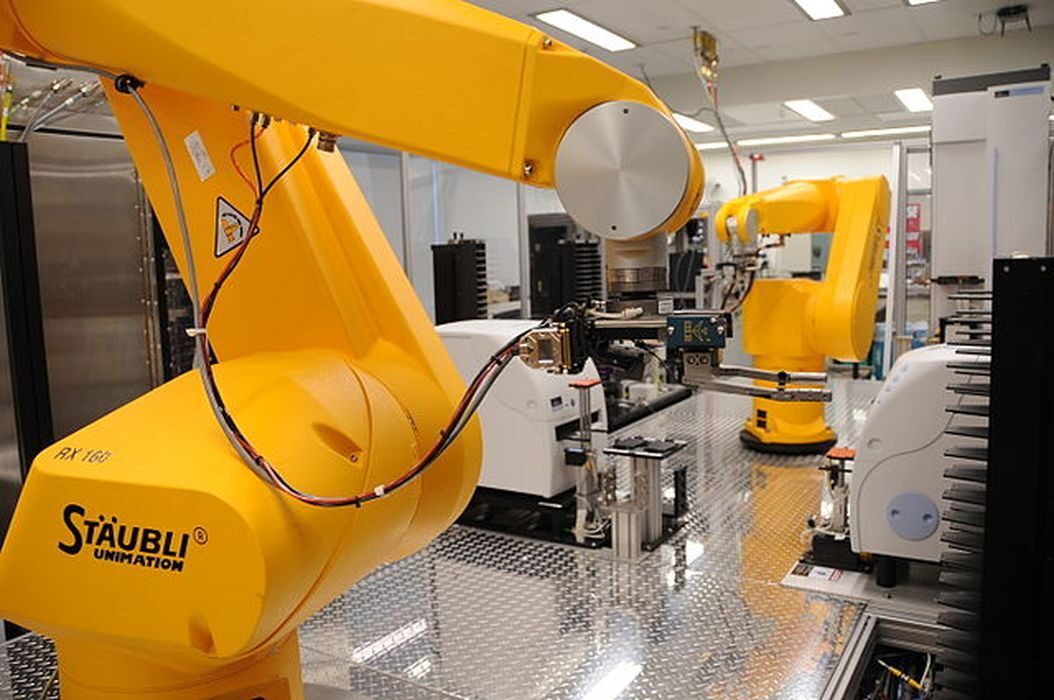
The Bigger Picture: A STEM Economy Built on Speed
The implications stretch beyond individual labs. As STEM industries expand—especially in life sciences, semiconductors, and medical devices—entire cities and regions are competing to host the next generation of research and manufacturing hubs. Efficient, adaptable, and high-output labs are central to that ambition. And that makes facility automation and 3D printing mission-critical.
Public funding agencies like the NIH are beginning to rethink how they support innovation. The days of bloated overhead and one-size-fits-all lab equipment are fading. In their place, we’re seeing support for streamlined, tech-enabled labs where AI manages data, robotics handles repetitive workflows, and 3D printers manufacture everything from component parts to experimental apparatuses.
Private capital is also flowing into this space. Investors now see lab infrastructure as a startup platform, not just a sunk cost. Facilities that can spin up new experiments in days, not months, hold a serious competitive edge—and 3D printing is often the cornerstone of that agility.
From Labs to Launchpads
Perhaps most exciting is how this ecosystem is accelerating translation from research to market. A physician with a novel device idea can now model it in CAD, print it overnight, test it in a university lab, and file for FDA feedback—all within a few weeks. Iterations can happen in parallel instead of sequentially. 3D printing shrinks the prototyping loop so dramatically that inventors can launch with confidence instead of guesswork.
In fields like personalized medicine, where treatments and diagnostics must match the patient’s unique biology, 3D printing enables the kind of individualization that mass production simply can’t deliver. Think of orthodontic devices, prosthetics, or even patient-specific surgical guides—all being printed to order in automated labs.
The Research & Development Tax Credit
The now permanent Research and Development (R&D) Tax Credit is available for companies developing new or improved products, processes and/or software.
3D printing can help boost a company’s R&D Tax Credits. Wages for technical employees creating, testing and revising 3D printed prototypes are typically eligible expenses toward the R&D Tax Credit. Similarly, when used as a method of improving a process, time spent integrating 3D printing hardware and software can also be an eligible R&D expense. Lastly, when used for modeling and preproduction, the costs of filaments consumed during the development process may also be recovered.
Whether it is used for creating and testing prototypes or for final production, 3D printing is a great indicator that R&D Credit-eligible activities are taking place. Companies implementing this technology at any point should consider taking advantage of R&D Tax Credits.
What’s Next
As the automation wave continues to reshape how we design and use specialized spaces, 3D printing will only grow in strategic importance. It’s the Swiss Army knife of facility automation: compact, adaptable, endlessly creative, and increasingly essential. Whether in the warehouse, the lab, or the hospital, it’s not just about what spaces are used for—but how fast, how smart, and how affordably they can adapt.
In this new reality, labs aren’t just places of science—they’re engines of production. And 3D printers are the machines turning ideas into impact, one layer at a time.