
Charles R. Goulding and Ari Willick examine how Cambridge, Massachusetts, and Cambridge, England, are advancing the future of 3D printing.
There are few city names that carry as much weight in science and technology as Cambridge. While separated by more than 3,000 miles and an ocean, Cambridge, Massachusetts, and Cambridge, England, have evolved into remarkably similar innovation ecosystems. Increasingly, one technology connects these two global innovation centers: 3D printing.
We have recently highlighted Boston’s growing concentration of metal 3D printing firms, the Wyss Institute’s breakthroughs in biomedical printing, MIT’s advances in high-strength 3D printed aluminum, and AI-driven research emerging from Cambridge, Massachusetts. Together, these developments illustrate how Boston-Cambridge has become one of the world’s premier additive manufacturing clusters. Across the Atlantic, Cambridge, England, has quietly built an equally impressive ecosystem where deep-tech startups, university laboratories, and industrial manufacturers are pushing 3D printing into production applications. While the two regions differ in scale, they share remarkably similar innovation models: both combine elite universities with venture-backed commercialization. The Boston-Cambridge metropolitan area attracted US$15.6 billion in venture capital just in 2023, while the Cambridge, UK, cluster consistently ranks among Europe’s leading technology hubs, attracting more than US$2 billion in venture funding in 2024, its second-best year on record. That steady flow of capital has helped both ecosystems transform laboratory research into globally significant additive manufacturing companies.
Cambridge, Massachusetts: Where Research Meets Manufacturing
The additive manufacturing expertise found around Cambridge is vast. The combination of MIT, Harvard, the Wyss Institute, and a dense network of venture-backed startups has produced companies that span everything from desktop stereolithography to industrial metal printing and biomedical manufacturing.
Formlabs
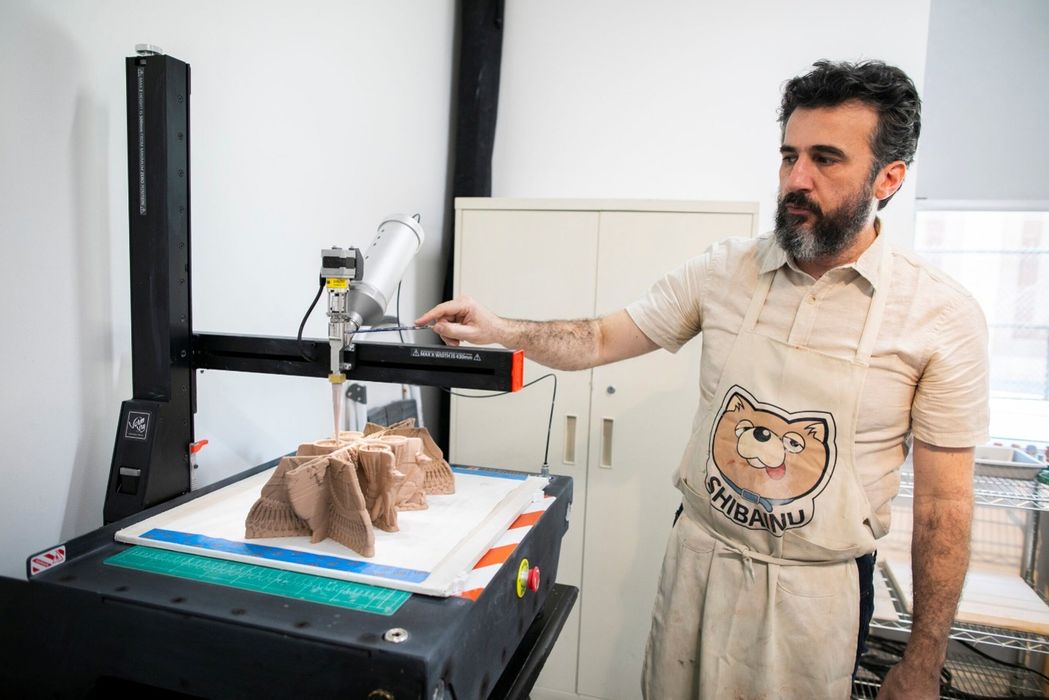
Formlabs has played a defining role in the commercialization of stereolithography (SLA) 3D printing. Founded in 2011 by MIT graduates, the company challenged an industry long dominated by expensive industrial systems by introducing the Form 1 through Kickstarter in 2012. Its approach offered professional-quality prints at much lower costs with easier workflows, making SLA practical for designers that could not afford six-figure industrial machines. In doing so, Formlabs helped establish the market for professional desktop resin printing and accelerated the broader adoption of additive manufacturing.
Rather than remaining an SLA printer manufacturer, Formlabs has steadily expanded into a complete additive manufacturing ecosystem. The company introduced the Fuse series of selective laser sintering (SLS) printers, automated post-processing systems such as Fuse Blast, and one of the industry’s broadest portfolios of engineering, dental, and biocompatible materials. In 2024, Formlabs launched the Form 4 platform, replacing its Low Force Stereolithography (LFS) architecture with a new Low Force Display (LFD) print engine that delivers print speeds up to five times faster than the Form 3+, while also improving reliability and workflow automation.
Formlabs exemplifies the Cambridge innovation model. Research and entrepreneurship originating at MIT evolved into one of the world’s leading privately held 3D printing companies while remaining rooted in the local innovation ecosystem. More than a decade after its founding, the company continues to invest in new hardware, materials, software, and manufacturing technologies, including its acquisition of SLS startup Micronics in 2024 and the introduction of the industrial Fuse X1 platform in 2026. These developments demonstrate how Cambridge continues to produce companies that shape the direction of the global additive manufacturing industry.
VulcanForms
VulcanForms represents the maturation of Boston’s additive manufacturing ecosystem. Based in Greater Boston, it combines laser powder bed fusion with machining, inspection, and production capabilities to make end-use metal parts for aerospace, defense, medical, and semiconductor customers. Rather than selling printers, VulcanForms delivers finished parts at industrial scale, showing how the region has evolved from equipment development into advanced manufacturing.
VulcanForms also provides an interesting contrast with Cambridge, England. While Boston has produced several companies with vertically integrated manufacturing, many of Cambridge UK’s leading firms (including Xaar and TTP, discussed below) have concentrated on enabling technologies and engineering platforms that support manufacturers worldwide. Together, these complementary approaches illustrate how both ecosystems continue expanding additive manufacturing’s industrial reach.
Wyss Institute for Biologically Inspired Engineering
Not every important contributor to additive manufacturing is a commercial printer manufacturer. Harvard University’s Wyss Institute has become a major research center for biomedical and bioprinting technologies. Researchers have developed innovative approaches for fabricating living tissues, vascular structures, organ-on-chip devices, and personalized medical implants using advanced 3D printing techniques.
These innovations extend well beyond healthcare. The institute’s interdisciplinary model demonstrates how additive manufacturing serves as a technology enabling breakthroughs across multiple scientific disciplines.
Industry Update: Desktop Metal and MarkForged
Since our previous coverage of Boston’s metal additive manufacturing sector, the regional landscape has changed significantly through industry consolidation. Two of Greater Boston’s best-known additive manufacturing companies, Desktop Metal and MarkForged, have entered new chapters that reflect both the challenges and continued maturation of the industry.
Originally founded in Cambridge before relocating to nearby Burlington, Desktop Metal helped popularize production-scale metal additive manufacturing through its work in binder jetting and other technologies aimed at moving additive manufacturing beyond prototyping and into full-scale industrial production. The company was highlighted previously as a defining name in Boston’s metal 3D printing. However, following financial difficulties, Desktop Metal entered Chapter 11 bankruptcy proceedings, and its assets were subsequently acquired through a court-supervised sale. While the company’s corporate structure has changed, many of the technologies and engineering advances it pioneered continue to influence industrial metal additive manufacturing.
MarkForged has likewise entered a new phase. Founded in Cambridge and headquartered in nearby Waltham, the company first gained recognition by commercializing continuous carbon fiber reinforcement before expanding into metal additive manufacturing with its Metal X platform and Digital Forge manufacturing ecosystem. In May 2026, Stratasys announced its acquisition of MarkForged from Nano Dimension, expanding Stratasys’ capabilities in aerospace, defense, and industrial production while preserving MarkForged’s expertise in composite and metal additive manufacturing. Nano Dimension will retain Markforged’s Metal Binder Jetting assets, illustrating how valuable the company’s technology portfolio has become.
Together, these developments illustrate the rapid evolution of the additive manufacturing industry. Although ownership has changed, both companies remain central to Boston’s legacy as one of the world’s leading centers for metal 3D printing innovation. The region’s strength has never rested on a single company but on the concentration of engineering talent, research institutions, startups, and manufacturers that continue to drive innovation.
Cambridge, England: A Different Path to Additive Manufacturing Leadership
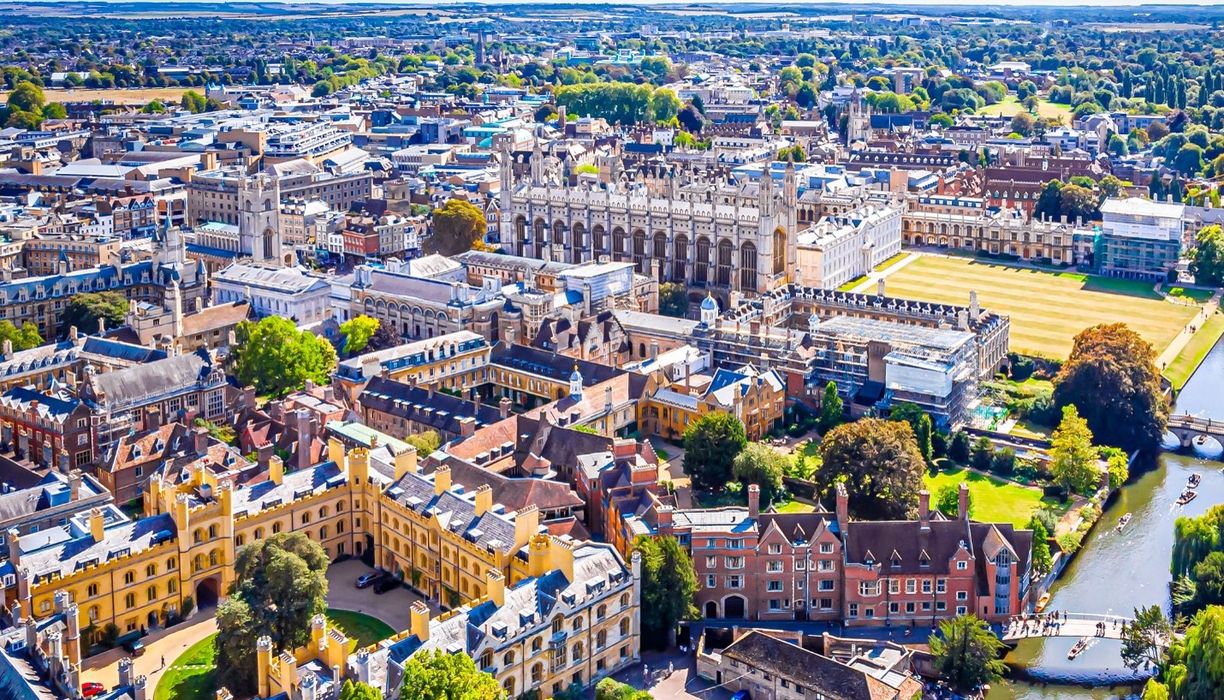
Like its American counterpart, Cambridge, England, has leveraged its university ecosystem to create an internationally recognized technology cluster. Often referred to as “Silicon Fen,” the region hosts hundreds of deep-tech companies specializing in engineering, advanced materials, electronics, healthcare, and manufacturing technologies.
TTP plc
TTP, located just outside Cambridge, has become an important contributor to industrial additive manufacturing through its engineering consultancy and technology development activities. The company has worked extensively on advanced manufacturing systems, precision engineering, and industrial inkjet technologies that support next-generation additive manufacturing processes. Its multidisciplinary engineering teams frequently develop new manufacturing platforms for clients spanning healthcare, electronics, and industrial markets.
TTP illustrates a different innovation model. Rather than commercializing a single printer platform, it develops technologies that allow manufacturers across multiple industries to incorporate 3D printing into their production systems. This contrasts with Boston’s concentration of printer manufacturers and production companies, yet both approaches have produced globally influential additive manufacturing businesses.
Xaar
Headquartered just north of Cambridge, Xaar is a global leader in industrial inkjet printhead technology. Although originally known for conventional digital printing, the company’s precision printheads have become key enabling components for binder jetting, ceramics printing, and electronics manufacturing. Its technology allows manufacturers to deposit precise amounts of functional materials across a wide variety of industrial processes.
As additive manufacturing increasingly relies on sophisticated material deposition rather than traditional extrusion alone, companies like Xaar play an increasingly important role in advancing production-scale 3D printing technologies.
University of Cambridge
The University of Cambridge itself remains a leading center for additive manufacturing research. Faculty across engineering, materials science, and biomedical departments continue developing new printable materials, advanced manufacturing processes, and medical applications. These research efforts have generated numerous startup companies while strengthening the region’s reputation as one of Europe’s foremost deep-tech ecosystems. Like MIT and Harvard across the Atlantic, the University of Cambridge continues supplying both the talent and research pipeline that sustain its regional additive manufacturing cluster.
The Research & Development Tax Credit
Enacted in 1981, the now permanent Federal Research and Development (R&D) Tax Credit allows a credit that typically ranges from 4%-7% of eligible spending for new and improved products and processes.
Qualified research must meet the following four criteria:
- Must be technological in nature
- Must be a component of the taxpayer’s business
- Must represent R&D in the experimental sense and generally includes all such costs related to the development or improvement of a product or process
- Must eliminate uncertainty through a process of experimentation that considers one or more alternatives
Eligible costs include U.S. employee wages, cost of supplies consumed in the R&D process, cost of pre-production testing, U.S. contract research expenses, and certain costs associated with developing a patent.
On December 18, 2015, President Obama signed the PATH Act, making the R&D Tax Credit permanent. Since 2016, the R&D credit has been used to offset regular and Alternative Minimum Tax (AMT) for companies with revenue below US$50 million. And, pre-profitable, pre-revenue startup businesses can also obtain up to US$500,000 per year in payroll tax offsets and cash rebates for up to five years.
Eligibility and tax treatment are fact-specific, so manufacturers should maintain project and expense documentation and consult qualified tax advisers.
Two Innovation Ecosystems, One Manufacturing Future
Although each Cambridge has developed its own industrial identity, the similarities are striking. Both combine elite universities, entrepreneurial cultures, venture capital, and close collaboration between academia and industry. Boston has developed a concentration of printer manufacturers and vertically integrated production companies, while Cambridge, England, has excelled in enabling technologies, engineering consultancies, and research-driven commercialization. Together, these complementary strengths demonstrate that there is no single blueprint for building a successful additive manufacturing ecosystem.
For the additive manufacturing industry, there may be no two cities better positioned to define that future than the two Cambridges.