
What if changing a resin’s temperature could change the properties of the finished print?
The newly published patent comes from Align Technology, the company best known for Invisalign. The patent describes a resin 3D printing process in which temperature becomes another controllable process variable, alongside exposure.
The interesting part is that the machine wouldn’t necessarily need several different resins to produce different material properties. Instead, regions of the same resin could be heated or cooled differently before or during photopolymerization.
Align’s examples rely heavily on resins containing polycaprolactone-based components that can crystallize as they cool. At higher temperatures the crystalline structure disappears and the material becomes more uniform. Cure it while hot, and that structure can effectively be frozen into the polymer in one state. Let it cool and crystallize before curing, and a different structure can be locked in.
The patent includes an interesting experiment. A resin sheet was placed between two temperature-controlled metal plates. One region was held at 80C while another remained at 30C. Both regions were then photopolymerized.
The 80C section was transparent because the crystalline structure had melted away. The 30C section remained cloudy because crystals were still present. After curing, the low-temperature region had a modulus about 200MPa higher than the hot-cured region.
Same formulation. Different behavior!
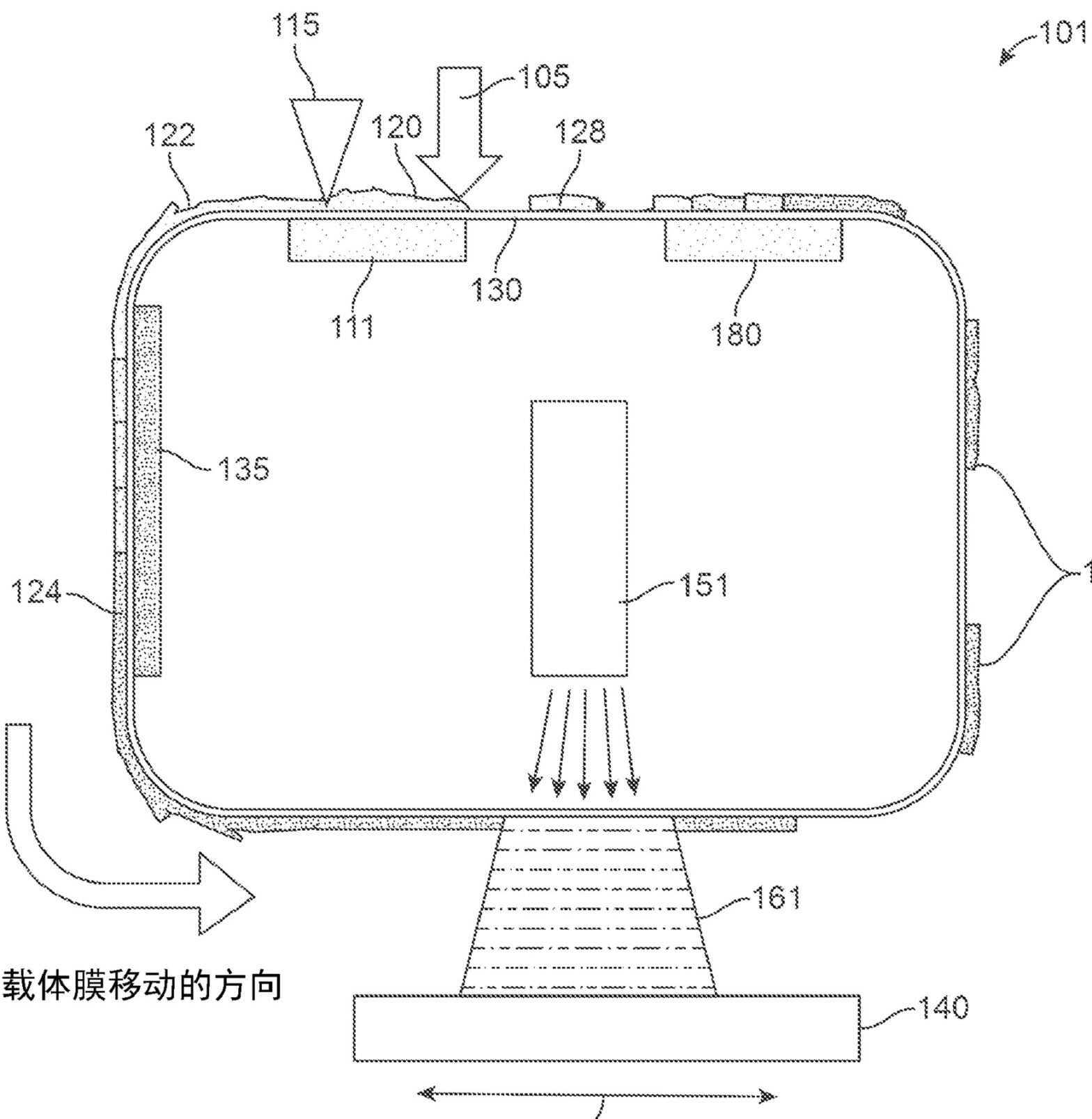
Align also demonstrated a faster version that looks more like something that could fit into a printer. A thin resin layer was selectively heated for ten seconds with an infrared lamp through a square mask, then the entire layer was cured with a 495nm light source. The heated square ended up more transparent and softer than the surrounding material.
That suggests temperature could potentially become a second “image” projected onto each layer. The normal optical exposure determines where polymerization occurs, while a thermal pattern determines what kind of polymer structure develops there.
There’s another fun effect. Align found that layer bonding was poor when the solid resin was kept well below its melting temperature. Heating the surface close to the melting point greatly improved bonding between layers. The patent even proposes selectively heating only portions of a layer, potentially creating deliberately bonded and unbonded regions or controlled slip zones inside a printed object.
The printer concepts are a little unusual. Rather than relying only on a conventional vat of liquid resin, Align describes heating resin until it flows, coating it onto a carrier film, cooling it until it becomes much more viscous or solid, and then transporting that film to the build region for exposure. Uncured material can later be removed and reused.
That makes more sense when you look at the intended application.
A substantial portion of the patent discusses directly 3D printed orthodontic appliances. An aligner does not necessarily need identical stiffness everywhere. Different regions could apply different forces to teeth, while other areas could be made more flexible or resistant to repeated deformation.
There is still a long way between these demonstrations and a production dental printer. The examples are mostly simple sheets and test pieces, and the patent explores many possible machine arrangements rather than documenting a finished commercial system.
Resin printers normally control geometry with light. Align is proposing that temperature could simultaneously control material behavior. That could turn one resin into several materials without ever changing cartridges.
Via Espacenet
