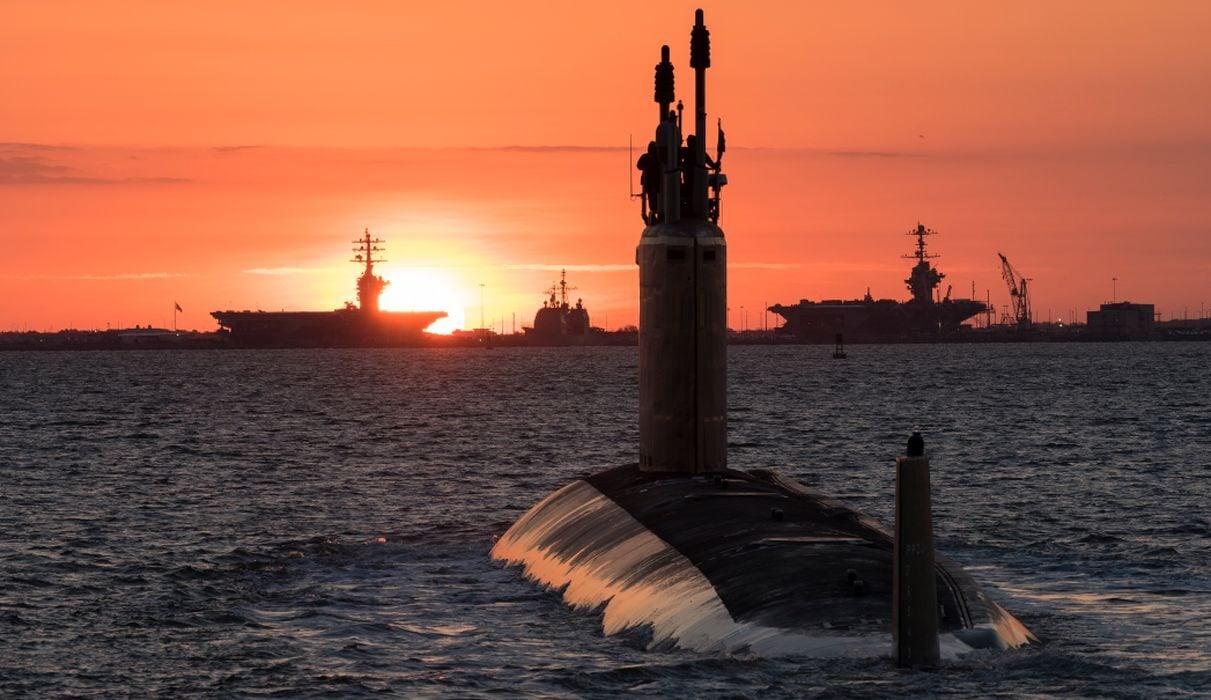
Charles R. Goulding and Preeti Sulibhavi set sail through the US Navy’s most ambitious shipbuilding program in decades, which involves Huntington Ingalls Industries (HII) and 23 shipbuilders.
Huntington Ingalls Industries (HII), America’s largest shipbuilder, has become a cornerstone of U.S. naval power. Known for its Newport News Shipbuilding facility in Virginia and Ingalls Shipbuilding in Mississippi, HII employs more than 44,000 people and generates nearly US$12 billion in annual sales. With the U.S. Navy embarking on its most ambitious shipbuilding program in decades, HII has developed an innovative new approach: the distributed shipbuilding model. This strategy pairs HII’s two major yards with 23 shipbuilding partners spread across the country. The goal is simple but critical—boost production capacity without relying solely on new hires in an already strained labor market.
The Distributed Shipbuilding Model
Traditionally, large warships are constructed in a handful of major yards. But the Navy’s urgent demand for aircraft carriers, submarines, and destroyers requires a more flexible model. HII’s distributed shipbuilding strategy distributes the workload across partner shipyards and fabricators in multiple states. Instead of attempting to scale up all operations in-house, HII has tapped into a network of regional shipbuilders that already have skilled labor, modern facilities, and local supply chain access.
One example is HII’s partnership with Eastern Shipbuilding Group (ESG) in Panama City, Florida. Under this agreement, ESG supports the production of outfitted structural units for the Navy’s Flight III Arleigh Burke-class guided missile destroyers. ESG has invested heavily in its Nelson Street Facility to expand capacity, while HII integrates those units into the larger assembly process. The collaboration has been described as a force multiplier, accelerating destroyer production at a time when the Navy needs to maintain its competitive edge.
This arrangement is not an isolated experiment. HII has already doubled its outsourced production hours in 2025 and expects to quadruple them within two years. With 23 companies now part of HII’s structural assembly network, the model reflects a fundamental shift in U.S. naval procurement, ensuring industrial resilience and faster delivery timelines.
HII’s Growing 3D Printing Expertise
While the distributed shipbuilding model strengthens capacity, another equally important factor is technological modernization. HII has been steadily building expertise in additive manufacturing (AM), commonly known as 3D printing, for over a decade. The company has invested in advanced metal additive systems capable of producing large-scale, certified components for Navy vessels.
At Newport News Shipbuilding, HII has pioneered the use of 3D printing for critical submarine and aircraft carrier parts. One landmark achievement came in 2018 when Newport News, in partnership with the Department of Defense and additive manufacturing specialists, successfully produced and certified a 3D printed metal part for a nuclear-powered aircraft carrier. This was a first in U.S. naval history, proving that additive manufacturing could meet the Navy’s rigorous performance and safety requirements.
Since then, HII has expanded its additive manufacturing operations, printing valves, piping assemblies, and complex geometries that are difficult or costly to produce with traditional methods. In 2021, HII announced that it had installed the nation’s largest electron beam powder bed fusion 3D printer at its Newport News facility, capable of fabricating large titanium structures. This machine opens the door to producing lightweight, high-strength parts for submarines and carriers, reducing both costs and lead times.
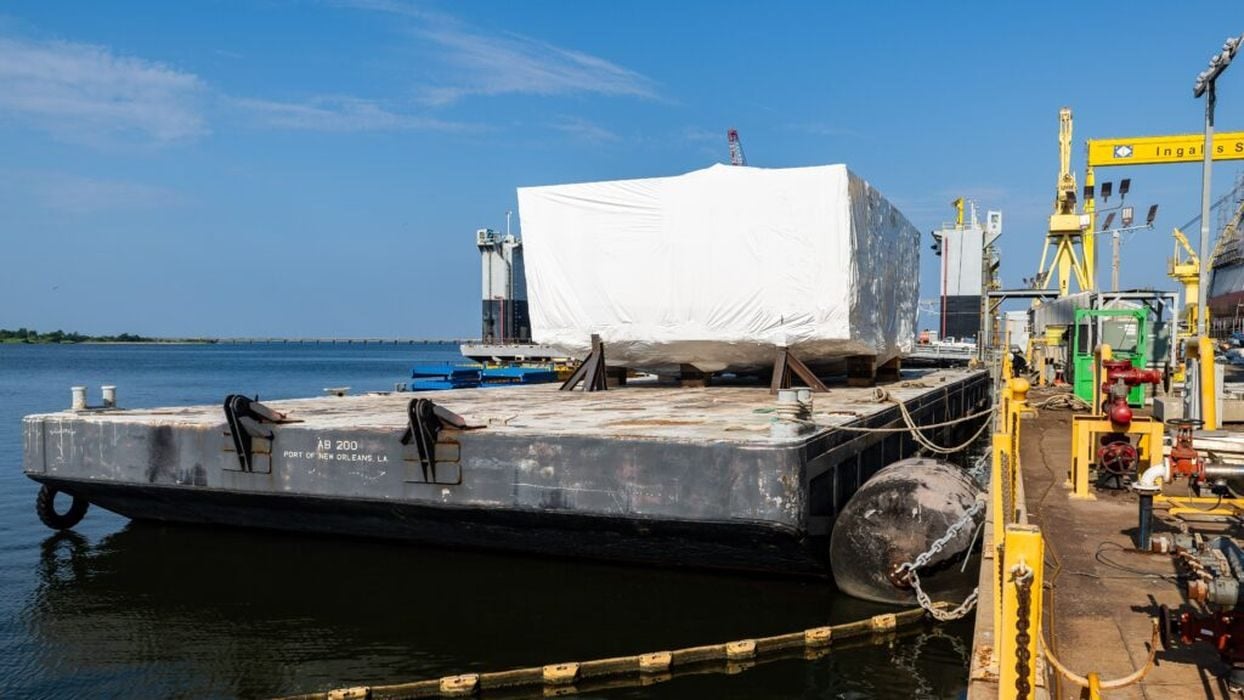
Ingalls Shipbuilding in Mississippi has also invested in additive capabilities, particularly for non-structural but mission-critical components. The ability to 3D print replacement parts on demand improves fleet sustainment, reducing the Navy’s dependence on long-lead procurement cycles.
Extending 3D Printing Across the Distributed Network
The real opportunity lies in applying HII’s additive manufacturing expertise across its distributed network of 23 partner shipbuilders. These smaller shipyards have varying levels of 3D printing experience. Some may already operate polymer-based printers for prototyping, while others are just beginning to explore metal additive manufacturing. By sharing best practices, training, and digital design files, HII could raise the technological baseline across its entire industrial ecosystem.
Imagine Eastern Shipbuilding not only fabricating destroyer modules but also using HII-certified 3D printing processes to produce specialized fittings or piping assemblies locally. The ability to distribute digital part designs to multiple yards—rather than relying solely on physical supply chains—would dramatically increase resilience and flexibility. In a distributed shipbuilding model, where dozens of companies must coordinate production, additive manufacturing acts as both a cost saver and a synchronizer.
The Navy has already expressed interest in this concept. The service envisions a future where certified digital part libraries are shared across its industrial base. If a component is needed in Virginia, Mississippi, or Florida, the nearest capable shipyard could print it on-site. This reduces logistics bottlenecks, accelerates schedules, and minimizes downtime.
Benefits for the 3D Printing Industry
For the additive manufacturing industry, HII’s distributed shipbuilding model represents a major opportunity. Naval shipbuilding is among the most demanding sectors in American manufacturing, requiring not just innovation but certification at the highest level. By working closely with HII and its 23 partners, 3D printing companies can help standardize processes, improve material performance, and accelerate qualification pathways for new applications.
This could mean expanding the use of large-format metal printers, improving hybrid manufacturing techniques that combine machining with 3D printing, or developing new alloys optimized for marine environments. It also presents a chance for software providers to deliver digital thread solutions that securely transmit part designs across the distributed network.
Challenges Ahead
Of course, operating a distributed model of this scale is not without challenges. Coordinating production across 23 shipyards requires precise digital integration, rigorous quality control, and consistent training. Cybersecurity is also paramount—if shipyards are sharing sensitive digital designs, those files must be protected against espionage or tampering.
Similarly, while 3D printing offers clear benefits, scaling it effectively across multiple facilities is complex. Certification of parts for naval use requires stringent testing, and not every partner yard will have the expertise or equipment to meet those requirements immediately. It will take sustained collaboration, investment, and oversight to ensure success.
The Future of Naval Shipbuilding
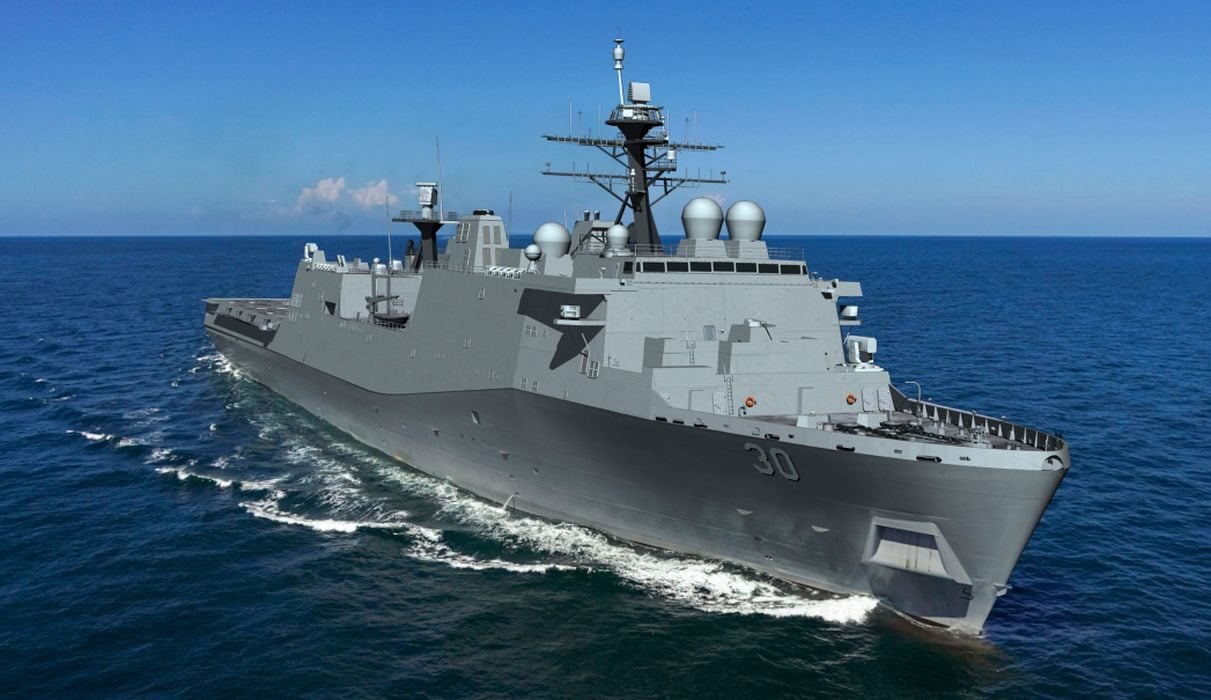
Despite these hurdles, the potential is enormous. If HII and its partners succeed, they will not only expand U.S. shipbuilding capacity but also modernize it in ways that could reshape the industry for decades. Distributed shipbuilding ensures that no single yard becomes a bottleneck, while additive manufacturing introduces flexibility and innovation into the production process.
This approach aligns with broader Department of Defense priorities. The Pentagon has emphasized the need to rebuild America’s defense industrial base, particularly in the face of great power competition. By expanding industrial participation, embracing digital tools, and accelerating throughput, HII’s strategy directly addresses these concerns.
The Research and Development Tax Credit
The now permanent Research and Development (R&D) Tax Credit is available for companies developing new or improved products, processes, and/or software. 3D printing can help boost a company’s R&D Tax Credits. Wages for technical employees creating, testing, and revising 3D-printed prototypes can be included as a percentage of the eligible time spent for the R&D Tax Credit. Similarly, when used as a method of improving a process, time spent integrating 3D printing hardware and software counts as an eligible activity. Lastly, when used for modeling and preproduction, the costs of filaments consumed during the development process may also be recovered.
Whether it is used for creating and testing prototypes or for final production, 3D printing is a great indicator that R&D Credit-eligible activities are taking place. Companies implementing this technology at any point should consider taking advantage of R&D Tax Credits.
Conclusion
HII’s distributed shipbuilding model, now encompassing 23 partner shipyards, marks a transformative moment in U.S. naval production. By combining the scale and experience of Newport News and Ingalls with the regional strengths of partners like Eastern Shipbuilding, the Navy gains both capacity and resilience. Layered on top of this is HII’s growing leadership in 3D printing—a technology with the power to shorten timelines, reduce costs, and increase adaptability across the entire industrial base.
The model is ambitious, and its complexity should not be underestimated. But if the participating shipbuilders share best practices, including advances in additive manufacturing, the payoff could be enormous: faster ship delivery, stronger supply chains, and a Navy better equipped to meet the demands of the future.