Charles R. Goulding and Preeti Sulibhavi explore how the Canadian shipbuilder, Davie Defense, is expanding into the US via the acquisition of a shipyard in Texas and how this sends waves through the 3D printing industry.
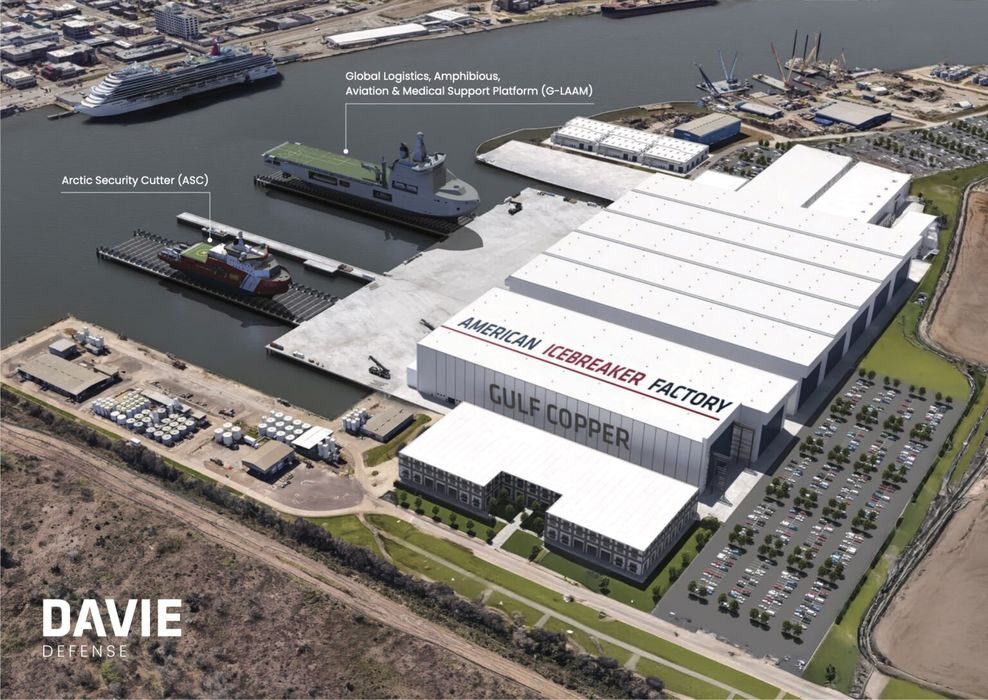
In mid-2025, Canadian shipbuilder Davie (part of the Inocea Group) made headlines with plans to acquire Gulf Copper & Manufacturing Corporation’s shipyard assets in Galveston and Port Arthur, Texas. The move represents a significant expansion of its presence in the U.S., with the stated aim of building icebreakers and other complex, mission-critical vessels under U.S. programs. What follows is a deep dive into the plan: what is being acquired, what is planned, and why it matters.
What Is Davie Acquiring / Where is It Located
- Assets: The planned acquisition includes shipyard facilities in Galveston and Port Arthur from Gulf Copper & Manufacturing, a Texas firm with a long history in ship repair, marine services, construction, and offshore work.
- Conditions: The deal remains subject to financial, regulatory, legal approvals and land lease negotiations (notably with the Galveston Wharves Board of Trustees). The expectation is that the deal will close in summer 2025.
What Davie Plans: The “American Icebreaker Factory”
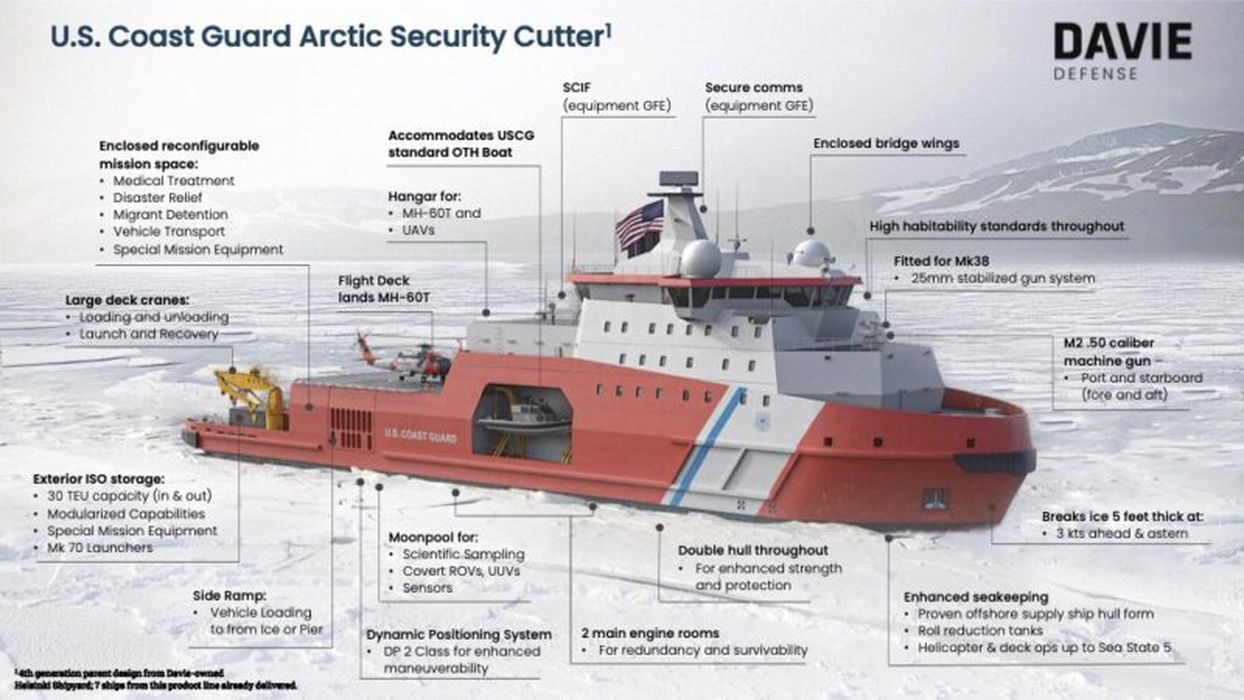
- Purpose-built facility: The yard in Galveston will be converted/upgraded into what Davie calls the “American Icebreaker Factory,” to build, for example, the U.S. Coast Guard’s Arctic Security Cutter (ASC) program. The facility specializes in icebreaker and other complex ship construction.
- Investment size: Davie intends to invest US$1 billion to upgrade and expand the Texas facilities.
- Capacity / physical plans: The concept images/renderings show multiple new assembly bays, new shiplifts, removal of some existing piers (finger piers), a new apron of reclaimed land along the waterfront, etc. The designs are meant to support efficient, large-scale construction of ice-capable vessels.
Strategic Rationale
- National Security / Arctic Capability: The United States currently has only three Arctic-ready icebreakers in service, and the need for more (both heavy/heavy-duty polar security cutters and mid-displacement Arctic Security Cutters) is a strategic imperative given climate change, Arctic competition, shipping lane access, and geopolitical pressures, especially from Russia and China.
- ICE Pact and Related Agreements: Davie’s move is aligned with the trilateral ICE Pact (U.S., Canada, Finland), which aims to increase capacity to build icebreakers in Western countries. Davie already has strong capability via its Finnish yard (Helsinki Shipyard) and its operations in Canada. Having U.S. yard capacity strengthens its competitiveness for U.S. contracts.
- Legislation and Policy Support: The acquisition supports U.S. policies such as the Maritime Action Plan, Ships for America Act, and executive orders aiming to restore American shipbuilding, bolster national security, and strengthen industrial capacity.
Economic & Job Impact
- Jobs: Davie estimates roughly 4,000 U.S. jobs resulting from the expansion: about 2,000 direct jobs at Gulf Copper (once under Davie) and about 2,000 more across the supply chain.
- Broader Economic Impact: According to analyses (e.g., independent studies cited by Davie), the economic ripple effects across Texas could be significant—affecting local suppliers, workforce development, ancillary services, etc.
Schedule / Deliverables & Key Milestones
- First ASC delivery: Davie claims it could deliver the first Arctic Security Cutter within around 26 months once the facility is active.
- Ceremony / Groundbreaking: The company plans a formal ceremony in Texas in fall 2025 to mark the start of construction on the upgraded shipyard.
Challenges & Concerns
- Regulatory / Legal / Lease agreements: The deal depends on approvals and lease terms (especially in Galveston), which could complicate or delay things.
- Execution risk: Building a facility, training workforce, securing supply chain, delivering for complex vessels on time and on budget is hard—especially when ramping up to new capacities.
- Competition: Other U.S. shipyards and consortia (including Bollinger Shipyards etc.) are also in the race for icebreaker contracts. Davie will be competing on cost, capability, and delivery speed.
Implications
- For the U.S. shipbuilding industrial base: If Davie succeeds, this could represent one of the largest single capacity increases in decades, especially focused on polar / ice-capable ships.
- For Arctic / Polar Strategy: This helps to close capability gaps in the U.S. fleet, potentially making the Coast Guard better able to respond to Arctic missions, search & rescue, polar research, sovereignty assertion, etc.
- Regional benefits in Texas: Revitalizing shipyards, generating high-skilled jobs, and potentially boosting the local economy. Also, infrastructure upgrades, etc.
The 3D Printing Implications
Davie is active in digital design and major icebreaker.
Davie has major contracts (e.g., Canada polar icebreaker awards) and corporate plans (the Texas “American Icebreaker Factory” expansion) showing strong investment in shipbuilding capability and modern digital design/manufacturing practices.
Recent Examples of 3D Printing in Marine / Icebreaker / Shipbuilding / Polar Tech
Here are a few recent and relevant examples of how additive manufacturing / 3D printing is being used in this domain or closely related spaces:
- “Polar Endeavour” Pump Parts via 3D Printing
A consortium including ABS, Sembcorp Marine, and 3D Metalforge installed 3D printed parts aboard the ConocoPhillips oil tanker Polar Endeavour. These parts include a centrifugal pump shaft, a combined brine/air injector nozzle, and an effluent pump coupling device. According to reports, these 3D printed parts passed safety tests and, in some cases, outperformed traditionally manufactured counterparts. - On-Ship 3D Printing Consortium (HD Hyundai-ABS)
There have been efforts (reported 2025) around having onboard 3D printing capability for ships, particularly for rapid replacement parts when at sea, reducing downtime. While not always specific to icebreakers, this trend is relevant for vessels operating in remote or harsh environments (polar regions etc.). - Seaspan’s Polar Icebreaker – 3D / Digital Modelling / Prototype Block
In Canada, Seaspan Vancouver is building the country’s first heavy polar icebreaker in over 60 years. As part of the preparation, they constructed a prototype block to validate methods (welding thick steel, aligning frames, etc.). In addition, the functional design and 3D modelling of the vessel are well advanced—over 70% done. Although this is not directly 3D printed parts, the digital/3D modelling and prototype block work counts as modern manufacturing/design tech in the icebreaker field. - Rapid Prototyping of Wave Buoys in Polar / Ice Zones
Some academic / field instrument work uses 3D printing for wave buoys deployed in marginal ice zones. For example, low-cost instruments with 3D printed housings (or parts) have been used in Arctic deployments to measure wave-ice interaction; rapid prototyping allows customizing designs for durability, mounting, etc.
The Research and Development Tax Credit
The now permanent Research and Development (R&D) Tax Credit is available for companies developing new or improved products, processes, and/or software. 3D printing can help boost a company’s R&D Tax Credits. Wages for technical employees creating, testing, and revising 3D-printed prototypes can be included as a percentage of the eligible time spent for the R&D Tax Credit. Similarly, when used as a method of improving a process, time spent integrating 3D printing hardware and software counts as an eligible activity. Lastly, when used for modeling and preproduction, the costs of filaments consumed during the development process may also be recovered.
Whether it is used for creating and testing prototypes or for final production, 3D printing is a great indicator that R&D Credit-eligible activities are taking place. Companies implementing this technology at any point should consider taking advantage of R&D Tax Credits.
Conclusion
Davie’s planned expansion into Texas via the acquisition of Gulf Copper’s yards and construction of a purpose-built icebreaker factory represents a bold step in the intensifying competition over Arctic and polar naval/operational capability. If executed well, it could reshape American shipbuilding capacity, deliver strategic vessels more efficiently, and help fulfill national security objectives tied to climate change and Arctic access. However, the path forward entails significant risks, including regulatory approvals, financial investment, supply chain development, and competition. Still, it is one of the most interesting developments in polar/icebreaker strategy in North America in many years.