
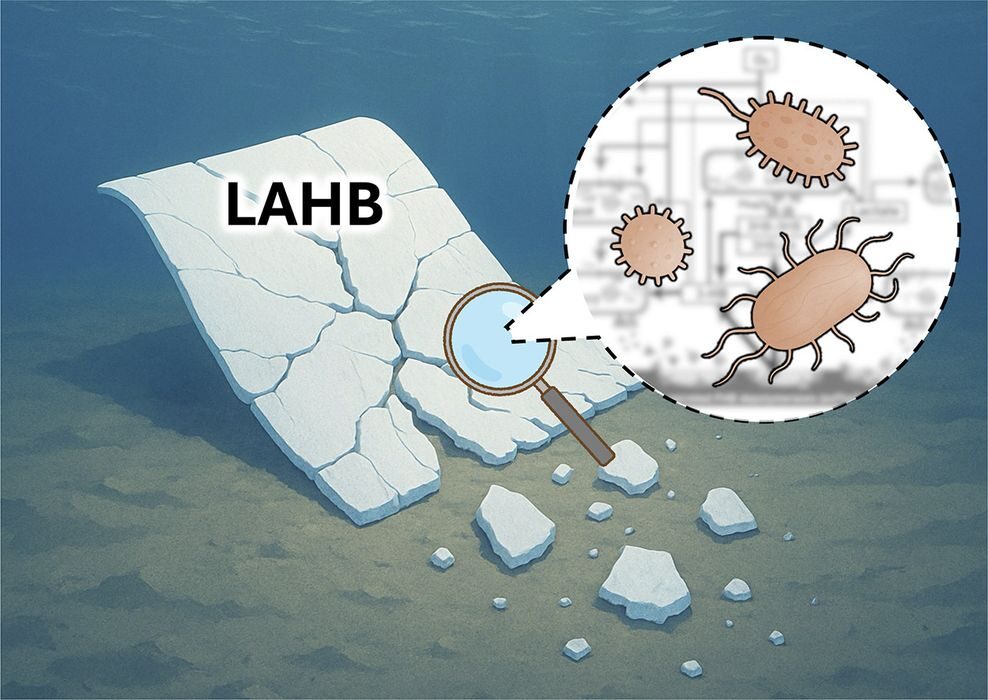
Researchers have investigated the biodegradability of LAHB, a material that has properties of PLA and PHB.
With the increasing amount of 3D printer waste generated by today’s advanced desktop FFF 3D printers, the need for more sustainable materials is as important as ever. The most common material 3D printed today remains PLA, which, while made from sustainable sources, is essentially a permanent material.
PLA cannot be broken down in natural circumstances and requires high temperatures and pressures to decompose at all. The cost of doing so is high enough that it effectively prevents PLA decomposition and recycling from taking place anywhere.
That’s why I’m always interested in new materials that are more sustainable, particularly those that can decompose in natural environments. If they don’t, they ultimately become microplastics that pollute the environment, invade the food chains, and eventually are consumed/breathed by everyone. The long-term health effects are completely unknown.
The new research looked at something called “LAHB”, which is a microbially synthesized copolymer combining features of PLA and PHB. The investigation involved placing samples of LAHB at the bottom of the ocean, where a lot of plastic ends up. There at 855m deep, the pressure is high, and the water temperature is around 4C.
The researchers found that the LAHB degraded significantly over a 7-13 month period, with around 82% of the weight removed. However, the PLA portion of the material did not decompose, as expected.
This makes LAHB a somewhat more sustainable material. But could it be used as a 3D print material? The researchers did not investigate this possibility.
The melting point of the material is similar to PLA, around 170C. However, the glass transition temperature is quite low, around 10C, whereas PLA is around 60C. LAHB is unlikely to exhibit significant warping during 3D printing due to its component polymers.
Because of the low glass transition temperature, objects printed in LAHB would likely not be used for structural or mechanical applications: it’s just too soft. However, soft is an attribute of some 3D print materials. TPU, for example, is a popular material. LAHB would not act like TPU, however, as it does not have stretch / snap-back properties.
I’m not sure there is such a material in the current set of 3D printer filaments on the market. Perhaps it’s time to introduce LAHB as a new option?
Via ScienceDirect
