Charles R. Goulding and Preeti Sulibhavi explore how Disney’s massive bet on Imagineering, from theme parks to cruise ships, is opening new doors for advanced manufacturing and 3D printing.
For more than a century, The Walt Disney Company has stood as one of the world’s most influential entertainment brands. What began with animated shorts and features like Snow White and the Seven Dwarfs has blossomed into a sprawling empire encompassing movies, television, theme parks, cruise ships, merchandise, and more. What ties all of these businesses together is storytelling: compelling characters, immersive worlds, and memorable experiences that engage audiences wherever they go.
Disney’s films, from the classic animated canon to the juggernaut franchises of Pixar and Marvel, are global cultural touchstones. They generate billions of dollars at the box office and spawn retail ecosystems filled with toys, costumes, books, apparel, and collectibles. Disney’s ability to extract merchandise value from its intellectual property is legendary — think of the endless parade of action figures, princess dresses, vinyl pins, and plush characters that fill parks, stores, and online marketplaces. These consumer products are not afterthoughts; they are key extensions of Disney’s storytelling reach.
The same philosophy animates Disney’s theme parks and experiential businesses. A visit to Disneyland or Walt Disney World isn’t just a vacation; it’s a chance to step into the worlds of Star Wars, Frozen, It’s a Small World, or Pirates of the Caribbean. Attractions and lands are meticulously themed, with immersive environments that make guests feel like active participants in the story. This blend of narrative and physical design is where Disney makes much of its money today, surpassing even films in some years as its primary revenue driver.
As Disney has expanded globally, it’s also broadened the ways it leverages its characters and themes. That includes cruise ships that extend the Disney experience onto the seas, retail merchandise tied to parks and films, and digital offerings on platforms like Disney+. Behind all of these experiences — movies, parks, merch, and ships — sits a unique creative engine: the Imagineers.
Who Are the Imagineers?
“Imagineering” is short for Imagine-engineering — the creative-thinking force behind Disney’s themed experiences. Walt Disney himself coined the term decades ago when he brought together artists, engineers, architects, designers, and storytellers to create Disneyland. Today, that mission continues under a division called Walt Disney Imagineering (WDI). Imagineers are the people who design attractions and experiences. They are responsible for every castle silhouette, every animatronic wizard, every themed restaurant’s lighting and décor, and even the queues that prepare guests for the ride ahead. They bridge art and technology, combining narrative, engineering, industrial design, architecture, and theatrical illusion to craft worlds that entertain people of all ages. Quite literally, Imagineers design Disneyland’s castles, roller coasters, resorts, and cruise ship environments alike.
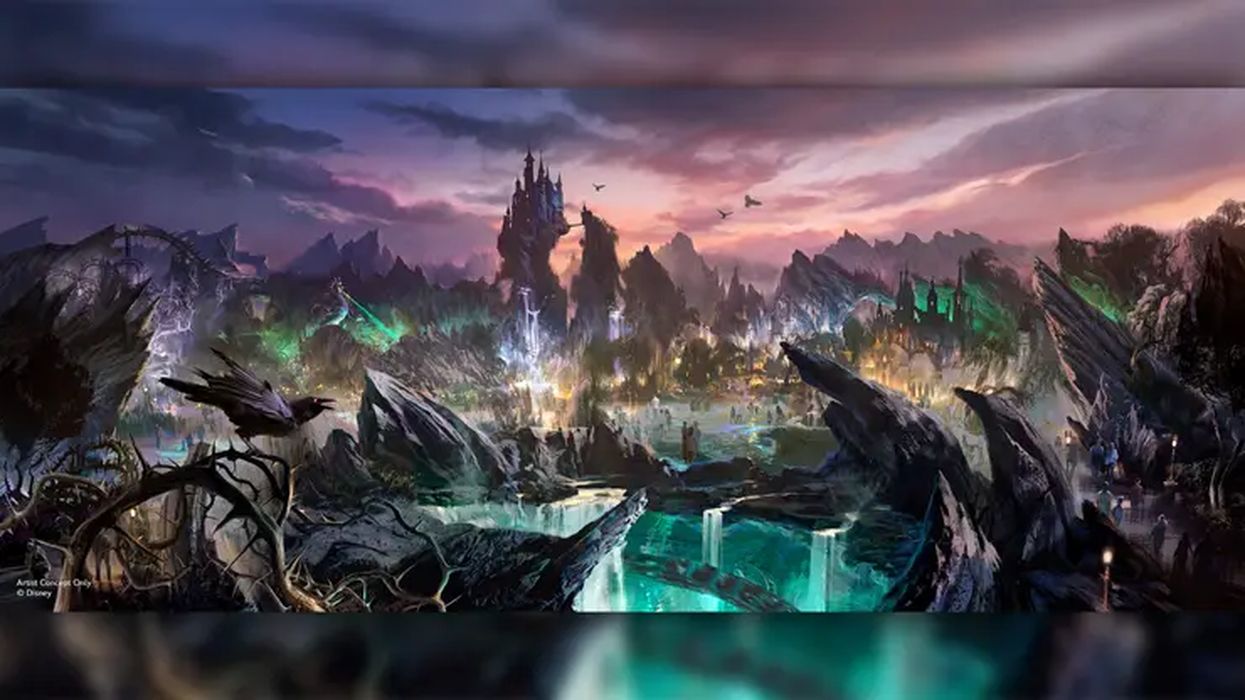
According to The Wall Street Journal, Disney now has roughly 3,000 Imagineers working largely out of secretive facilities, tucked away behind unmarked doors to avoid leaks that might spoil future attractions. Their work — from attractions to themed cruise ships — is a cornerstone of Disney’s long-term growth strategy. Disney is making a US$60 billion investment through 2033 to build new parks, expand existing ones worldwide, and launch new cruise experiences, and Imagineers are tasked with delivering that future.
While many outside Disney associate Imagineering with park rides and immersive lands, its responsibilities touch nearly every physical manifestation of Disney’s stories. That includes physical products sold in parks and online, retail environments, and experiential elements on cruise ships.
Disney’s Latest Gamechanger: The Disney Adventure
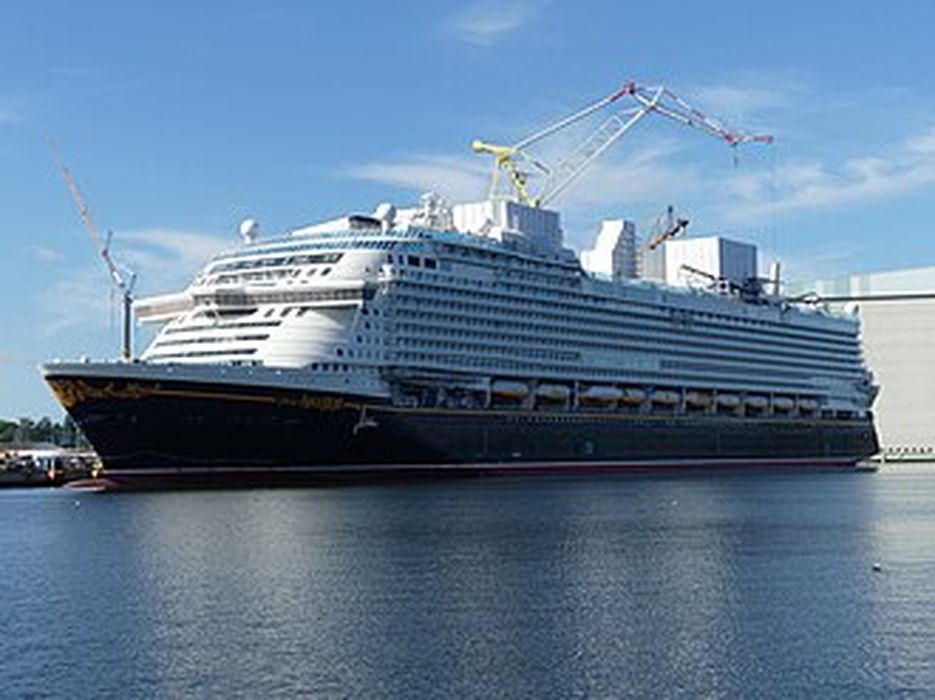
A vivid example of Disney’s ambitious approach is the Disney Adventure, a new cruise ship that represents one of the largest single investments in the company’s experiential portfolio. Originally built as a “Global Dream” vessel for another cruise brand, Disney acquired the unfinished ship and transformed it into an immersive entertainment platform at sea — a process that significantly expanded costs and scope.
With a length of 342 meters and space for thousands of passengers, Disney Adventure is now the largest ship in the Disney Cruise Line fleet and is scheduled to begin sailing in Singapore in March 2026. This ship isn’t a generic cruiser with a logo slapped on; it’s designed to be a floating Disney park. It has multiple themed zones inspired by Disney, Pixar, and Marvel properties, original live shows, immersive environments like Disney Imagination Garden, and even the first roller coaster at sea — Ironcycle Test Run — as part of its Marvel Landing area.
Disney Adventure, like all Disney cruise ships, relies heavily on Imagineering to integrate narrative into every corner of the vessel — from themed dining and entertainment to immersive public spaces and distinct retail experiences selling exclusive souvenirs. This isn’t incidental; the retail and merchandise strategies on these ships are designed to mirror the parks, offering guests tangible, story-driven products that extend the memory of their voyage.
3D Printing and Imagineering: Already in Play
As Disney undertakes these massive physical projects — parks, cruises, and more — there’s growing interest in how technology can accelerate design and production. One such technology is 3D printing, which has been moving out of rapid prototyping and into actual production applications.
Disney’s Imagineering division has begun experimenting with 3D printing on real projects, a move that aligns with broader industry trends where additive manufacturing is used to create custom, complex, and functional components faster and often at lower cost than traditional manufacturing.
Example 1: Jungle Cruise Canoe Prop
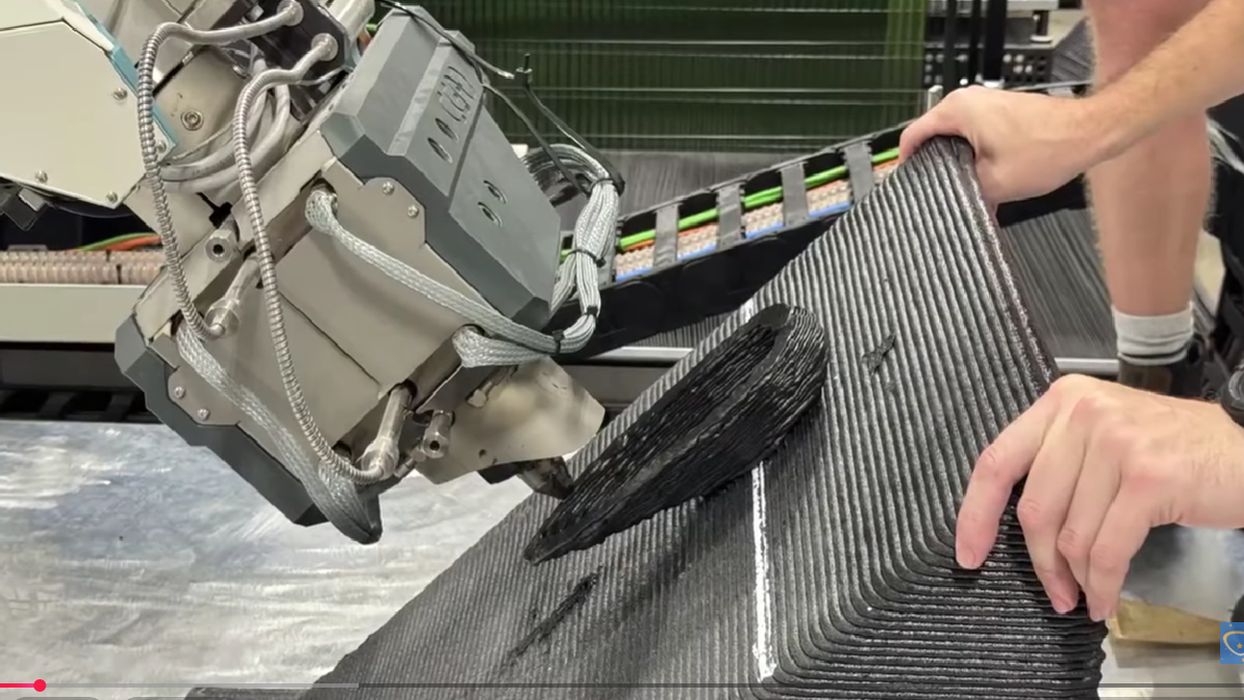
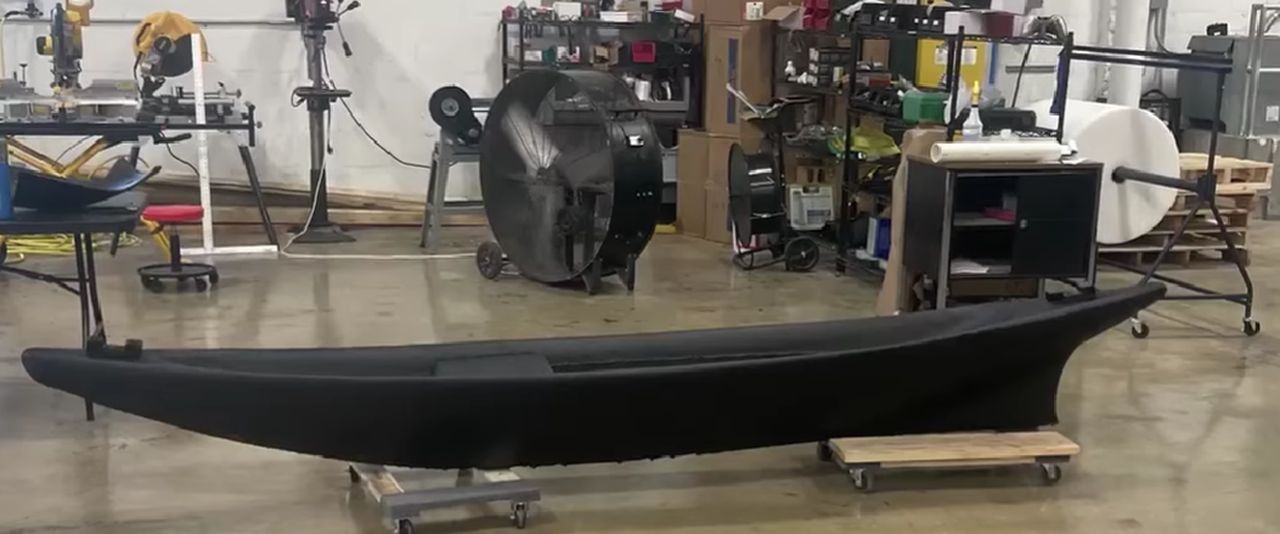
In January 2026, Imagineering partnered with a tech company called Haddy to install a large-scale 3D printed prop canoe on the Jungle Cruise attraction at Disneyland. Haddy is in St. Petersburg, Florida and is an AI-powered 3D printer manufacturer that uses robotic technology to create furniture and other products. This marked the first time a large 3D printed object was installed as a permanent fixture in a ride. The process began by 3D scanning an existing prop, then using industrial 3D printing to fabricate a full-scale canoe design. Haddy’s AI-driven additive approach reportedly required only about 70 robot hours to manufacture what would normally take hundreds of human hours and weeks to produce using conventional methods. Imagineers collaborated closely with Haddy to ensure the printed cane matched Disney’s aesthetic and operational requirements. The project demonstrated that with the right printer and materials, additive manufacturing could be used not just for prototypes but for actual, park-ready scenery.
Example 2: Potential Ride and Set Elements
Prior reporting suggests Disney could expand 3D printing to create other ride elements and props. For instance, future attractions — including rockwork in themed lands or decorative pieces in new parks — could leverage large-format 3D printing to produce complex shapes that would have been costly or time-consuming with traditional fabrication.
3D printing also opens possibilities for objects like ornamental fencing or light fixtures (already noted as 3D printed by a partner vendor) or bespoke parts for attractions like Monsters, Inc. Land and others still in development.
Example 3: Retail and Collectibles
While Disney’s official facilities have not publicly announced printing of retail items, there is a booming fan ecosystem of 3D printed Disney models and toys — from cruise ships to park icons — created by independent designers for personal use. The design and manufacturing of toys is a major market for 3D printing. These range from 3D printable models of cruise ships like the Disney Dream to miniature replicas of park attractions, showing strong demand among collectors and hobbyists for Disney-themed 3D printing files.
Officially sanctioned Disney merchandise designed for 3D printing could be a future frontier, especially for limited-edition collectibles, park exclusives, or even on-demand personalization. Imagineering’s deep involvement in narrative design — combined with additive freedom — could enable new kinds of products tied directly to guest experiences.
Challenges and the Road Ahead
Despite these promising examples, 3D printing is not yet ubiquitous in Disney’s production pipeline. Traditional fabrication remains dominant for major structural and engineering components due to certification standards, material performance, and cost considerations at scale. However, the successful deployment of props and collaboration with innovative partners suggests 3D printing will become a growing part of Imagineering’s toolkit.
As Disney’s parks and cruise lines expand in the coming decade, technologies like 3D printing could play an essential role in reducing development time, enabling more creative design iterations, and producing bespoke pieces tailored to each location’s storytelling needs. For a company that thrives on creating magic through physical environments, additive manufacturing may offer a new lever to strengthen both creativity and efficiency.
How Disney’s AI IP Deals Could Reshape Its Future
Disney’s growth strategy isn’t limited to physical parks, cruise ships, and merchandise. In late 2025, the company made a bold move into generative artificial intelligence (AI) that could have long-term implications for how it creates, protects, and monetizes intellectual property. In December, The Walt Disney Company struck a high-profile licensing and investment agreement with OpenAI, the creator of ChatGPT and related generative AI tools.
Under the three-year deal, Disney became the first major entertainment company to formally license its characters and other IP for use in OpenAI’s generative platforms, including its short-form video platform Sora and ChatGPT Images. Sora users will be able to generate short AI-generated videos featuring more than 200 characters and elements from Disney’s vast catalog — spanning Disney Animation, Marvel, Pixar, and Star Wars. These will include familiar icons from Mickey Mouse and Cinderella to Iron Man, Yoda, and Elsa.
Crucially, the agreement also includes a US$1 billion equity investment from Disney into OpenAI, and Disney will “deploy ChatGPT” internally as part of its digital tooling and product development across businesses like Disney+. That means behind the scenes, Disney’s own teams may use advanced AI models and APIs to improve productivity, creative planning, marketing, and other workflows.
This strategy marks a significant shift for a company that has spent recent years aggressively defending its IP against unauthorized use by AI companies. For example, Disney has taken legal action against other AI image generators accused of training on its copyrighted characters without permission. The new partnership flips that dynamic: instead of exclusively fighting unlicensed AI use, Disney is positioning itself to control how its characters are used in AI content creation and benefit financially from that usage.
From a broader business perspective, the Disney-OpenAI deal underscores several emerging trends:
1. Extending Disney’s Storytelling Beyond Traditional Media
Disney’s core strength has always been its stories and characters. By licensing more than 200 of them for use in generative AI tools like Sora and ChatGPT Images, Disney can expand how fans interact with those stories. Fans will be able to generate short AI-created videos or images featuring Disney characters, potentially deepening engagement beyond parks, movies, or merchandise. Some of this fan-created content may even be curated and shown on Disney+.
This move leverages Disney’s IP in a new, interactive dimension of creative expression, where fans become co-creators. It mirrors broader shifts in entertainment toward participatory experiences — a theme that resonates with Disney’s experiential businesses like theme parks and cruise ships.
2. New Revenue Streams and Control Over IP
By licensing its IP to OpenAI rather than letting AI platforms use it without authorization, Disney is asserting commercial control over how its characters are depicted in AI outputs. The deal includes explicit guardrails: for example, the license covers animated characters, props, environments, and costumes, but excludes actor likenesses and voices, which remain sensitive legal territory in Hollywood.
This approach allows Disney to monetize a new use case for its IP while also protecting its brand and creative ecosystem. It sets a template for how major media companies might handle AI integration across entertainment sectors, including film, television, and interactive digital platforms.
3. Internal Productivity and Future AI Tools
Disney isn’t just opening its characters to external AI use. The company is also using ChatGPT technology internally, deploying ChatGPT for employees to build new tools, enhance productivity, and potentially reimagine parts of its creative and operational workflow. This internal adoption can shorten development cycles, inform marketing strategies, support creative teams, and even influence how Disney integrates technology into attractions, merchandising, and consumer engagement channels.
Some industry commentary suggests this could eventually lead to bespoke AI tools tailored to Disney’s business, such as internal creative assistants or idea generation tools. While these tools won’t replace human creators or Imagineers, they could provide efficiency gains that enhance the broader creative process.
4. Strategic Positioning in the AI Era
Disney’s deal with OpenAI represents more than a licensing agreement — it’s a signal that major entertainment brands want to be part of the conversation shaping AI’s future rather than merely reacting to it. Instead of waiting for regulatory frameworks or facing unauthorized use of its characters, Disney chose to partner with a leading AI developer and invest in its ecosystem.
This has a knock-on effect on how Disney will be able to amplify its use of 3D printing technology as well. It will enhance any integration of 3D printing technology throughout the Magical Kingdom.Bottom of Form
The Research & Development Tax Credit
The now permanent Research & Development Tax Credit (R&D) Tax Credit is available for companies developing new or improved products, processes and/or software.
3D printing can help boost a company’s R&D Tax Credits. Wages for technical employees creating, testing and revising 3D printed prototypes can be included as a percentage of eligible time spent for the R&D Tax Credit. Similarly, when used as a method of improving a process, time spent integrating 3D printing hardware and software counts as an eligible activity. Lastly, when used for modeling and preproduction, the costs of filaments consumed during the development process may also be recovered.
Whether it is used for creating and testing prototypes or for final production, 3D printing is a strong indicator that R&D-eligible activities are taking place. Companies implementing this technology at any point should consider taking advantage of R&D Tax Credits.
Final Thoughts
Disney’s expansion plan — a US$60 billion bet on experiential storytelling — shows that the company’s future won’t be defined solely by movies or streaming content. Instead, it will be shaped by immersive worlds, physical experiences, and customer engagement that spans media, merchandise, parks, cruises, and potentially cutting-edge manufacturing technologies like 3D printing. Whether crafting a themed land at Walt Disney World or a magical new cruise ship experience, Imagineers remain at the heart of Disney’s creative engine — blending narrative and technology to bring audiences into their favorite stories in wholly new ways.