
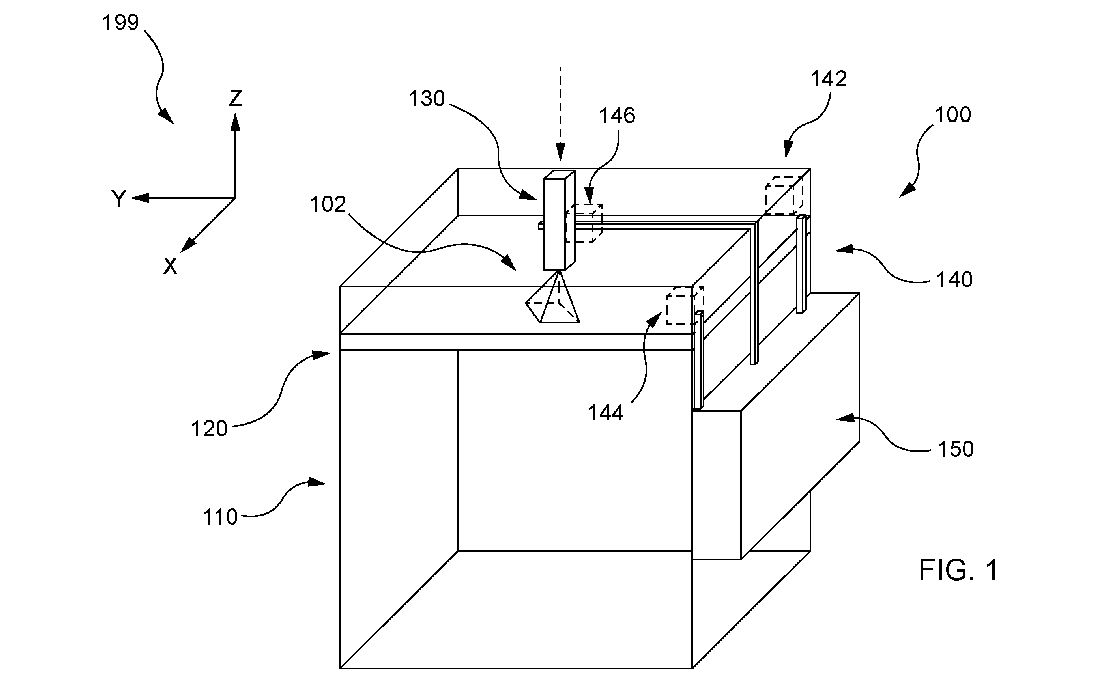
Dyze Design has filed a patent application that reads like a blueprint for turning a 3D printer into a data driven, self aware machine tool.
Most desktop FFF systems still run a familiar split brain: a Linux single board computer (SBC) handles files and UI, while a microcontroller unit (MCU) executes real time motion. That architecture works, but it also creates two issues for anyone looking for increased throughput: delayed reaction time when command buffers get long, and limited visibility into what actually happened during the build beyond a few temperatures indications and a log file.
Industrial platforms solve this with expensive motion controllers, tightly integrated servo drives, and deep telemetry. The Dyze Design filing is effectively an attempt to bring some of that discipline to modular AM hardware, while keeping the cost and expandability closer to the maker ecosystem.
A Control Stack Built Around Priorities And Feedback
Dyze Design’s main concept is to formalize communication between processors into separate channels with explicit priorities. Instead of a single command queue from SBC to MCU, the patent describes multiple priority queues: high priority for emergency stop, mid priority for routine adjustments, and low priority for printing commands. If something goes sideways, the stop or pause should not wait behind seconds of queued motion commands.
On the return path, the MCU sends operational information back to the SBC over separate channels intended for real time display versus recording. This is important because 3D printers often face a bandwidth crunch: you can stream lots of data and risk delays, or you can log sparsely and lose insight. Dyze Designs’ approach tries to do both by splitting “now” data from “later” data, then storing it locally and optionally shipping it to the cloud.
The modularity goes further than just an SBC plus MCU. The filing outlines IO modules, step motor modules, BLDC motor modules, and even a tool head module with local processing. Edge processing will pre process raw sensor signals on the module, transmit only event relevant summaries, and reserve bandwidth for the data that changes decisions.
From Telemetry To A Digital Representation
The most ambitious part is the “digital representation” of a build job. The patent describes collecting position, temperature, torque, and flow information, then combining those streams into something like a “per build digital twin”.
In theory, that digital twin can be used to validate whether the extruder followed an acceptable path, whether material deposition stayed in range, and even whether the reconstructed result matches the original model closely enough for certification style workflows.
Some of the proposed sensing is very Dyze Design flavored. The text references their Orthus filament sensor, including jam and runout detection with fine resolution, and describes synchronizing filament motion pulses against commanded extrusion to flag under extrusion, over extrusion, or a jam. It also proposes load cell based measurements at the tool head for collision or friction detection, Z force based bed calibration, and even melt pressure style monitoring for extrusion characterization.
There are also clever machine control details that might be borrowed from CNC thinking: torque based limit detection as an alternative to switches, multi motor synchronization where one axis can slow to let another “catch up,” and build plate clearance verification via scanning before starting a job.
What This Could Mean If It Ships
Because this is a patent, there is no guarantee any of it becomes a product, and key performance numbers are absent: sampling rates, latency, compute requirements, or how much cloud dependence is mandatory. If Dyze Design builds even a subset of this, it could strengthen their positioning in large format, high flow printing where failed jobs are expensive and unattended operation is the goal. It also hints at a future where printer vendors compete less on frame rigidity and more on controls, diagnostics, and automation.
The real test will be whether the system can deliver actionable reliability without burying users in dashboards. I am quite interested to see where this concept goes next.
Via WIPO PatentScope
