
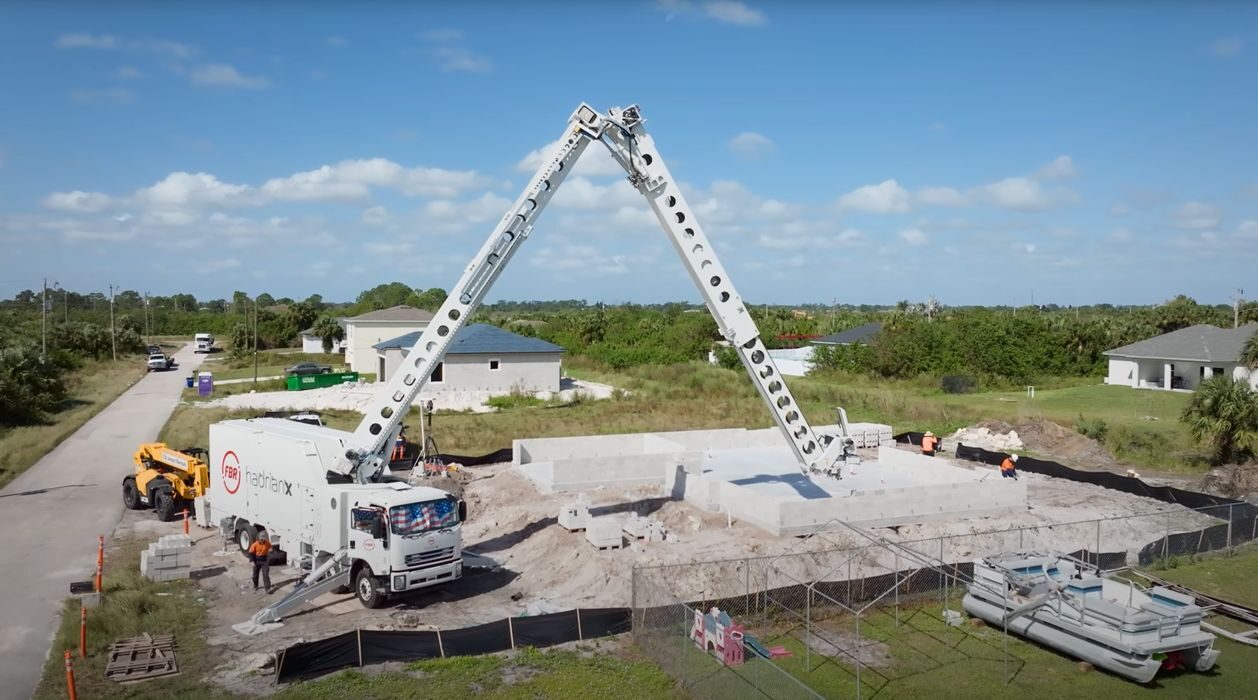
I’m reading about an unusual robotic construction system and comparing it to 3D printing.
Construction 3D printing today, also known as “3DCP” involves extrusion of concrete with a specialized toolhead. The toolhead is attached to either a robotic arm or a gantry system with rails, which both deposit concrete in layers. 3DCP can print a structure in a relatively short time, speeding up the construction process.
But then I saw an Australian company that produces an “advanced construction robot”. FBR’s “Hadrian” system builds structures with bricks.
Essentially the Hadrian is a giant robotic bricklaying machine. The robotic arm precisely positions each brick in the intended place, gradually creating a structure — layer by layer.
Sounds familiar, doesn’t it? Here’s how it works:
If you listen to the points made in the video, you will find they are essentially identical to those said by 3DCP companies. Print a building in a day, solve the housing crisis, etc.
The technology is somewhat similar, with the change being the material: individual bricks instead of flowing concrete. Everything else is mostly the same.
While I’m not sure of the cost differences between the two technologies, they are so similar that they might be the same cost.
Should robotic bricklaying be considered a type of 3D printing? It’s depositing material, layer by layer, isn’t it? The two technologies could certainly compete for similar jobs.
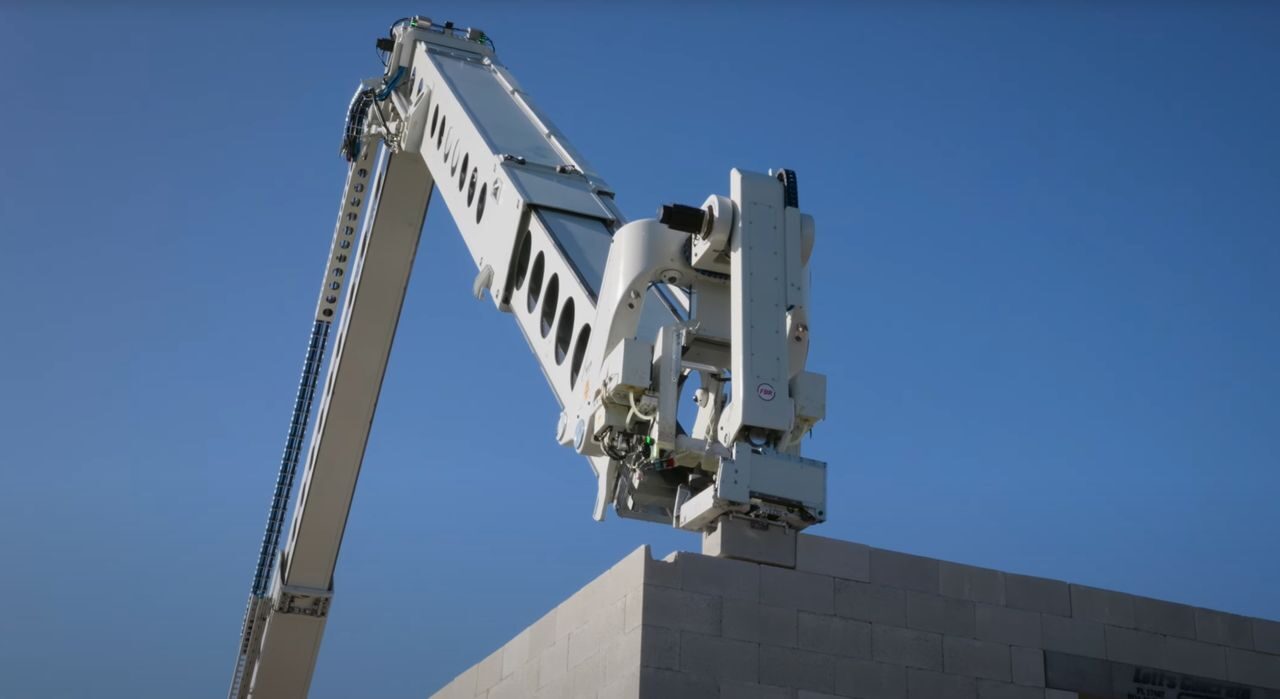
There may be some differences in capabilities between the two approaches. 3DCP, for example, can print curves, while the bricklaying approach does not — unless you have curved bricks that might be harder to produce. On the other hand, the bricklaying approach might be faster because the parts are pre-made.
There are some construction 3D printers that don’t operate on site, but instead sit in a central factory. They print components that are then shipped to the site for installation. We consider that to be 3D printing, yet in the end it’s just a large, specialized “brick” that is being installed like the bricklaying machine.
Either way, I think 3DCP companies had best keep watch on this new type of competition.
Via FBR
