
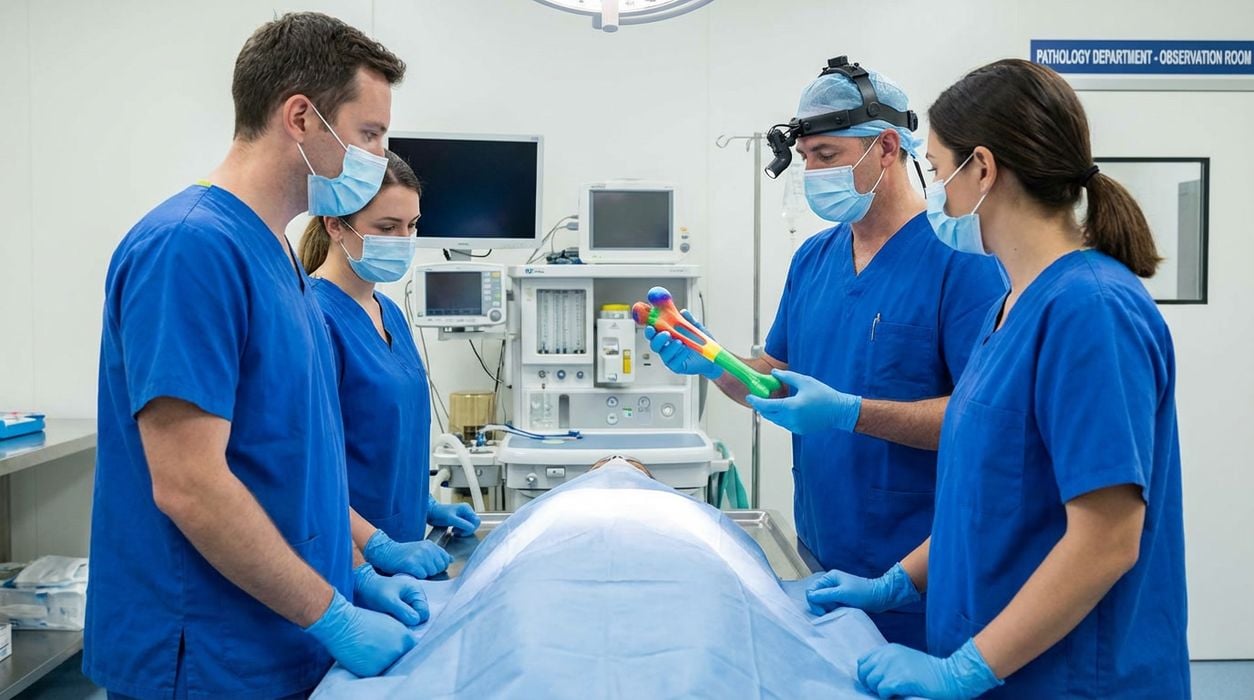
I’m always on the lookout for unusual 3D printer applications, and this is certainly one: autopsy analysis.
An article in BioEngineer describes how forensic specialists are using 3D printing in homicide cases. These folks are faced with corpses for examination and have to determine exactly what happened based on the evidence available.
Their job is often quite difficult: yes, someone might have been shot, but from what angle? From what distance? How was the victim positioned at that time? It’s far more complex than you might realize.
Here’s how 3D printing can help with all this: the specialists 3D print a replica of the weapon (or suspected weapons) that were involved in the case. They then use them to simulate various scenarios with the victim in an effort to narrow down the details of the situation.
Why do it with 3D printed replicas? BioEngineer explains:
“The traditional autopsy process often requires forensic pathologists to examine wounds in painstaking detail to ascertain the cause of death and reconstruct events leading to the victim’s demise. When a weapon is involved, direct contact with the actual murder instrument can pose considerable safety concerns and complicate evidence preservation. Using actual weapons, especially sharp or contaminated ones, increases the risk of accidental injury and contamination. This quandary has long challenged forensic practitioners, spurring the search for safer yet equally effective alternatives.”
There are challenges, however. Most forensic specialists are not experts in 3D print technology, which is perhaps one reason this hasn’t been done until now. Researchers have been studying these issues and have developed a series of techniques to enable specialists to make use of the technology.
This use of 3D printing is reminiscent of surgical models, where doctors print replicas of patient structures in advance of surgery. They would perform analysis in a similar fashion, with reality transformed into a 3D print used for experimentation.
I’m wondering if there are more 3D print use cases that involve this same pattern.
Via BioEngineer and Springer
