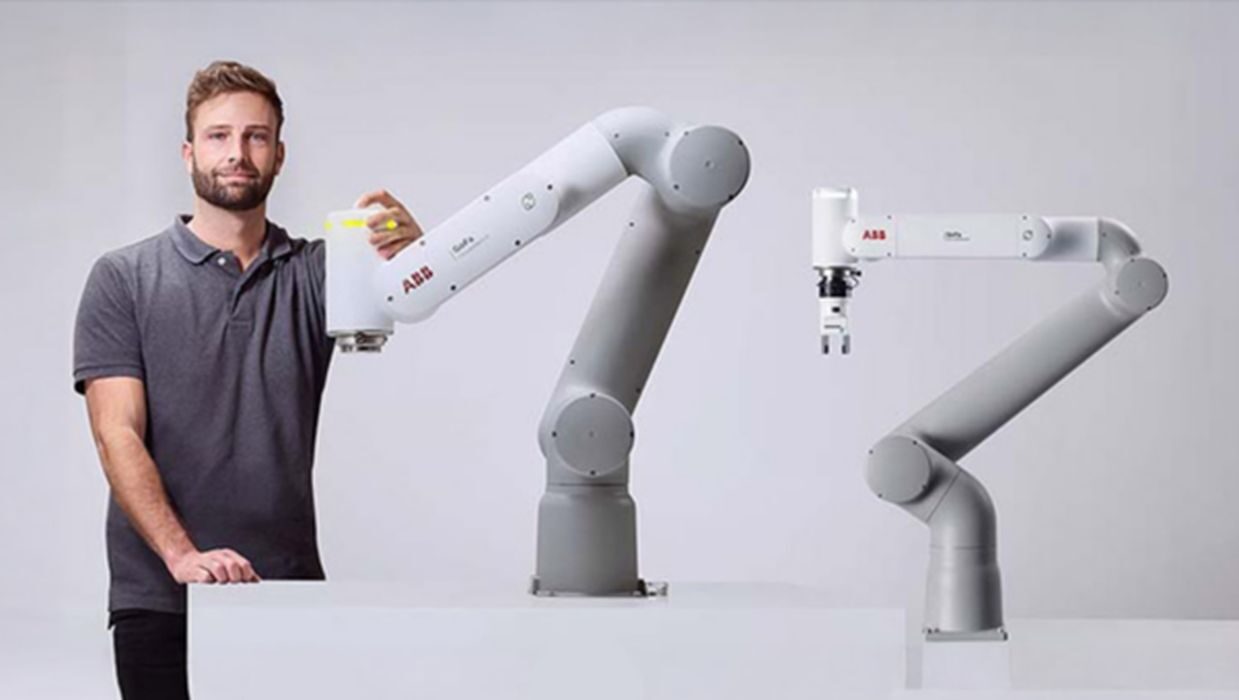
Charles R. Goulding and Andressa Bonafe connect SoftBank’s robotics deal to the rise of additive manufacturing and the next wave of AI-powered production.
On October 8, 2025, SoftBank Group announced that it would acquire ABB’s industrial-robotics division for US$5.4B. The Japanese tech conglomerate, founded and led by Masayoshi Son (CEO), is positioning the deal as a step toward Son’s “Physical AI” vision, which combines advanced AI with real-world robotic execution.
The transaction alters ABB’s previously signaled path: as we reported last June, the Swiss-based industrial engineering group had been preparing to spin off the robotics unit next year. SoftBank’s move surprised markets on both timing and price, surpassing analysts’ expectations and validating the unit’s importance as a core asset in next-generation manufacturing.
Integrating AI and Robotics
SoftBank isn’t just buying robots; it’s buying the physical endpoint for its AI ambitions. Son has framed the strategy as “Physical AI,” where advanced models don’t stop at sensing and planning, they rather act through machines on the factory floor. That theme echoes our earlier analysis of NVIDIA’s roadmap to embodied intelligence, which outlined how chips, simulation, and foundation models are converging to power real-world robotics.
ABB’s portfolio makes that possible. The unit brings industrial arms widely used in automotive and high-mix manufacturing, plus the software, sensors, and control stacks that let those systems adapt. In other words, SoftBank gains the motion layer where AI can execute.
This fits the larger pattern of SoftBank’s recent AI push that includes major commitments across model providers, chips, and data-center infrastructure. By adding ABB’s robotics, SoftBank extends that stack from compute to motion, positioning AI to plan, perceive, and then physically perform.
Scale matters here too. ABB’s robotics business is one of the largest globally and already profitable, giving SoftBank an existing platform rather than an unsure bet. That platform is a ready test bed for AI-driven path planning, quality inspection, predictive maintenance, and closed-loop control – areas in which smarter software can lift robot utilization and throughput.
If the integration works, the trajectory is straightforward: train on operational data, push better perception and control into cells, and iterate faster than traditional automation cycles. Put simply, this is a move from AI proofs-of-concept to AI-native production lines with ABB’s hardware as the canvas.
Wider Implications: ABB and Japan
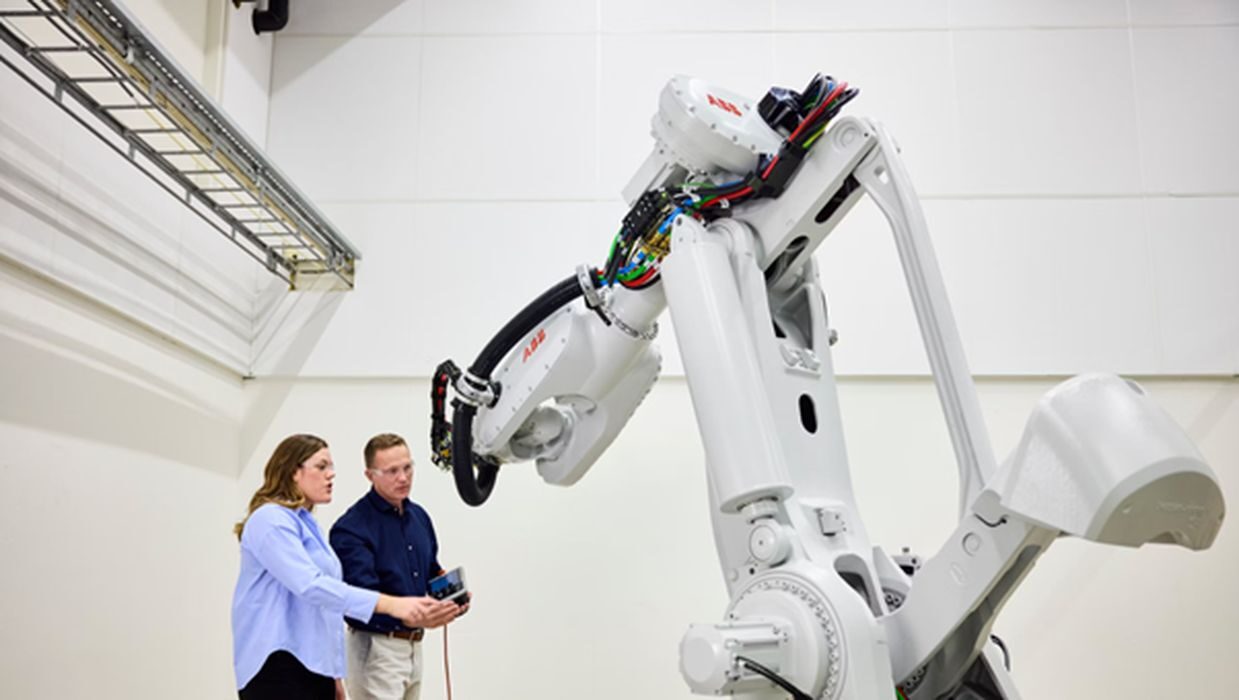
Taken together, the deal reshapes two stories at once. For ABB, converting a capital-intensive robotics unit into roughly US$5.3B in net cash simplifies the portfolio and sharpens its focus on electrification and industrial automation. This matches the trend we’ve described in our Eaton and Schneider Electric stories: power and controls augmented by software to serve accelerating AI and data-center builds. Markets read ABB’s move as balance-sheet strengthening, with shares trading up around the announcement, and management signaling room for targeted M&A to deepen higher-margin segments. The unit leaving ABB is substantial, about US$2.3B in 2024 revenue and roughly 7,000 employees, and closing is scheduled for mid to late 2026.
For Japan, transferring one of the world’s largest industrial-robot makers to a Japanese owner further consolidates a leadership position built over decades, precisely as national champions push to fuse AI with factory hardware. SoftBank’s thesis is explicitly “Physical AI,” and ABB’s profitable, deeply embedded robotics platform gives Japan another global-scale stage to execute that vision.
3D Printing Enters the Frame
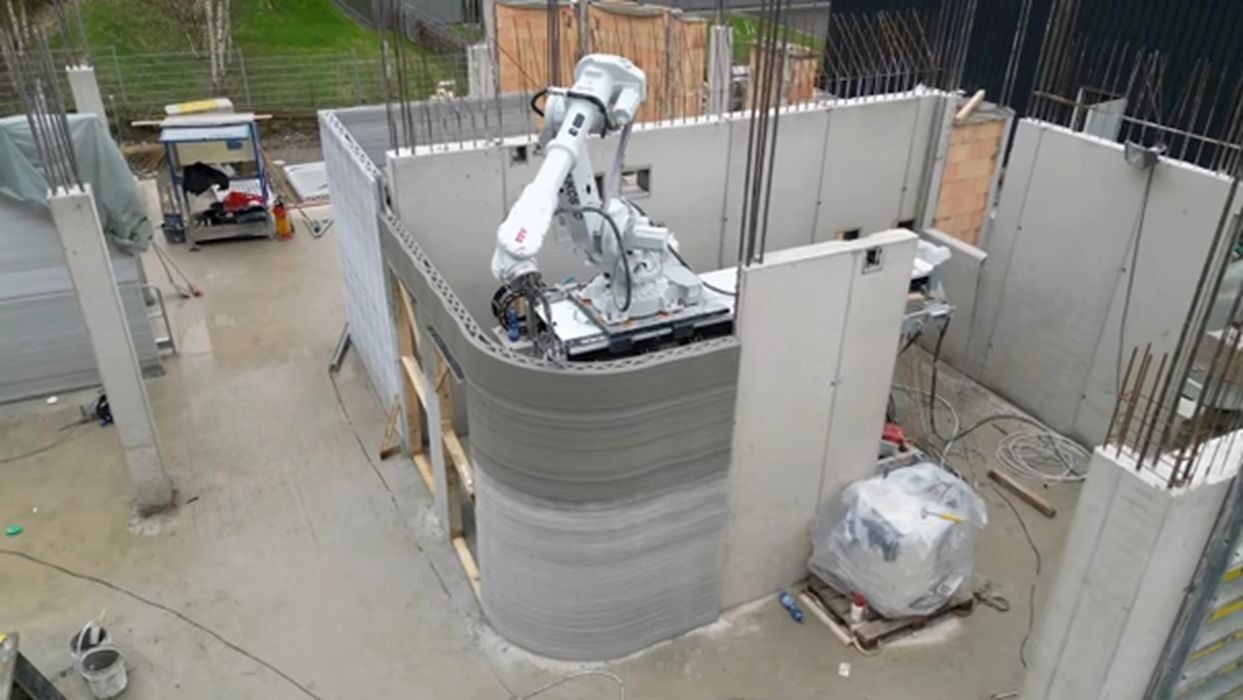
There is a straightforward link between this deal and additive manufacturing. ABB’s robots already serve as motion platforms in large-format 3D printing across metals, concrete, and polymers. Examples include MX3D’s stainless-steel bridge produced with robot-based WAAM, concrete-printing projects such as Simpliforge and the German Red Cross headquarters build using an ABB IRB 6700, and pellet-extrusion systems from partners like Massive Dimension mounted on ABB industrial and collaborative arms. With multi-axis deposition and offline simulation, a single robotic additive manufacturing workcell can print large or irregular parts and then pivot to post-processing tasks such as support removal, sanding, or inspection with minimal human intervention.
This is where SoftBank’s “Physical AI” vision naturally fits. Pair industrial robots with AI that plans toolpaths, monitors material behavior in real time, and corrects defects on the fly, and get a closed-loop production: models learn from sensors, printers adjust mid-build, and robots reconfigure the workcell without long changeovers. Add generative design at the front end, and the loop tightens further as lightweight lattices and multi-material parts move directly into multi-axis print paths and automated finishing.
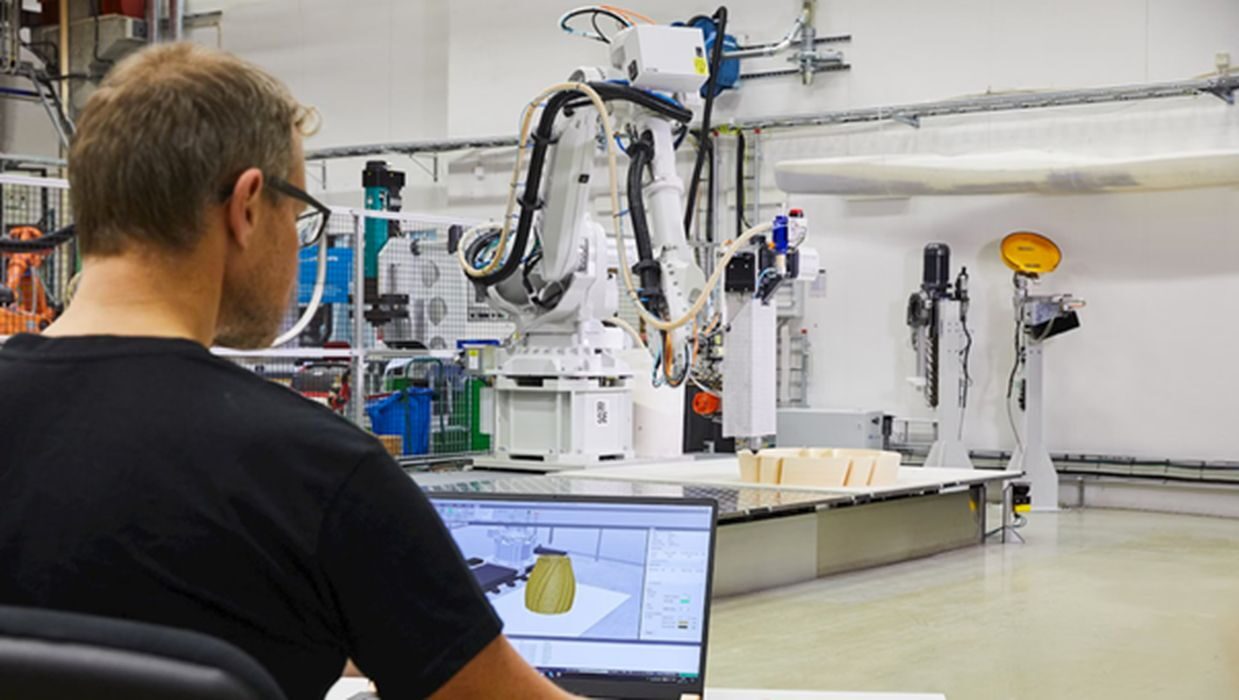
While the 3D-printing link isn’t spelled out in the deal announcements, it is a logical extension of what both sides already do. On ABB’s end, the RobotStudio 3D Printing toolset converts slicer paths into RAPID code and simulates multi-axis deposition for processes like WAAM, concrete, and pellet extrusion, so ABB’s robots already act as the motion backbone for large-format additive. On SoftBank’s side, the group has direct exposure to the sector from leading Formlabs’ Series E, which included governance involvement and hands-on familiarity with scaling 3D-printing businesses. Taken together, those facts make an AI-robotics-additive convergence a well-supported expectation rather than speculation.
ABB’s refocus reinforces the backbone these cells need. Electrification and controls provide stable power, deterministic control, and plant-level orchestration that links printers, robot handlers, and vision systems under one command layer.
This deal brings together the key pieces of the next wave in AI and robotics: advanced models, industrial motion, additive workflows, and the electrification and controls that tie it all together. For US-based companies building or piloting these capabilities, much of that work can qualify for the R&D Tax Credit described below.
The Research & Development Tax Credit
The now permanent Research and Development (R&D) Tax Credit is available for companies developing new or improved products, processes and/or software.
3D printing can help boost a company’s R&D Tax Credits. Wages for technical employees creating, testing and revising 3D printed prototypes can be included as a percentage of eligible time spent on the R&D Tax Credit. Similarly, when used as a method of improving a process, time spent integrating 3D printing hardware and software counts as an eligible activity. Lastly, when used for modeling and preproduction, the costs of filaments consumed during the development process may also be recovered.
Whether it is used for creating and testing prototypes or for final production, 3D printing is a great indicator that R&D Credit-eligible activities are taking place. Companies implementing this technology at any point should consider taking advantage of R&D Tax Credits.
Conclusion
SoftBank’s purchase of ABB’s robotics unit isn’t just a portfolio shuffle; it’s a signal that AI is moving from code to capable machines. While Japan tightens its grip on industrial robotics and ABB redirects fresh capital toward electrification and automation, the connective tissue between them increasingly includes large-format 3D printing. As “Physical AI” takes shape, with robots that learn, print, inspect, and adapt, the winners will be manufacturers that turn pilots into production. For U.S. firms, there’s a potential double payoff: smarter, more resilient factories and R&D Tax Credit benefits for the experimentation that gets them there.