
Charles R. Goulding and Kate Esposito consider how the Chan Zuckerberg Initiative is revolutionizing biotechnology through low-cost 3D bioprinting and advanced cellular research across its three pioneering Biohubs.
On Sunday, June 29, 2025, the New York Times reported that the Chan Zuckerberg Initiative, created by Mark Zuckerberg and Priscilla Chan, has undergone a significant shift from embracing the social sciences to primarily concentrating on hard sciences. As a result of this shift, the Initiative has made biotechnology a bigger priority, relying on its three Biohub centers to further its goal of advancing 3D bioprinting research. The CZ Biohub San Francisco, established in 2016 as the first of the three biohubs, focuses on the creation of easily accessible, cost-effective 3D printers. CZ Biohub Chicago, created in March 2023, centers around the use of sensors and probes to monitor cellular signals specifically related to inflammatory diseases, in addition to the use of 3D bioprinting to create tissue constructs to better understand disease mechanisms. Established in October 2023, CZ Biohub New York concentrates on bioengineering immune cells to detect and fix cellular abnormalities.
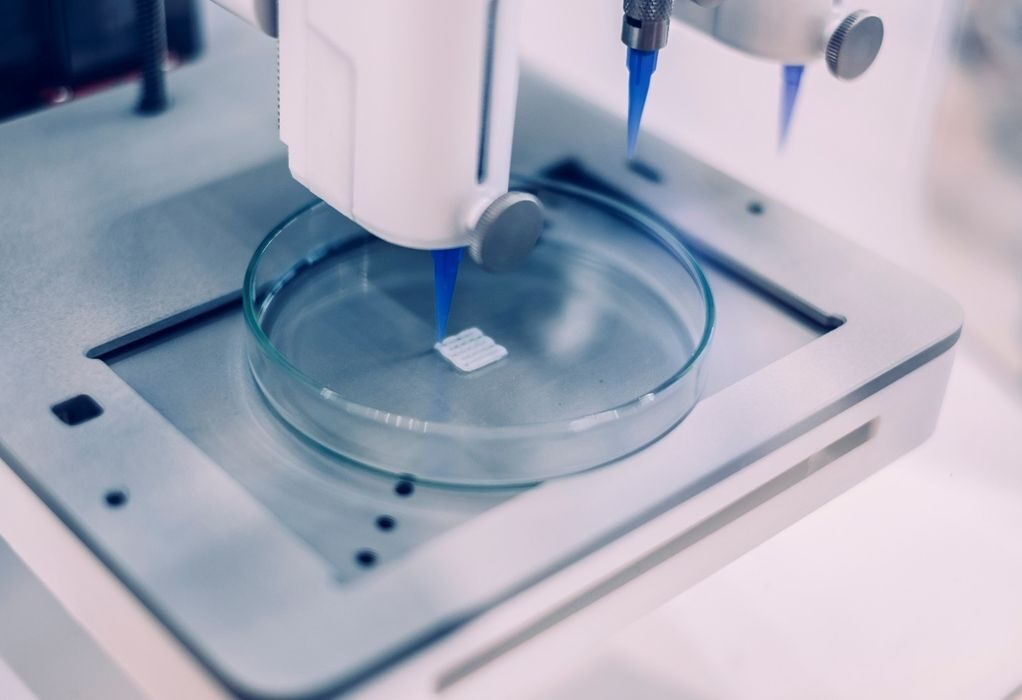
CZ Biohub San Francisco Investigator Mark Skylar-Scott and his team at Stanford have developed what they call “Printess”, an open-source 3D bioprinter built from 3D printed and off-the-shelf components. Printess uses Direct Ink Writing (DIW), a type of 3D printing technology regarded as one of the most versatile 3D bioprinting techniques because of its ability to accommodate a wide range of material viscosities and chemistries (Weiss et al., 2025). However, unlike the US$10,000 to US$200,000 price range that typically accompanies DIW, Printess costs only $250 (Sher, 2025). Furthermore, unlike most DIW systems, Printess is open-source, with all design files, firmware, and assembly instructions freely available online. This is revolutionary, as it enables almost any lab to integrate bioprinting. Printess is also customizable, allowing users to alter its printheads, build volume, and material capabilities as needed.
Despite its low cost, Printess yields exceptional results. It is extremely accurate, with precision tests boasting a repeatability of ±5 µm and minimal backlash errors (Sher, 2025). Printess can use various syringe sizes, which allows for a wide range of material viscosities to be printed. These multimaterial capabilities include multimaterial mixing, multimaterial multinozzle printing, and embedded printing (Weiss et al., 2025). As a result, Printess has precise control over material composition and structure, making it suitable for applications across a wide array of fields, including tissue engineering, energy storage, and robotics. It has created cell-laden structures that are highly viable, offering a low-cost alternative to tissue engineering research. Additionally, it has printed photocurable hydrogels and thermally cured elastomers, which are useful for drug delivery and wound healing (Sher, 2025).
CZ Biohub Chicago, led by Professor Shana O. Kelley, aims to use bioprinted technologies to precisely measure biological processes within human tissues, with the goal of understanding and treating the inflammatory states that cause many diseases. Scientists at CZ Biohub Chicago embedded thousands of sensors and sampling probes in tissues, enabling scientists to monitor molecular and cellular signals and decipher how disruptions in signaling processes lead to inflammation and disease (Chan Zuckerberg Initiative, 2023). To gain insight into how tissues function in both health and disease, engineered platforms combining several state-of-the-art technologies are in development to take the first holistic and direct measurements of inflammation in human tissue. Among these is a 3D bioelectronics technology capable of recording and modulating inflammation activities, in development by PME Assistant Professor Sihong Wang. According to Wang, this technology will be able to interface with tissue models in a 3D-embedded manner, enabling scientists to develop a deeper understanding of biological processes such as inflammation (Fassbender & Fassbender, 2024).
3D bioprinting techniques will also be utilized to build multiscale cardiac tissue models to further help scientists understand disease mechanisms (Chan Zuckerberg Biohub, n.d.). 3D bioprinters function by precisely layering bioinks composed of living cells, biomaterials, hydrogels, and growth factors over one another, creating a 3D tissue model that can mimic the structure, physiology, and mechanics of human cartilage, muscle, or organs (Transforming Medical Images into Human Tissue with 3D Bioprinting, 2024). These advanced tissue models will enable CZ Biohub Chicago researchers to better monitor immune cell activities within tissues in the hope of discovering ways to prevent immune cells from contributing to the onset of inflammatory diseases.
3D bioelectronic technologies like the ones in development by CZ Biohub Chicago’s Sihong Wang have also become increasingly popular in New York. In May 2025, Northwell Health opened a Center for Bioelectronic Medicine in Manhasset, New York. The Center aims to connect patients to bioelectronic medicine clinical trials and is optimistic that bioelectronic medicine could replace certain drugs with serious side effects and high costs (Allen & Devaney, 2025). The efforts in both Chicago and New York to develop and implement new 3D bioelectronic technologies emphasize the growing importance of the work the Chan Zuckerberg Initiative is doing to increase the use of 3D bioprinting in the medical field.
Professor Andrea Califano and his team at CZ Biohub New York plan to utilize the natural capabilities of immune cells to recognize and fix cellular abnormalities, in addition to bioengineering immune cells to detect and treat events before diseases form. Researchers have collaborated to build new tools that can characterize and modify immune cells to identify potential problems in early stages (Chan Zuckerberg Biohub, n.d.) Immune cells will be bioengineered to scout, report, and repair damage to cells before serious illnesses take hold. The CZ Biohub New York plans to first apply this approach to cancers that are difficult to detect, such as pancreatic and ovarian cancer, and neurodegenerative diseases, such as Parkinson’s and Alzheimer’s.
Though CZ Biohub New York has not explicitly mentioned the use of 3D bioprinting in their research, studies have shown that bioprinting may help further their investigations. For instance, 3D bioprinting can be used to create accurate and representative cancer models that emulate interactions between cancer cells and their environment (Wu et al., 2023). These models allow researchers to observe how bioengineered immune cells interact with tumor cells, helping to identify ways to enhance their activity. Researchers at the Leiden Academic Center for Drug Research developed a model to advance cancer immunotherapy using a 3D printer to create mini-tumors in an environment that closely mimics human tissue. They also created a method to monitor interactions between these tumors and immune cells during tests (Wakefield, 2024). Furthermore, using 3D microfluidic bioprinting, researchers can create models of neurodegenerative diseases with a high degree of structural and functional complexity (Iafrate & Cidonio, 2025). The accuracy of these models helps bridge critical gaps in researchers’ understanding of neurodegenerative diseases and paves the way for innovative therapeutic approaches. These findings suggest that CZ Biohub New York can use 3D bioprinting to aid its researchers in understanding immune cells and detecting early stages of disease.
The Research & Development Tax Credit
The now permanent Research and Development (R&D) Tax Credit is available for companies developing new or improved products, processes and/or software.
3D printing can help boost a company’s R&D Tax Credits. Wages for technical employees creating, testing and revising 3D printed prototypes are typically eligible expenses toward the R&D Tax Credit. Similarly, when used as a method of improving a process, time spent integrating 3D printing hardware and software can also be an eligible R&D expense. Lastly, when used for modeling and preproduction, the costs of filaments consumed during the development process may also be recovered.
Whether it is used for creating and testing prototypes or for final production, 3D printing is a great indicator that R&D Credit-eligible activities are taking place. Companies implementing this technology at any point should consider taking advantage of R&D Tax Credits.
With a California facility, the company will be able to utilize the lucrative California R&D tax credit for its U.S. innovation activities.
Conclusion
The Chan Zuckerberg Initiative’s focus on understanding and manipulating biological systems is reflected in the efforts of all three CZ Biohubs and their development of cutting-edge tools and technologies. Through CZ Biohub San Francisco’s creation of a low-cost and easily accessible 3D bioprinter, CZ Biohub Chicago’s use of 3D printed tissue models to understand disease mechanisms, and CZ Biohub New York’s efforts to bioengineer immune cells, the Chan Zuckerberg Initiative is making great strides in advancing our understanding of biology and improving human health.
At a time when the federal government is restricting some university life science research grants, the shift in Chan Zuckerberg’s funding to more biotechnology is particularly important.
