
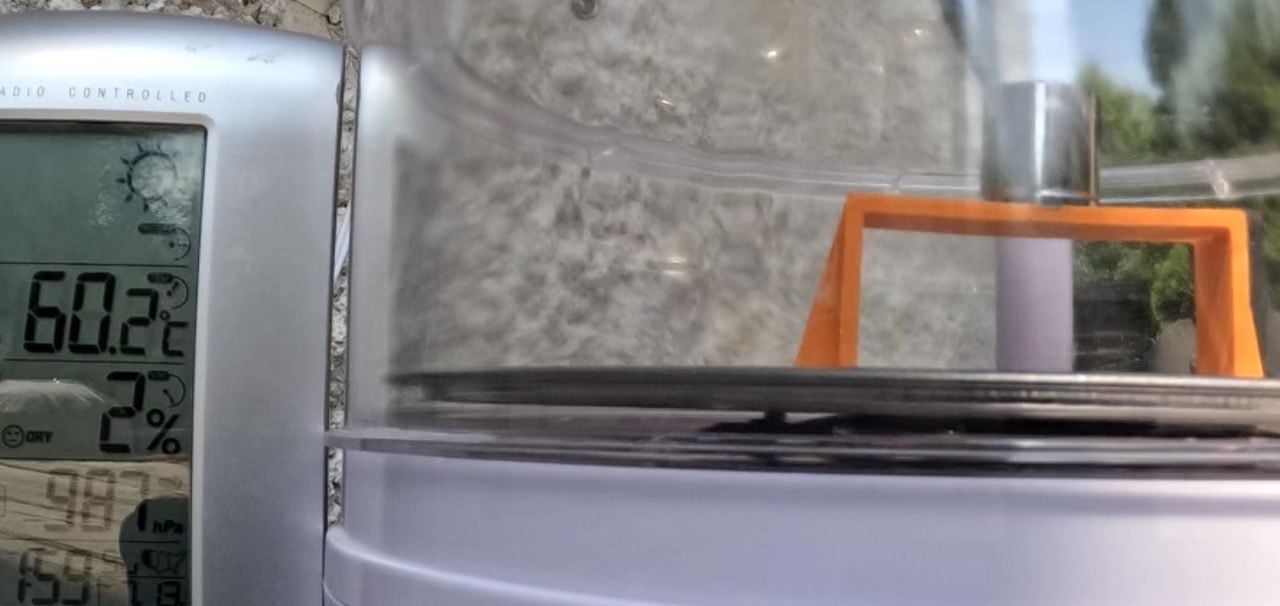
We’ve been testing the new high-temperature PLA material from Polymaker.
Polymaker is certainly one of the most notable 3D printer filament manufacturers on the planet. They have an enormous range of materials, including what is certainly the largest selection of filament colours available today.
One of their other characteristics is a tendency to experiment with new materials and approaches. Very often we see the company introduce new materials and associated hardware and software.
One of their latest innovations is a high-temperature PLA material. This is quite surprising, because PLA, the most-printed material, has a terribly low softening temperature.
This means that PLA prints are not suitable for high-temperature applications. For example, if you were to print a phone holder for your automobile, it would likely sag when summer temperatures rise inside the vehicle. For such applications, ABS, PETG, or other materials are better choices.
The new product is “HT-PLA”, and it comes in two varieties. One is a plain PLA mix, and the other is a special glass fibre version that provides extra strength. HT-PLA comes in 14 different colours, while the GF version is available in nine.
Polymaker states the heat stability temperature of HT-PLA is around 150°C, which is vastly higher than the typical PLA softening temperature, which is around 50°C.
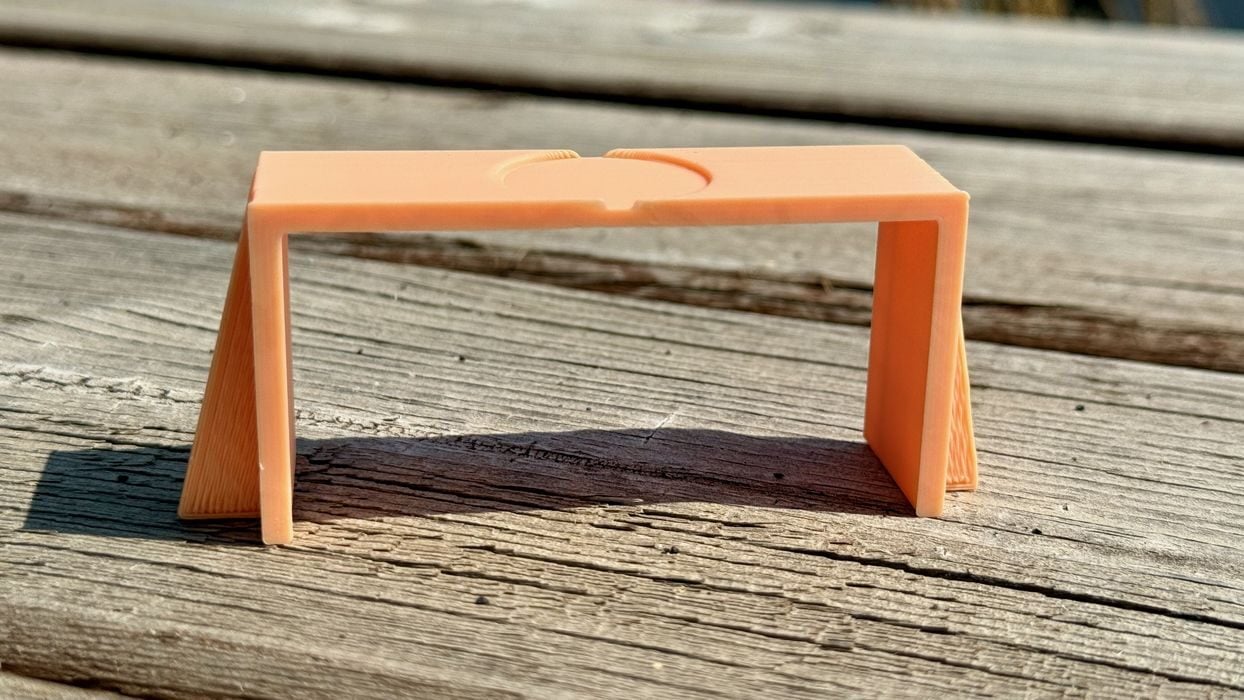
We decided to do a simple test of the material’s capabilities with some rudimentary testing equipment. Our plan was to design and print a set of bridge-like structures in various materials. These would then be placed within a heated chamber, with a small weight on the bridge. A timelapse video of the progress would tell us the temperature at which the material began to deform.
We printed our bridge in four different materials:
- Anycubic PLA Orange
- eSun ePLA+HS White
- Bambu Matte PLA Black
- Polymaker HT-PLA Orange
I used HT-PLA print parameters from Polymaker, which turn out to be basically the same as normal PLA. This is a material you should be able to print very easily. I found that its printing behaviour was identical to typical PLA.
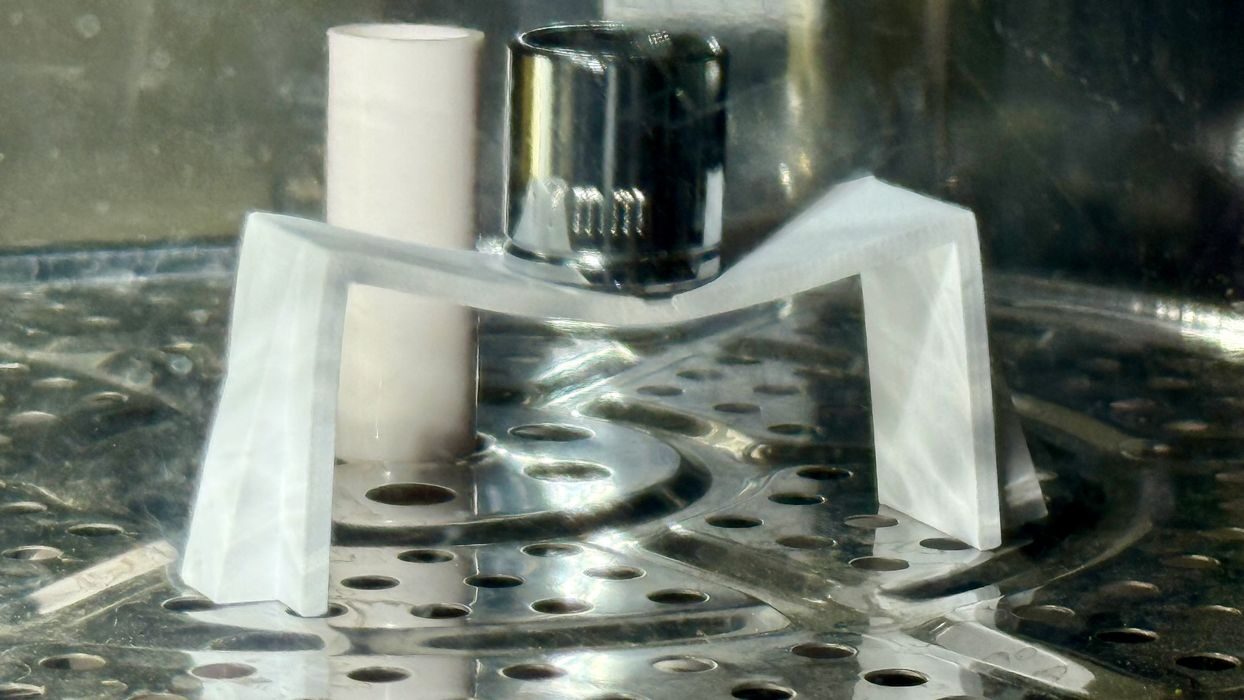
The bridges were put inside our handy filament dryer, which is supposedly able to reach 70°C. A wireless temperature gauge was placed inside, and we used a GoPro to record the progress of each experiment. We ran the experiment a couple of times each to confirm findings.
Here’s what we found:
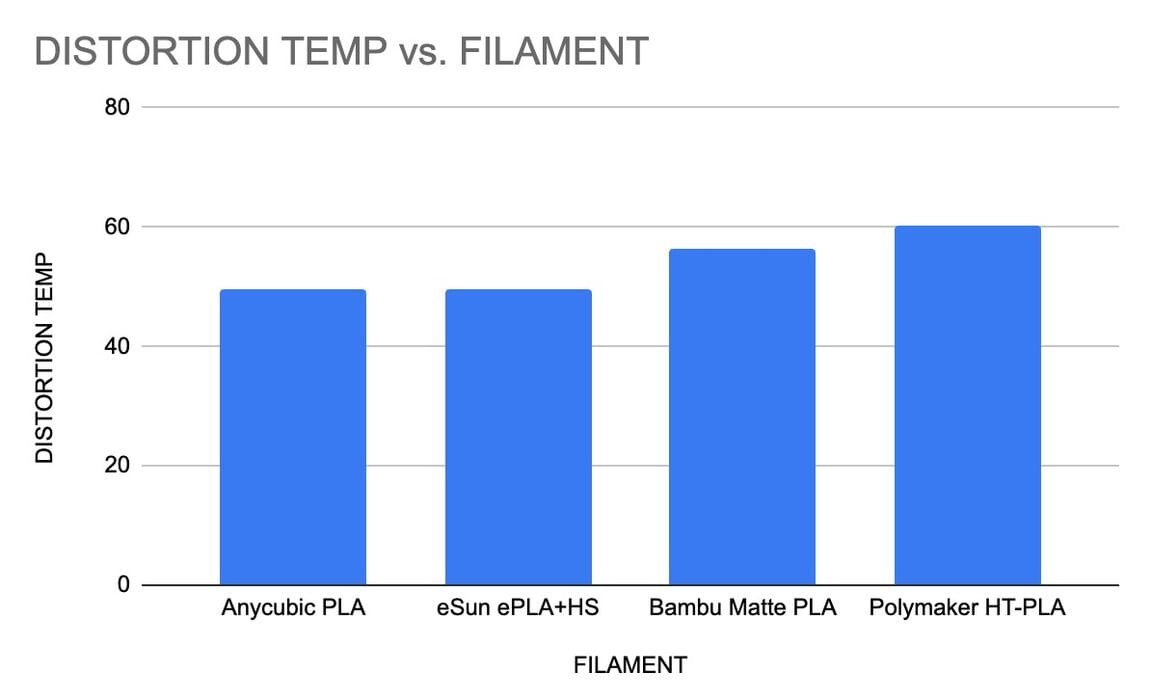
The Anycubic and eSun PLA filaments fared the worst under extreme temperatures, with both bridges sagging noticeably as temperatures neared 50°C. Both ended up sagging at 49.6°C. Were we to let the test run further, the bridges would have completely collapsed to a flat state.
The Bambu Lab Matte PLA fared much better, being able to resist sagging until 56.4°C. This is quite interesting, as this is a characteristic that Bambu Lab does not advertise: their PLA seems to have better thermal resistance than some other PLAs on the market.
Finally, we tested the Polymaker HT-PLA, and found surprising results. I’ve marked the sag temperature at 60.2°C, which seems a lot less than the 150°C stated by the company. However, that’s thermal stability while not under a load, and here we definitely had a load.
The really interesting thing is that after the initial very slight sag, the bridge did not distort any further. It held up as high a temperature as we could coax the filament dryer to go.
After I removed the hot HT-PLA bridge from the dryer, I found that it actually was soft — it could be easily bent. Yet somehow it didn’t distort much while under the load.
This is a behaviour that is quite different from typical PLA, and could open up some additional applications for this material. If you have a need for a PLA part that must exist in a higher temperature environment — but not under significant load — HT-PLA could be the material for you.
Via Polymaker
