
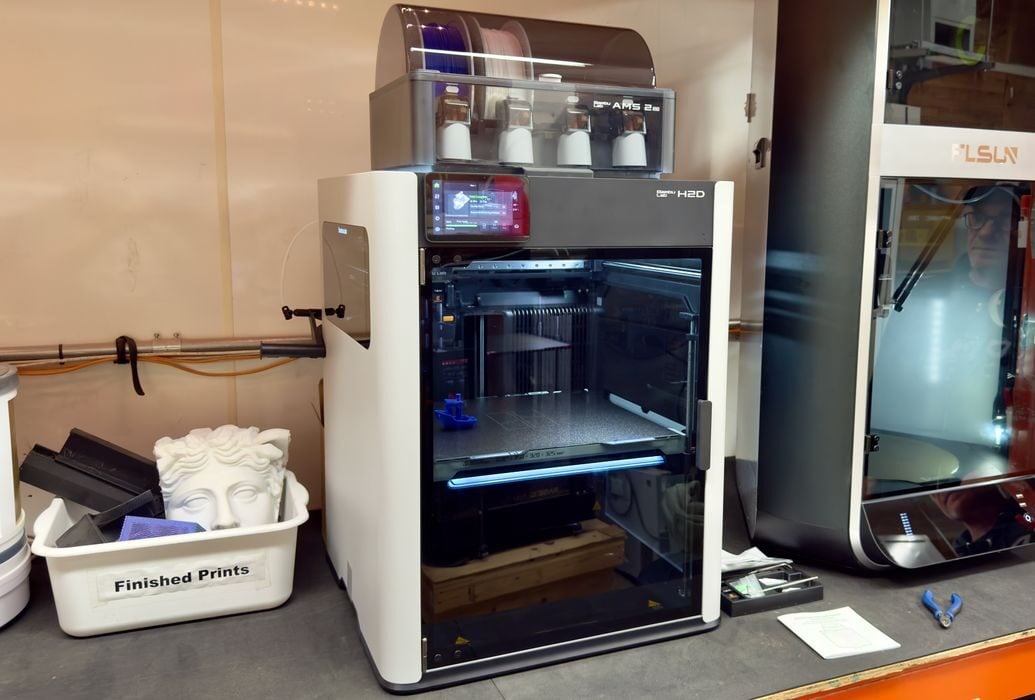
Our look at Bambu Lab’s amazing H2D 3D printer concludes with software, print results and final thoughts.
This is part three of a three part series, please read parts one and two.
Bambu Lab H2D Software
Not too much surprising here because the H2D uses the exact same software as is used for all the Bambu Lab devices: BambuStudio on the desktop, and Bambu Handy on mobile. Both work equally well on the H2D as they do on other Bambu Lab devices.
There are some twists and turns with the H2D, however, as it involves dual extruders. No other Bambu Lab device has this characteristic, so there are some extra things to deal with.
Those include the selection of filament saving mode, for example.
I should say this again: you have to be very conscious of where you’ve loaded filaments on the H2D, as it’s easy for the human operator to mess things up. Best practice would be to double check everything before you proceed with a job.
Bambu Lab H2D Print Results
The print results on the H2D were nothing short of amazing. The print quality was universally outstanding on each print we attempted — and our only print fail was the misdetection of material on the plate above.
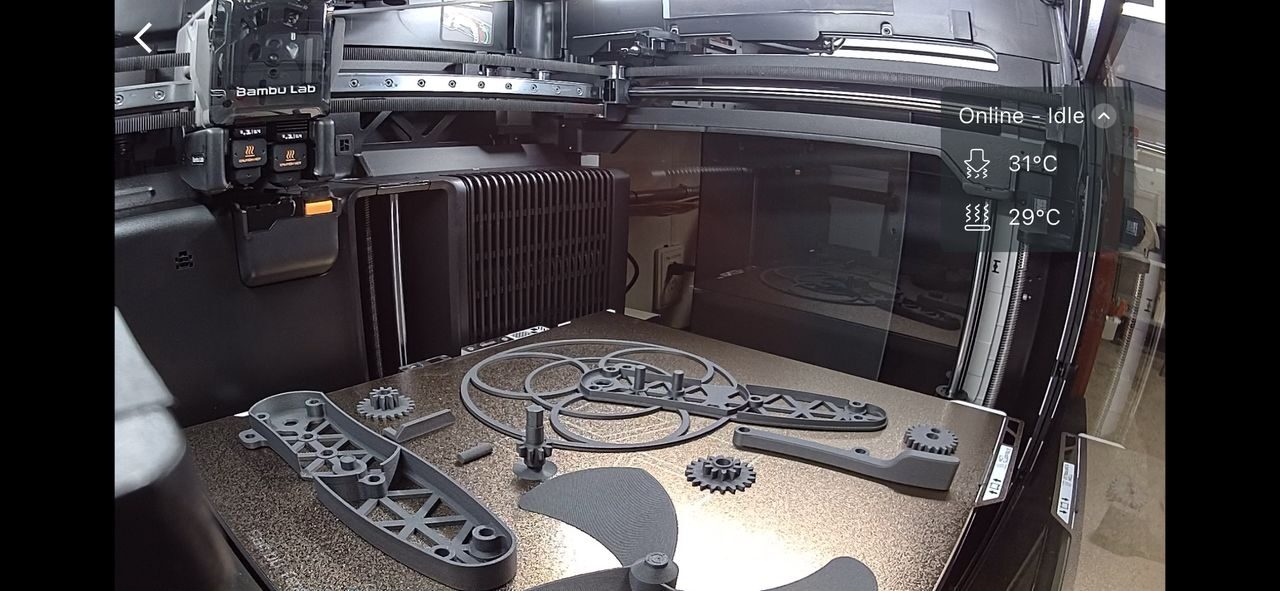
We printed countless items in a variety of materials. Here we printed all the parts for a mechanical fan. The job finished quickly, and we were easily able to assemble all the parts without issue. The fan works great, too.
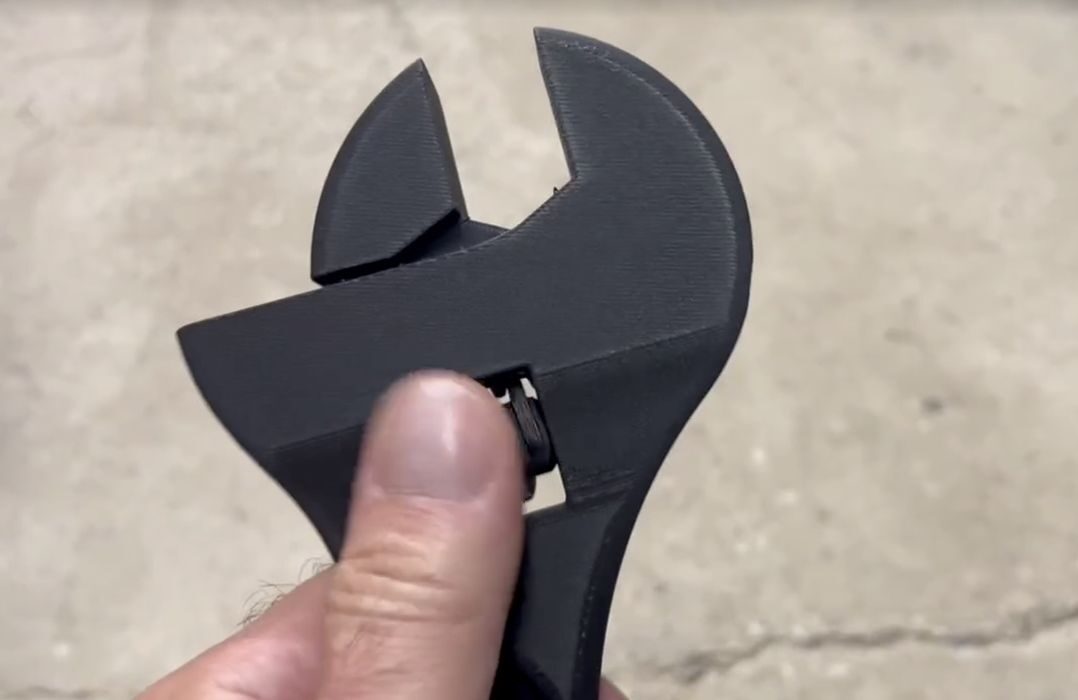
We printed a life-size crescent wrench, which came out perfectly and was easily adjusted. However, we forgot to beef up the infill and perimeters, so it isn’t so useful as an actual wrench.
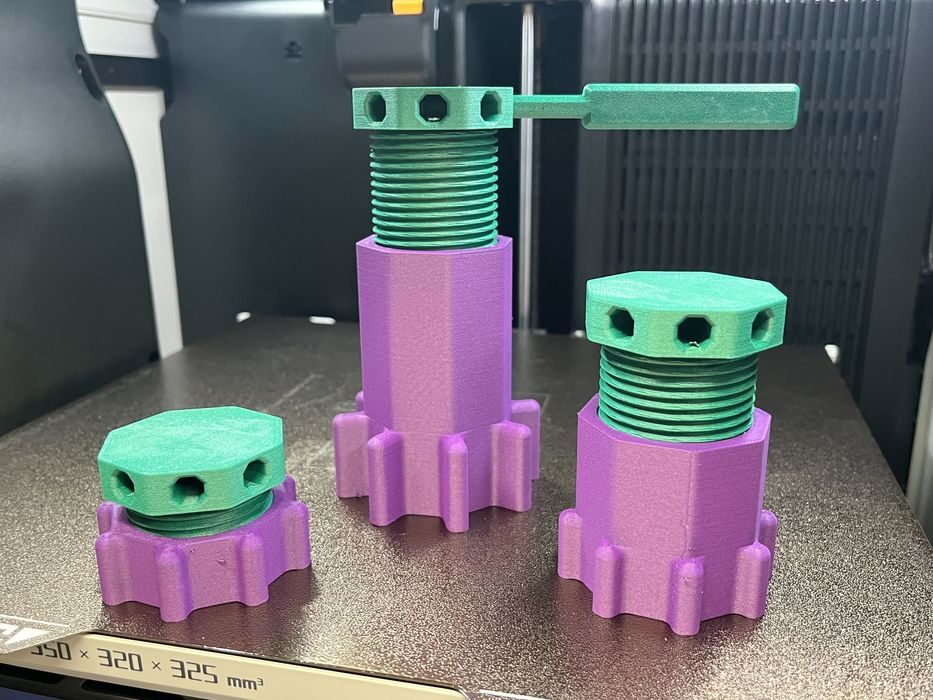
These multicolor prints tested dimensionality, and they fit together without issue.
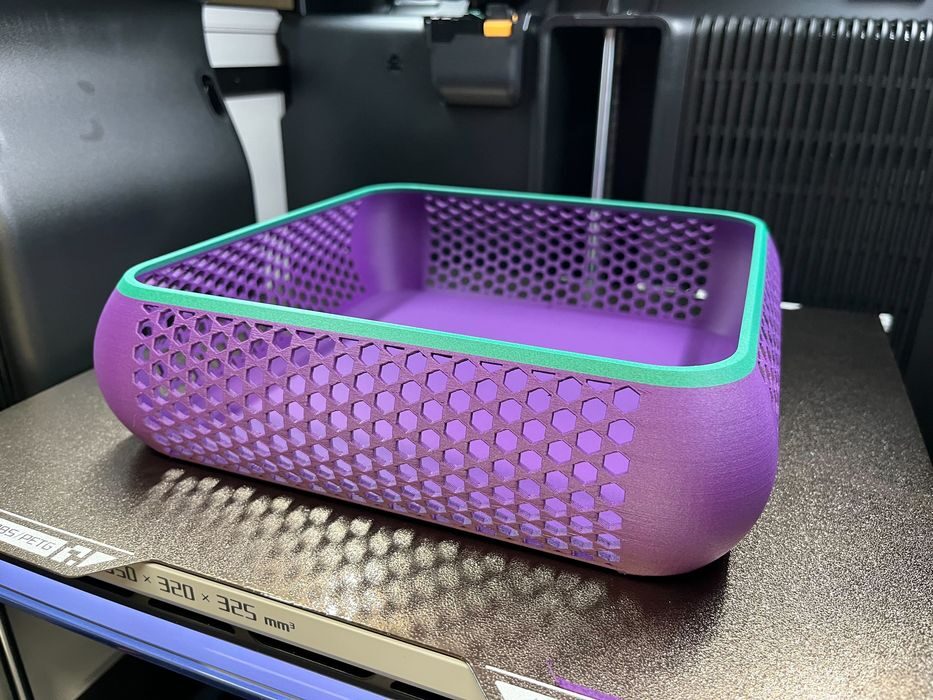
Could the H2D print something large? Here we printed a large multicolor tray, and it was quite impressive, particularly for such a long print.
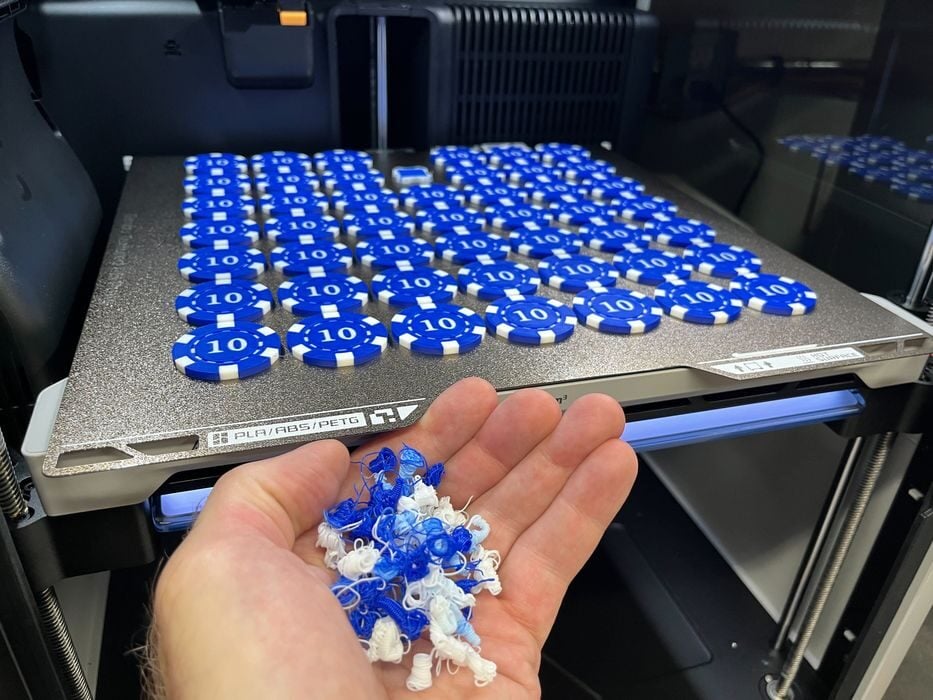
What about mass production? Could the massive build plate on the H2D be used to produce large amounts of parts all at once? We printed a full sheet of casino chips, and they finished perfectly. Unfortunately they could not be cashed in at the local casino.
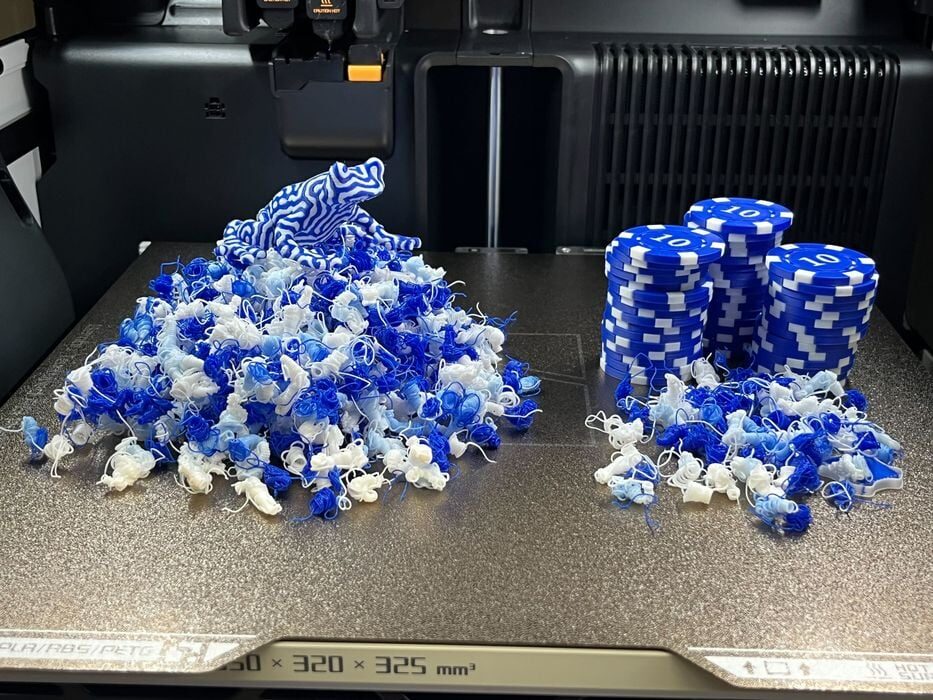
You’ll notice the waste produced when printing the casino chips, but there was far more when printing the multicolor frog. Here’s the comparison of waste when using only the AMS 2 Pro. If we had put blue and white material on each of the two toolheads, there would have been almost no waste. That clearly shows the benefit of dual extrusion, especially when only two colors are used.
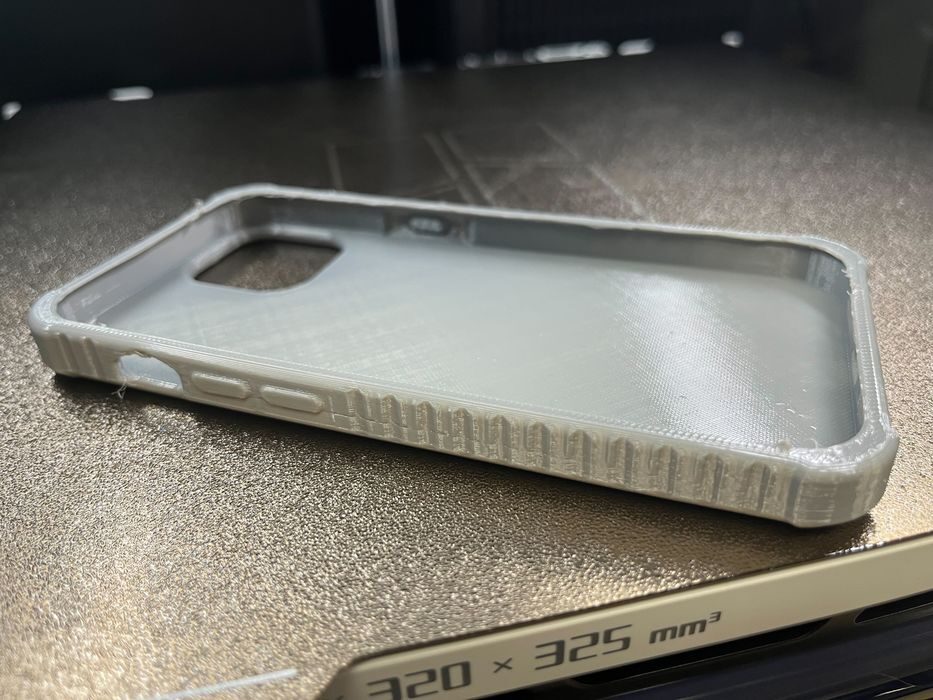
How does TPU work? We printed this phone case and it was not only very smooth, but it fit the phone perfectly and will actually be used.
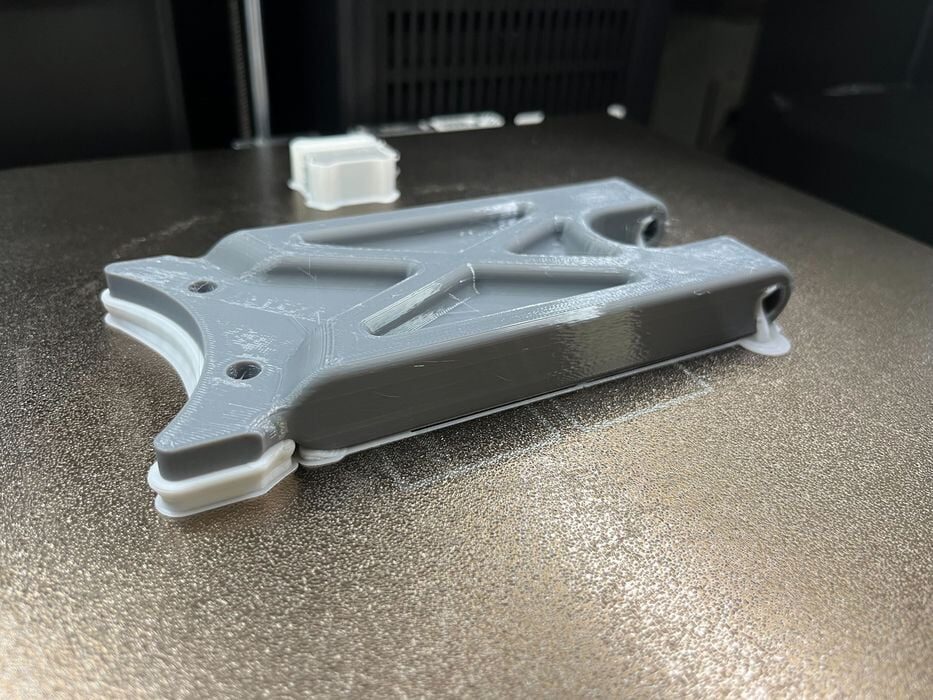
Here we tried something interesting. We printed a part in TPU (grey) and used solid PLA (white) as the support material. This worked extremely well, with smooth surfaces all around. Highly recommended!
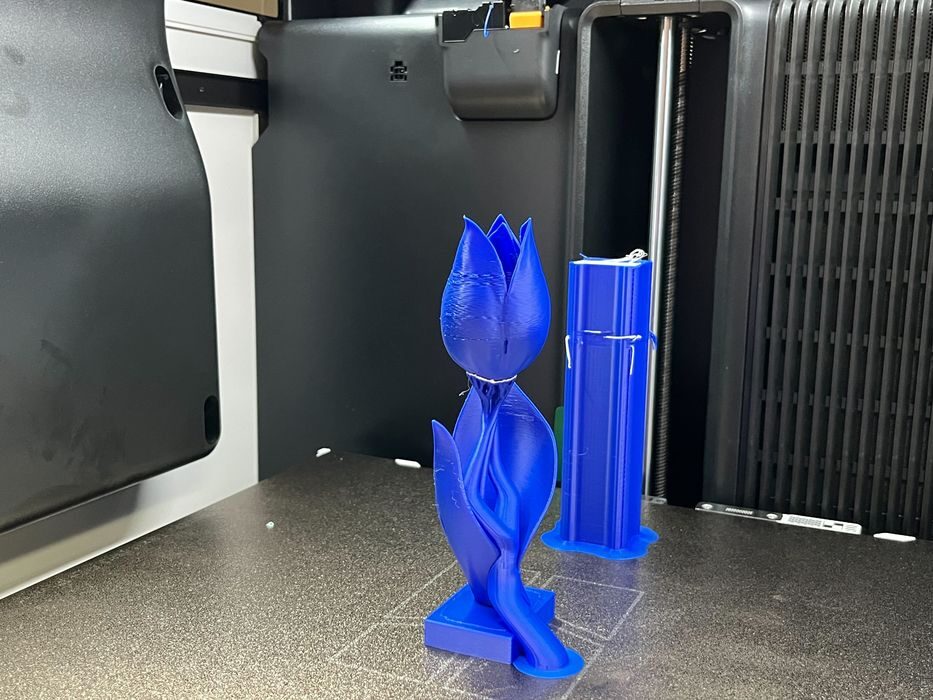
Another interesting combination: we printed a spindly structure in blue PLA, but used Bambu Lab’s PLA support material in the second extruder. You can see a slight white line where the interface only was made in the support material. This allowed the delicate print to easily break off without issue. Note that we didn’t print all the support structures in the relatively expensive support material.
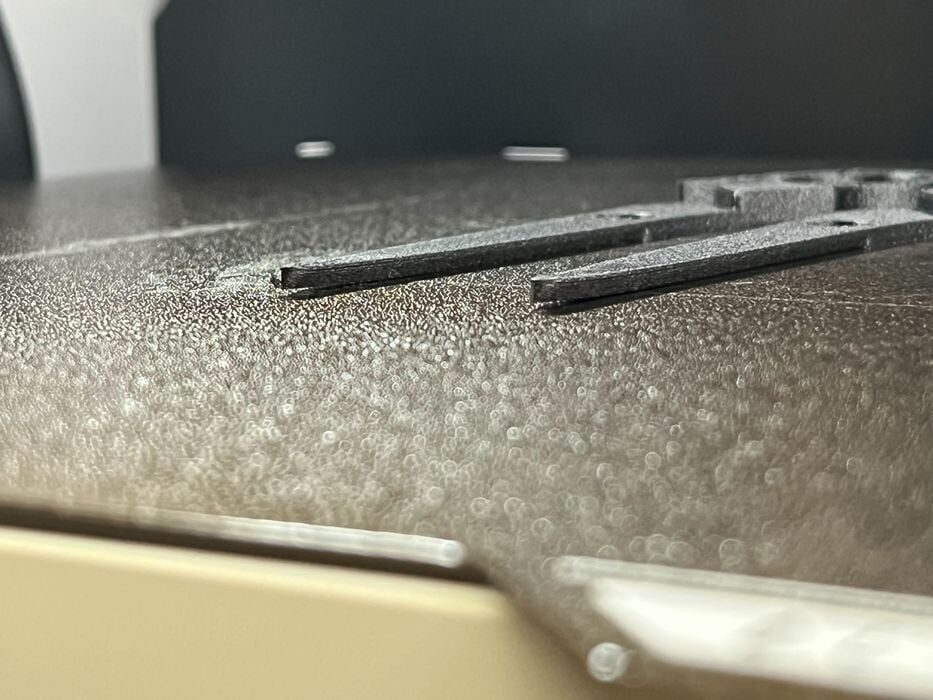
We tested the notoriously tricky PAHT-CF material. It’s a nylon, but with carbon fiber mixed in, and is very strong. However, it doesn’t really stick well to the standard H2D print plate. Here you can see our scissor print lifting. Really you need to use a glue stick with PAHT-CF.
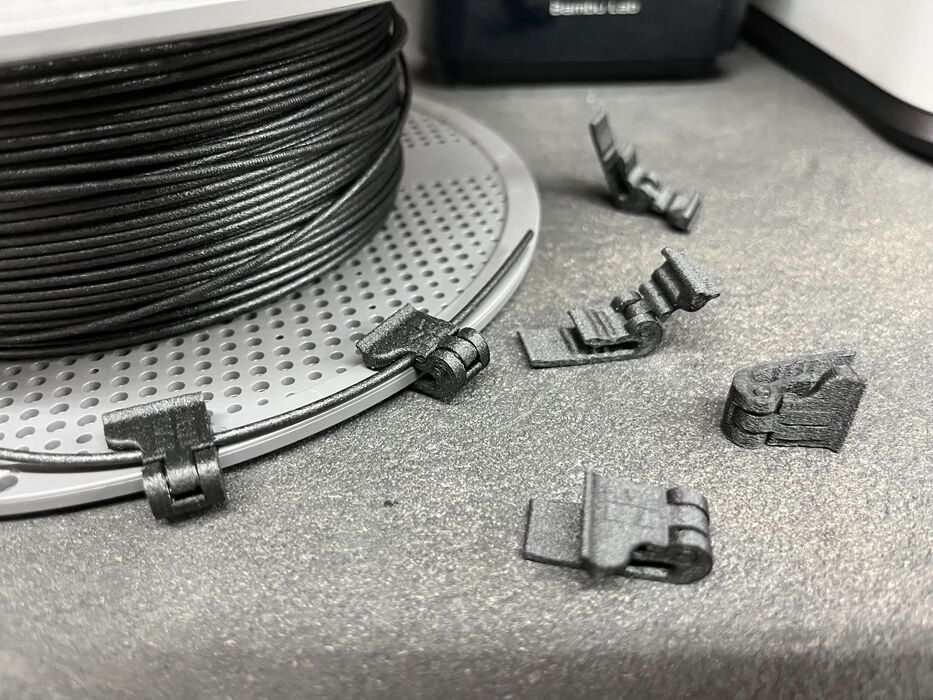
That said, you can print smaller items in PAHT-CF without glue stick applications. Here we printed a number of filament clips that worked perfectly.
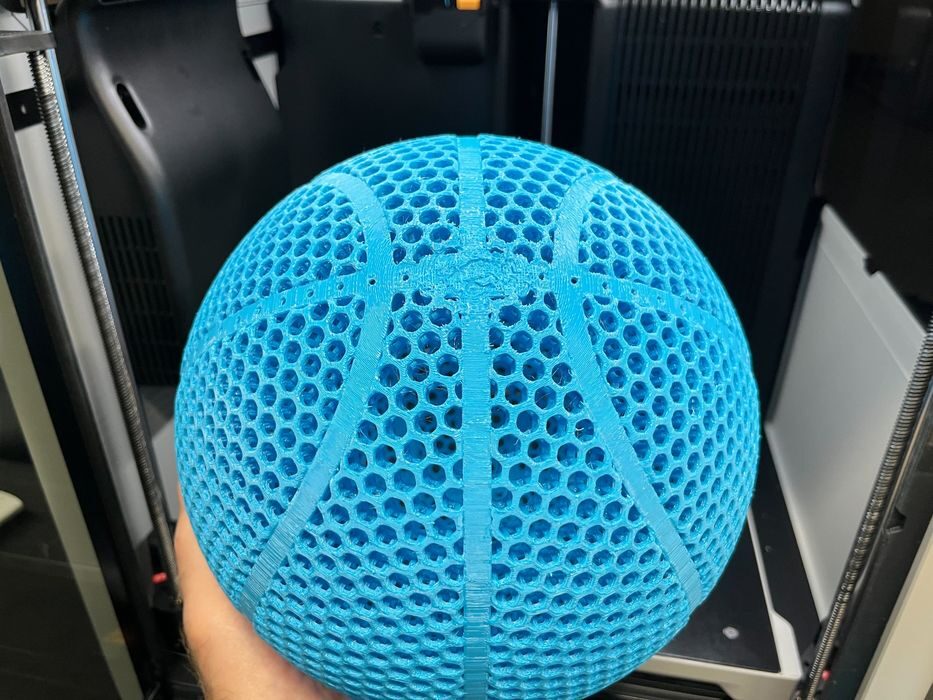
What about that basketball? The job completed successfully, and I can report that the ball looks and feels just like a real basketball. It bounces appropriately, and everyone had a lot of fun with it, until it snapped when bounced a little too hard.
Bambu Lab H2D Final Thoughts
I am very impressed with the Bambu Lab H2D. It’s an incredible workhorse of a 3D printer that seems to be able to handle almost any common 3D print material, and do so very well.
Prints are of exceptional quality regardless of the material used. I believe that’s due to the massive number of sensors and software feedback mechanisms that Bambu Lab has built into the H2D.
The safety key seems to be a compromise between full-factory-in-your-face presentation and none at all. This jives with the H2D’s capabilities: somewhere between consumer and professional.
The very large build plate allows for not only larger prints, but also mass production of parts by batching them together. This machine can crank out a lot of parts in short order.
The only negative aspect I saw on the H2D (aside from the AI detection error) was that it is a bit complex the manage all the different spooling options: left port, right port, AMS, external spool, TPU port, etc. This could be quite confusing to those new to 3D printing. However, it also provides great flexibility to optimize prints and reduce waste.
BAMBU LAB
H2D
★ BEGINNER 7/10
★ ENTHUSIAST 10/10
★ PRODUCTION 10/10
BEST FEATURES
✔︎ Large build volume
✔︎ Exceptional quality
✔︎ Reduced waste
QUESTIONS
✖︎ AI detection
✖︎ Spool confusion
✖︎ It’s pretty heavy!
This is part three of a three part series, please read parts one and two.
Via Bambu Lab
