
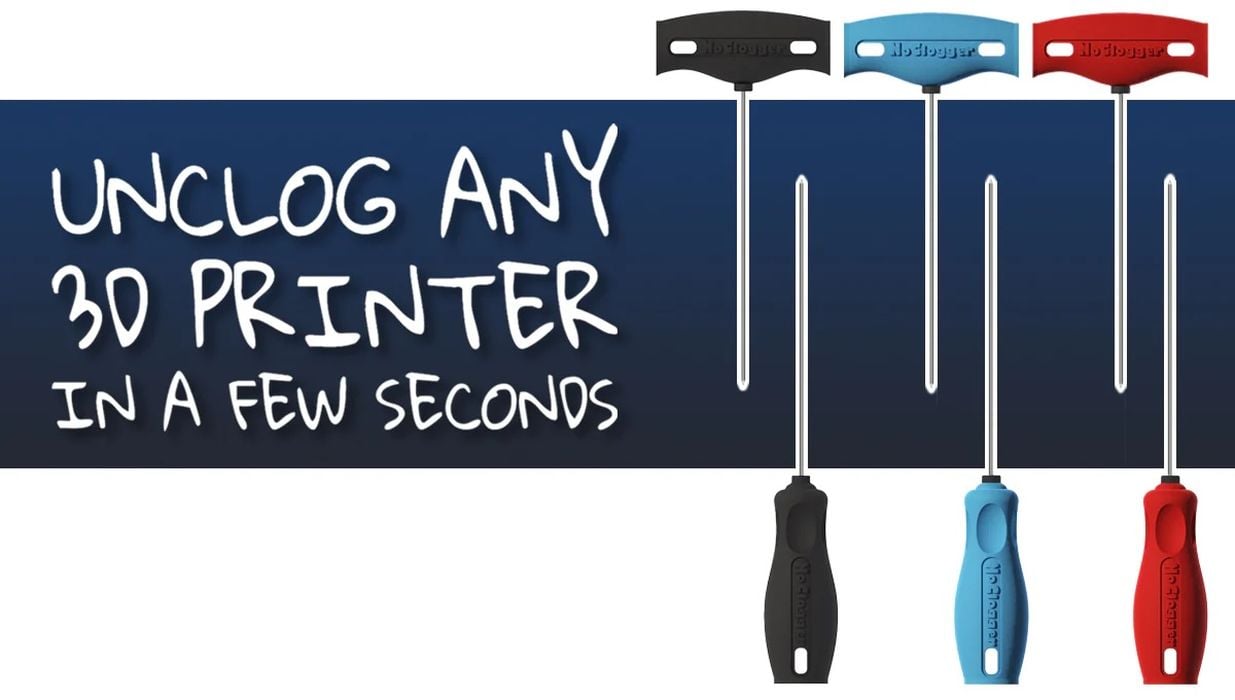
I’ve been seeing a lot of posts about the “NoClogger”, but is it really a useful tool?
This is a specialized, but simple tool for unclogging FFF 3D printer nozzles. Clogs occur when gunk gets trapped in the nozzle, messing up extrusions and setting up for unreliable 3D printing.
The normal procedure to unclog a nozzle is to perform a “cold pull”. This is a relatively simple process where you insert a length of filament into the extruder, heat it up to flow around all the debris in the nozzle, and then cool it down. Just at the moment when it solidifies, you violently pull the filament back out and it emerges with all the debris.
The other method that’s commonly used is to insert a very thin metal probe up into the nozzle to jiggle whatever is there in the faint hope that it would dislodge the obstruction and resume proper flow. That’s what that thin metal tool in a tube is for; you may have seen one that came with your desktop FFF 3D printer.
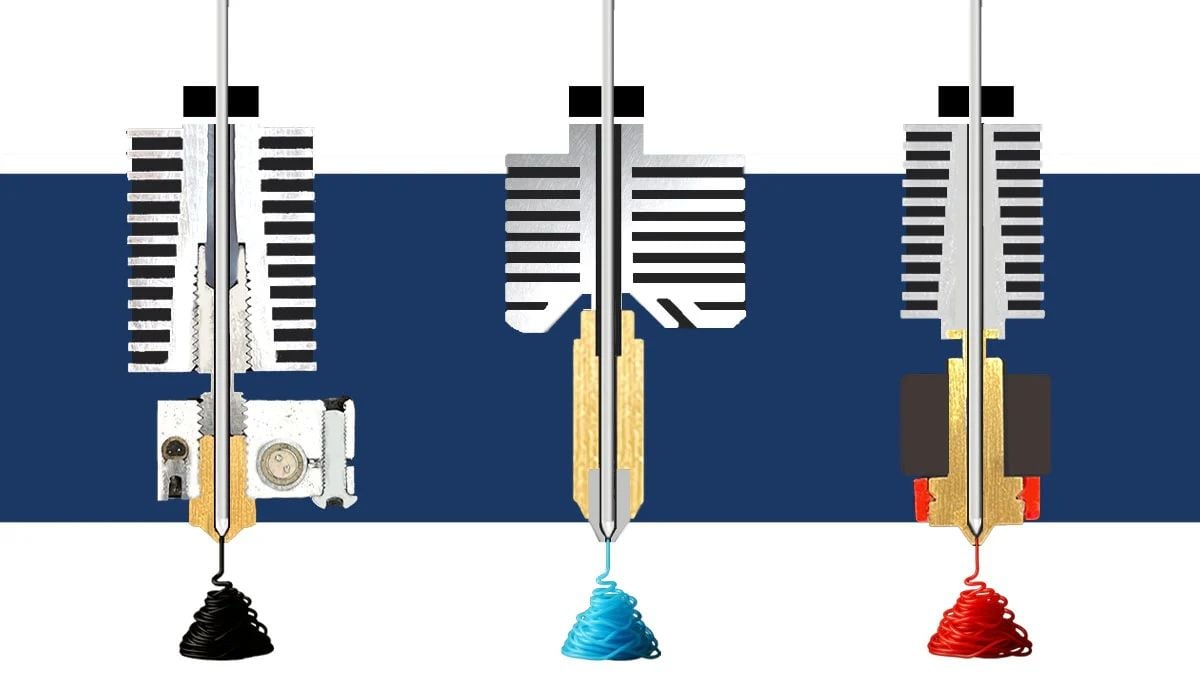
The NoClogger seems to take a different approach. The tool is basically a metal rod about the diameter of standard 1.75mm filament. You will detach the input tube from the top of the hot end, and then plunge the NoClogger all the way down to the end of the nozzle. It will then push any material through the nozzle, thus clearing out the blockage.
In theory.
I am pretty skeptical of this approach because it can’t truly address the real problem. The real problem is that debris accumulates in the nozzle because it can’t make it through the hole. Debris can be stray fibres, dust, higher temperature materials, etc. A typical contaminant is wood fibres from wood filament. Imagine these fibres piling up like logs on a fire at the bottom of the nozzle.
Then ask yourself, “How would a NoClogger push that through the hole?”
Sometimes it might work, but if the debris is actually blocking the hole, then the hole will remain blocked. In those cases, the cold pull method would work best.
I’ve watched a few reviews of the NoClogger, and the use case seems to mostly be for situations when the filament breaks off, leaving a stub inside the hot end unreachable by the extruder gears. The NoClogger would then push this broken-off piece through the nozzle, yay!
But you can do exactly the same thing by simply loading more filament and pushing it through.
My suspicion here is that with the explosion of desktop 3D printers, there are a whole lot of operators that really don’t yet know how to operate their machines, and the NoClogger appears to them to be a magic device.
Is it more effective than that thin probe? Probably. Is it more effective than the cold pull? Absolutely not. Is it easier than the cold pull?
Maybe slightly, but cold pulls are free.
Via NoClogger
