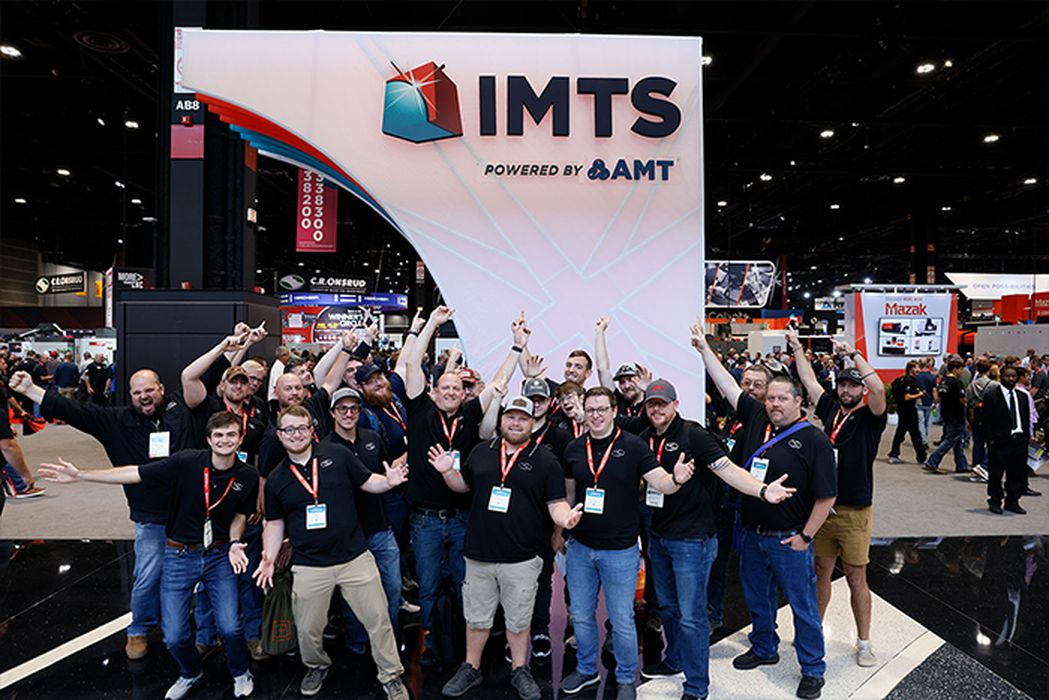
Charles R. Goulding describes his hopes for the IMTS 2026 event in Chicago this September.
Every two years, the International Manufacturing Technology Show (IMTS) transforms Chicago’s McCormick Place into the center of the manufacturing world. Scheduled for September 14-19, 2026, IMTS has long been recognized as North America’s premier manufacturing technology event, bringing together machine tool builders, automation specialists, software developers, additive manufacturing leaders, and manufacturers seeking the next generation of production technologies. With thousands of exhibitors and attendees from around the globe, the show has become an unmatched opportunity to see where manufacturing is headed and how emerging technologies are reshaping the factory floor.
One of the reasons IMTS continues to be so influential is its ability to showcase technologies that once existed in separate worlds but are now increasingly interconnected. Traditional CNC machining, robotics, digital manufacturing, artificial intelligence, industrial software, and additive manufacturing are no longer independent disciplines. Instead, they are becoming integral components of highly automated production environments designed to maximize productivity, quality, and flexibility.
I’m looking forward to attending IMTS in Chicago this year. While I’ve attended many manufacturing events over the years, IMTS remains unique because it consistently demonstrates how established manufacturing processes continue to evolve alongside cutting-edge innovations. This year, I am particularly interested in exploring both the machine tool exhibits and the rapidly expanding additive manufacturing technologies that complement them. Equally exciting is the strong presence of automation, robotics, and medical technology companies that increasingly rely on advanced manufacturing methods, including industrial 3D printing.
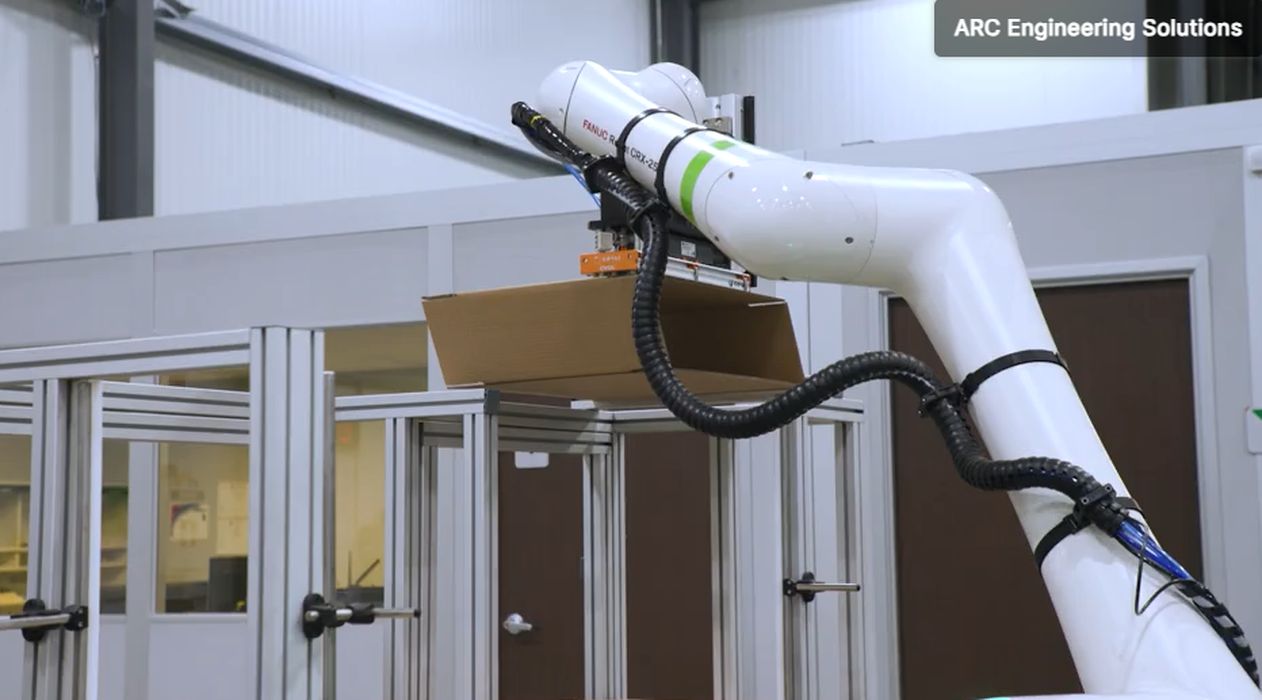
Fanuc
Among the exhibitors I plan to visit is FANUC, whose industrial robots have become nearly ubiquitous in modern manufacturing facilities. Automation and additive manufacturing are becoming increasingly intertwined, and FANUC has demonstrated how robotic systems can be integrated into metal additive manufacturing cells for automated part handling, post-processing, inspection, and production workflow management. Rather than treating additive manufacturing as a standalone technology, manufacturers are integrating robots throughout the production cycle to reduce labor requirements while improving consistency and throughput.
The relationship between robotics and additive manufacturing extends even further. Robotic systems are increasingly being used for large-format directed energy deposition (DED) applications, where multi-axis robotic arms provide greater flexibility than conventional machine configurations. As manufacturers seek to automate entire production cells, companies like FANUC are helping bridge the gap between additive manufacturing equipment and the broader smart factory ecosystem.
Siemens
Another exhibitor that continues to push digital manufacturing forward is Siemens. Few companies have invested as heavily in creating a comprehensive digital manufacturing platform that connects product design, simulation, additive manufacturing, machining, and factory automation. We have covered Siemens on Fabbaloo multiple times previously. Whether it was Siemens and NVIDIA at the CES 2026 conference; and, about how Siemens’ Dotmatics acquisition supercharged 3D printing. Siemens has been integrating 3D printing and automation for years now.
Siemens’ NX software has become one of the industry’s leading platforms for designing parts specifically optimized for additive manufacturing.
More importantly, Siemens has demonstrated how digital twins allow engineers to simulate additive manufacturing processes before production even begins. This capability reduces costly trial-and-error development while improving part quality and accelerating product introduction. In medical manufacturing, aerospace, and industrial equipment production, digital twins are increasingly allowing manufacturers to validate complex geometries before printing a single layer of material. As additive manufacturing becomes integrated into production environments, software platforms such as those developed by Siemens are becoming every bit as important as the printers themselves.
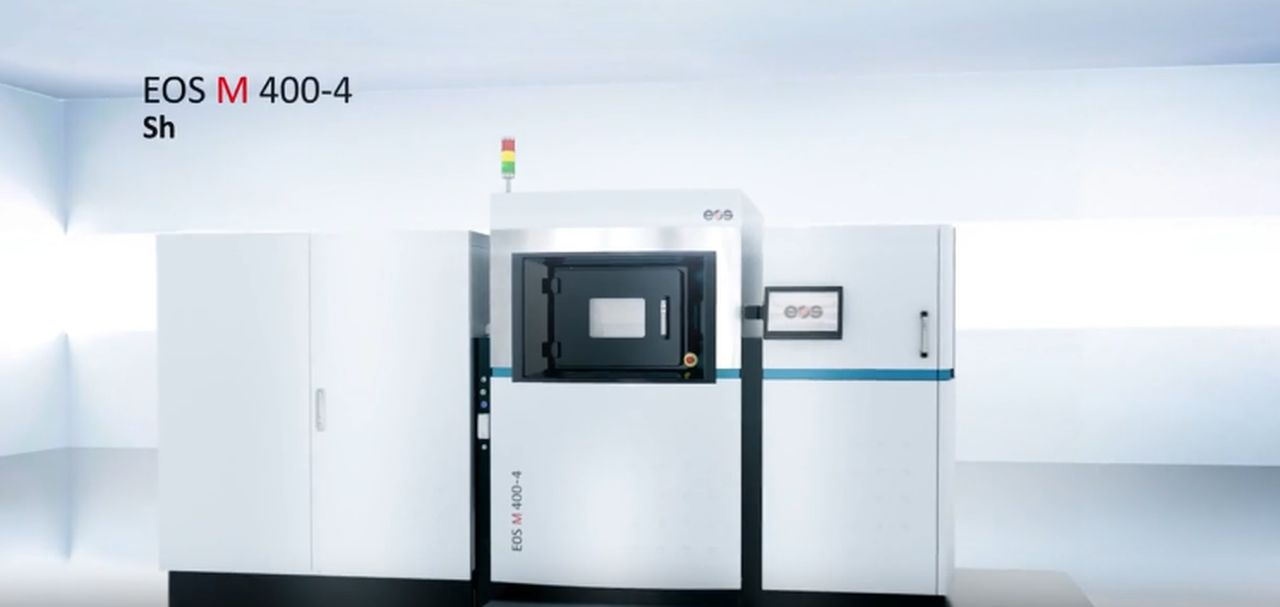
EOS
EOS is another company I expect to spend considerable time visiting during IMTS. As one of the pioneers of industrial metal and polymer additive manufacturing, EOS continues to expand the range of applications suitable for production-scale 3D printing. Rather than focusing solely on prototyping, EOS has increasingly emphasized serial manufacturing for demanding industries including aerospace, medical devices, and industrial production.
One particularly interesting development has been EOS’s continued advancement of patient-specific medical manufacturing. Hospitals and medical device companies increasingly rely on metal additive manufacturing to produce customized orthopedic implants, spinal implants, and cranial reconstruction devices tailored to individual patients. Titanium implants manufactured using EOS technology provide excellent biocompatibility while allowing highly porous lattice structures that encourage bone growth and long-term implant stability. These designs would be extraordinarily difficult, if not impossible, to manufacture using conventional machining techniques.
Medical manufacturing represents one of additive manufacturing’s most compelling success stories because personalization offers tremendous clinical value while avoiding many of the cost penalties traditionally associated with customized production. As precision medicine continues to evolve, additive manufacturing is positioned to become an even larger component of patient care.
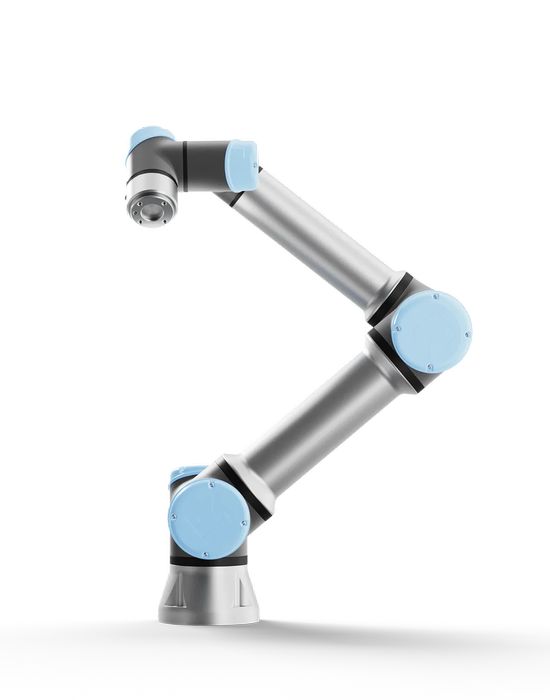
Universal Robots
Universal Robots also represents an exciting intersection between automation and additive manufacturing. Collaborative robots, or cobots, have dramatically lowered the barriers to automation by allowing robots to safely operate alongside human workers. As additive manufacturing becomes more common within machine shops and production facilities, cobots are increasingly being deployed for repetitive tasks including printer loading, part removal, support removal, inspection, and secondary finishing operations.
The flexibility of collaborative robots makes them especially attractive for additive manufacturing environments, where production volumes may vary and workflows frequently change. Unlike traditional high-volume automation systems, cobots can often be reprogrammed relatively quickly to accommodate new production requirements. This adaptability aligns perfectly with one of additive manufacturing’s greatest strengths: manufacturing flexibility.
Mazak
Finally, I think I will enjoy visiting Mazak’s exhibits because the company has consistently demonstrated that subtractive and additive manufacturing should not be viewed as competing technologies. Instead, hybrid manufacturing systems combine the strengths of both approaches within a single machine.
Mazak’s HYBRID Multi-Tasking technology integrates laser metal deposition with traditional CNC machining, allowing manufacturers to add material where needed and machine it to final tolerances without moving the workpiece between machines. This approach offers tremendous opportunities for repairing expensive tooling, rebuilding worn components, and manufacturing highly complex parts with improved efficiency.
Hybrid manufacturing also reinforces an important point that continues to emerge throughout the manufacturing industry. The future will not belong exclusively to additive manufacturing or traditional machining. Rather, successful manufacturers will employ whichever technology or combination of technologies delivers the best technical and economic outcome. IMTS has consistently highlighted this convergence, and I expect this year’s exhibition to continue that trend.
As someone who spends considerable time studying manufacturing innovation, I believe IMTS offers an invaluable opportunity to observe not only individual technologies but also how entire manufacturing ecosystems are evolving. Automation, robotics, artificial intelligence, digital engineering, and additive manufacturing are becoming increasingly interconnected. Manufacturers are no longer evaluating these technologies independently but instead are integrating them into comprehensive production strategies designed to improve competitiveness in an increasingly demanding global marketplace.
I’m especially interested in speaking directly with exhibitors to better understand how their newest solutions are addressing labor shortages, increasing manufacturing resilience, and enabling more localized production. These conversations often provide insights that go well beyond product demonstrations and reveal where manufacturing investment is heading over the next decade.
3D Printing Activities and R&D Tax Credit Potential
The 3D printing technologies highlighted for IMTS 2026 may provide fertile ground for federal R&D tax credit opportunities where companies are developing or improving products, processes, software, or manufacturing methods through technical experimentation. Under IRC § 41, qualifying research generally must relate to a new or improved business component, rely on engineering, computer science, or other technological principles, and involve a process of experimentation aimed at resolving uncertainty about function, performance, reliability, or quality. FANUC’s integration of industrial robots into metal additive manufacturing cells for automated handling, post-processing, inspection, and workflow management could qualify when engineering teams are evaluating alternative robotic configurations or control strategies for additive production environments. Siemens’ additive manufacturing software, NX design tools, and digital twins likewise align with credit concepts where simulation is used to validate complex geometries, reduce print failures, or improve additive process parameters before production. Software development may qualify if it satisfies the general qualified research tests and, for internal-use software, the additional innovation, economic risk, and commercial availability requirements.
EOS, Universal Robots, and Mazak illustrate additional pathways. EOS’ work in production-scale metal and polymer additive manufacturing, including patient-specific titanium implants with porous lattice structures designed for biocompatibility, bone growth, and long-term stability, may involve qualifying prototyping, materials testing, and design iteration. Universal Robots’ cobots used for printer loading, part removal, support removal, inspection, and finishing may support credits where developers are experimenting with automation workflows and reprogrammable production methods. Mazak’s hybrid systems combining laser metal deposition with CNC machining may also present process-development R&D when engineers test ways to repair tooling, rebuild worn components, or manufacture complex parts more efficiently without moving the workpiece. Potential qualified research expenses can include eligible employee wages, supplies used in qualified research, certain computer-use costs, and 65% of qualifying contract research costs. However, routine production, ordinary quality control, post-commercial production work, troubleshooting, tooling-up, trial runs, and non-experimental implementation generally may not qualify.
Conclusion
I cannot wait to attend this year’s IMTS in Chicago and learn firsthand what the future holds for manufacturing. Every edition of the show offers new ideas, new partnerships, and new technologies that push the industry forward. Judging by the strong representation of machine tool builders, automation leaders, robotics innovators, software developers, and additive manufacturing companies, IMTS 2026 promises to be another outstanding event. The future of manufacturing is being shaped by the convergence of digital technologies, automation, and advanced production methods, and additive manufacturing will undoubtedly remain one of the most important pieces of that future.