
Charles R. Goulding and Preeti Sulibhavi spotlight why Siemens believes AI-driven digital twins are now as essential to industry as electricity once was, and how NVIDIA’s computing power makes that vision real.
In January 2026 at CES in Las Vegas, Siemens’ President and CEO Roland Busch delivered a keynote that left little doubt: artificial intelligence (AI) isn’t just another technology – it is the defining industrial revolution of our time. Busch and his counterparts on stage framed AI as essential in virtually every step of creating and operating modern physical systems, from the design of products and plants to running factories in real-time. Integral to this vision is the idea of the digital twin, a software representation of the physical world that blends physics, real-time data, and AI to simulate, analyze, and optimize systems long before they exist in reality.
AI: The “Electricity” of Today’s Industry
Busch opened by emphasizing a bold comparison: just as electricity once reshaped society, AI will reshape industry for the next century. Siemens is positioning what it calls “Industrial AI” not as an add-on feature to existing products and processes but as a core, embedded capability across design, operations, and optimization. AI now drives predictive insights, automated engineering decisions, and continuous real-time improvements across manufacturing, buildings, grids, and transportation systems.
A striking point from the keynote and related Siemens material is the scale of this technological shift: the infrastructure for modern AI – especially the data centers and compute clusters that support large-scale simulation and modeling – rivals or exceeds the cost of traditional industrial factories. Some AI data centers now cost in the neighborhood of tens of billions of dollars to build and run, representing a new class of industrial investment rarely seen outside of semiconductor fabs or automotive assembly plants. These centers are effectively the world’s newest factories, producing digital insight at scale.
This marks a dramatic reframing of how industrial capability is measured. Instead of focusing solely on machines and robotics, the industry now views data, models, and computational power as mainstream production assets, alongside robotics and automation hardware.
Digital Twins: From Passive Models to Active Intelligence
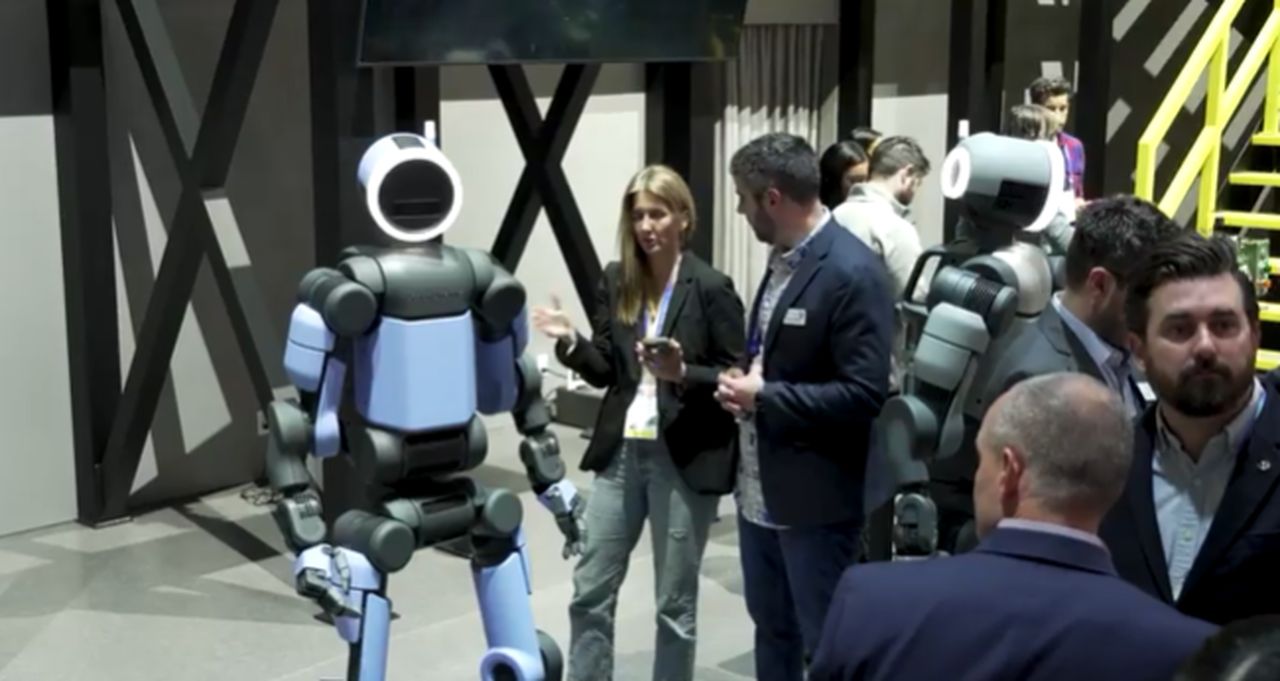
At the heart of Siemens’ AI narrative is the digital twin. Traditionally, digital twins were static simulations, useful for validation and occasional testing. Siemens’ latest approach, however, treats them as active engines of intelligence that continuously ingest real-world data and use AI to predict outcomes, test scenarios, and guide decision-making across physical operations.
This shift from passive simulation to AI-driven digital twins enables scenarios previously thought impractical. For example, PepsiCo and Siemens deployed high-fidelity 3D digital twins of manufacturing and supply chain facilities that simulate every conveyor, machine, and human path. In weeks, teams identified layout changes that boosted throughput by 20 percent, drastically cut capital costs, and validated design changes before they ever touched the physical plant.
Busch described digital twins as the “central nervous system” for modern industry – a unified virtual view that ties engineering, operations, and analytics together. These twins let companies answer “what if” questions, anticipate failures, test upgrades, and even train robots and operators in simulated environments.
Siemens & NVIDIA: Expanding a Strategic Partnership
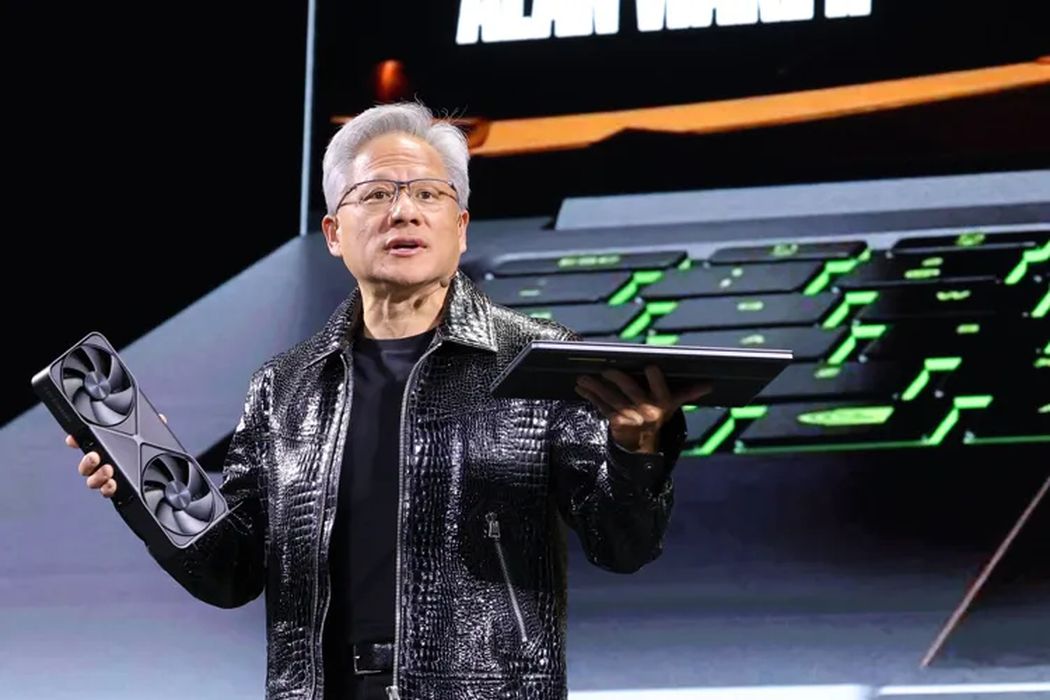
A centerpiece of the keynote was Busch’s on-stage conversation with Jensen Huang, CEO of NVIDIA. Their message was clear: Siemens and NVIDIA are forging a deep partnership to bring AI, digital twins, and automation together at an industrial scale.
The collaboration between Siemens and NVIDIA has several concrete facets:
- Industrial AI Operating System – Siemens and NVIDIA plan to co-develop an “Industrial AI Operating System” that layers AI across the industrial lifecycle, from design to production to real-time operations, enabling continuous optimization and automation.
- Real-Time Simulation and Visualization – Siemens is integrating NVIDIA Omniverse libraries into its engineering and digital twin tools to enable photo-realistic, physics-accurate simulations. This means complex systems can be visualized and tested at an unprecedented level of fidelity.
- EDA and Chip Design Acceleration – Siemens is incorporating NVIDIA NIM and Nemotron AI models into its Electronic Design Automation (EDA) software. This enables more advanced generative workflows when designing semiconductors and printed circuit boards, a domain traditionally slow and computation-intensive.
- AI-Driven Factories – Together they want to build the first fully AI-driven adaptive manufacturing sites, starting with Siemens’ own Electronics Factory in Erlangen, Germany. These sites use AI to simulate operations, recommend changes, and automatically enact improvements in real-time.
This partnership illustrates why Siemens is leaning heavily on NVIDIA chips: industrial AI workloads require massive parallel processing power and specialized acceleration for simulation, physics modeling, and AI inference. NVIDIA GPUs and infrastructure libraries like Omniverse provide this performance, enabling Siemens’ software to process detailed physics simulations and train or run AI models that mirror real physical systems.
Huang summed up the collaboration this way: “Generative AI and accelerated computing have ignited a new industrial revolution, transforming digital twins from passive simulations into the active intelligence of the physical world.”
Another example of this collaboration is Commonwealth Fusion Systems (CFS), a nuclear fusion startup backed by both Siemens and NVIDIA. As reported by The Wall Street Journal on January 7, 2026, the two companies are supporting CFS by applying AI-driven simulation, high-performance computing, and digital twin technology to model fusion reactors in extreme detail, compressing years of physical experimentation into weeks of virtual testing. The goal is to accelerate the path to commercially viable fusion energy, an industry where real-time physics simulation and massive computational power are essential.
Automation: Real-Time Decisions, Lower Costs, Faster Cycles
AI and digital twins don’t just improve design – they fundamentally reshape automation. Siemens now embeds AI directly on the shop floor, turning systems that once reacted slowly into proactive, adaptive automation networks. Machines talk to digital twins in real time, feeding data back into models that can make immediate adjustments to optimize throughput, reduce downtime, or predict maintenance needs.
This translates to faster innovation cycles, lower operational costs, and improved resilience against supply chain disruptions or unexpected demand shifts. In many cases, what used to take weeks of engineering analysis can now be determined in minutes through AI-assisted simulation and automated optimization.
3D Printing: Where It Fits
In the midst of all this AI and digital twin revolution, 3D printing holds a unique and increasingly strategic role.
1. Building Parts of the Product
3D printing – or additive manufacturing – has historically been used for prototyping or low-volume production. In Siemens’ vision, it becomes a complementary production method tightly integrated into digital workflows. Because digital twins can model complex geometries and simulate performance under stress, engineers can design optimized parts that are impossible to manufacture with traditional methods and print them directly. This reduces weight, improves performance, and shortens design cycles.
2. Manufacturing Tooling and Fixtures
Digital twin simulations can identify the most efficient tooling and fixture designs. 3D printing allows rapid production of these tools, often customized for specific production lines or batches, enabling flexible manufacturing systems that adapt quickly to new products.
3. Replacement Parts in the Field
Perhaps most importantly, digital twins tied to real-time data can predict component wear and failure. When a part is predicted to fail soon, a digital twin can generate a new 3D model optimized for longevity or performance, and that part can be printed on demand – either on site at a plant or at a regional hub – minimizing downtime and inventory costs.
In this sense, 3D printing becomes integrated into the full product lifecycle:
design → simulate → optimize → print → deploy → monitor → re-optimize.
Examples from the Real World
Siemens highlighted several real-world examples during and around the CES keynote:
- PepsiCo is using Siemens’ digital twin technologies to simulate entire plants and supply chains, reducing issues before execution and boosting throughput significantly.
- Commonwealth Fusion Systems is creating a digital twin of its fusion reactor to compress years of experimentation into weeks of simulation, accelerating commercial fusion energy development. This project leverages Siemens modeling and NVIDIA’s simulation tech.
- Siemens’ Electronics Factory in Erlangen will serve as a blueprint for AI-driven adaptive manufacturing – a testbed for the Industrial AI Operating System they’re building with NVIDIA.
The Research & Development Tax Credit
The now permanent Research & Development Tax Credit (R&D) Tax Credit is available for companies developing new or improved products, processes and/or software.
3D printing can help boost a company’s R&D Tax Credits. Wages for technical employees creating, testing and revising 3D printed prototypes can be included as a percentage of eligible time spent for the R&D Tax Credit. Similarly, when used as a method of improving a process, time spent integrating 3D printing hardware and software counts as an eligible activity. Lastly, when used for modeling and preproduction, the costs of filaments consumed during the development process may also be recovered.
Whether it is used for creating and testing prototypes or for final production, 3D printing is a strong indicator that R&D-eligible activities are taking place. Companies implementing this technology at any point should consider taking advantage of R&D Tax Credits
Conclusion: The Physical World Meets the Digital Mind
Siemens’ message at CES 2026 was unmistakable: we’re entering a new industrial age where AI, digital twins, and automation are inseparable. AI isn’t just a tool for efficiency; it’s the core platform on which future factories, products, supply chains, and infrastructure will be designed, optimized, and operated.
Through its expanded collaboration with NVIDIA, Siemens is accelerating this transition by combining high-performance compute and AI platforms with deep industrial expertise and systems. The result is a world where the digital twin isn’t just a model, but the central command center for physical reality, and where 3D printing becomes an integrated production resource, not an afterthought.
For industries ranging from electronics to energy to consumer goods, this approach promises better products, faster cycles, more resilient operations, and lower costs – a true revolution in how we make and manage the products we need, today and in the future.