
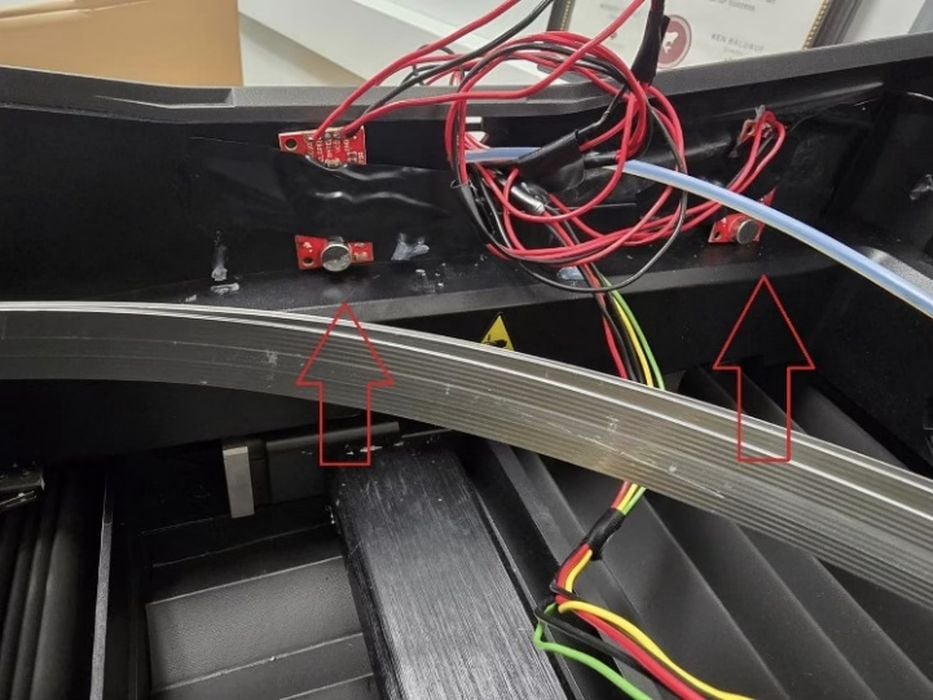
Researchers have proposed a multimodal sensor fusion approach to AI-based fault detection in 3D printing, aiming to push AM monitoring closer to reliable, Industry 4.0 operation.
In-process quality assurance has been a persistent bottleneck across additive. Most current offerings rely on a single signal — a camera for visual anomaly detection, a thermistor or pyrometer for temperature drift, or a microphone for extrusion clicks — and each alone tends to miss subtle defects or trigger false alarms. As print farms scale and metal systems add more lasers, the cost of undetected errors rises alongside the human effort needed to watch builds.
Multimodal sensor fusion — combining feeds like machine vision, thermal signals, acoustic emission, vibration, and drive current — is a well-known tactic in robotics and autonomous systems. Applied to AM, it promises complementary coverage: a thermal spike that is borderline could be confirmed by a change in acoustic signature, while a vision occlusion might be rescued by motion or current anomalies. Powder bed fusion platforms already log photodiode melt pool data, while filament machines expose nozzle temperature, motor current, and webcams; bringing these streams together under one model is the obvious next step.
Industry 4.0 requires traceability, automated exception handling, and minimal human touch time. If fusion-driven detectors can raise reliable, timely alerts — and feed into MES or scheduling software — operators could pause builds, adjust parameters, or cull parts before expensive post-processing like depowdering or sintering commits wasted value.
How Fusion Models Could Improve Reliability
At a high level, the approach aligns time-stamped sensor streams, extracts salient features per modality, and learns a joint decision rule. Images might be passed through a convolutional network, acoustics transformed to spectrograms, and temperature or motor current summarized by trends and rates of change. A fusion layer — early, late, or hybrid — then votes on whether the process is healthy or drifting into a fault state.
The novelty here is not any single sensor but the correlation learned between them. An under-extrusion event in FFF, for example, often co-occurs with stepper current spikes, nozzle temperature recovery, and a distinct acoustic pattern; in laser powder bed fusion (LPBF), lack-of-fusion porosity correlates with melt pool intensity drops and plume changes. Fusing these cues can reduce false positives and detect problems sooner, improving throughput by stopping bad builds early rather than after hours of machine time.
Constraints remain. Synchronization and calibration drift are nontrivial, especially on retrofits. Compute budgets must be balanced between on-edge inference — for low latency and privacy — and cloud aggregation, which can enable fleet learning but adds network dependence. Labeling ground truth is costly: real faults are rare by design, and simulated defects may not generalize. Domain shift across machines, materials, and toolpaths threatens model robustness, and the paper’s public record does not disclose cross-platform metrics, detection latency, or false alarm rates.
Who Benefits And What It Could Change
If this approach is validated, service bureaus and OEMs operating LPBF fleets could see fewer wasted builds and more predictable throughput. Dental and medical users, where traceability and regulatory documentation matter, would benefit from richer audit logs that link alerts to sensor evidence. Large desktop farms printing end-use FFF parts could cut human oversight by routing alerts into automation — pausing jobs, cueing purge routines, or flagging chambers for operator review.
It is important to note this is a research release, not a commercial product. Pricing, supported printer classes, and integration paths into common toolchains — from OctoPrint and Klipper to LPBF build processors — are not stated. A likely adoption path starts with passive monitoring, progresses to assisted interventions, and eventually closes the loop on select parameters like laser power, scan speed, or extrusion flow, once safety cases and safeguards are proven.
What to watch now are reproducible benchmarks: public datasets, code, and evaluations that report precision, recall, and detection latency in layers or seconds. Open archiving on Zenodo is a positive signal, and if the authors release data across multiple materials and geometries, the community could finally compare methods apples to apples. Trade show demos this year and next — perhaps at Formnext — would help translate lab reliability into shop-floor reality.
In the future it may be that machines can hear, see, and feel their own mistakes.
Via Zenodo
