
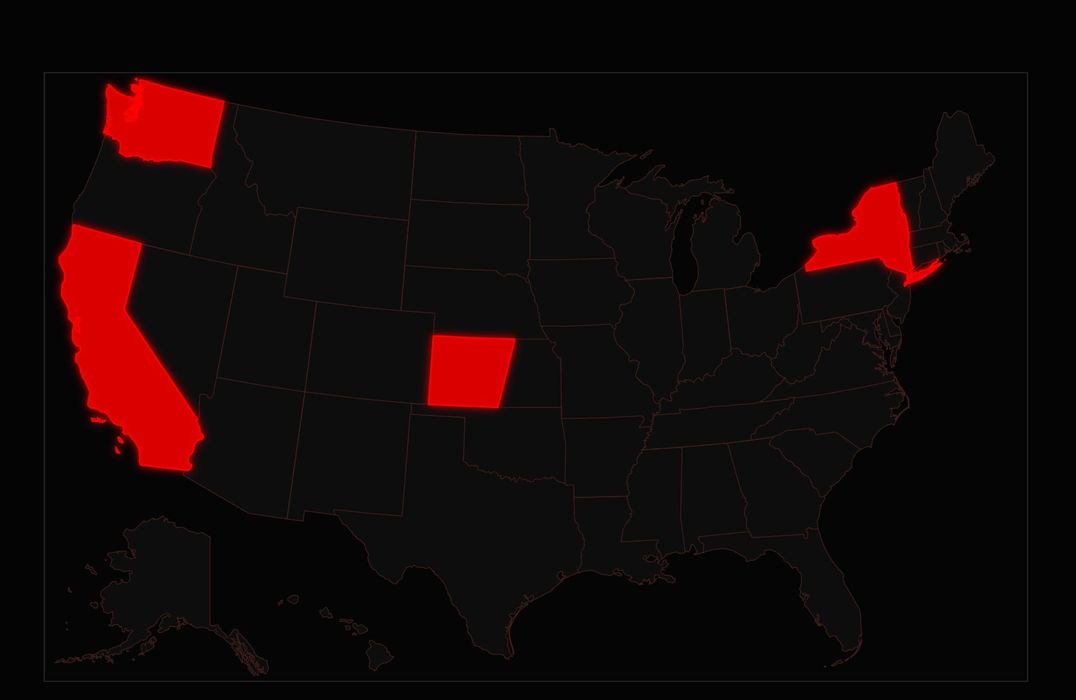
A new advocacy website says proposed “anti gun” bills could unintentionally criminalize everyday 3D printers and software.
The site, titled “Stop the 3D Printing Ban 2026,” collects references to pending and proposed legislation in several US states, and describes them as a threat to the wider additive manufacturing ecosystem. It believes that lawmakers are not specifically trying to ban 3D printing outright, but that their broad definitions and compliance requirements aimed at “ghost guns” could sweep in general-purpose machines, open source tools, and normal makerspace activity.
There is growing interest in this topic, as these proposed laws creep ever closer to being passed. Yesterday we reported on a significant post from the Electronic Frontier Foundation on this topic, and it won’t be the last. Here we have a site set up by the community simply because of this growing concern.
Over the past decade, policymakers have repeatedly returned to the same problem: digital fabrication makes it easier to produce regulated items, and the typical regulatory instinct is to control the tools, the files, or both. The 3D printing industry has mostly treated this as a niche issue, because the vast majority of the millions of 3D printers worldwide are used for prototyping, jigs and fixtures, education, dental models, and consumer hobbies.
However, the tone has recently shifted as bills increasingly reference “additive manufacturing” directly, rather than only focusing on firearms parts. That is very important because once a law defines a category too broadly, manufacturers and sellers can become responsible for compliance checks, recordkeeping, or feature changes that were never part of their product plan. Even if enforcement focuses on a narrow use case, uncertainty alone can stall sales, investment, and especially open development.
Why “Content Control” Hits Hardware
Most consumer and prosumer 3D printers are general-purpose motion systems that interpret GCODE, and that generality is exactly what makes them useful. Attempts to control “what gets printed” tend to spill over into how printers are designed, distributed, and supported. A bill that treats certain printed items as inherently suspect can easily evolve into requirements for identity checks, “authorized” material usage, or restrictions on file sharing and slicing workflows.
This site’s concern is that restrictions could land upstream, at the point of sale. If a seller is made responsible for policing potential end uses, the path of least resistance is to limit who can buy a printer, require more paperwork, or stop selling some models entirely. For large vendors with compliance departments, that is painful but possible. For small kit makers, open source hardware teams, and community-run shops, it can be existential. It is quite likely that if these laws are passed, we would never see new entrepreneurs launch a 3D printer project.
There is also a software angle here. Many 3D printing software tool stacks are very modular: CAD, export, slicer, printer firmware, and remote management. If lawmakers start treating files or toolpaths as regulated “instructions,” it becomes difficult to draw a line that can maintain legitimate engineering and education uses. The same toolchain that prints a replacement knob can also print a controlled component, and automated filtering is notoriously error-prone.
What This Could Mean For Open Source
Open source 3D printing depends on sharing. Designs live in repositories, firmware is forked, and slicers accept plugins and custom post-processing. Policies that require centralized control, provenance tracking, or mandated “safe lists” of printable objects would likely push the market toward locked-down ecosystems and far away from open source tools. That could resemble the smartphone app store model: permitted content, approved developers, and remote enforcement.
Even if that outcome is not the intent, it is a predictable industry reaction to the usual regulatory ambiguity. 3D printer manufacturers minimize risk by reducing user freedom, because a locked system is easier to certify and easier to defend in court. If the most successful printers in the next cycle are those that can demonstrate compliance features, open architectures could be pushed to the margins, or into gray-market distribution channels.
At the same time, there are practical limits to “printer-level” control. Hardware does not understand the meaning of a part, only motion and extrusion. A determined actor could alter geometry, rename files, switch materials, or use alternative fabrication methods. That is why broad technical mandates can punish normal users while actually doing very little to stop intentional misuse.
The new website highlights the need for early scrutiny, because once a bill becomes law, changing it is slow, and compliance costs tend to become permanent features of the market.
If you’re concerned about the proposed legislation, Stop the 3D Printing Ban 2026 might be a good site to keep track of the current status of each bill.
