Charles R. Goulding and Andressa Bonafe break down how Schaeffler is blending automation and additive manufacturing to tackle labor shortages and redefine production flexibility.
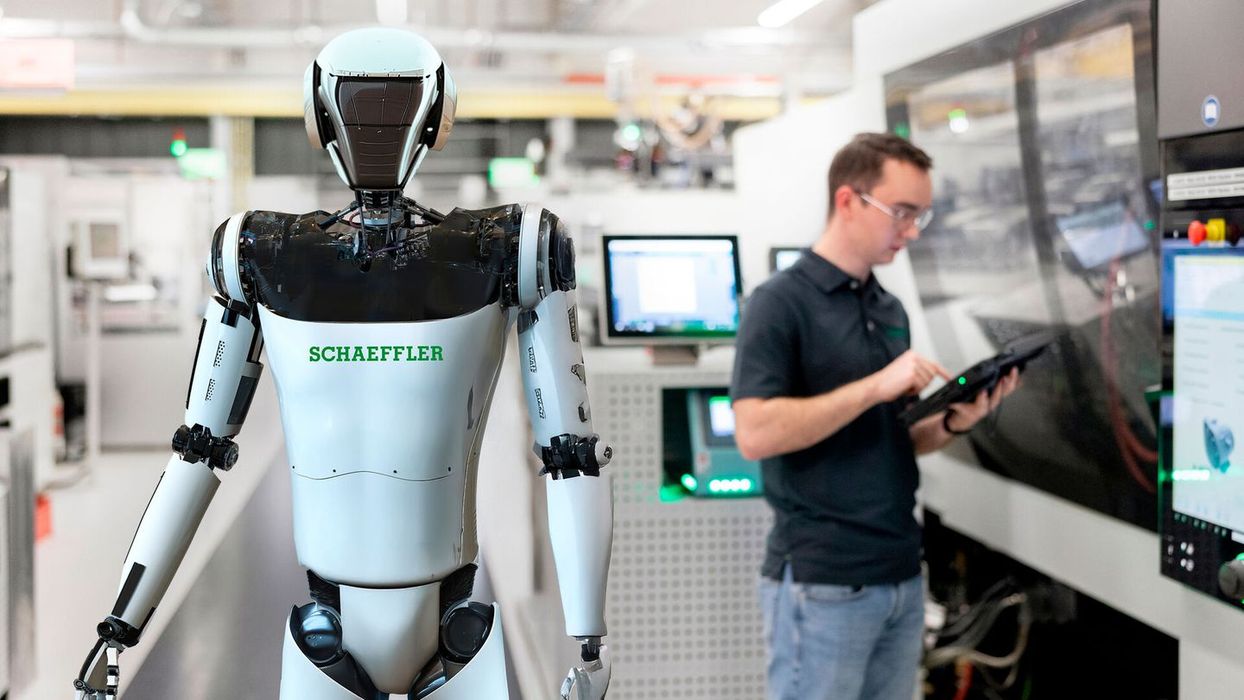
A recent Wall Street Journal report describes an unusual scene inside Schaeffler’s factory in Cheraw, South Carolina: a humanoid robot named Digit methodically lifting 25-pound baskets of bearing components and transporting them across the shop floor. A task once performed by a human worker is now handled by a machine designed specifically for repetitive, physically demanding labor.
This is not a one-off experiment. Schaeffler has stated that it plans to expand deployment of these robots, identifying “a whole host of use cases” for humanoid systems in its production environment. The development reflects a broader shift underway in industrial manufacturing toward mobile, AI-enabled automation that complements human labor, while addressing persistent workforce shortages and productivity pressures.
A Global Motion Technology Company Facing Structural Change
Founded in Germany in 1946, Schaeffler is one of the world’s largest automotive and industrial suppliers, producing bearings, powertrain systems, and precision components for both automotive and aerospace markets. The company employs approximately 115,000 people globally and operates across dozens of manufacturing sites. According to its most recent financial disclosures, the group reported 2025 revenue of €23.5 billion, underscoring the scale and global reach of its operations.
That scale, however, does not insulate the company from the structural shifts reshaping its core markets. As CEO Klaus Rosenfeld recently noted, Schaeffler is actively transforming into a “leading global Motion Technology Company,” expanding beyond its traditional automotive base into areas such as e-mobility, humanoid robotics, and defense, with a stated goal of generating up to 10% of revenue from these new growth areas by 2035.
The broader mobility and industrial components sector is also undergoing structural change. Electrification is reshaping demand for traditional engine components, while supply chain disruptions, pricing pressure from OEMs, and competition from global suppliers (including Bosch, ZF Friedrichshafen, Continental AG, and bearing specialists such as SKF) continues to compress margins.
Layoffs in Germany and the Push for Efficiency
In 2024, Schaeffler announced significant layoffs in Germany, part of a broader restructuring aimed at aligning its workforce with shifting demand, particularly as internal combustion engine components decline in importance.
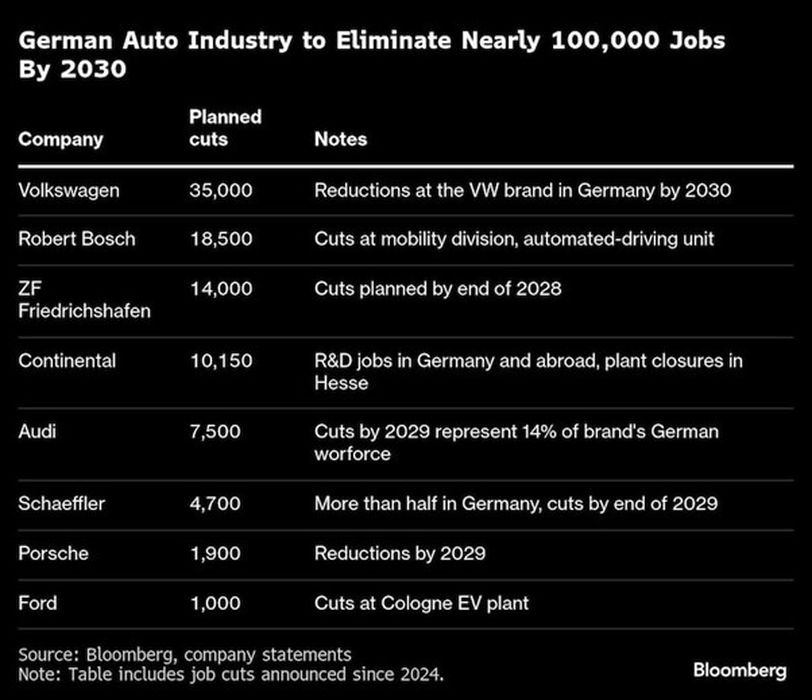
These layoffs reflect a pattern seen across Europe’s automotive supply chain: companies are simultaneously reducing headcount in legacy product lines while investing in new technologies and production methods. The goal is not simply cost-cutting, but repositioning for a different manufacturing future.
Automation plays a central role in that transition, but its workforce impact is uneven. As the WSJ report highlights, Schaeffler’s U.S. plant in South Carolina has not experienced layoffs tied directly to automation; instead, some workers have been reassigned to higher-skilled roles, and the facility continues to face hiring challenges.This contrasts with developments in Europe, where workforce reductions are more directly linked to structural shifts in demand.
Beyond the Assembly Line
While industrial automation has long relied on fixed robotic arms performing repetitive tasks in controlled environments, a new generation of systems is emerging. General-purpose humanoid robots are designed to move through facilities and handle a range of tasks, extending automation beyond static workstations.
Digit, developed by Agility Robotics, represents this new category. Unlike stationary robots, it can walk, carry loads, and operate in environments designed for humans. Today, safety constraints require separation from workers, but upcoming models are expected to operate alongside humans more freely.
Although humanoid robots are gaining traction in industrial settings, large-scale deployment remains in its early stages, with most Western facilities still operating pilot programs rather than full production fleets. That is expected to change rapidly as industry projections suggest the number of units deployed globally could reach into the millions by 2040, fundamentally reshaping factory workflows. For Schaeffler, the appeal is clear: address labor shortages in physically demanding roles, increase consistency and uptime, and reallocate human workers to inspection, programming, and higher-value tasks.
From Machine Parts to Machine Maker: Schaeffler’s AM Push
While robotics is the most visible change on the factory floor, Schaeffler has quietly made an equally significant move: it has become a manufacturer of industrial 3D printing systems. The vehicle for this transformation is Schaeffler Special Machinery, the group’s machine construction unit, which in 2023 entered the additive manufacturing market with a multi-material 3D printing system unlike anything commercially available at the time.
The pivot began at automatica 2023 in Munich, where Schaeffler Special Machinery unveiled its concept for high-precision multi-material printing, a system capable of combining metals and technical ceramics in a single build. The announcement signaled that Schaeffler was not merely adopting additive manufacturing internally; it was positioning itself as a supplier of AM technology to external customers across industries including medical technology, aerospace, and battery production.
The Belgian Startup Behind Schaeffler’s AM Systems
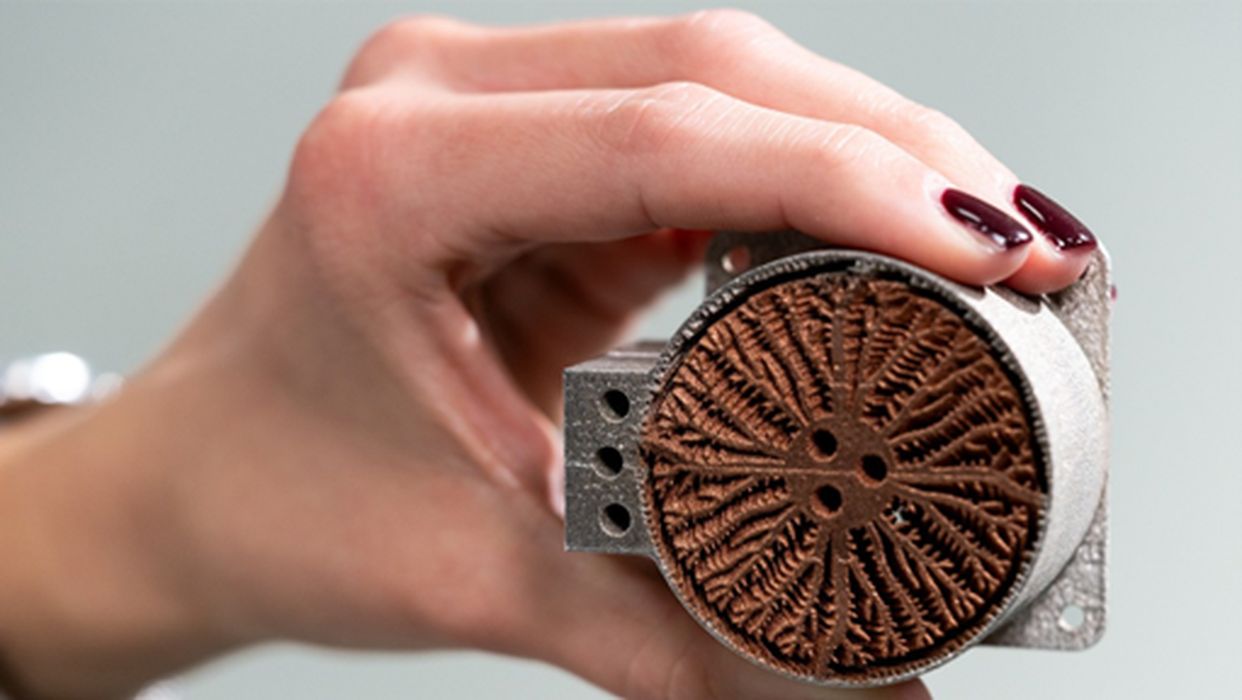
The technical foundation for Schaeffler’s AM machines came through a strategic acquisition. In October 2023, Schaeffler acquired Aerosint SA, a Belgian startup previously owned by Desktop Metal, and renamed it Schaeffler Aerosint SA. Aerosint’s patented Selective Powder Deposition (SPD) technology is the core of what makes Schaeffler’s systems distinctive: it enables the simultaneous, pixel-precise deposition of multiple material powders onto a print bed, keeping them separate until fused layer by layer.
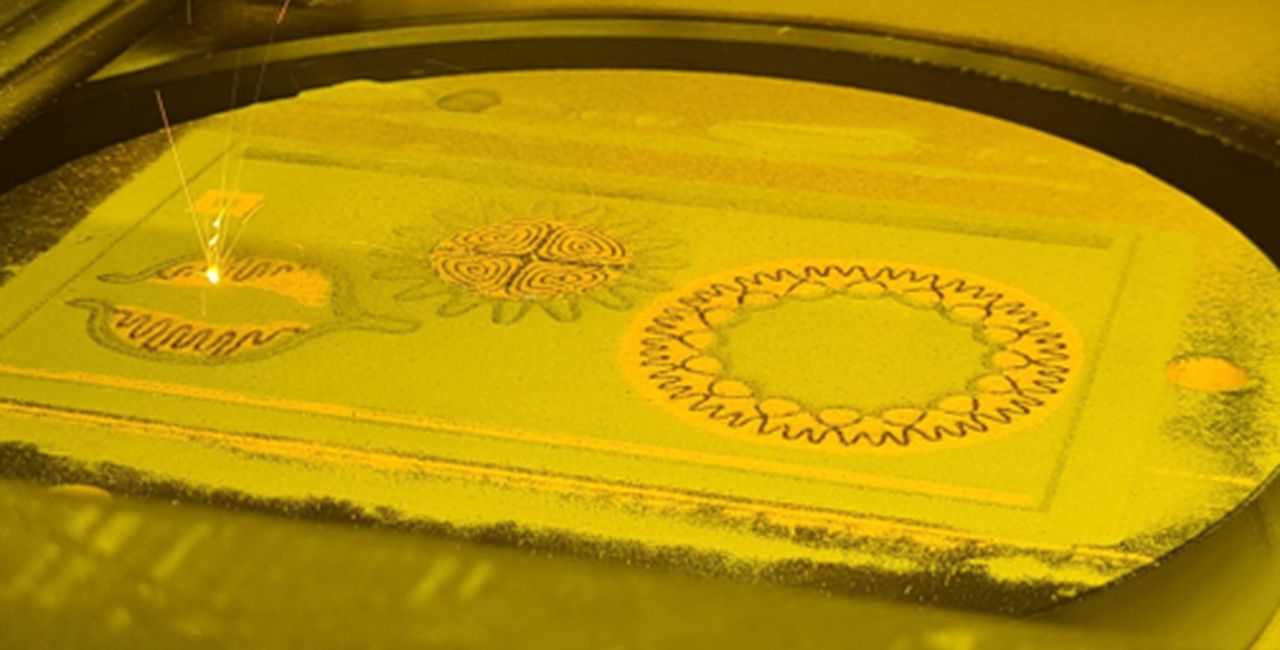
As Andreas Schick, Chief Operating Officer at Schaeffler AG, noted at the time of the deal, the technology offers “the first industrial solution” for producing parts from multiple metallic and ceramic materials in a single additive process. The recoater, a device that deposits powders onto the bed, works at lateral powder pixel resolutions of up to 300 μm, enabling the kind of material transitions and functional gradients that are impossible in conventional manufacturing.
Inside Schaeffler’s 3D Printing Portfolio
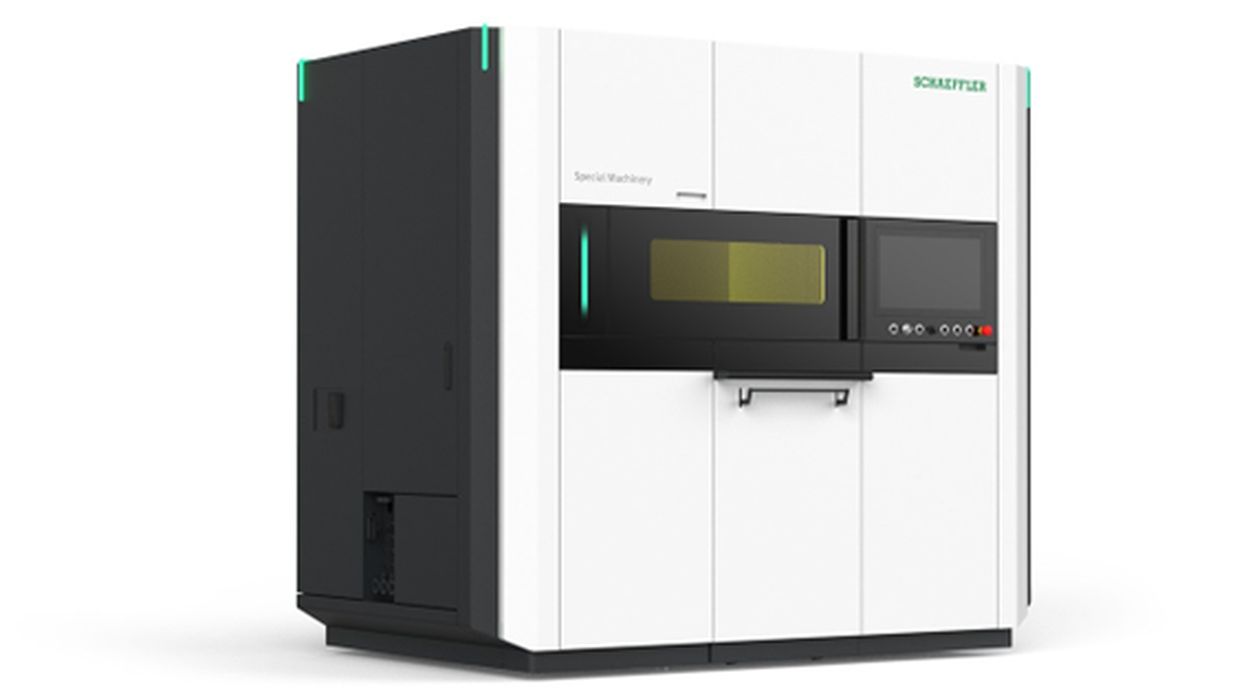
Schaeffler Special Machinery’s commercial AM portfolio currently centers on two machines. The OmniFusion 3D is a laser powder bed fusion (LPBF) system that uses the Aerosint recoater to print with up to three different materials in a single build (metals, technical ceramics, or combinations thereof). Up to four laser sources can be deployed simultaneously, and the build chamber is sealed under argon inert gas to maintain process integrity. The system debuted publicly at Rapid.Tech 3D in May 2024, marking the first time the machine was shown running in an industrial context.
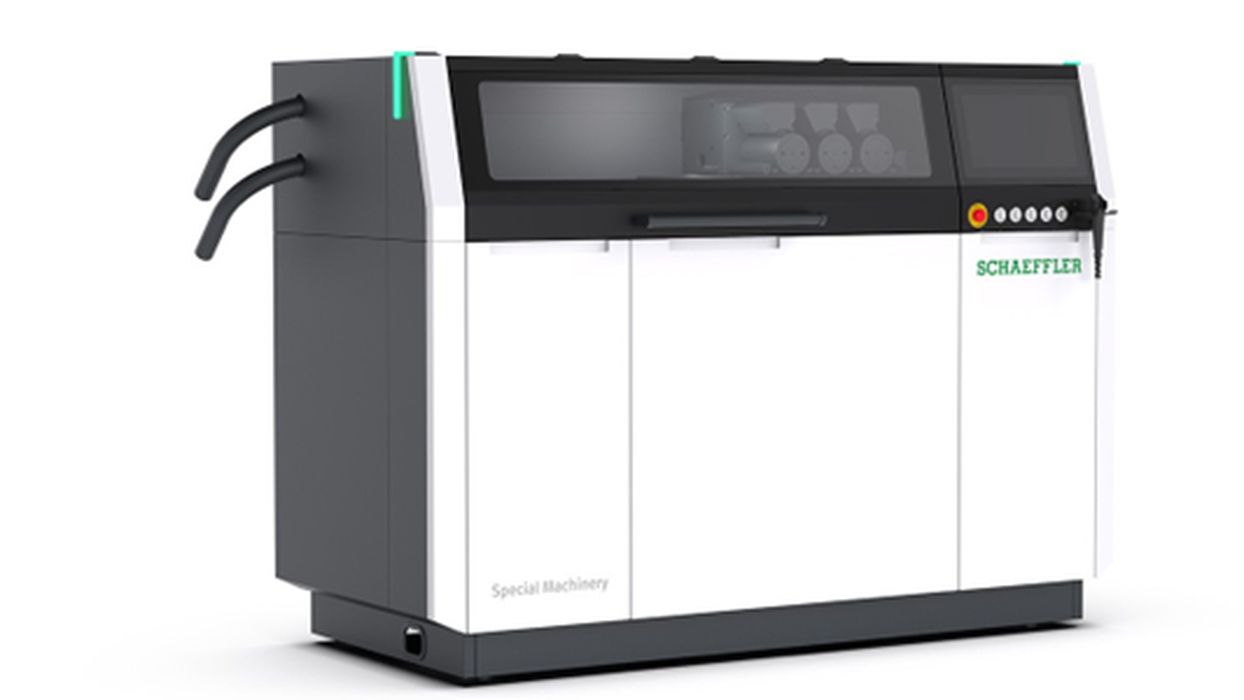
The second machine, the OmniForm 3D, takes a different approach: it uses a binder-free sintering process rather than laser fusion. Powders are deposited into molds up to 100mm in diameter with pixel precision, then heat-treated using field-assisted sintering. Because no binder is required, the process avoids the contamination and post-processing steps associated with binder jetting, making it particularly suited to high build rates and difficult-to-weld materials.
Where Technology Meets Application
For Schaeffler Special Machinery, the commercial value of its AM systems depends not just on the machines themselves but on the depth of its application partnerships. The company has structured two close collaborations with specialists who bring domain expertise that Schaeffler’s engineering alone cannot supply. These partnerships translate multi-material printing capability into industry-specific solutions.
The first is Meotec, an experienced specialist in multi-material 3D printing with magnesium. In this partnership, Schaeffler Special Machinery acts as the machine builder and automation partner, while Meotec leads development of magnesium-based multi-material applications. The collaboration integrates additive manufacturing, post-processing, and functional surface coating technologies into a single workflow, a combination that opens new possibilities for lightweight, high-performance components in aerospace and medical applications.
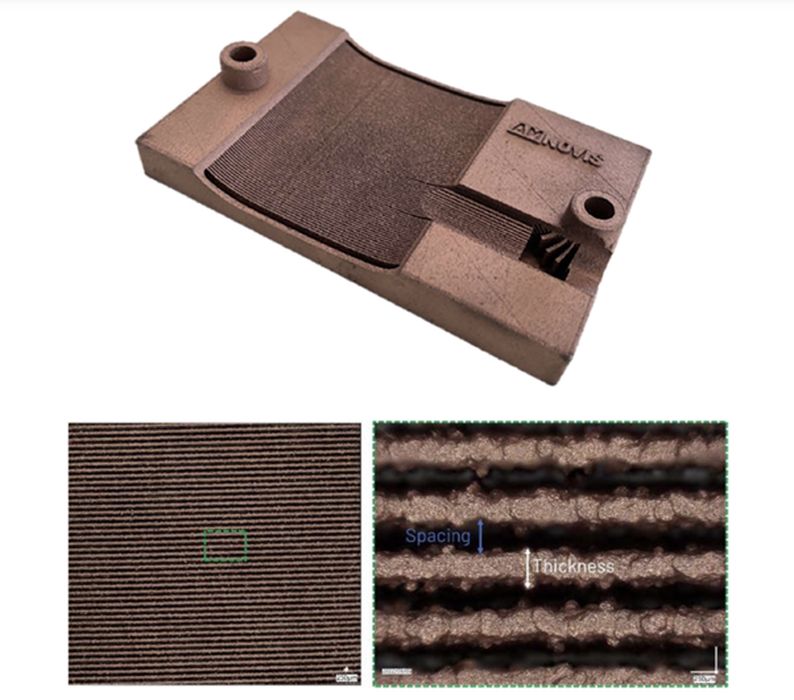
The second partner is Amnovis, a specialist in high-end additive manufacturing of titanium and copper components for regulated and high-tech industries, with a particular focus on medical devices. Together with Schaeffler Special Machinery, Amnovis is developing new applications in multi-metal 3D printing and refining production processes for demanding fields such as medical technology. Amnovis’s deep expertise in processing these metals directly informs how Schaeffler’s systems are configured and validated for real-world use.
Robotics and Additive Manufacturing: Two Sides of the Same Strategy
The deployment of humanoid robots and the development of industrial 3D printing systems are, on the surface, distinct initiatives. They reflect, however, the same underlying logic: Schaeffler is building a manufacturing model that is less dependent on fixed tooling, long supply chains, and static labor arrangements.
Humanoid robots like Digit handle repetitive physical tasks in production environments designed for humans, while Schaeffler’s OmniFusion 3D and OmniForm 3D eliminate the tooling constraints that traditionally governed what parts could be made and how fast. Together, they give Schaeffler the ability to reconfigure both its labor and its production processes in response to changing product lines, a competitive advantage in a market where demand is increasingly difficult to predict.
For U.S. companies pursuing similar investments in robotics and additive manufacturing, these activities frequently qualify for R&D Tax Credits.
The Research & Development Tax Credit
The now permanent Research and Development (R&D) Tax Credit is available for companies developing new or improved products, processes and/or software.
3D printing can help boost a company’s R&D Tax Credits. Wages for technical employees creating, testing and revising 3D printed prototypes can be included as a percentage of eligible time spent for the R&D Tax Credit. Similarly, when used as a method of improving a process, time spent integrating 3D printing hardware and software counts as an eligible activity. Lastly, when used for modeling and preproduction, the costs of filaments consumed during the development process may also be recovered.
Whether it is used for creating and testing prototypes or for final production, 3D printing is a great indicator that R&D Credit eligible activities are taking place. Companies implementing this technology at any point should consider taking advantage of R&D Tax Credits.
Conclusion
The image of a humanoid robot quietly moving parts across a South Carolina factory floor captures only part of what Schaeffler is building. Through Schaeffler Special Machinery, the company has moved from precision components manufacturer to industrial 3D printing machine maker. Together with its robotics strategy, this positions Schaeffler not merely as a company adapting to change, but as one actively shaping the tools the rest of industry will use to manufacture the next generation of products.