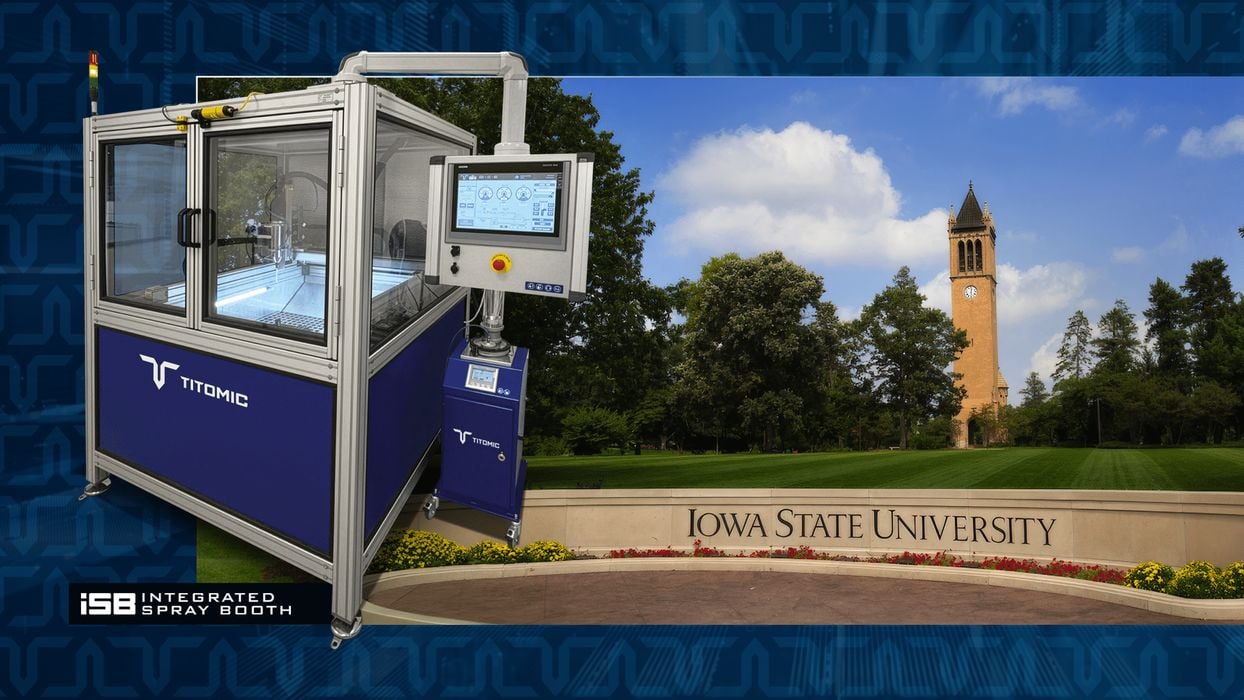
Charles R. Goulding and Preeti Sulibhavi take a closer look at Titomic’s growing academic footprint and what its new Iowa State partnership reveals about the future of cold spray technology.
Australia-based Titomic has taken another step in expanding the reach of its cold spray technology, this time through a new collaboration with Iowa State University. The university has ordered a Titomic 623 ISB-11 system, a fully integrated cold spray platform designed to support both advanced research and industrial-style applications.
At first glance, this looks like a straightforward equipment sale. In reality, it signals something more important: the growing role of cold spray within the broader additive manufacturing ecosystem, and the increasing involvement of universities in validating and extending these technologies.
A Research-Driven Partnership
The connection between Titomic and Iowa State University is rooted in shared priorities. Both are focused on advancing materials science while ensuring that new processes can move beyond the lab and into practical use.
By bringing the ISB-11 system onto campus, Iowa State gains access to a production-capable cold spray platform. Unlike many additive systems typically found in academic settings, this is not limited to small-scale experimentation. It is designed as a complete environment, with integrated material handling and safety systems, allowing researchers to work under conditions that closely resemble real manufacturing.
That distinction matters. Much of today’s additive manufacturing research still relies on powder bed fusion or directed energy deposition systems. While powerful, those technologies involve melting materials, which introduces challenges such as residual stress, oxidation, and microstructural changes.
Cold spray, by contrast, is a solid-state process. Metal particles are accelerated at high velocity and bond upon impact without melting, a concept well documented in foundational studies of Cold spray. This allows researchers to explore material behavior in ways that are difficult with thermal processes.
For Titomic, placing systems in academic institutions provides more than visibility. Universities test technologies rigorously, publish findings, and often uncover new applications. That kind of validation can accelerate adoption across multiple industries.
Understanding the Dual Advantage
One of the most interesting aspects of this installation is what Iowa State researchers describe as the system’s “dual advantage.” This refers to the ability to support both fundamental research and applied manufacturing within the same platform.
Fundamental Materials Exploration
On the research side, the ISB-11 system enables detailed investigation into new materials and composites. Because cold spray avoids melting, it preserves the original properties of feedstock materials while allowing them to be combined in novel ways.
This opens up opportunities to study:
- Metal matrix composites with tailored properties
- Layered structures with distinct functional characteristics
- Coatings engineered for extreme environments
Researchers can focus on how particles deform and bond during impact, how microstructures evolve, and how these factors influence performance. These are key questions in materials science, particularly for applications where failure is not an option.
Applied and Scalable Validation
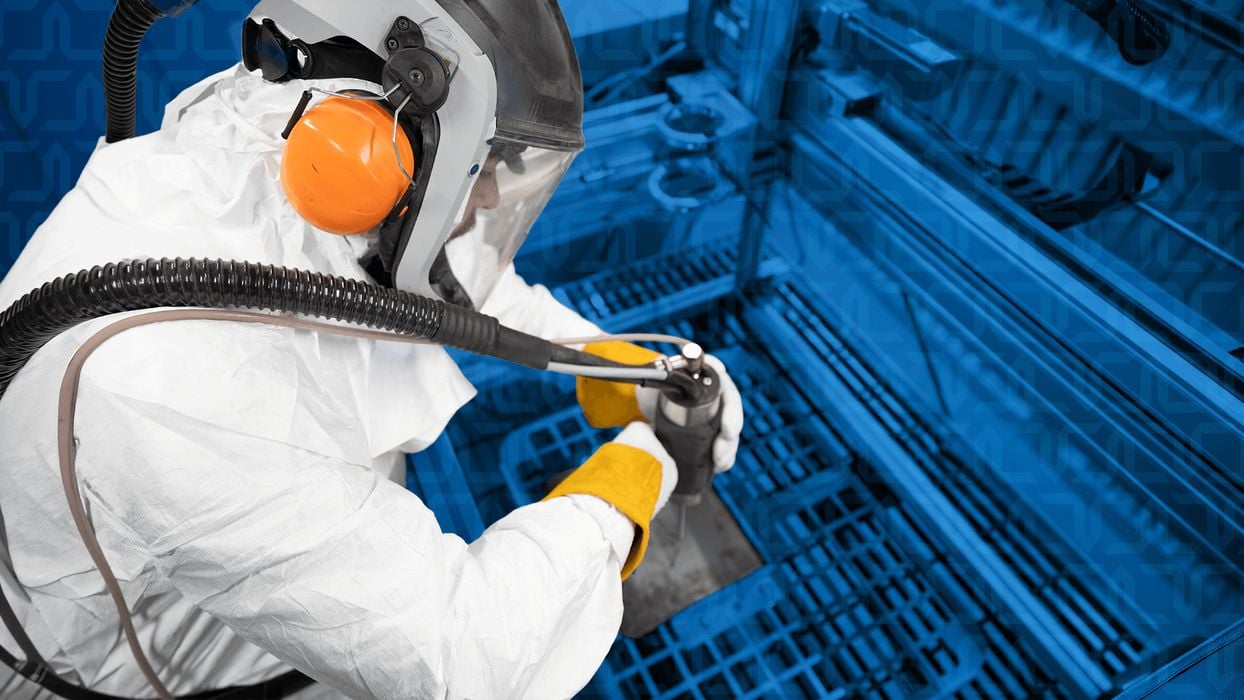
The second advantage is just as significant. The ISB-11 is not just a lab tool. It is designed as a turnkey system capable of operating in production-like conditions.
This means researchers can take a material or process developed in the lab and evaluate whether it can scale. They can test repeatability, efficiency, and performance in scenarios that resemble real-world manufacturing.
This combination is relatively rare. Many research systems are either highly controlled but not scalable, or scalable but not flexible enough for experimentation. By bridging that gap, the Titomic platform allows Iowa State to connect theory with application more directly.
Cold Spray’s Role in Additive Manufacturing
Cold spray occupies a unique position within additive manufacturing. While it is an additive process, it differs significantly from more common 3D printing methods.
Rather than building parts layer by layer through melting and solidification, cold spray deposits material in solid form. This leads to several advantages:
- Minimal thermal distortion
- Reduced residual stress
- High deposition rates
- Ability to add material to existing components
These characteristics make cold spray particularly effective for repair and surface enhancement. In many industries, repairing a component is far more cost-effective than replacing it, especially when dealing with large or complex parts. Titomic has been working to expand cold spray beyond coatings and repair into larger-scale additive manufacturing. Systems like the ISB-11 reflect that shift, offering more integrated and flexible capabilities.
Additive Manufacturing at Iowa State
The addition of the Titomic system builds on an already strong foundation in advanced manufacturing at Iowa State University.
The university has active research programs in materials science, mechanical engineering, and manufacturing processes. These efforts include work on metal additive manufacturing, microstructure analysis, and performance testing.
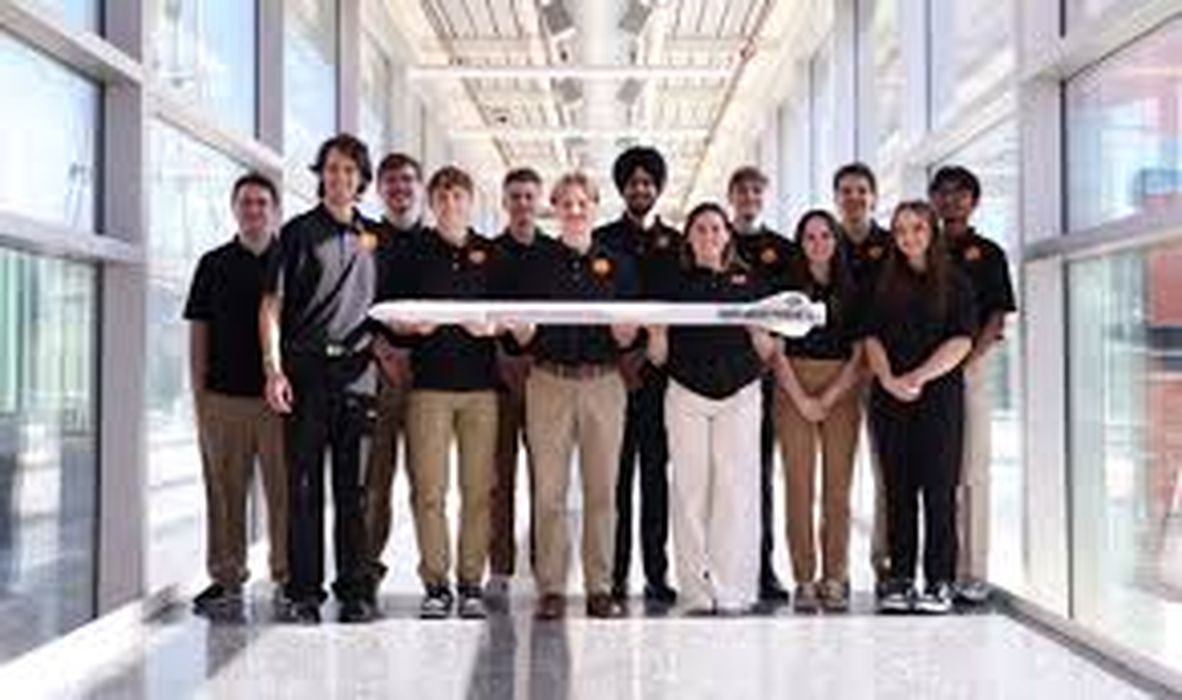
In fact, Iowa State’s Cy Launch rocketry team took their 3D printed rocket to the 2025 NASA Student Lanuch competition in Huntsville, Alabama. It was the third time the team has entered the competition with a 3D printed rocket.
In comes cold spray technology. Cold spray adds a complementary capability. Where traditional metal 3D printing methods focus on precision and complexity, cold spray offers speed, scalability, and the ability to work directly on existing components.
Materials and Composites Research
Iowa State researchers are actively exploring advanced materials designed for demanding environments. These include composites intended for high strength, wear resistance, and thermal stability.
Cold spray enables these materials to be applied as coatings or built up in layers without altering their chemical properties through melting. This is particularly useful for studying how materials behave under real operating conditions.
Repair and Lifecycle Extension
One of the most immediate applications of cold spray is component repair. This is an area of growing importance across multiple industries.
Researchers at Iowa State can use the ISB-11 system to investigate:
- Restoration of worn or damaged metal surfaces
- Enhancement of component durability
- Development of corrosion-resistant coatings
These efforts align closely with industry needs, especially in sectors where equipment is expensive and downtime is costly.
Aerospace and Space Applications
Iowa State has ongoing research related to aerospace systems and propulsion. Cold spray technology fits naturally into this area.
Potential applications include:
- Repairing high-value aerospace components
- Applying protective coatings for extreme environments
- Developing lightweight but strong structural elements
Organizations such as NASA have already explored cold spray for coatings and in-space manufacturing concepts, highlighting its relevance to future space systems.
Industry Implications
The impact of cold spray extends well beyond the lab. Its adoption is growing across several key industries.
Defense
The defense sector has been one of the earliest adopters of cold spray technology. Maintenance and sustainment are major challenges for military systems, and the ability to repair components quickly is critical.
According to work supported by the U.S. Department of Defense, cold spray can be used to restore damaged parts, extend service life, and reduce the need for replacement components. Portable systems even allow for field repairs, which can significantly improve operational readiness.
Energy
In the energy sector, equipment often operates under harsh conditions involving high temperatures, pressure, and corrosion. Cold spray can be used to:
- Repair turbines and pipelines
- Apply protective coatings
- Improve efficiency through surface modification
These applications can reduce maintenance costs and extend the life of critical infrastructure.
Space
Space systems present unique challenges, including extreme temperature changes and radiation exposure. Cold spray offers a way to apply coatings and perform repairs without introducing thermal stress.
There is also growing interest in using cold spray for in-situ manufacturing, potentially enabling repairs or construction in space environments. While still in early stages, this is an area where research institutions like Iowa State can contribute significantly.
Becaust Titomic’s advanced systems are customizable, their integration may help companies take advantage of research and development tax credits (R&D).
The Research & Development Tax Credit
The now permanent Research & Development Tax Credit (R&D) is available for companies developing new or improved products, processes, and/or software.
3D printing can help boost a company’s R&D Tax Credits. Wages for technical employees who create, test, and revise 3D printed prototypes can be included as a percentage of eligible time spent for the R&D Tax Credit. Similarly, when used as a method of improving a process, time spent integrating 3D printing hardware and software counts as an eligible activity. Lastly, when used for modeling and preproduction, the costs of filaments consumed during the development process may also be recovered.
Whether it is used for creating and testing prototypes or for final production, 3D printing is a strong indicator that R&D-eligible activities are taking place. Companies implementing this technology at any point should consider claiming R&D tax Credits.
Iowa also incentivizes R&D. The Iowa Research and Development (R&D) Tax Credit is an annual tax credit based on qualified expenses as allowed under section 26 USC 41 of the Internal Revenue Code (IRC). Businesses must first be certified by the Iowa Economic Development Authority (IEDA) as eligible to apply for the credit.
Both federal and state incentives can be combined to optimize R&D benefits.
A Step Toward Broader Adoption
The installation of the Titomic 623 ISB-11 system at Iowa State reflects a broader shift in additive manufacturing. The technology is moving beyond prototyping into areas such as repair, large-scale production, and hybrid manufacturing approaches.
Cold spray is part of that evolution. It does not replace existing 3D printing methods but complements them, offering capabilities that are particularly valuable for certain applications.
By placing advanced systems in academic environments, companies like Titomic are helping to accelerate innovation. Researchers gain access to industrial-grade tools, while industry benefits from the discoveries that follow.
For Titomic, this move strengthens its presence in North America and reinforces its position in the cold spray market. For Iowa State, it provides a platform that connects fundamental research with real-world application.
And for the additive manufacturing industry as a whole, it is another sign that the field is entering a more mature phase, one where the focus is shifting from what is possible to what is practical.