
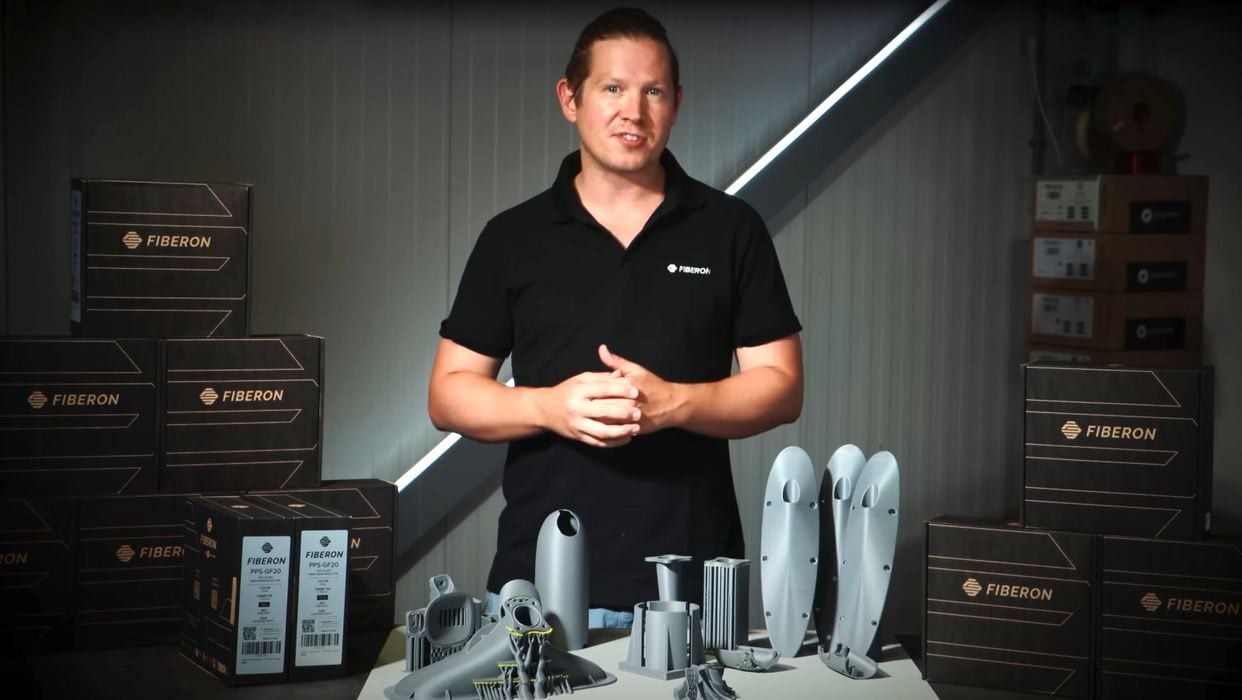
Polymaker has released a new material that could shake up manufacturing.
The new material is part of their Fiberon line of production materials. Their initial selection included strong fiber-reinforced materials that are ideal for many end-use applications.
Now they’ve added a new material to the Fiberon portfolio, PPS-GF20. This is a PPS-based material, which you may not be familiar with.
PPS (Polyphenylene sulfide) is an organic polymer that can be used as a high-performance thermoplastic. It has two prominent features: very high thermal resistance and extreme chemical resistance. In fact, Wikipedia says:
“PPS has not been found to dissolve in any solvent at temperatures below approximately 200 °C (392 °F).”
It is also resistant to UV light, making it ideal for outdoor applications, flame-resistant, resists dyeing, and ages very slowly.
Polymaker has created a new 3D printer filament with PPS, PPS-GF20. The “GF20” refers to reinforcing glass fibers, to the amount of 20 percent of the total weight. That’s a significant amount of fiber.
The glass fibers introduce significant stiffness to printed parts, making them ideal for a number of production applications.
Polymaker states PPS-GF20 has a heat deflection temperature of over 230°C, and a bending modulus of over 4 GPa.
One more very interesting characteristic is the electrical properties. Competing strong materials tend to make use of carbon fibers, which are conductive. Here, PPS-GF20 uses glass fibers, which do not conduct electricity. This makes PPS-GF20 ideal for applications where radio transmissions must pass through the part. A key example of this would be for drones: a drone housing made from PPS-GF20 would have more communication range than one made from a CF material.
All of these make PPS-GF20 an incredible material. So how does it stack up against other ultra-strong super materials? Polymaker prepared this chart showing thermal resistance:
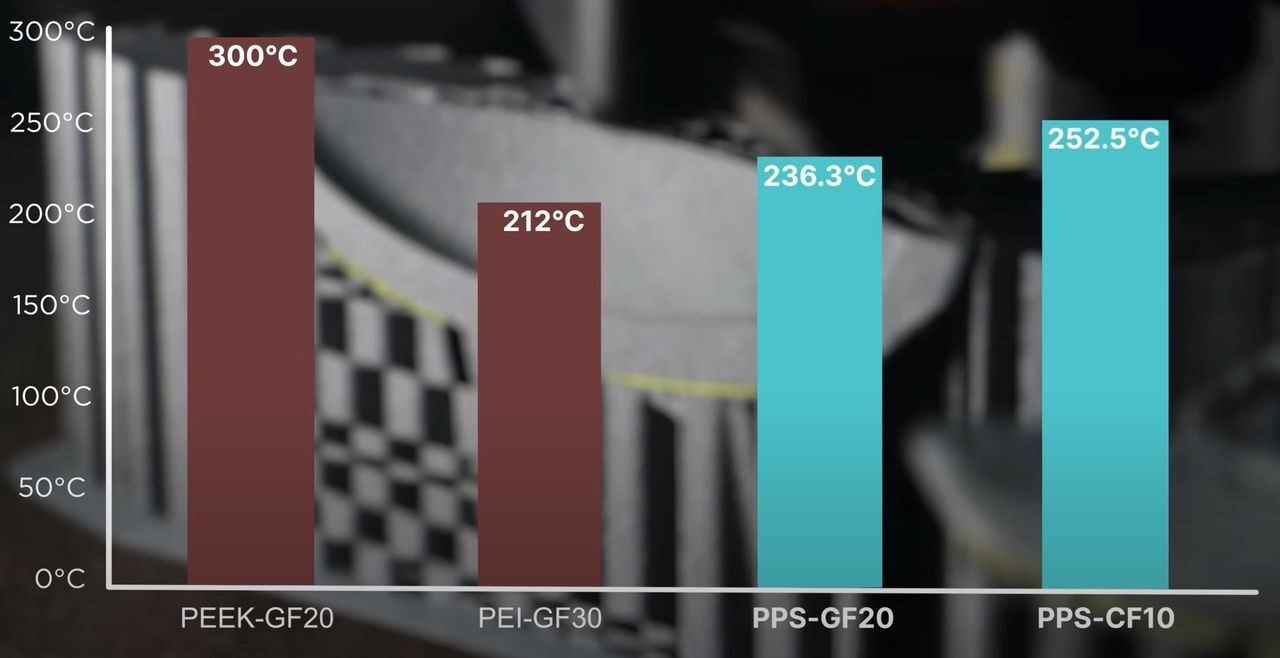
Note that PPS-GF20 is not too far behind PEI and PEEK, which are the current champions in that aspect.
But then there’s this:
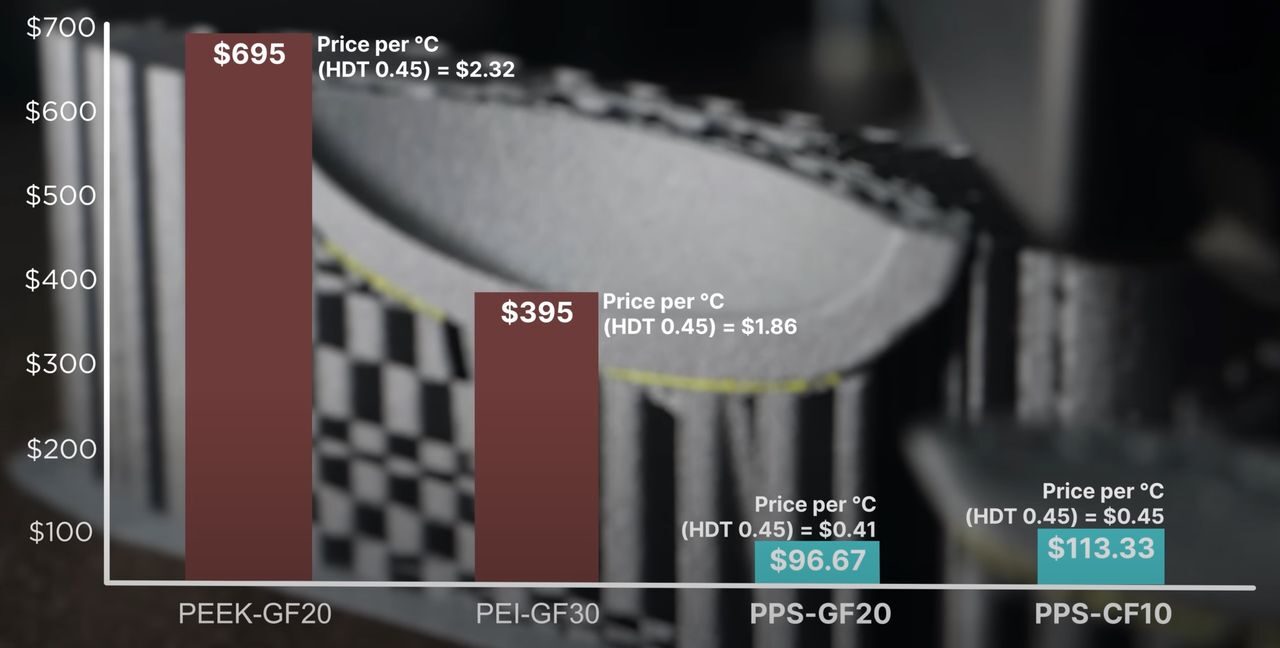
The chart shows a vast price difference between PEEK/PEI and PPS-GF20, per kg. This suggests that applications that don’t quite require the highest thermal resistance would be far better off using the less expensive PPS-GF20.
It seems that PPS-GF20 could be a material that unlocks applications that otherwise would be too expensive to produce using the traditional high-temperature materials.
Via Polymaker
