
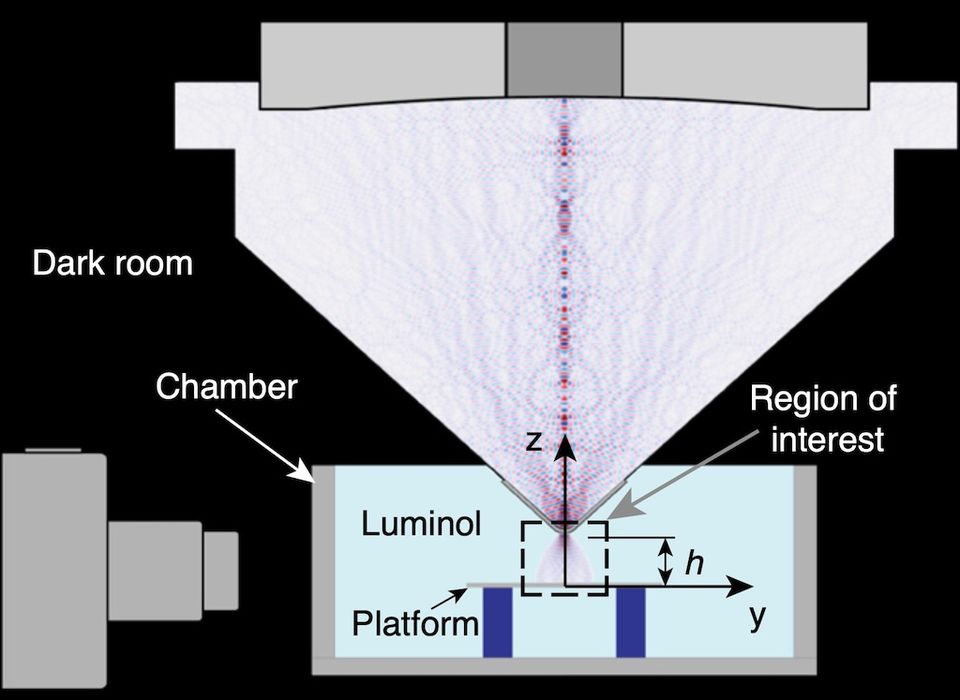
Proximal Sound Printing (PSP) is a new sound driven additive manufacturing process that claims it can directly 3D print fine PDMS microstructures with far better resolution and repeatability than earlier “sound printing” attempts. 
Polydimethylsiloxane (PDMS) is the go-to elastomer in microfluidics and soft lithography applications because it is biocompatible, optically clear, and easy to handle in labs. The problem is that PDMS is a heat curing thermoset, and most 3D printing processes require either photopolymers (SLA and DLP) or carefully tuned rheology (direct ink writing). Those routes typically push you into custom resin chemistry, incompatible initiators, or support baths, and the “native” PDMS formulation that researchers really want often gets compromised.
A team led by Muthukumaran Packirisamy at Concordia University (with collaborators at UC Davis) has been working on ultrasound driven curing for a while under the banner of Direct Sound Printing (DSP).
In their earlier concept, focused ultrasound creates cavitation bubbles, and the bubble collapse triggers sonochemical reactions that drive polymerization in heat curing resins.
The new paper argues that DSP’s practical limits were the ones you might expect: feature sizes in the one to two millimeter range, fluid motion that disturbs the build zone, and difficulty producing more complex or multi material structures. 
Proximal Sound Printing
PSP keeps the same basic physics, but the geometry changes in a way that is important.
Instead of trying to cure “in the open,” PSP routes ultrasound through a guiding acoustic chamber that ends in a small printing aperture covered by a thin aluminum film barrier.
The printing resin sits immediately outside that barrier, and cavitation occurs right at the barrier surface inside the resin, forming a highly localized reactive zone that the authors call a sonochemically ultra active reactor (SUAR). The substrate (or the print head) then moves to “draw” the part pixel by pixel in the usual manner. 
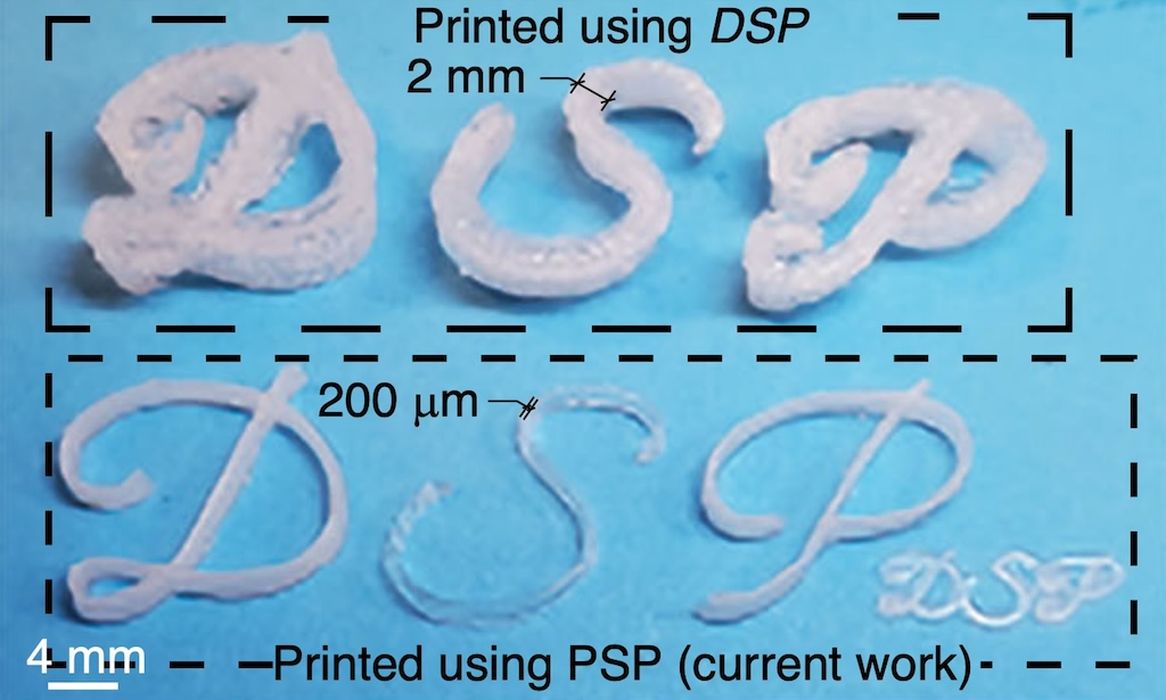
The main claim of the work is a practical feature size of 0.2mm in PDMS, demonstrated by printing the letters “DSP” where PSP produces roughly 0.2mm line thickness versus about 2mm for DSP in the same material. PSP wins the resolution battle.
They also printed microfluidic structures, including a Y channel with 0.3mm inlet channels and a 0.5mm main channel, plus a serpentine micromixer with 0.5mm channels, and showed laminar flow versus mixing behavior using dyed streams. In other words, their 3D printed parts functioned as designed.
On the energy side, PSP is a low power solution because much of the electrical input never makes it past the barrier. Under one test their modeling estimates a maximum deposited acoustic power of about 0.32W at the barrier surface. They also point out that their earlier DSP demonstrations used about 20W electrical input, so PSP reduces applied electrical power to only 5W in that setup, a four times reduction. 
There is also throughput to consider: with a larger aperture, they report a volumetric deposition rate around 250,000 mm3/hour, compared with about 15,000 mm3/hour for DSP, and they also argue it is in the same range as other 3D print processes such as FFF and direct ink writing for bulk deposition. That rate, however, comes with much thicker features; that process trades resolution for deposition by swapping aperture sizes and layer thickness. 
PSP is not a drop in replacement for conventional microfabrication quite yet. The setup uses a focused ultrasound transducer, a water filled acoustic chamber, an aluminum barrier film, and a tight gap control between the tip and substrate; any drift in that gap likely changes the SUAR geometry and therefore feature size.
The paper also shows that PDMS mixing ratio affects internal porosity and optical clarity (for example, ten to one tends to be more porous, while sixteen to one trends more transparent), which is useful, but it also means process recipes will be application specific. 
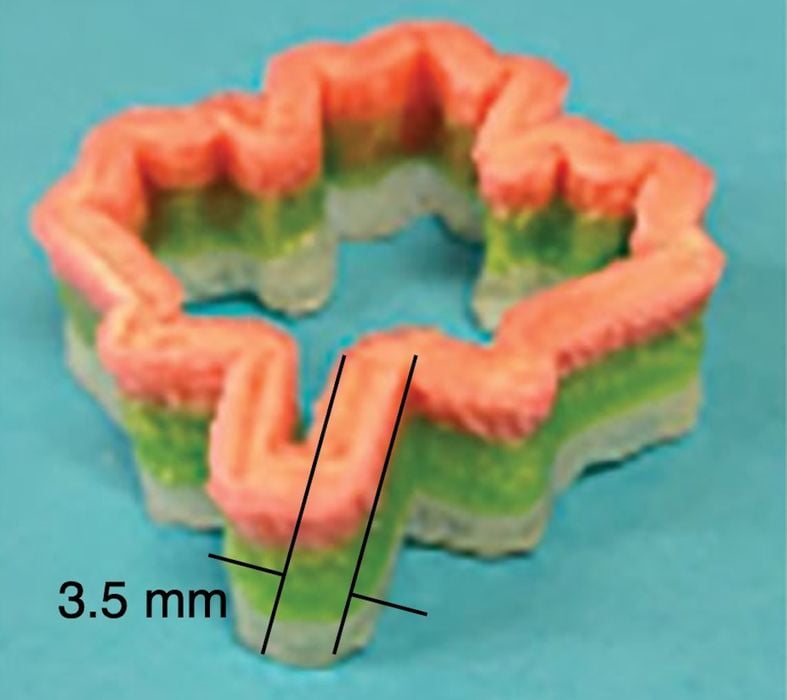
The authors do demonstrate multi material printing and even PDMS colloids (a glow pigment suspension), which is intriguing for functional microdevices. The big open questions for production are long run stability of the barrier, automation of resin delivery without bubbles, metrology for feature control, and whether the approach can be packaged into a robust toolchain for labs that do not want to babysit acoustic alignment.
If PSP holds up outside a controlled research environment, it could become one of the rare techniques that prints “real” PDMS microfluidics without reformulating the chemistry, and that is a very tempting promise for the future.
Via Nature
