

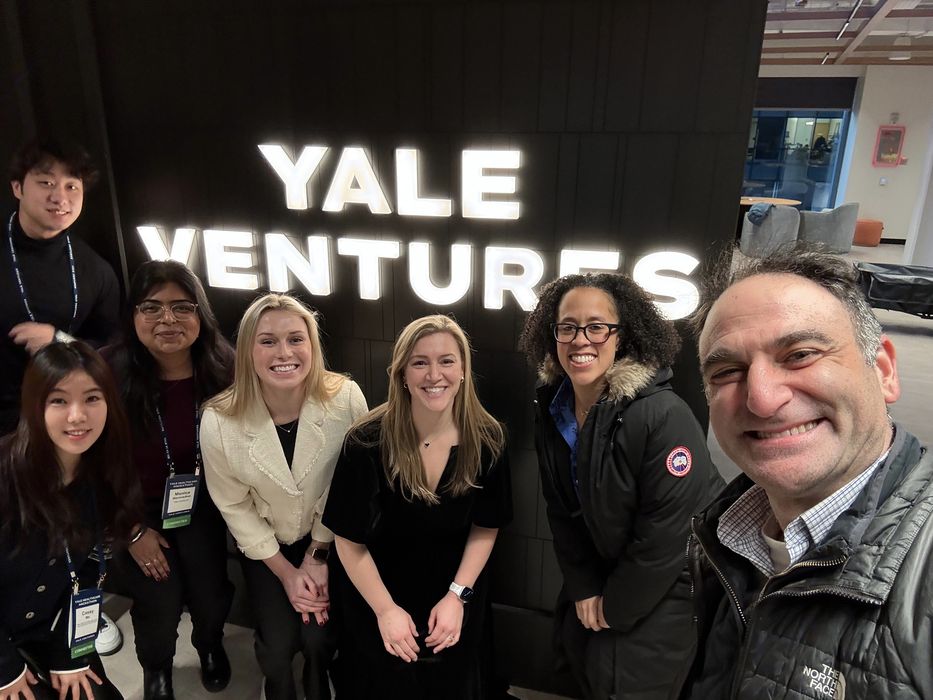
Charles R. Goulding and Preeti Sulibhavi look beyond Yale’s individual research breakthroughs to reveal a larger trend in university innovation, as quantum computing, AI, medical devices and climate technology increasingly move from the lab toward commercialization.
I recently read the Yale Ventures Annual Report 2026, and found so much relevant information that could be of interest to the 3D printing and advanced manufacturing community that it quickly became apparent we could not cover everything in a single article. Instead, we decided to focus on a few developments that demonstrate how university research is increasingly moving beyond the laboratory and into commercial technologies, startups and industrial applications.
Several themes stand out: quantum computing is becoming increasingly commercial, interdisciplinary health technology is receiving greater institutional support, wastewater treatment is emerging as a climate-technology opportunity, and large research collaborations are combining artificial intelligence, biotechnology and advanced brain mapping.
For the Fabbaloo audience, there is an especially interesting connection. These developments illustrate how advanced technologies tend to converge. Quantum computing, AI, medical devices, climate technology and additive manufacturing may appear to be separate fields, but the underlying innovation ecosystem increasingly connects them.
Quantum Computing Moves Toward Commercialization
Two developments highlighted by Yale Ventures demonstrate how quickly quantum computing is moving from academic research toward commercialization.
The first is the acquisition of Yale spinout Quantum Circuits Inc. by D-Wave. In January 2026, D-Wave announced an agreement to acquire Quantum Circuits for US$550 million, consisting of US$300 million in D-Wave stock and US$250 million in cash. The transaction was subsequently completed, with Quantum Circuits’ superconducting gate-model technology becoming part of D-Wave’s broader quantum computing strategy.
Quantum Circuits was founded by leading Yale quantum researchers, including Robert Schoelkopf and Michel Devoret. Its technology focuses on superconducting, error-corrected gate-model quantum computing, complementing D-Wave’s established quantum annealing systems. D-Wave said the acquisition is intended to accelerate development of a scalable, error-corrected gate-model quantum computer.
This is particularly relevant to our previous Fabbaloo article, “Quantum Computing Emerges from the Shadows”, where we examined how quantum computing could eventually influence materials science, manufacturing and additive manufacturing.
The second development is arguably even more significant from a regional economic-development perspective.
The National Science Foundation awarded QuantumCT, a public-private initiative led by the University of Connecticut and Yale, a two-year, US$15 million NSF Regional Innovation Engines award. QuantumCT brings together Yale, UConn, Southern Connecticut State University, industry, government and other partners to advance quantum sensing, secure communications, computing and materials.
The program could ultimately receive as much as US$160 million from the NSF over a decade if it demonstrates sufficient progress. Connecticut has also pledged US$121 million to QuantumCT, including an additional US$60 million tied to receiving the NSF award.
The implications extend well beyond quantum computers themselves. QuantumCT is designed to create technology ventures, develop a skilled workforce and move research into commercial applications in sectors including defense, biotechnology, manufacturing and financial services.
For additive manufacturing, this is important because quantum technology requires sophisticated physical infrastructure, specialized materials, precision components, cryogenic systems and advanced manufacturing techniques. As quantum systems become more sophisticated, opportunities for precision manufacturing and 3D printing suppliers should grow alongside them.
Yale Builds a New Health Technology Pipeline
Another development that caught my attention was Yale’s HealthTech Works program.
HealthTech Works brings together the Yale School of Medicine, Yale School of Public Health, and Yale School of Engineering & Applied Science, with support from Yale Ventures.
The objective is to develop technologies ranging from AI applications for drug discovery and development to healthcare delivery, clinical care, diagnostics and medical devices. The program provides funding, commercialization expertise, mentorship and connections to investors, clinicians and industry.
That interdisciplinary approach is a particularly welcome development given the direction of healthcare technology.
Medical technology increasingly requires expertise that crosses traditional boundaries. A new diagnostic device, for example, may require physicians to define the clinical problem, engineers to design the hardware, data scientists to develop algorithms, manufacturers to produce the device and public-health experts to determine how it can be deployed at scale.
As Megan Ranney, Dean of the Yale School of Public Health, put it:
“The next generation of health solutions requires interdisciplinary collaboration. HealthTech Works will ensure that Yale’s expertise in public health & data science, engineering, and clinical practice come together to produce scalable innovations with broad population impact.”
That philosophy has obvious relevance to 3D printing. Additive manufacturing has already become important in customized medical devices, surgical models, implants, prosthetics and other healthcare applications. The next generation of these technologies is likely to involve much more integration with AI, clinical data and digital workflows.
HealthTech Works could therefore become another pipeline through which university research moves toward commercially viable medical products.
Wastewater Becomes a Climate Technology Platform
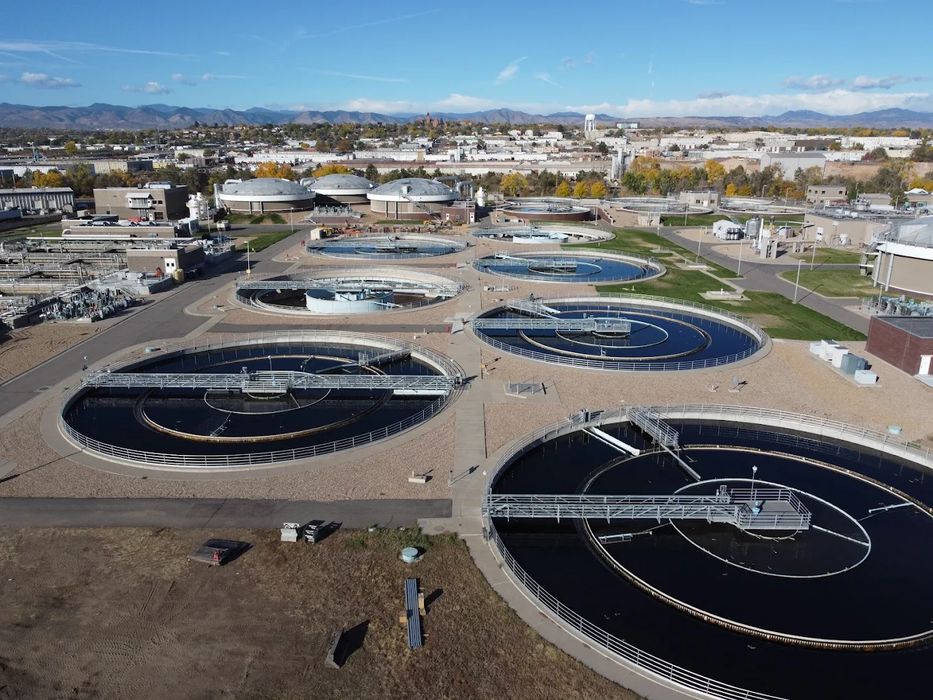
Yale Ventures also highlights the rapid development of CREW, a Yale spinout addressing one of the less glamorous but increasingly important areas of climate technology: wastewater treatment.
CREW raised US$25 million in Series A financing in May 2026, including US$19 million in equity and US$6 million in grants and other non-dilutive funding. Investors included Burnt Island Ventures, AP Ventures, Sony Innovation Fund, Builders Vision, Kibo Invest, Idemitsu Ventures and New York Ventures.
The business opportunity is substantial.
Wastewater treatment operators face tighter regulations, increasing wastewater volumes and aging infrastructure. According to CREW, those pressures have contributed to treatment costs doubling over the past 20 years. Utilities therefore need technologies capable of increasing the performance and capacity of existing facilities without requiring enormous new capital investments.
CREW’s technology works within existing wastewater infrastructure. By optimizing conditions such as pH and alkalinity through smart dosing of calcium carbonate, the company says its process can improve biological treatment, settling, chemical usage, capacity and efficiency while also enabling measurable carbon removal.
The company has already established an impressive commercial footprint. Since launching in 2024, CREW says it has deployed its technology at nearly 10 wastewater treatment facilities across the United States and Europe, including Hampton Roads Sanitation District (HRSD). One utility is considering deferring US$350 million in planned capital upgrades because of the performance improvements generated by the technology.
This is exactly the type of startup story that is increasingly relevant to the advanced manufacturing community: instead of building entirely new infrastructure, technology is being developed to make existing infrastructure substantially more productive.
Big Science Meets Startup Creation
Another striking example comes from a US$46 million Harvard-Yale research initiative focused on autism and human brain development.
The grant establishes the Human Developmental Neurobiology Hub, co-led by Harvard’s Paola Arlotta and Yale’s Nenad Sestan. Researchers will examine brain development at neural, cellular, genetic and molecular levels. The Yale component includes projects involving high-resolution mapping of brain development from the womb through adolescence and examining gene expression in human brain cells at different developmental stages.
The initiative also incorporates AI. Data generated by the research will help Marinka Zitnik and her colleagues develop computational models intended to create a “virtual cell model” of the developing human brain.
We have a previously published article on the subject matter years ago in 2013. And, Warren Buzzell, Jr., a member of our firm, has had the opportunity to conduct research in the field of traumatic brain injury at Robert Morris University (now Stony Brook University). He and his principal investigator, Dr. Rika Carlsen, utilized 3D printing to gain valuable insight into the phenomenon.
Again, the pattern is interdisciplinary: biology, neuroscience, AI, data science and engineering are converging around a major research challenge.
For companies involved in advanced manufacturing, this is a useful reminder that tomorrow’s manufacturing opportunities may emerge from research fields that currently appear unrelated to manufacturing.

The Research and Development (R&D) Tax Credit
The article highlights several startup activities that may present IRC § 41 R&D tax credit opportunities, especially for early-stage companies still pre-profit or reinvesting heavily in product development. Qualified research under IRC § 41 generally must involve domestic IRC § 174A research expenditures, be technological in nature, relate to developing a new or improved business component, and involve a process of experimentation.
Based on the article, potential qualifying areas could include quantum computing development, healthtech diagnostics and medical devices, AI-based drug discovery tools, climate/wastewater process improvements, and computational modeling. Quantum Circuits’ work on scalable, error-corrected gate-model quantum computing, HealthTech Works’ focus on AI, diagnostics, devices, and care delivery, and CREW’s smart-dosing wastewater technology all involve technical development and improvement efforts that may fit the IRC § 41 framework if the companies can document uncertainty, experimentation, and qualified costs.
The most reader-friendly opportunity is the R&D payroll tax offset for qualified small businesses. Under IRC §§ 41(h) and 3111(f), an eligible startup may use part of its research credit against payroll taxes rather than waiting to use it against income tax. A qualified small business generally must have less than US$5 million of current-year gross receipts and no gross receipts before the five-tax-year period ending with the current year. For tax years beginning after 2022, the payroll offset can be up to US$500,000, applied first against employer Social Security tax and then employer Medicare tax. The election is made annually on timely filed Form 6765 and claimed on Form 8974 with the payroll tax return.
R&D Tax Savers has been helping companies navigate the complexities of the R&D credit since it was introduced into law in 1981.
The Startup Model Is the Common Thread
Perhaps the most important takeaway from the Yale Ventures report is not any single technology. It is the startup model connecting them.
Quantum Circuits became a major technology acquisition. HealthTech Works is designed to turn university research into health technology companies. CREW is commercializing climate technology while working within existing infrastructure. The Harvard-Yale brain initiative combines large-scale research with AI and computational modeling.
The common denominator is commercialization.
That point is particularly evident in the CREW investment. Austin Noronha, Managing Director, Sony Ventures-US, explained:
“Startups advancing frontier technologies to tackle global environmental challenges are central to building more sustainable, resilient industries – and a key focus of Sony Innovation Fund’s investment strategy,” said Austin Noronha, Managing Director, Sony Ventures-US. “CREW combines deep geochemistry expertise with a pragmatic business approach to seamlessly integrate carbon capture into existing infrastructure, making it both scalable and commercially viable. With multiple deployments already underway, CREW is well-positioned to help various industries accelerate decarbonization.”
For Fabbaloo readers, the broader lesson is clear. Universities are no longer simply places where technologies are invented and then licensed years later. Increasingly, universities are building structured pathways that combine research, venture funding, engineering, clinical expertise, investors and industry partners.
That shift should matter to the 3D printing industry.
Additive manufacturing thrives when new materials, new computational methods, new medical applications and new industrial processes move from research into production. The Yale Ventures 2026 report provides a useful snapshot of that transition in action.
Quantum computing may help discover better materials. HealthTech Works may generate new medical devices that incorporate additive manufacturing. Climate startups such as CREW are demonstrating how existing infrastructure can be optimized rather than replaced. And large-scale neuroscience projects are showing how AI and advanced computational tools can transform biomedical research.
The technologies are different, but the innovation model is increasingly the same: research, interdisciplinary collaboration, commercialization and deployment.
That may ultimately be one of the most important trends to emerge from Yale’s 2026 innovation ecosystem—and one worth watching closely as additive manufacturing continues to expand beyond its traditional boundaries.