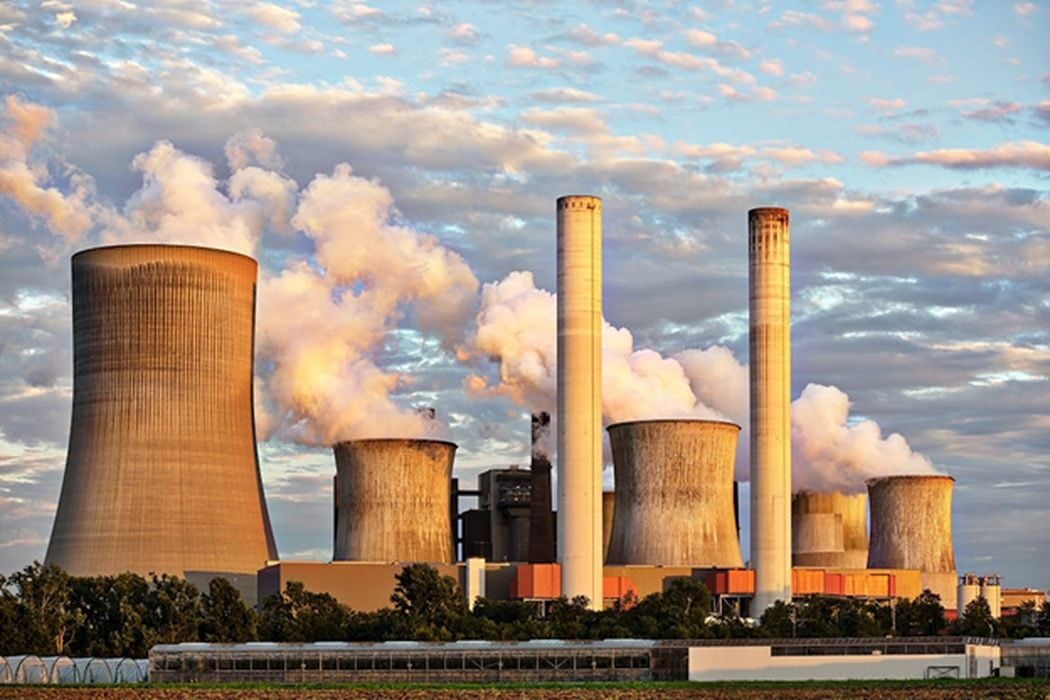
Charles R. Goulding and Kate Esposito spotlight how Holtec International’s public offering and plans to restart a decommissioned nuclear plant are turbocharged by 3D printing and supported by valuable R&D tax incentives.
Introduction: Holtec International Goes Public
On June 30th, 2025, Barron’s reported that Holtec International, a Pure Play Nuclear company with extensive experience, will be going public with an Initial Public Offering (IPO). This strategic decision comes in the wake of major technology corporations taking an interest in nuclear power as a means of supporting Artificial Intelligence (AI) datacenters. Holtec is especially appealing to these organizations because, unlike other nuclear providers, it earns revenue from decommissioning nuclear plants and handling nuclear waste, which has helped it build a large market value. The company’s annual profits are upward of US$500 million, and they are hoping to sell about 20% of their equity to investors.
Additionally, Holtec plans to bring back a decommissioned nuclear plant, which has never been done in America. The Palisades Nuclear Plant in Michigan shut down in 2022 due to financial reasons. Holtec is now attempting to revive the plant, with the state of Michigan and the Department of Energy contributing hundreds of millions of dollars in support of the endeavor. Holtec also intends to place two small nuclear reactors (SMRs) on the site, though they have yet to receive federal or state approval.
Across the nuclear world, additive manufacturing is emerging as a tool able to revolutionize nuclear plants and reactors. 3D printed parts can withstand harsh nuclear environments, enable complex geometries, accelerate trial cycles, and minimize material waste. Holtec has the potential to utilize 3D-printed parts in their goal of restarting the Palisades reactor and creating new SMRs, in addition to making them even more valuable to potential investors.
Benefits of 3D Printing Within Nuclear Energy Field
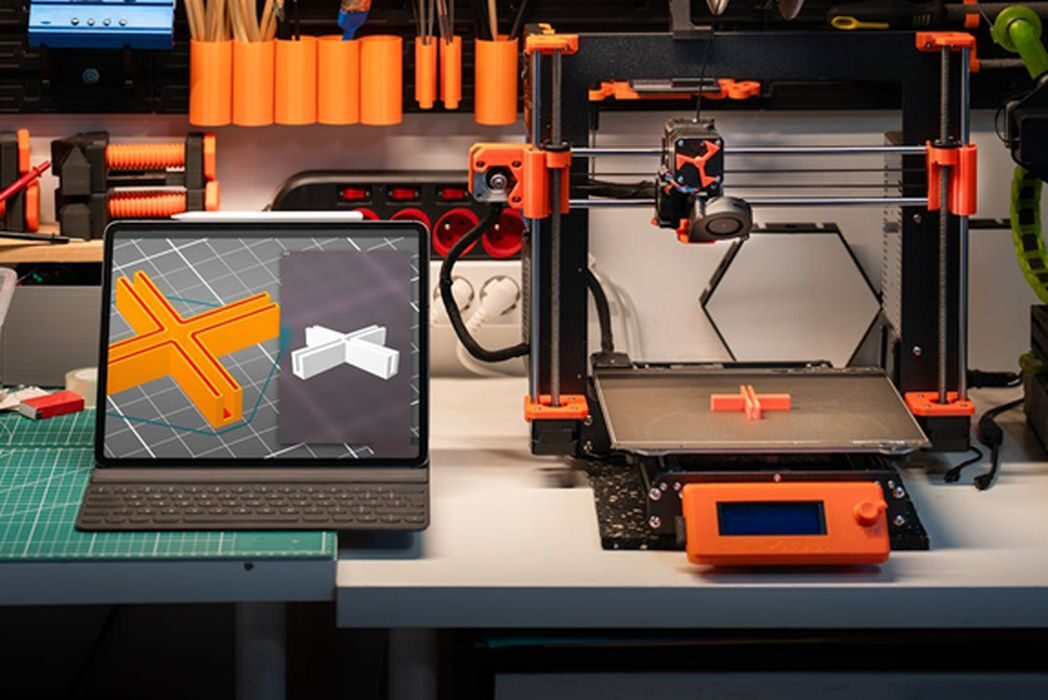
Though 3D printing technology was not available with legacy U.S. nuclear plants, it is becoming increasingly common thanks to its ability to revolutionize nuclear systems. Compared to traditional methods of manufacturing, additive manufacturing is faster, less wasteful, and greatly reduces errors, making it more efficient and much less expensive. 3D printing allows for the creation of complex components, prototypes, and specialized parts with enhanced durability and precision. Manufacturers utilize 3D printing to construct designs quickly and rework them as needed, greatly reducing developing time and helping researchers reduce carbon emissions faster. Additive manufacturing can replace parts that can no longer be traditionally manufactured, allowing for maintenance and repair in radioactive environments. Furthermore, researchers have discovered that some new metal alloys developed for reactors are stronger if they are fabricated through 3D printing than if they are produced using conventional casting, highlighting 3D printing’s ability to increase safety in the nuclear field.
3D printing has the potential to revolutionize the nuclear energy field, and there are many ways to apply it. Ongoing research and design projects are focused on expanding the capabilities and uses of 3D printing within nuclear facilities and reactors. Additive manufacturing will soon transform reactor design, maintenance procedures, and fuel manufacturing, leading to safer, more efficient, and cost-effective nuclear power systems.
3D Printing Applied to Nuclear Energy
Many companies have already begun incorporating 3D-printed technologies into nuclear energy projects. In 2017, Siemens created the first 3D-printed part operating in a nuclear power plant, a metallic impeller for a fire protection pump. The original impeller, in operation at the Krško plant in Slovenia since the commissioning of the plant in 1981, needed to be replaced. However, it was impossible to obtain a new part because the manufacturer had shut down. The part was instead 3D-printed and was able to clear all stringent nuclear power tests, showcasing its reliability. 3D-printing the impeller enabled the plant to continue operating, preventing it from having to shut down prematurely.
The Oak Ridge National Laboratory developed the Transformational Challenge Reactor (TCR), which uses laser power bed fusion to print complex microreactor core parts. In 2021, ORNL used the TCR to create 3D-printed reactor components in conjunction with the Tennessee Valley Authority (TVA) and Framatome. Four 3D-printed stainless steel channel fasteners were installed at TVA’s Browns Ferry Unit 2. These fasteners are a critical safety component in nuclear reactors, making their success crucial. Inspections have shown that the brackets are performing well, cementing confidence in 3D-printed parts within regulated environments. ORNL plans to leave the brackets in place for six years before removing them and evaluating their progress.
Researchers at the University of North Dakota are working on crafting 3D-printed nuclear reactors fortified with reinforced steel. The team is led by Sougata Roy, a mechanical engineering professor. They plan to use austenitic steel, an alloy bolstered with nitrogen, as the primary construction material. The main objective is to determine the superior efficiency of 3D-printed components compared to conventionally designed ones, with testing focusing on tribological properties – pertaining to wear, lubrication, and friction – at elevated temperatures.
3D Printing Within Holtec International
3D printing may be able to help Holtec International with their goal of restarting the Palisades nuclear reactor and adding two new SMRs to the site. The Palisades plant was commissioned in 1971, meaning that many parts are likely in need of replacing. Similarly to the Krško plant in Slovenia, these parts may no longer be traditionally manufactured, making 3D printing crucial to the plant’s recommissioning. Holtec also plans to refurbish the plant with an array of enhancements, some of which could utilize 3D printing in their development.
Furthermore, 3D printing can be implemented within the SMRs that Holtec intends to create. Researchers at the University of Alberta have already designed and manufactured advanced 3D-printed materials for SMRs meant to increase safety within the reactors. The research team has explored ways to make the containment material inside the SMRs more durable and less corrosive. They are using 3D printing to modify a superalloy found in conventional reactors that is used to resist corrosion under extreme heat. If Holtec chooses to apply this technology, their SMRs should be safer and less at risk of malfunctioning, which will likely help them receive the approval necessary to execute their plans.
The Research & Development Tax Credit
The now permanent Research and Development (R&D) Tax Credit is available for companies developing new or improved products, processes, and/or software. 3D printing can help boost a company’s R&D Tax Credits. Wages for technical employees creating, evaluating, and revising 3D printed prototypes are typically eligible expenses toward the R&D Tax Credit. Similarly, when used as a method of improving a process, time spent integrating 3D printing hardware and software can also be an eligible R&D expense. Lastly, when used for modeling and preproduction, the costs of filaments consumed during the development process may also be recovered.
Whether it is used for creating and testing prototypes or for final production, 3D printing is a great indicator that R&D Credit-eligible activities are taking place. Companies implementing this technology at any point should consider taking advantage of R&D Tax Credits.
Conclusion
3D printing is already revolutionizing the nuclear field, and it has the potential to lead to even more advancements in the future. Holtec International could use additive manufacturing to help them accomplish their goals of restarting the Palisades nuclear plant and adding two small modular reactors at the site.