Charles R. Goulding and Preeti Sulibhavi spotlight how France’s world-leading nuclear sector is harnessing 3D printing to modernize aging infrastructure, accelerate reactor development, and drive global energy innovation.
France’s Nuclear Industry and the Rise of 3D Printing
France has one of the most mature and efficient nuclear power systems in the world. With over 70% of its electricity generated by nuclear power—more than any other country—France has spent decades refining its nuclear infrastructure, research, and regulatory frameworks. This makes it not only a leader in nuclear energy but also a vital proving ground for new technologies like 3D printing.
As the global nuclear industry explores ways to modernize, reduce costs, and improve safety, additive manufacturing—commonly known as 3D printing—has emerged as a transformative solution. For France, the integration of 3D printing into its nuclear supply chain is already reshaping how complex parts are designed, tested, and produced. From streamlining manufacturing timelines to enabling the fabrication of geometrically complex components that were previously impractical or impossible to create, 3D printing is opening new pathways for innovation in France’s nuclear sector.
Two major players are at the forefront of this evolution: Framatome and NAAREA. Both organizations are leveraging 3D printing to push the boundaries of what’s possible in nuclear technology.
Framatome: Driving Innovation Through Strategic Partnerships
Framatome is a key pillar of the French nuclear industry. Headquartered in Courbevoie, France, Framatome is a global leader in the design, maintenance, and development of nuclear reactors and fuel. The company has been instrumental in building and supporting France’s nuclear fleet and continues to expand its role internationally.
In recent years, Framatome has increasingly focused on innovation in additive manufacturing. One of its most notable collaborations is with the Oak Ridge National Laboratory (ORNL) in the United States and the Tennessee Valley Authority (TVA)—a partnership aimed at testing and deploying 3D-printed components in operating nuclear reactors.
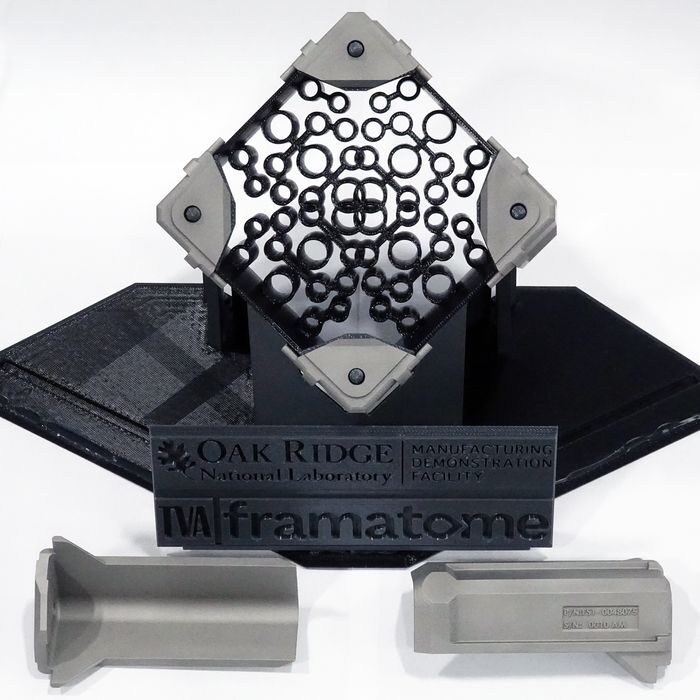
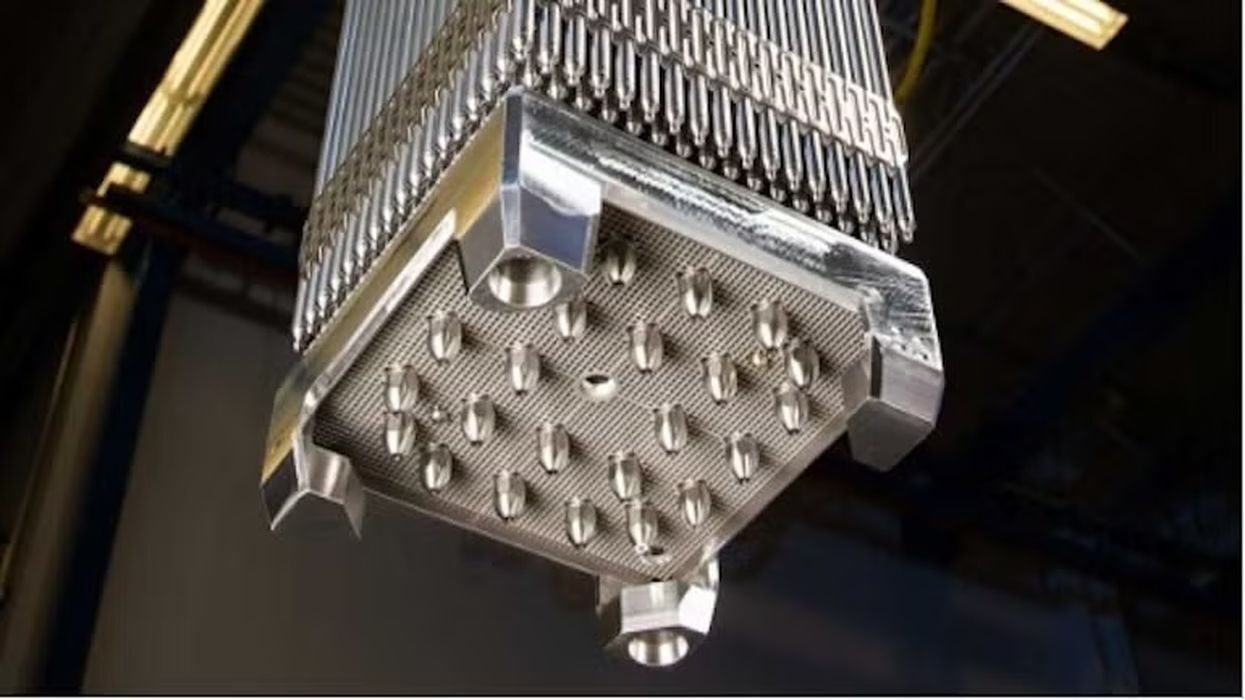
In 2021, Framatome, ORNL, and TVA achieved a major milestone when they successfully installed and tested the first safety-related 3D printed component inside a commercial nuclear reactor. The part, a stainless-steel fuel assembly channel fastener, was fabricated using powder bed fusion technology and passed rigorous regulatory and performance evaluations. This was more than a proof of concept—it was a clear demonstration that additive manufacturing can meet the high safety and durability standards required in the nuclear energy sector.
Building on that success, Framatome continues to explore additional uses for 3D printing, particularly for legacy components that are no longer manufactured through conventional means. These include parts for reactors that have been in service for decades and for which original tooling or suppliers no longer exist. Additive manufacturing allows Framatome to reverse-engineer and replicate these parts efficiently, helping extend the life of aging reactors while reducing operational risk and costs.
Beyond retrofitting, Framatome is also researching how 3D printing can be used in the construction of next-generation nuclear reactors, particularly small modular reactors (SMRs). These reactors require highly compact and precise components—a perfect match for the strengths of additive manufacturing.
NAAREA: A Newcomer With Disruptive Potential
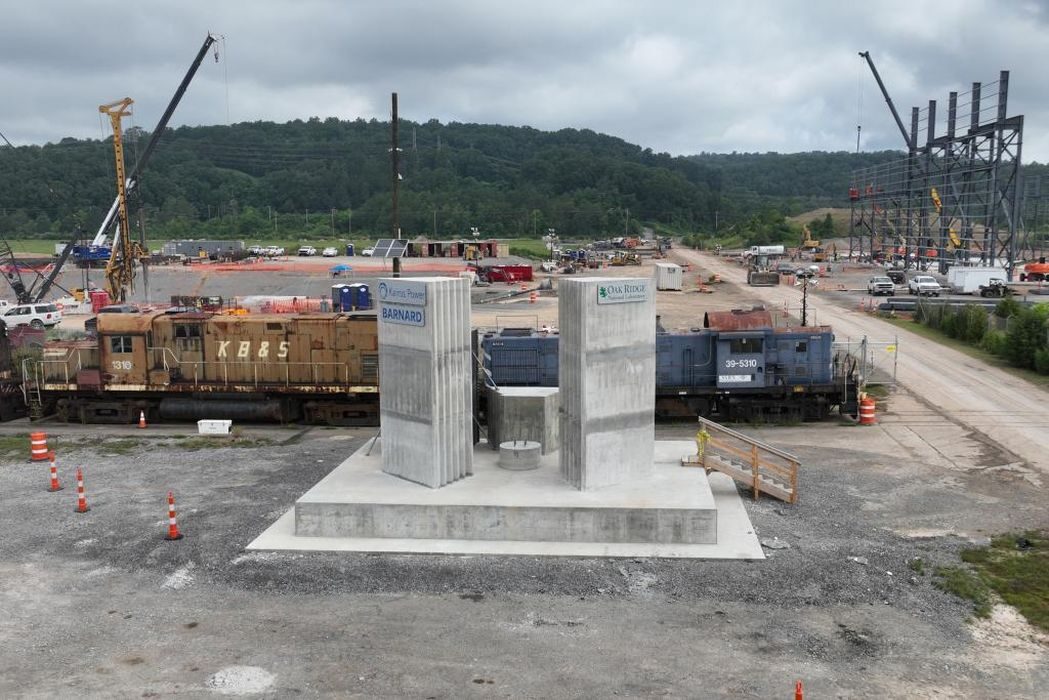
While Framatome represents the legacy and strength of France’s established nuclear ecosystem, NAAREA (Nuclear Abundant Affordable Resourceful Energy for All) symbolizes the future. Founded in 2020, NAAREA is a French startup developing a novel micro fast reactor that aims to address the dual challenges of energy sustainability and nuclear waste.
NAAREA’s design is based on molten salt fast reactor (MSFR) technology, which enables the recycling of long-lived radioactive waste into usable fuel. This concept—sometimes referred to as “nuclear waste-to-energy”—could dramatically reduce the amount of high-level nuclear waste while providing clean, dispatchable power.
3D printing is central to NAAREA’s strategy. The startup is designing its microreactors with additive manufacturing in mind from the ground up. This approach allows for optimization of internal component geometries, better heat exchange, and modular construction—making it faster and cheaper to produce reactors at scale.
In 2023, NAAREA announced plans to build a pilot reactor by the end of the decade, with the aim of mass-producing microreactors in the 2030s. These small-scale units could provide clean energy to remote regions, industrial sites, or even be deployed in disaster zones where traditional infrastructure is compromised.
By integrating 3D printing into its design and fabrication process, NAAREA is not just making its technology more manufacturable; it’s also enabling designs that are more efficient and more compact than conventional systems. This aligns with a global trend toward smaller, decentralized nuclear power options that can be built faster and tailored to specific energy needs.
Why France Is the Ideal Testbed
France’s deep experience in nuclear power makes it an ideal testbed for the industrialization of 3D printed nuclear components. With its 56 reactors, strong regulatory institutions, and skilled workforce, the country offers a robust ecosystem for piloting advanced manufacturing technologies in real-world nuclear environments.
Moreover, France’s commitment to decarbonization has reaffirmed its long-term reliance on nuclear energy. In 2022, President Emmanuel Macron announced a major nuclear expansion plan, including the construction of at least six new EPR2 reactors and potential investment in SMRs. These projects will require thousands of specialized components—many of which can benefit from 3D printing’s speed, precision, and cost-efficiency.
Additive manufacturing also enhances France’s nuclear supply chain resilience. During the COVID-19 pandemic and subsequent global supply chain disruptions, the ability to produce critical parts locally and quickly became a strategic advantage. 3D printing offers just that, allowing France to maintain independence and reduce lead times for key reactor components.
Advantages of 3D Printing in Nuclear Applications
The adoption of 3D printing in the nuclear sector offers several concrete benefits:
- Design Freedom: Engineers can create complex geometries that improve performance, such as advanced heat exchangers, cooling channels, and lattice structures.
- Reduced Lead Time: Traditional manufacturing methods for nuclear parts can take months or even years. 3D printing slashes these timelines dramatically.
- Customization & Rapid Prototyping: Engineers can test and refine component designs much faster.
- Supply Chain Flexibility: Spare parts and rare components can be printed on demand, reducing storage costs and logistical delays.
- Material Efficiency: Additive manufacturing minimizes material waste, which is especially valuable when working with high-cost, high-performance alloys used in nuclear applications.
The Research & Development Tax Credit
The now permanent Research and Development (R&D) Tax Credit is available for companies developing new or improved products, processes and/or software.
3D printing can help boost a company’s R&D Tax Credits. Wages for technical employees creating, testing and revising 3D printed prototypes are typically eligible expenses toward the R&D Tax Credit. Similarly, when used as a method of improving a process, time spent integrating 3D printing hardware and software can also be an eligible R&D expense. Lastly, when used for modeling and preproduction, the costs of filaments consumed during the development process may also be recovered.
Whether it is used for creating and testing prototypes or for final production, 3D printing is a great indicator that R&D Credit-eligible activities are taking place. Companies implementing this technology at any point should consider taking advantage of R&D Tax Credits.
Conclusion: France Sets the Global Benchmark
France’s nuclear industry is not only the most mature in the world—it’s now becoming one of the most innovative. By embracing 3D printing, the country is setting a global benchmark for how advanced manufacturing can extend the life of existing reactors, reduce costs, and pave the way for next-generation nuclear technologies.
Framatome’s collaboration with U.S. partners and NAAREA’s disruptive reactor designs underscore a broader transformation. As other nations seek to build new nuclear infrastructure or upgrade aging fleets, they will increasingly look to France for proven models of how to integrate additive manufacturing into nuclear power safely and effectively.
The fusion of old and new—legacy infrastructure with cutting-edge manufacturing—positions France as both a leader and a laboratory for the future of nuclear energy.