
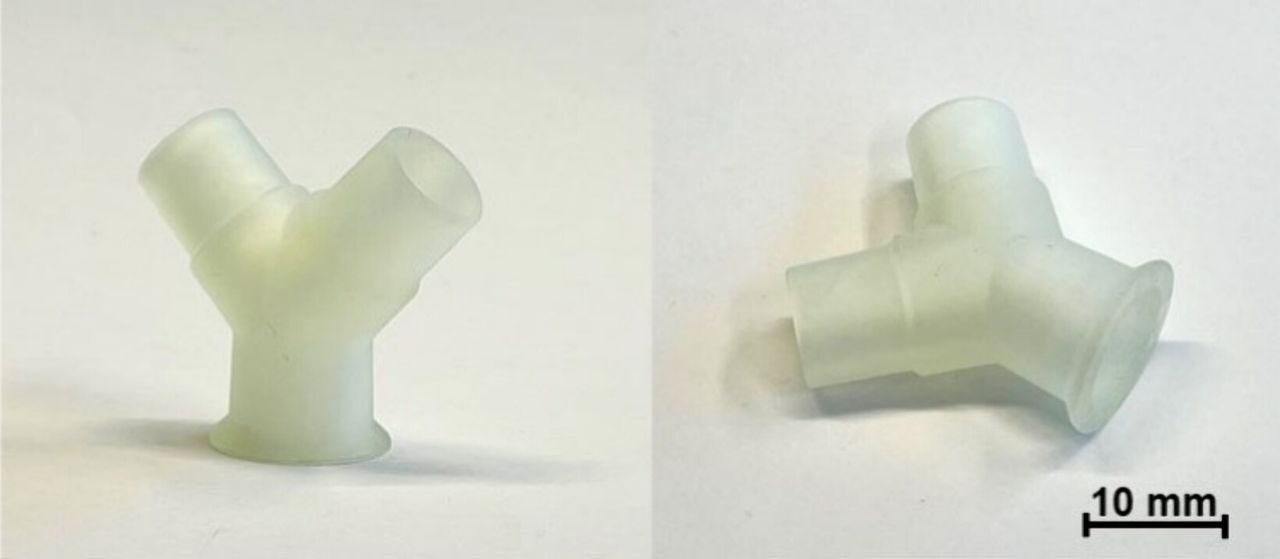
Researchers have developed the first vitrimer resin for consumer-grade 3D printing.
What’s that? You don’t know what a vitrimer resin is? It’s a different type of polymer.
There are three broad families of plastics:
- Thermoplastics (e.g. PETG, PLA), which can be melted and reshaped repeatedly.
- Thermosets (e.g. most 3D printer resins, epoxy), which, once set, cannot be melted or reshaped.
- Vitrimers (the new class), which are like thermosets, but can flow when heated.
This property gives you repairability, reprocessability, and self-welding while keeping the strength of a thermoset. You could, for example, heat press a vitrimer into a new shape.
Vitrimers have been used in 3D printing previously, but mostly in an experimental sense. A few years ago, some resins were developed for 3D printing, but they required metal catalysts (slow curing, toxicity questions), and had narrow resin windows (too viscous or brittle for reliable printing).
As a result, vitrimers really haven’t been used much for 3D printing. However, the result of this study might change that forever.
The researchers were able to develop a vitrimer resin that can be easily 3D printed, even on low-cost desktop resin 3D printers. Their formula does not require any catalysts.
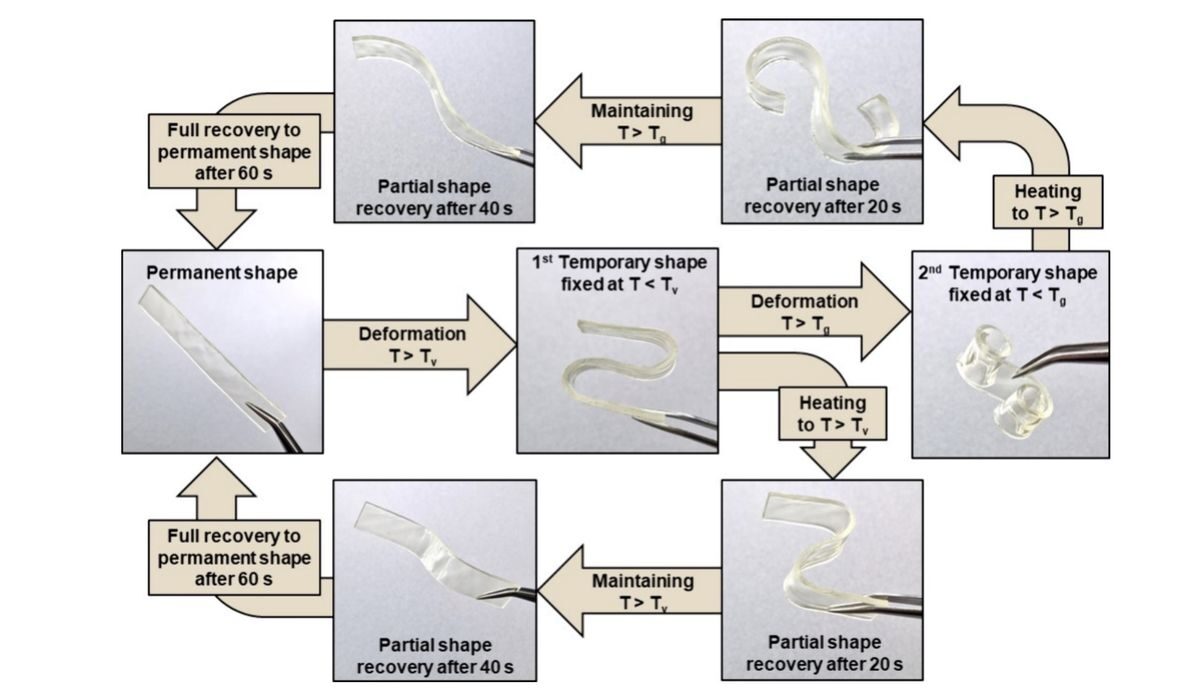
There are two interesting and unexpected properties of the new resin, Dipentaerythritol pentaacrylate (DPEPA).
One is that it is antimicrobial. This means it could be used for applications where that’s desirable, such as hand grips, storage containers, etc.
The second and perhaps more interesting unusual property is that it can be self-repairing. Recall that the material can flow when heated. This means that minor cracks can in theory be filled with a suitable application of heat.
This development is a research project, but it seems to me that it’s likely this material might make its way through commercialization and eventually become a product you can purchase.
At some point in the future, you might be able to print self-repairing parts.
Via ACS
