
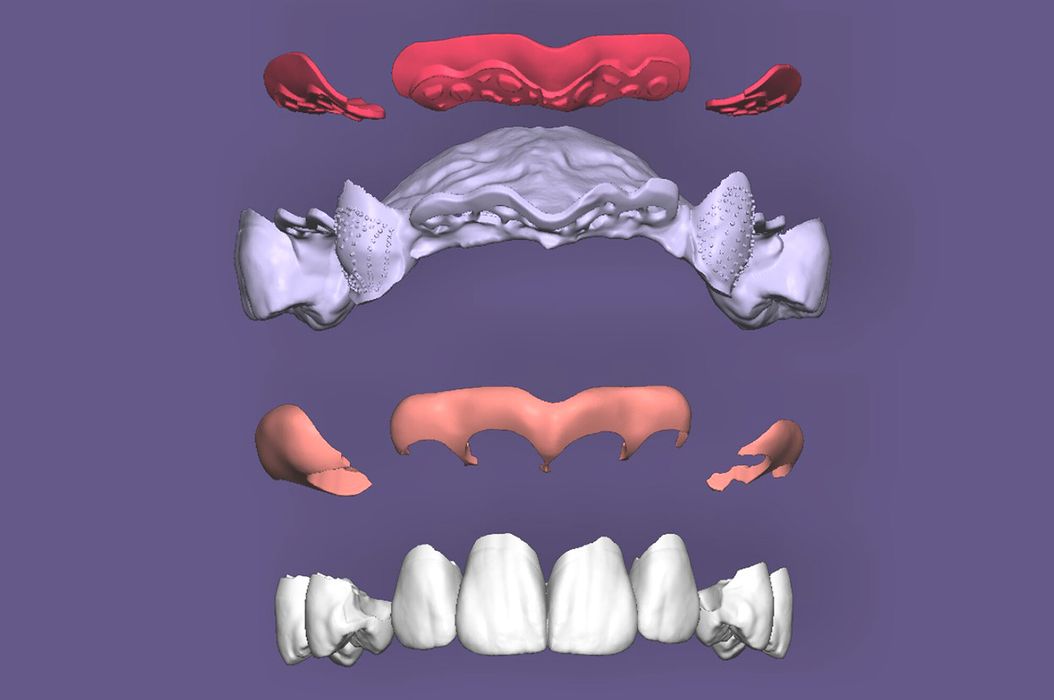
A new research paper explains how 3D printing is reshaping removable dental prosthetics today.
The paper surveys current materials, printers, and workflows for complete dentures and removable partial dentures, then maps where additive manufacturing is gaining ground versus conventional casting and milling. For denture bases and tests, resin processes like Digital Light Processing (DLP) and stereolithography (SLA) now dominate discussions, while frameworks for partials are increasingly designed digitally and produced by either printed patterns for casting or direct metal using Laser Powder Bed Fusion (LPBF). The authors believe the shift is an evolution toward validated, end to end digital workflows in the lab.
Dental has long been an early adopter of digital tools, but subtractive PMMA milling has been the go-to for strength, color stability, and fit. Printed denture systems have been catching up with specialized biocompatible resins, tighter process controls, and software tuned for occlusion and aesthetics. Competing ecosystems from well known dental and AM vendors are vying for attention with validated resin and printer pairings, integrated nesting, and post processing recipes that aim to boost reliability and throughput.
From Rapid Try Ins To Functional Prostheses
One clear advance is the routine use of printed testers. Labs can print diagnostic setups in hours, make chairside adjustments, and loop those changes back into CAD for a faster, more predictable delivery. Production denture bases and tooth sets are also being printed, then bonded, allowing same day or next day turnaround in some workflows. The review notes that material portfolios now include pink base resins, various tooth shades, and clear resins for occlusal splints and records.
Constraints remain in spite of progress. Bonding between printed teeth and bases is a critical interface that must withstand thermal cycling and mastication; long term fatigue data is still limited in public literature. Mechanical properties of printed bases approach clinical thresholds, but milled PMMA often retains an edge in fracture toughness and wear. Labs must also manage resin handling, accurate washing, and controlled post cure to minimize warpage and maintain fit — steps that add labor if not automated.
Frameworks, Materials, And Workflow Economics
For removable partial dentures, digital design has largely replaced manual waxing, yet production splits between two AM paths. Many labs print resin patterns and invest cast cobalt chrome, preserving familiar metallurgy and polishing routines. Others print frameworks directly in cobalt chrome via LPBF, which can reduce lead time and remake risk but demands surface finishing and validation of biocompatibility, corrosion resistance, and porosity. The review positions both approaches as viable, with selection driven by equipment access, finishing expertise, and cost per part.
Throughput is the other lever. DLP platforms can nest many arches per build, and some labs stack builds to run unattended, but the process is only as fast as the slowest step. Support removal, cleaning, post cure, bonding, and polishing still dominate touch time. Software integration across intraoral scanning, design, nesting, and traceability helps reduce friction. The authors emphasize that validated printer resin pairings and standardized post processing are crucial to consistency and reduce rework, which directly impacts economics.
The review also flags reliability and quality control. Closed loop exposure control, part orientation strategies that mitigate anisotropy, and in process sensing are emerging, but most dental printers still rely on operator discipline. Color stability, water sorption, and biofilm resistance vary by resin family; labs should examine data where available and demand lot traceability and documentation for audits.
What To Watch Next
Clinical evidence over multiple years will decide how far printed dentures displace milled alternatives. Independent datasets comparing fatigue life, bond durability between teeth and bases, stain resistance, and patient reported outcomes will be key. The field is likely to move toward more integrated or even monolithic prints that reduce adhesive interfaces, along with smarter nesting, stack safe supports, and semi automated post processing.
Regulatory validation and vendor lock in are real considerations. Many high performance materials are tied to specific printers and curing boxes; that protects outcomes but can constrain lab flexibility. Buyers should weigh the value of a validated turnkey against cross platform openness, and plan for training as software and materials evolve.
If dentures are becoming data and light, the winners will be those who master both.
