
A report opens up the possibility that 3D printer waste could be put to good use.
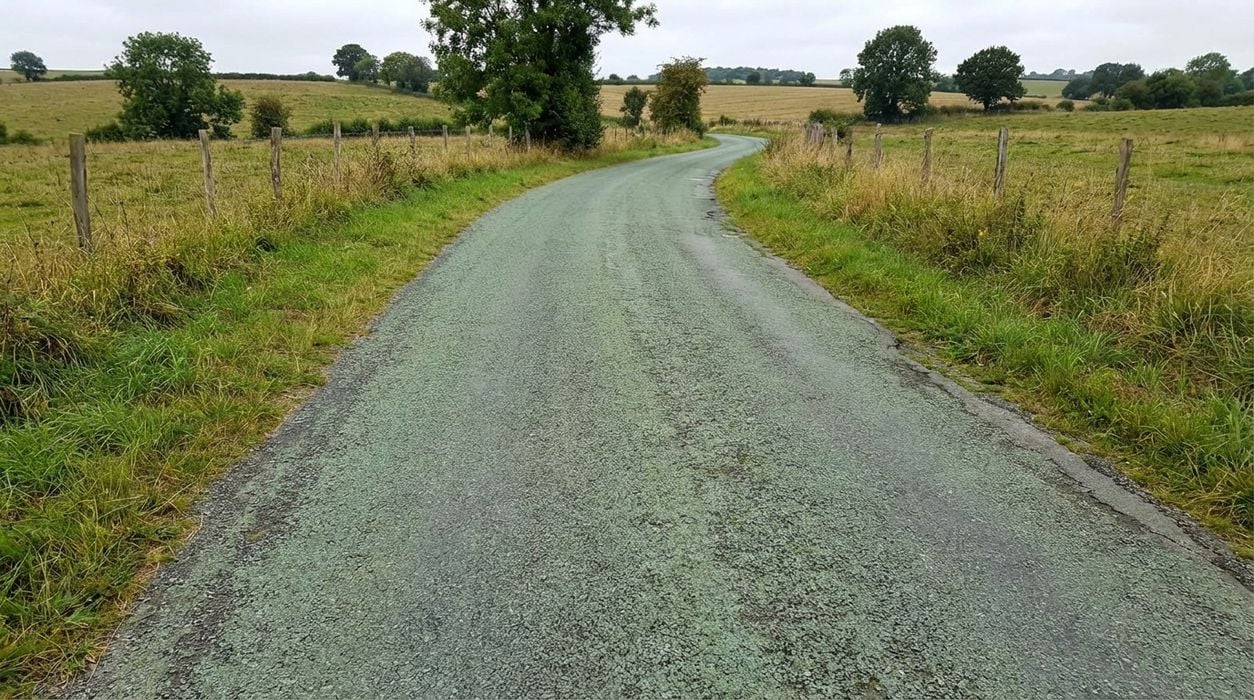
The report, published on TechExplore, describes a method of strengthening roadways. The concept is to change the traditional asphalt mix — usually gravel, sand, and bitumen — by adding some waste plastic.
Experiments that changed 8-10% of the bitumen to waste plastic had positive results. The plastic is melted into the bitumen at a high temperature and becomes part of the bonding agent between the gravel and sand. TechExplore writes:
“This process is like adding rebar to concrete: The plastic adds flexibility and strength. Roads with this mix can better handle extreme temperatures and heavy traffic. In hot places, that means fewer cracks and potholes.”
This is because the plastic material has a higher thermal resistance than plain bitumen, providing better performance when summer temperatures rise.
Would deploying tonnes of plastic into roadways increase the microplastic problem? Evidently not. Measurements showed a “minimal” amount of the material escaped the roadways to become microplastics. The majority simply stays embedded in the road.
This idea could be linked to the increasing amount of 3D printer waste. Today’s filament swapping desktop 3D printers generate a massive amount of waste when changing colors. In some cases, the amount of waste is 10X the weight of the final print, showing the magnitude of the issue.
Today there are really no practical approaches for dealing with all that waste material, aside from putting it in the landfill, where it eventually becomes microplastics. That’s because current municipal recycling services depend on special marks to indicate the type of plastic for sorting in centralized facilities. 3D printer waste doesn’t have marks.
But what if there was a way to simply collect the waste as-is and integrate it into roadway production? It would seem that this could be quite simple to do, and would also produce better roads.
Would the waste have to be sorted? The story suggests it does, but I suspect the sorting requires far less precision than conventional recycling. Colors don’t matter, for example, and likely any material with similar thermal characteristics would function in the same manner.
If such a system were implemented, it could easily slurp up all the 3D printer waste in a region. Roads are large and long, and the number of 3D printers is still relatively low. In some areas, there may not be enough 3D printer waste to use in this way, but there will be other forms of plastic waste that can be used.
I’m hoping that someone investigates this angle more deeply, because it just might be the easy solution to 3D printer waste we’ve all been looking for.
Via TechExplore
