
Charles Goulding and Ari Willick discuss three ways Rockwell Automation is applying its industrial automation expertise to the 3D printing industry.
When thinking about companies involved in 3D printing, Rockwell Automation may not be one of the first names that comes to mind. Rockwell does not manufacture conventional 3D printers. Instead, its strength lies in industrial automation, including controllers, motion systems, robotics, manufacturing software and digital engineering tools.
That gives Rockwell several ways to participate in additive manufacturing without building the printers themselves. Three examples stand out: its automation technology used in LaserBond’s metal additive manufacturing process, its Plex manufacturing software, and its Emulate3D digital twin platform.
We previously examined Rockwell alongside several other manufacturers in our article, “Additive Advantage: The Role of 3D Printing in U.S. Manufacturing’s Comeback.” In that piece, we discussed the relationship between additive manufacturing and increased factory automation. Rockwell’s three 3D printing connections provide a closer look at what that relationship can mean in practice.
1. Controlling an Additive Manufacturing Process
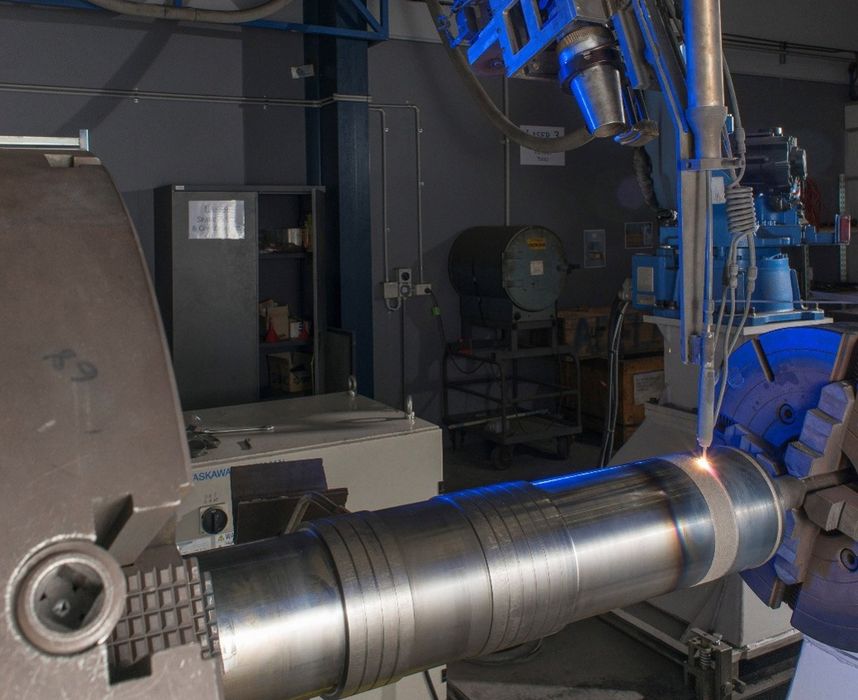
One of the clearest examples comes from LaserBond, an Australian surface engineering company that uses laser cladding.
Laser cladding is an additive manufacturing process that deposits high-performance metal or composite material onto new or remanufactured components. The deposited material forms a metallurgical bond with the existing component and can provide protection against wear and corrosion.
For LaserBond, precise robotic control is essential. Each job can involve a different component geometry and application, requiring the robot, laser and associated equipment to work together accurately.
Rockwell Automation provided LaserBond with an automation system built around Allen-Bradley Compact GuardLogix controllers and Kinetix servo drives, along with Studio 5000 and FactoryTalk software. Rockwell reports that the resulting control system reduced typical program setup time from approximately 30 minutes to less than 5 minutes for most jobs. LaserBond was also able to save job data and build a library that could be reused for similar applications.
This is a useful demonstration of Rockwell’s role in additive manufacturing. The company does not need to build the printer or deposition system itself. Its technology can instead control the machines, motion and information required to make an additive process productive.
We discussed this broader relationship in “3D Printing Automation and Avoiding the Technology Trap,” where we noted that additive manufacturing increasingly operates alongside complementary technologies including robotics, CNC equipment, sensors, scanners and software.
LaserBond shows what that combination can look like on the factory floor, with Rockwell’s automation technology directly supporting the additive manufacturing process.
2. Managing the Additive Factory with Plex
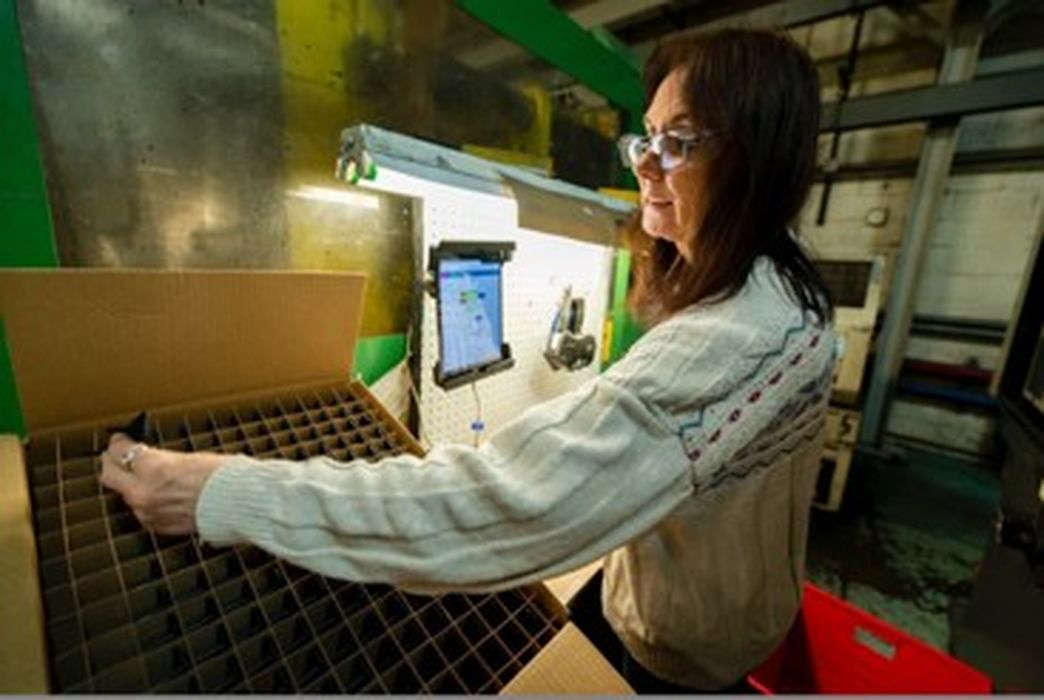
Rockwell’s second 3D printing play comes through Plex Systems, which the company acquired in 2021. The acquisition expanded Rockwell’s portfolio of cloud-based manufacturing software, with Plex providing manufacturing execution system (MES), ERP, quality, supply chain and other smart manufacturing capabilities.
Plex has specifically addressed the requirements of additive manufacturing execution systems. It explains that as additive production scales, manufacturers must manage print jobs, machine availability, materials, scheduling, post-processing and quality assurance. Additive MES software can help coordinate those processes while providing production visibility and traceability.
This addresses an important issue for industrial 3D printing. A company operating one or two machines for prototyping can often manage production relatively informally. A facility operating numerous printers for serial production has a very different problem. Jobs must be scheduled, materials tracked, machines monitored, quality documented and downstream processing coordinated.
The printer itself is only one part of that system. Rockwell’s Plex portfolio places the company in a position to participate in this less visible portion of additive manufacturing. As 3D printing becomes more integrated into factory operations, software connecting machines with production planning and business systems can play an important role in making additive production practical at larger scales.
3. Digital Twins Before Physical Production
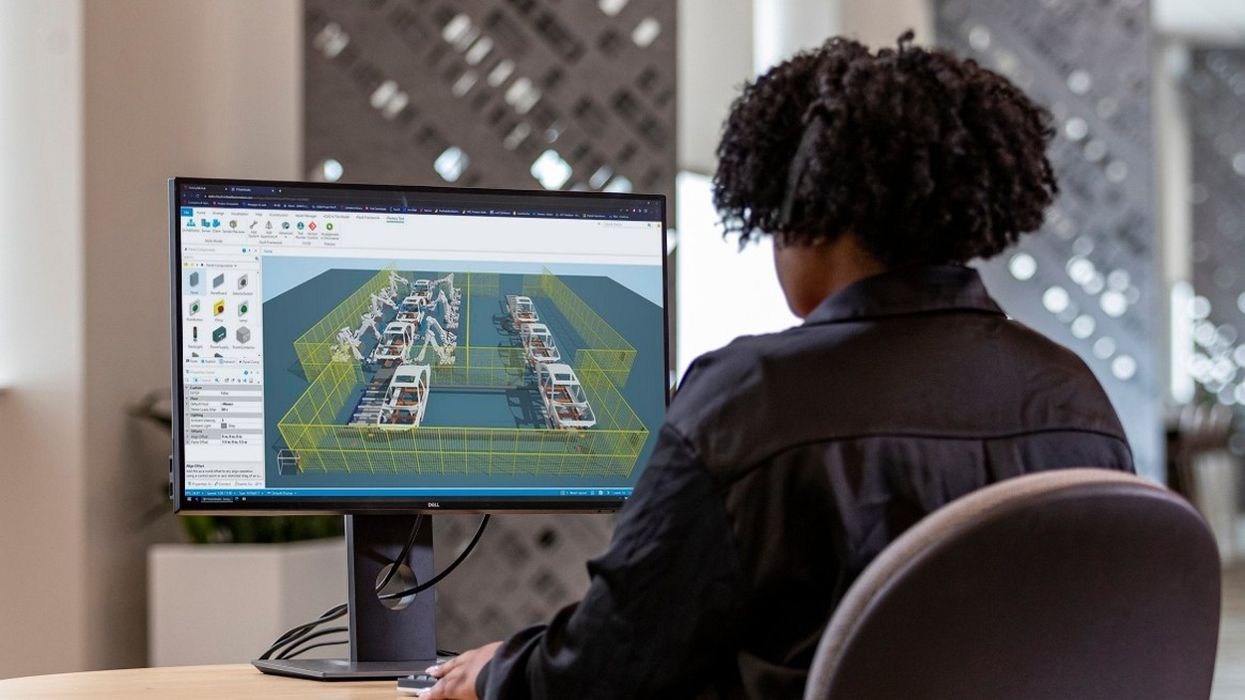
Rockwell’s third 3D printing play comes through Emulate3D, its digital twin and industrial simulation software.
Emulate3D allows manufacturers to construct virtual models of automated systems and test machinery, control logic and production layouts before making changes to physical equipment. Rockwell says manufacturers can use the software for virtual prototyping, simulation and virtual commissioning.
Rockwell has continued expanding these capabilities. Its Emulate3D Factory Test technology combines multiple models into larger factory-scale digital twins and supports automated testing of mechanical, electrical, control, robotics and other system behavior.
These capabilities are particularly relevant to 3D printing as additive manufacturing becomes integrated with other factory equipment. A production system may include 3D printers alongside robots for part handling, material movement systems, inspection equipment and post-processing machinery, all of which must operate together efficiently.
Emulate3D gives manufacturers a way to model those interactions before committing to a physical factory configuration. By simulating the broader production environment, companies can evaluate how additive manufacturing equipment will fit into an automated workflow and identify potential issues before the system is built.
We have seen a similar convergence at Siemens, which we covered in “Transforming Industry: Siemens’ Integration of 3D Printing and Automation.” Siemens combines additive manufacturing with a broader portfolio encompassing automation and digital manufacturing technologies. Rockwell approaches the opportunity from a different starting point, but the underlying connection between additive manufacturing, automation and digital production technologies is similar.
The Research and Development (R&D) Tax Credit
Manufacturers and systems integrators implementing industrial automation, digital twin simulations, and additive Manufacturing Execution Systems (MES) to scale 3D printing can claim the Section 41 R&D Tax Credit for Qualified Research Expenses (QREs). As firms transition additive manufacturing from prototyping to serial production using solutions like Rockwell Automation’s Emulate3D, Plex, and motion controllers, they frequently incur eligible expenses by resolving technical uncertainties related to software integration, robotic part-handling, and factory-scale simulation.
To qualify under IRC Section 41, the engineering and software development activities surrounding 3D printing automation must satisfy the IRS Four-Part Test:
- Permitted Purpose: Developing new or improved automated workflows, predictive maintenance algorithms, or integrated MES platforms (like Plex) to manage additive serial production, materials tracking, and robotic post-processing.
- Elimination of Uncertainty: Resolving technical unknowns, such as determining if a robotic arm can reliably achieve precise geometric tolerances during laser cladding (e.g., LaserBond), or if digital twin models can accurately predict factory floor thermal bottlenecks.
- Process of Experimentation: Utilizing systematic trial and error, including digital simulation (via Emulate3D), pilot-line trials, sensor integration testing, and iterative coding to evaluate automated cell configurations.
- Technological in Nature: Relying on hard sciences such as mechanical engineering, robotics, computer science, materials science, and data analytics to bridge the gap between standalone 3D printers and connected smart factory systems.
Firms adopting and integrating industrial 3D printing technologies may capture significant QREs, including:
- Wages: Compensation for robotics programmers, automation engineers, data scientists, and systems integrators designing and testing additive manufacturing production lines.
- Supplies: Costs of consumables used during pilot runs, prototype robotic end-effectors, test fixtures, and materials consumed during the experimental printing process.
- Cloud and Software: Expenses tied to simulation platforms, AI/ML model development, and cloud computing necessary for additive MES algorithms or digital factory modeling.
- Contract Research: Up to 65% of fees paid to third-party engineering firms, software developers, or external testing labs assisting with the automation integration.
By proactively identifying and documenting these automation and software development efforts, manufacturers can accurately capture QREs. This allows companies to offset federal and state tax liabilities, effectively preserving capital to reinvest in the continued expansion of their smart manufacturing capabilities.
Three Different Roles in 3D Printing
Rockwell’s three 3D printing plays cover three different parts of the additive manufacturing process. LaserBond demonstrates Rockwell equipment directly controlling an additive manufacturing system, Plex provides software capabilities relevant to managing additive workflows, and Emulate3D provides another layer for designing and testing the automated factories in which those machines may operate.
An automated additive factory can require motion control, PLCs, safety systems, robotics, machine connectivity, production scheduling, traceability, quality management and digital simulation. These are precisely the types of technologies Rockwell Automation has spent decades developing for conventional manufacturing.
For Rockwell Automation, 3D printing may therefore be less about entering the printer business and more about applying its existing strengths to the growing number of industrial processes surrounding additive manufacturing. Its LaserBond, Plex and Emulate3D examples show three different ways the company is already doing so.