
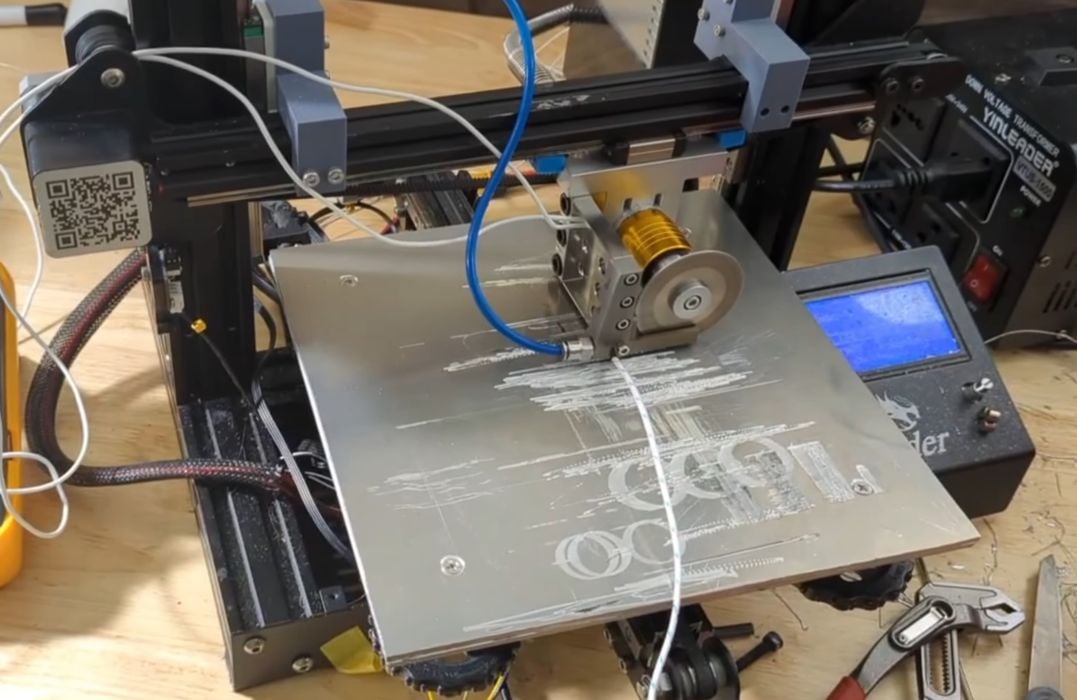
The Rotoforge project is developing a low-cost, open-source, metal 3D printer based on the Ender-3 platform.
Metal 3D printing is very hard to achieve. Today’s practical metal 3D print options all have some challenges:
- LPBF: Requires commercial equipment, expensive powder, complex software, huge environmental concerns (e.g. EOS, Nikon SLM)
- Binder Jet: Less expensive, but produces parts with less strength (e.g. Markforged)
- WAAM: Requires an expensive robotic arm with laser/electrical arc toolhead and normal welding wire (e.g. MX3D)
- Additive Friction Stir Deposition (AFSD): Uses friction to bond metal together (from Meld Manufacturing)
All of these methods work, but their cost puts them completely out of the affordability envelope of individuals, who instead print in polymers. Today, the only approach to printing for desktop 3D printers is to use metal filaments and a post-print sintering process, which has all kinds of constraints and is still relatively expensive.
Now, a project is attempting to overcome these challenges by developing an inexpensive open-source design for a friction-based metal desktop 3D printer. Rotoforge uses rotation to heat up a metal material, which can then be deposited layer by layer. They explain:
“Rotoforge is a free and open-source hardware/software 3d printer for printing metal, plastic, and ceramic heterogenously on the home desktop safely and affordably with performance similar to FDM. It uses friction welding to locally heat, form, and bond metal/plastic/ceramic wire/rod/sheet/powder into 3D objects.”
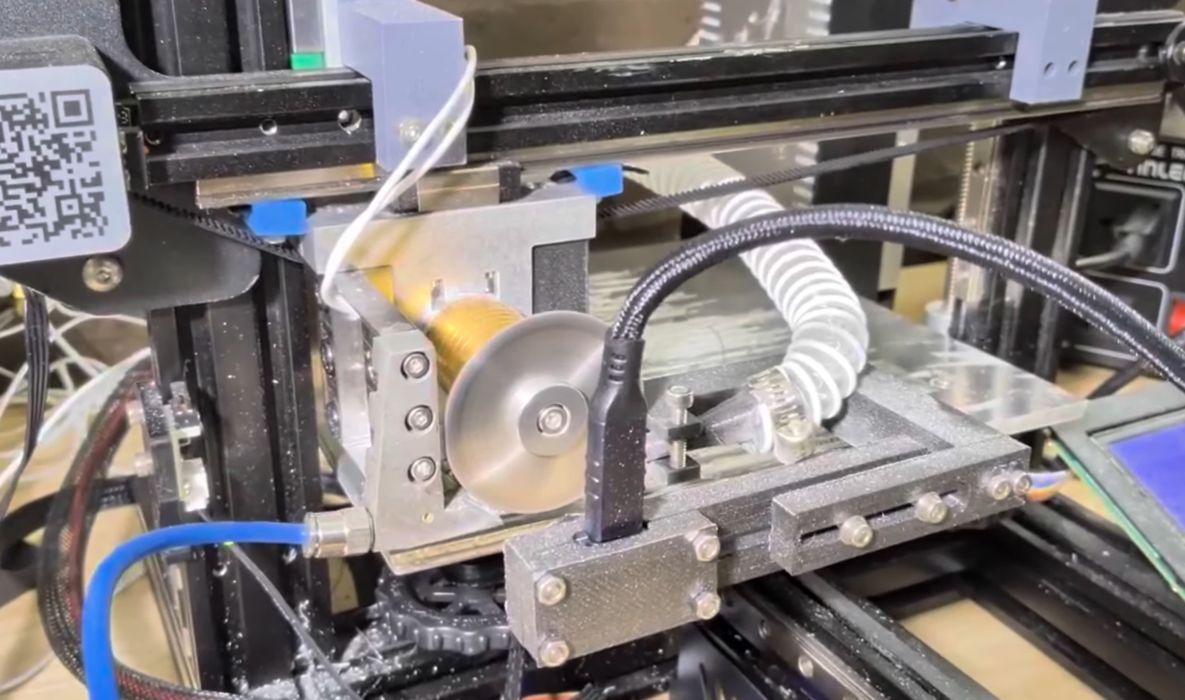
How does it work? They’ve taken a stock Creality Ender-3 and modified it to perform friction-based 3D printing of aluminum metal. Note: aluminium has a relatively low melting point, making it the easiest common metal to print.
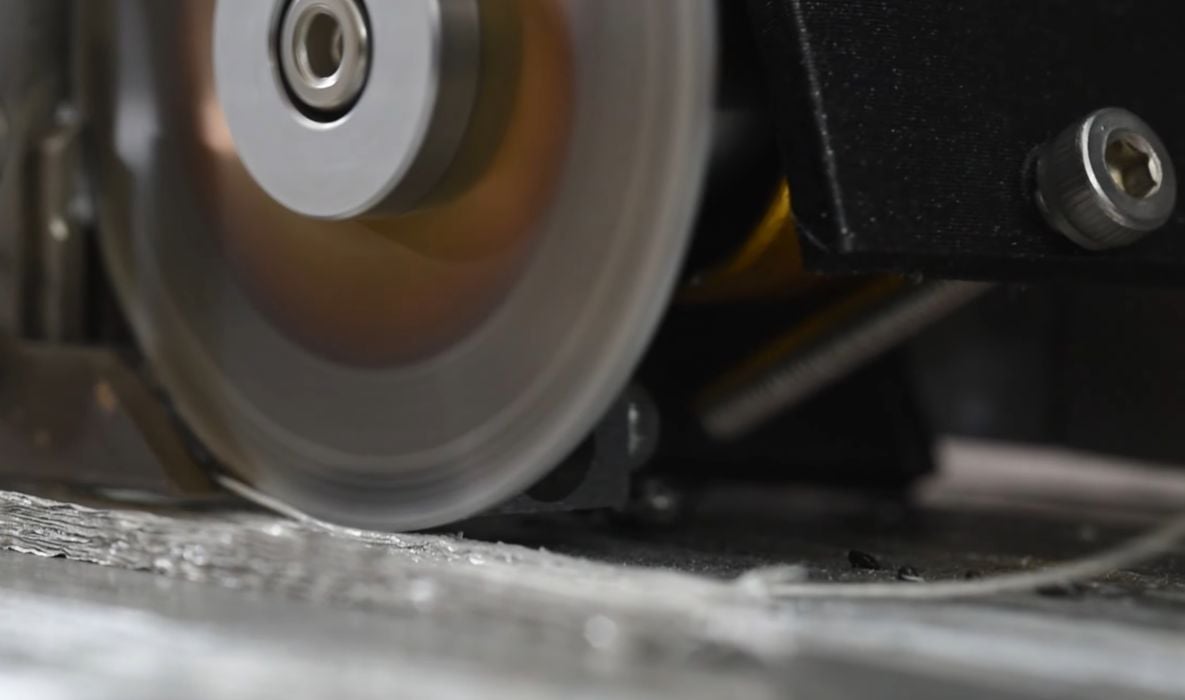
The system involves pulling a standard aluminium wire into a new toolhead, which is rotating at 30,000 rpm. That rotational speed generates enough friction to heat the aluminium to a point where it plasticizes. Then it’s dragged along the print surface, where it is deposited. This can be done layer by layer to build up an object.
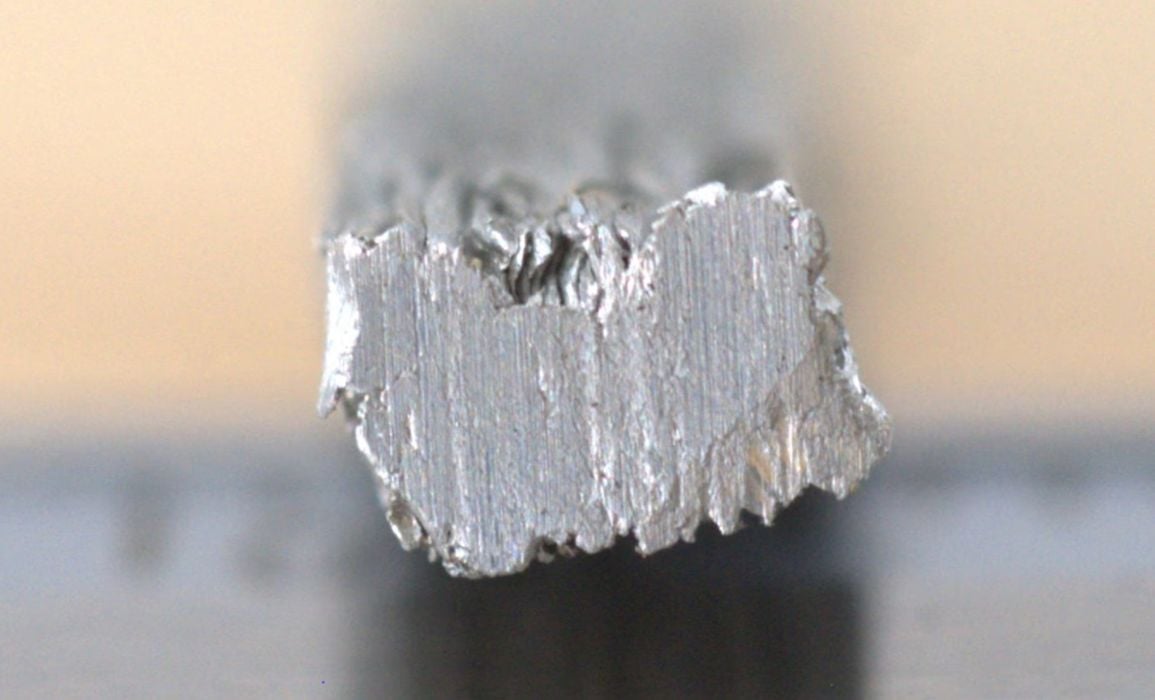
Here you can see a cross-section of the deposition line, which is approximately 1.5mm across. It’s pretty rough, and you’ll notice that in the prints produced.
There are a number of constraints, as this system is still deep in the development stage. For example, printing along the line of rotation works reasonably well, but printing in different directions is more complex and challenging.
The team is still working on printing diagonally and even attempting curves, but there’s lots of work yet to do.
For example, they’re now working on a new toolhead that has a fourth axis, presumably for turning during off-axis print moves, and is able to handle higher temperatures. That should enable them to print with materials other than just aluminium.
The entire project is open source, and you can download the details from GitHub and give it a try yourself.
However, if you do, you should connect with the Rotoforge community and contribute your knowledge to the project.
Eventually, it is possible the project may produce a workable design that could permit very inexpensive metal 3D printing capabilities. They say their current version costs only US$500, and that’s likely the price range of future designs as well.
