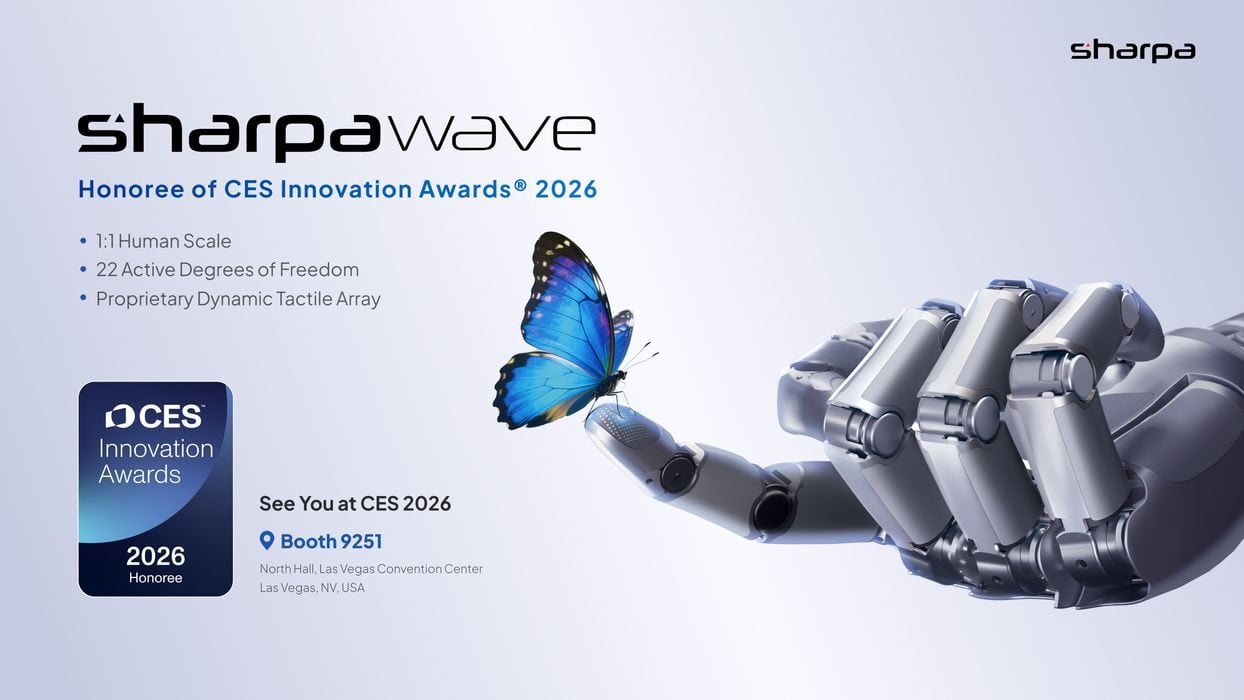
Charles R. Goulding and Preeti Sulibhavi connect the dots between a new mass-produced robotic hand, decades of end-effector engineering, and the expanding role of 3D printing in building smarter machines.
The world of robotics has taken another meaningful step forward with the introduction of Sharpa Robotics’ (headquartered in Singapore) SharpaWave dexterous robotic hand — now in mass production and heading for a major showcase at CES 2026 in Las Vegas. Not just another end effector, the SharpaWave pushes the boundaries of robotic manipulation with a level of sensitivity and control that edges closer to human performance.
For the 3D printing community on our blog, Fabbaloo, this isn’t just another robotics story. It highlights the growing synergy between robotics and additive manufacturing — a relationship that can reshape how complex mechanical systems are designed, manufactured, and deployed.
Singapore’s Robotics Leadership Continues
We’ve previously highlighted Singapore’s growing prominence in 3D printing across Asia, from innovation hubs to research leadership. Sharpa Robotics and the SharpaWave build on that momentum, anchoring the city-state’s role not just in additive processes but in next-generation automation.
At its core, robotics engineering is shaped by the challenge of creating tools that interact with the real world as dexterously as humans. Engineers in end effector design (sometimes called End of Affector or EOA engineers) have long admired the human hand’s coordination, force sensitivity, and flexibility. The SharpaWave represents a significant step toward that ideal.
A Personal Perspective on Hands and Engineering
Over my 26 years at Dover Corporation, I monitored research and development (R&D) at De-Sta-Co — once Detroit Stamping Company and a major name in end effectors, now part of Stabilus SE following a US$608 million acquisition in 2024. This background gives a deep appreciation for the challenge involved in even modest multi-axis grippers, let alone a fully articulated hand. Traditional clamps and grippers from mechanical suppliers have provided foundational tools for decades. But the SharpaWave operates on an entirely different plane of complexity and capability.
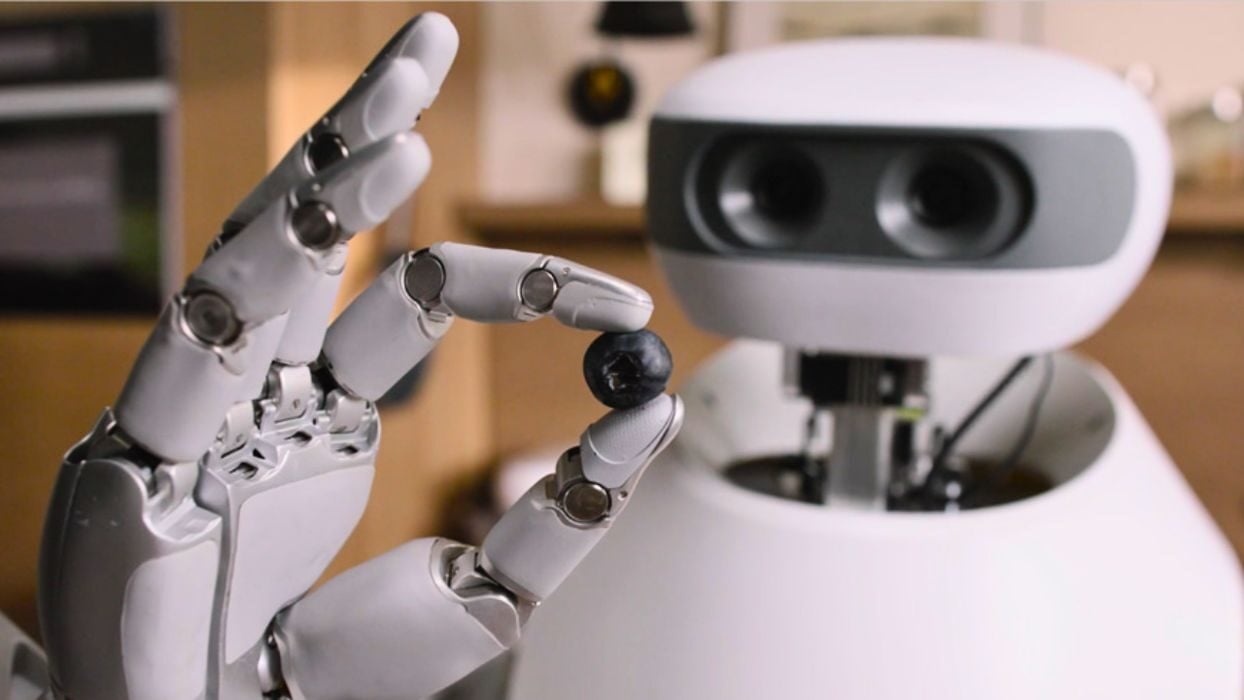
What SharpaWave Brings to Robotics
The SharpaWave is notable for a handful of key capabilities that set it apart from earlier robotic hands and many research prototypes:
1. 22 Active Degrees of Freedom
This means each finger joint and the thumb can move independently and with precision closely matching a human hand. This dimensionality is key to dexterity, allowing the hand to perform complex manipulation tasks rather than simply pick-and-place.
2. Visuo-Tactile Sensing
Each fingertip integrates a miniature camera plus more than 1,000 tactile sensor elements, creating a Dynamic Tactile Array (DTA) that combines video-like and pressure-based feedback. The result: the hand can “feel by seeing,” detecting contact forces as subtle as 0.005 N — a level of sensitivity suitable for handling fragile objects like paper edges, small components, or even eggshells.
Traditional robotic hands often rely on force sensors and control loops that provide limited tactile feedback. In contrast, the SharpaWave’s visuo-tactile approach allows rapid adjustment of grip and motion based on real-time sensory input.
3. Adaptive Force and Grip Control
With six-dimensional force sensing, the SharpaWave can dynamically adjust its grip to prevent slips or crush delicate items. This matters both for industrial tasks and for potential home or service robot applications that interact with everyday objects.
4. Developer-Friendly Software Stack
Unlike many proprietary robotic components, the SharpaWave ships with open, developer-oriented software like SharpaPilot, compatible with popular simulation frameworks (e.g., NVIDIA Isaac Gym, PyBullet, MuJoCo). This makes it easier for researchers and developers to integrate the hand into custom systems and advance research without being locked into one vendor’s stack.
5. Mass Production and Durability
Sharpa has scaled the hand into mass production, with automated testing rigs to verify endurance, accuracy, and reliability of its thousands of microscale gears, sensors, and actuators inside each unit. The company claims that joints and sensors are certified to withstand over a million cycles — a crucial factor for industrial deployment and long-term research use.
CES 2026: Bringing SharpaWave to the Main Stage
The SharpaWave will be featured as a CES 2026 Innovation Awards Honoree in the Robotics category — a major stage for early technology adoption and industry partnerships. This recognition highlights not just the hardware engineering but the broader potential for integrating advanced end effectors into everyday robotics workflows.
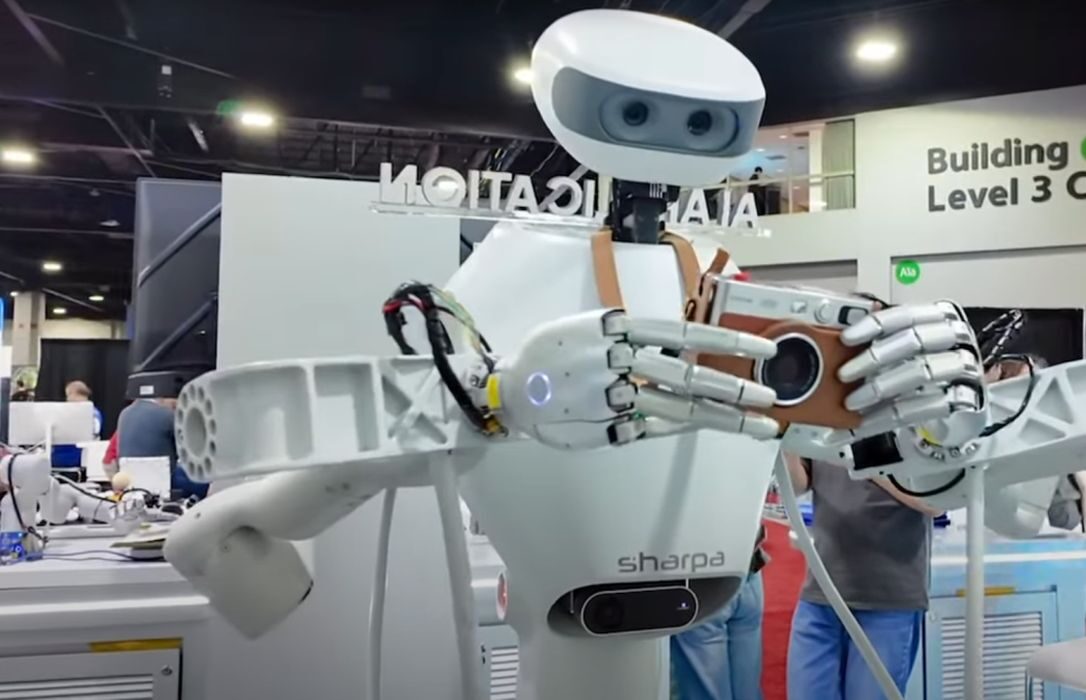
Pictures from Sharpa’s CES announcement show the hand mounted on humanoid robotics platforms, suggesting vision beyond industrial manipulators — toward general-purpose robots that operate tools and interact with human environments.
Humanoid Robots and Beyond
The timing of the SharpaWave’s rollout is especially relevant amid renewed industry focus on humanoid robots — machines designed to function in environments built for humans rather than specialized industrial spaces. High-dexterity end effectors are essential to that vision. A robot that can operate a screwdriver, hold a coffee cup, or manipulate touchscreen controls has to have fine control and sensory feedback at its fingertips.
While full humanoids remain a long-term goal, innovations in hands like SharpaWave bring us closer to robots that can perform a broad range of tasks in factories, labs, hospitals, and even domestic settings.
3D Printing and Robotics: A Circular Future
One of the most exciting aspects for our readers is the circular integration potential between 3D printing and robotics:
- Design Freedom: Additive manufacturing enables lighter, more complex mechanical structures — ideal for compact, dexterous robotic hands where internal routing, custom joint geometries, and space-efficient layouts matter.
- Rapid Iteration: Robots with advanced hands can aid in automating the production of 3D printers themselves, improving consistency, lowering costs, and unlocking new points in hardware manufacturing.
- New Materials and Sensors: Future 3D printable materials could embed tactile elements, flexures, or sensing meshes directly into end effector components, blurring the line between mechanical structure and sensory skin.
- Robots Helping Robots: As robotic hands get better and more affordable, they can be used to assemble complex 3D printers, service them, and even calibrate them — creating a self-improving manufacturing ecosystem.
This interplay opens imaginative possibilities for workflows where robots build machines that build parts for robots — a virtuous cycle of engineering improvement.
Prosthetic and Orthopedic Applications
Beyond industrial and service robotics, the capabilities embodied in SharpaWave have direct relevance to medical technology:
- Advanced Prosthetics: The same tactile richness and joint control could be adapted to prosthetic limbs, providing users with nuanced feedback and control far beyond current commercial devices.
- Orthopedic Tools: Surgical robots, rehabilitation systems, and assistive devices could benefit from robotic hands that match human dexterity and tactile awareness, expanding what is possible in precision medical procedures.
The convergence of robotics, AI, and 3D printing may soon deliver prosthetic solutions that feel more natural and responsive to human intent and environmental interaction.
The Research & Development Tax Credit
The now permanent Research & Development Tax Credit (R&D) Tax Credit is available for companies developing new or improved products, processes and/or software.
3D printing can help boost a company’s R&D Tax Credits. Wages for technical employees creating, testing and revising 3D printed prototypes can be included as a percentage of eligible time spent for the R&D Tax Credit. Similarly, when used as a method of improving a process, time spent integrating 3D printing hardware and software counts as an eligible activity. Lastly, when used for modeling and preproduction, the costs of filaments consumed during the development process may also be recovered.
Whether it is used for creating and testing prototypes or for final production, 3D printing is a great indicator that R&D Credit-eligible activities are taking place. Companies implementing this technology at any point should consider taking advantage of R&D Tax Credits

Looking Ahead
The mass production of the SharpaWave hand is more than an engineering milestone — it signals a shift in how robotics components are designed, built, and deployed. For the 3D printing community, it underscores how additive manufacturing is increasingly woven into the broader ecosystem of advanced automation.
From industrial automation to household helpers, from autonomous labs to advanced prosthetics, robotic hands like SharpaWave are laying the groundwork for machines that can interact with the world in far more human-like ways. For those who remember The Jetsons, the space age is here. And, we each just may be able to have our very own Rosie one of these days.