Charles R. Goulding and Preeti Sulibhavi examine how Formlabs’ new US$85,000 Fuse X1 industrial 3D printer could accelerate the shift of additive manufacturing from a high-cost specialty process to a mainstream production technology.
For years, industrial 3D printing has promised a manufacturing revolution. The technology enables companies to produce complex parts on demand, reduce tooling costs, shorten development cycles, and create designs that would be impossible with conventional manufacturing methods. Yet despite those advantages, industrial additive manufacturing has remained out of reach for many organizations because of one stubborn obstacle: price.
That situation may be changing.
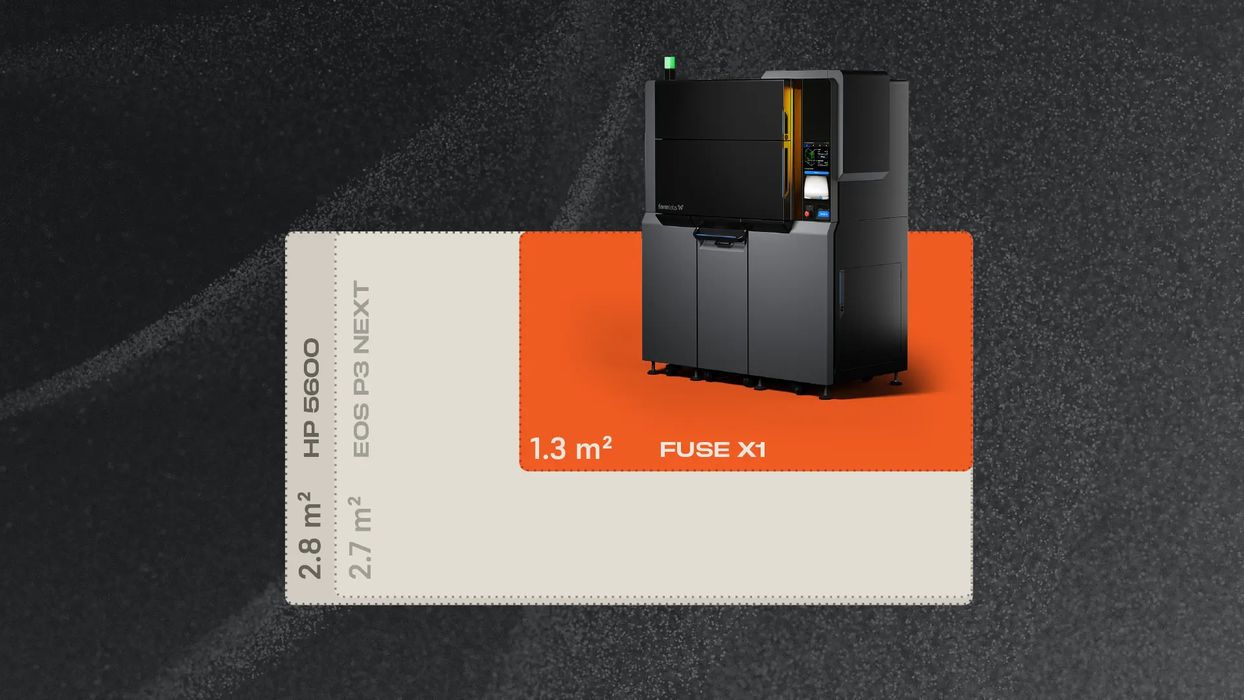
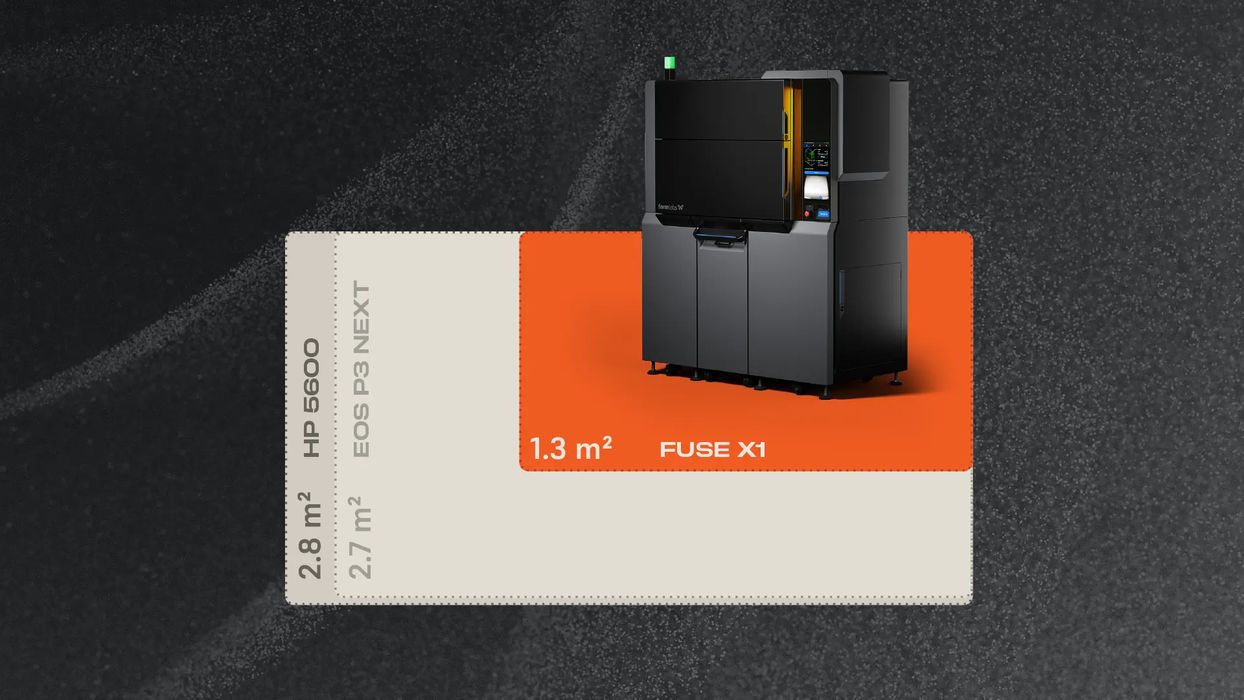
Formlabs recently unveiled the Fuse X1, a new industrial selective laser sintering (SLS) 3D printer with a starting price of approximately US$85,000. While that is still a significant investment, it is dramatically lower than the roughly US$500,000 price tag often associated with traditional industrial powder-bed fusion systems. The launch highlights a broader trend that is reshaping additive manufacturing: industrial-grade 3D printing is becoming more accessible to smaller manufacturers, engineering teams, service bureaus, and product developers.
The significance of this shift extends far beyond one machine. Lower-cost industrial systems have the potential to bring production-grade additive manufacturing to thousands of organizations that previously could not justify the expense.
Formlabs’ Rise in Additive Manufacturing
Formlabs has become one of the most influential companies in the additive manufacturing industry by pursuing a strategy that many larger industrial suppliers initially overlooked. Rather than focusing exclusively on large enterprises, Formlabs concentrated on making professional-grade 3D printing more affordable and easier to use.
Founded in 2011 by MIT Media Lab graduates, the company is headquartered in Somerville, Massachusetts. Over the past decade, it has expanded from desktop stereolithography systems into a broad portfolio that includes resin printers, SLS systems, materials, software, and automated production solutions. The company now employs more than 750 people and has grown into one of the most recognizable brands in professional additive manufacturing.
The company has also built a sizable recurring-revenue business around the materials consumed by its printers. According to recent reports, Formlabs generates approximately US$250 million in annual revenue, with more than half of that total coming from recurring purchases of printing materials such as resins and powders. That recurring revenue stream provides a level of financial stability that is relatively uncommon among hardware manufacturers and reflects the growing installed base of Formlabs equipment operating in engineering departments, manufacturing facilities, research labs, and healthcare organizations worldwide.
Formlabs did particularly strong with its Fuse SLS product line. Company executives indicated that Fuse system sales increased by more than 25% year-over-year as manufacturers increasingly adopted additive manufacturing for tooling, fixtures, and end-use production parts.
The company’s success reflects a larger industry movement. Customers are increasingly choosing lower-cost systems that can deliver industrial-quality results without the massive capital expenditures traditionally associated with factory-scale additive manufacturing.
What Is the Fuse X1?
The Fuse X1 represents Formlabs’ latest effort to bring industrial capabilities to a wider audience.
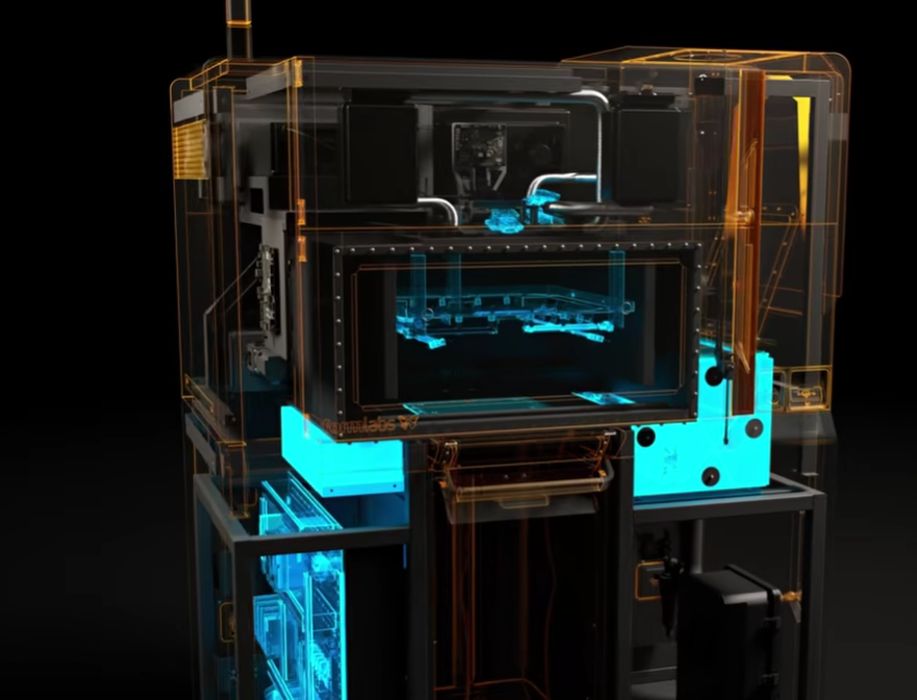
The machine is a large-format SLS 3D printer designed for production applications rather than simple prototyping. According to launch information, the system features a build volume of approximately 330 x 330 x 565 mm, significantly larger than previous Fuse systems. It uses a 120-watt laser and is designed to deliver substantially higher throughput than smaller SLS platforms.
SLS technology works by selectively fusing layers of powdered polymer material with a laser. Unlike filament-based systems, SLS does not require support structures because the surrounding powder supports the part during printing. This makes it possible to create highly complex geometries, internal channels, lattice structures, and nested assemblies.
The resulting parts are often strong enough for functional testing, tooling applications, and even end-use production.
That distinction is important. While desktop printers are commonly used for prototypes, industrial SLS systems are increasingly being used to manufacture real products and factory components.
Why Lower-Cost Industrial Systems Matter
The introduction of an US$85,000 industrial SLS system arrives at a particularly important moment for manufacturing.
Global supply chains remain under pressure from geopolitical uncertainty, trade disruptions, labor shortages, and changing customer expectations. Manufacturers are under increasing pressure to shorten lead times while maintaining flexibility.
Traditional manufacturing methods are often optimized for high-volume production. However, many companies now need to produce smaller batches, customized products, replacement parts, and rapidly changing designs. Conventional tooling can become prohibitively expensive under those conditions.
Industrial 3D printing addresses many of these challenges by eliminating tooling requirements and enabling digital inventories. Companies can manufacture parts when needed rather than maintaining large physical inventories.
The challenge has always been the economics.
When an industrial printer costs half a million dollars or more, the business case becomes difficult for small and mid-sized organizations. An US$85,000 system changes that calculation considerably.
The lower acquisition cost reduces financial risk and lowers the barrier to entry. Engineering teams can justify bringing production capability in-house rather than outsourcing work to service providers. Small manufacturers can explore additive manufacturing without making a multi-million-dollar commitment.
In many cases, organizations may find that the printer pays for itself through savings in tooling, prototyping, outsourcing, and inventory costs.
Applications Across Multiple Industries
One of the most interesting aspects of the Fuse X1 is the diversity of applications it enables.
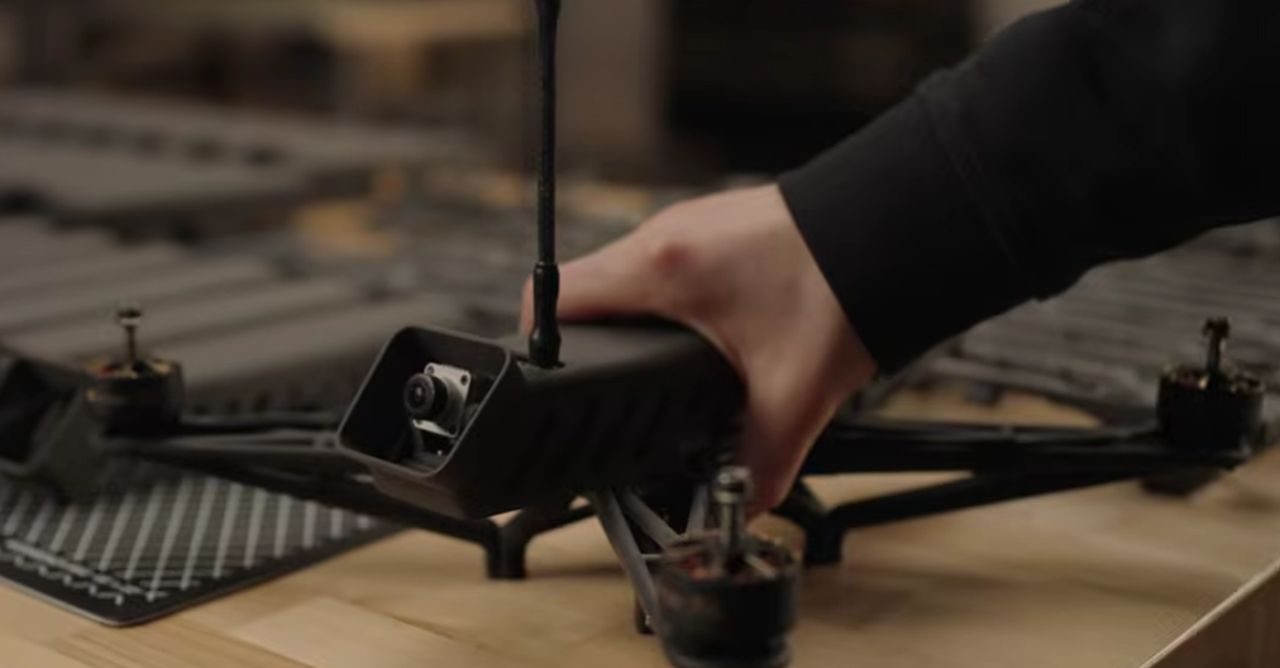
Manufacturing facilities can use the system to produce jigs, fixtures, assembly aids, robotic end-effectors, and replacement parts. These applications often deliver rapid returns because they replace machined components that may take days or weeks to obtain.
The automotive sector is another likely beneficiary. Automotive suppliers frequently require low-volume production runs, custom tooling, and functional prototypes. SLS technology is well suited to these requirements because it produces durable polymer parts with complex geometries.
Aerospace organizations can leverage additive manufacturing for lightweight components, tooling, ducting systems, and production aids. The ability to consolidate multiple parts into a single printed assembly can reduce weight and simplify manufacturing processes.
Medical device companies may also benefit. Healthcare manufacturers often produce highly specialized equipment in relatively low volumes. Additive manufacturing allows these organizations to iterate designs quickly while avoiding expensive tooling investments.
Consumer product companies represent another promising market. Product developers can move from prototype to production using the same manufacturing platform, reducing development time and accelerating product launches.
Service bureaus could arguably gain the most immediate advantage. Lower equipment costs make it easier for service providers to expand capacity and offer industrial-grade production services to customers who are not yet ready to purchase their own systems.
How Do Advanced Manufacturing Firms Claim Section 41 R&D Tax Credits for Affordable Industrial SLS 3D Printing?
Advanced manufacturing firms and engineering teams qualify for the Section 41 Credit for Increasing Research Activities (R&D Tax Credit) by dedicating Qualified Research Expenses (QREs) toward developing, testing, and scaling industrial selective laser sintering (SLS) systems, materials, and complex end-use components. Crucially, following the passage of the Omnibus Balanced Budget and Beyond Act (OBBBA), the highly restrictive Section 174 amortization mandates have been fully repealed. Aerospace, automotive, and medical device organizations can now completely deduct 100% of their domestic research and experimental expenditures in the tax year they are incurred. This legislative shift returning to full R&D expensing dramatically amplifies immediate cash flow for companies capitalizing on the democratization of affordable industrial hardware like the Formlabs Fuse X1.
Additive Manufacturing R&D Framework: Innovation to Eligible Impact
| Industry / Application | Innovation & Technical Objective | Qualified QRE Activities & Prototyping Protocols |
| Industrial SLS Hardware Engineering | Optimizing large-format build volumes (330 X 330 X 565 mm}) and high-throughput systems utilizing 120-watt lasers. | Adaptive Thermal Control Qualification: Developing custom slicing algorithms, establishing scalable dimensional tolerances, and executing multi-stage structural assembly testing to eliminate support structures. |
| Aerospace & Automotive Systems | Engineering low-volume, lightweight functional components, ducting networks, custom tooling, and low-mass lattice structures. | Mechanical Fatigue Testing: Designing multi-part assemblies into a single component, evaluating tensile strength, and running automated regression testing for end-use production parts. |
| Medical Devices & Diagnostics | Iterating highly specialized healthcare equipment and customized anatomical guides in low-volume production runs. | Biocompatible Polymer Validation: Conducting chemical resistance testing, evaluating structural tolerances under extreme thermal cycles, and performing material characterization studies. |
A Glimpse of the Future
The launch of the Fuse X1 may ultimately be remembered less for the machine itself and more for what it represents.
For decades, industrial additive manufacturing was defined by expensive systems operated by large corporations. Today, the industry appears to be moving toward a model that resembles the evolution of computing. Capabilities that were once limited to major enterprises are becoming available to smaller organizations at dramatically lower price points.
Formlabs has built its business around that concept. The company first brought professional stereolithography to desktop users. Now it is applying the same strategy to industrial SLS manufacturing.
If the approach succeeds, the impact could be substantial.
Manufacturers would gain greater flexibility. Engineers would gain faster access to production-grade tools. Product developers could move from concept to market more quickly. Smaller businesses could compete with larger organizations by leveraging digital manufacturing technologies that were previously beyond their reach.
Conclusion
The Fuse X1 demonstrates how rapidly the economics of industrial 3D printing are changing. By delivering large-format SLS capabilities at a starting price around US$85,000, Formlabs is challenging the long-standing assumption that industrial additive manufacturing requires a six-figure or even seven-figure investment.
The industries most likely to benefit include manufacturing, automotive, aerospace, medical devices, consumer products, and additive manufacturing service providers. These sectors stand to gain through lower tooling costs, faster product development cycles, greater production flexibility, reduced inventory requirements, and the ability to manufacture complex end-use parts on demand.
Most importantly, lower-cost industrial systems could accelerate the transition of additive manufacturing from a specialized technology into a mainstream production tool. If that happens, the Fuse X1 may be viewed as another milestone in the ongoing democratization of industrial 3D printing.