
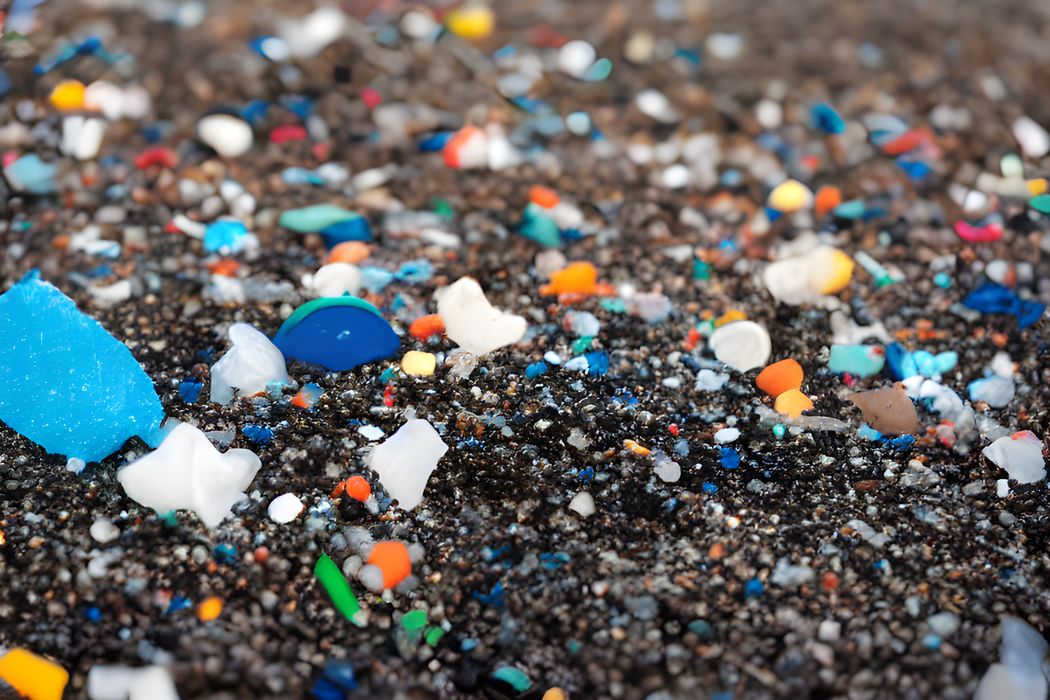
A new paper in Nature describes the startling amount of plastic pollution in the oceans.
The researchers performed a detailed survey in the Atlantic by collecting water samples at depths of 10 m, 1000 m, and 30 m above the sea bottom in twelve different areas of the North Atlantic.
The collected samples were then filtered to reveal the amount of plastic pollution present. This pollution is the result of discarded plastic items, which gradually break down mechanically into smaller and smaller pieces, eventually becoming microplastics.
However, this study was not about microplastics. Instead, the researchers were interested in finding nanoplastic particles. These are much smaller in dimension, less than 0.001mm across. This is so small that these particles can freely pass through cell walls and enter living organisms.
The researchers were concerned with three types of materials: PET, PS, and PVC, two of which are popular 3D print materials. PET, for example, is mostly used to manufacture drink bottles. PS includes ABS and ASA, also popular 3D print materials. PVC is not normally 3D printed as it releases corrosive chlorine when heated, and only special 3D printers can do so.
They found that the concentrations of these materials were approximately 18mg per cubic metre of ocean water. Remember that these particles are so small they are literally invisible, so “clear” water, really isn’t.
Extrapolating their samples to the wider North Atlantic, this suggests there is an astonishing 27 M tonnes of nanoplastics in the surface level of the ocean.
In other words, these plastics are literally everywhere.
These tiny nanoparticles are constantly being absorbed by sea creatures and plants, which then follow up the food chain, ultimately entering the human diet. The nanoplastics in the ocean are eventually going to reach you.
This is a wake-up call for the use of plastic, and the 3D print community might consider the implications. While not the largest generator of plastic waste by far, 3D print operations do generate a large amount of waste material. Virtually none of it is recycled, so it goes to landfills and ultimately into the environment in the manner described by the researchers.
It’s time to make use of properly biodegradable plastics whenever possible, instead of the materials we now use.
Via Nature
