
Charles R. Goulding and Aaron Rofe take a deep dive into how Bunim Laskin’s Swimply revolutionized backyard pool rentals—and why Shvimply was built to serve faith-based communities with strict privacy needs.
In July 2025, Charles Goulding and Aaron Rofe of R&D Tax Savers interviewed Bunim Laskin, CEO of Swimply. We have previously written an article about Swimply’s original business model, and part two of this article will be about Shvimply, their new business model for people of conservative faiths. Swimply is an online marketplace that allows users to rent private backyard swimming pools by the hour, drawing parallels to the paradigm shifts brought about by companies like Uber and Airbnb for taxis and hotels. Founded by Bunim Laskin, who serves as CEO, the company officially launched in 2019. The idea was conceived by Laskin at age 20 after he noticed a neighbor’s unused pool. He offered to help the neighbor with expenses in exchange for his family’s use of the pool. This initial arrangement led him to realize the potential for a scalable business, inspiring him to use Google Earth to find other pools and approach homeowners directly.
From starting with just four pools in Lakewood, New Jersey, Swimply quickly expanded. By the summer of 2019, it had grown to 40 hosts, and by 2020, it operated in 35 cities. As of June 2025, Swimply hosts 15,000 private pools in over 150 cities across the United States, Canada, Australia. The platform has experienced significant growth, with business doubling in the last year, partly attributed to people seeking additional revenue sources and looking to stay local amidst inflation. Laskin described renting a neighbor’s pool as a brand-behavior that’s objectively healthy for people in every conceivable way.
Swimply’s business model involves commission fees from both hosts and guests. Hourly rentals typically start at US$20 per hour in most markets. The company has secured significant funding, including an initial seed round of US$1.2 million and a US$10 million Series A round in 2021. Laskin even appeared on Shark Tank in March 2020, though the Sharks ultimately declined to invest.

Over time, Swimply has iterated the product based on user feedback. Early on, they learned the importance of lounge chairs and the area around the pool for bookings, not just the water itself. They also refined their pricing strategy, recognizing that willingness to pay varies significantly by location and intended use (e.g., families vs parties). A key challenge has been managing the impact of frequent rentals on neighborhoods, as some hosts were earning substantial income (up to US$100,000/year), leading to concerns about noise and traffic.
To address this, Swimply implemented a “neighborhood-friendly policy”, requiring hosts to communicate with neighbors and providing tools for neighbors to report issues. All new pool listings undergo a 24-hour verification process for safety and security, and any pool with a one-star review is removed from the app. Swimply’s marketing approach is hyper-local, using billboards and flyers, and importantly, empowering hosts to market their pools as “franchises” within their communities.
Regarding liability, Swimply states it offers every pool-rental host US$1 million in liability coverage, patterned on Airbnb. However, a personal injury attorney noted concerns about potential exclusions if renters drink alcohol or violate agreements. As of 2023, Swimply no longer provides a liability insurance policy but has replaced it with a US$1 million host guarantee that is self-funded and US$10,000 of property protection for hosts inside the United States. Swimply requires pool owners to have their pools inspected for health and safety, including tiles and chlorine levels. All pool guests sign waivers.
Shvimply for People of Conservative Faiths
In response to a rising demand from religiously observant communities, Swimply launched its sister site, Shvimply, on June 30, 2025. Shvimply is designed as a modest alternative for groups like Orthodox Jewish, Muslim, and other conservative faith communities who require true privacy for swimming. The inspiration for Shvimply directly stems from Laskin’s own background as an Orthodox Jew. Years ago, he was disciplined for hosting an unauthorized pool party at his rabbi’s house, an experience that ultimately sparked the idea for this new venture.
The platform addresses a growing problem where public pools are often incompatible with the modesty standards of many faith-based communities, particularly for women. Shvimply’s standout feature is its guarantee of absolute privacy, ensuring full visual seclusion from hosts, neighbors, and passersby.
Unlike Swimply, Shvimply’s interface removes any imagery that could be considered immodest, meaning no swimwear photos or pool parties. It specifically curates serene, private spaces where men or women can swim separately or privately, and the homeowner cannot view the pool from a part of their house, or is not home during the booking. Additionally, cameras and photos are not allowed at Shvimply pools during rental periods. The name “Shvimply” is a playful spin on the Yiddish word “shvimmen”, meaning “to swim”, nodding its roots while embracing a broader, including mission.
The rise of platforms like Swimply creates an opportune moment for the 3D printing industry to enhance the pool experience. Pool ownership comes with significant maintenance and often underuse, making rental platforms like Swimply a valuable solution. To further enrich these rented experiences, 3D printing can be utilized for both fun accessories and essential tools.
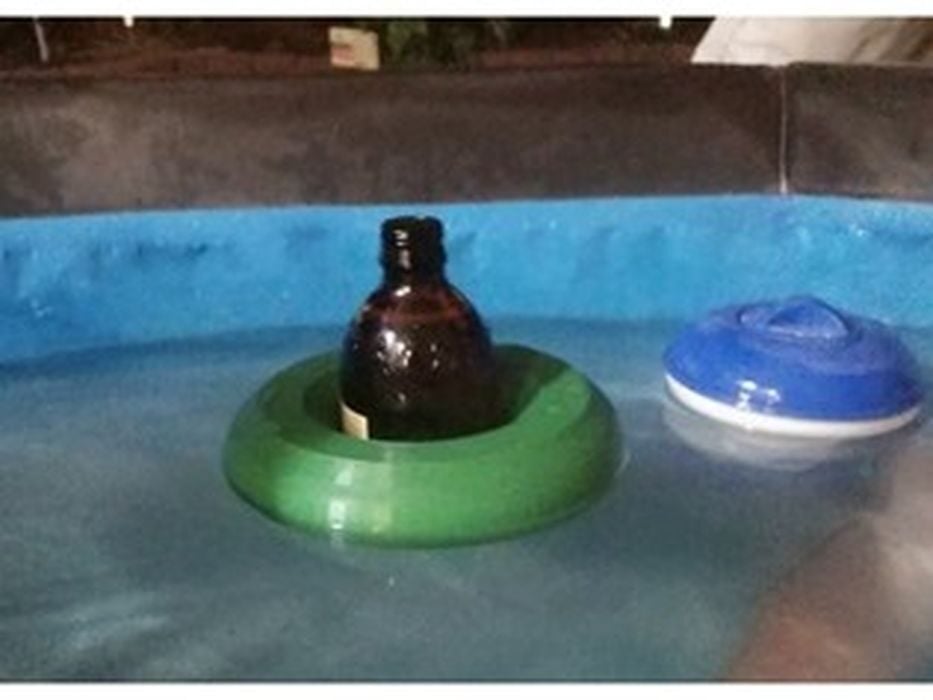
Potential 3D printed Items for Swimply Pools:
- Accessories: This could include custom inflatable loungers, Bluetooth pool speakers, floating snack and drink holders, floating canopy beds, and pool volleyball sets. Customized items can enhance the unique appeal of each rented pool.
- Tools and Safety Essentials: Parts for necessary backyard pool tools like skimmers, components for fencing, safety essentials such as life vest holders or ring buoy mounts, robotic pool vacuum parts, and solar blanket accessories could also be 3D printed.

The Research & Development Tax Credit
The now permanent Research and Development (R&D) Tax Credit is available for companies developing new or improved products, processes and/or software.
3D printing can help boost a company’s R&D Tax Credits. Wages for technical employees creating, testing and revising 3D printed prototypes are typically eligible expenses toward the R&D Tax Credit. Similarly, when used as a method of improving a process, time spent integrating 3D printing hardware and software can also be an eligible R&D expense. Lastly, when used for modeling and preproduction, the costs of filaments consumed during the development process may also be recovered.
Whether it is used for creating and testing prototypes or for final production, 3D printing is a great indicator that R&D Credit-eligible activities are taking place. Companies implementing this technology at any point should consider taking advantage of R&D Tax Credits.
Making Waves
Swimply has transformed private pool access by creating an online marketplace for hourly rentals, expanding from four initial listings to 15,000 pools across 150+ cities in the US, Canada, and Australia. This platform offers a novel recreational option and significant earning potential for pool owners, with some making up to US$100,000 a year.
While addressing challenges like liability and neighborhood concerns through host guidelines and verification processes, Swimply launched Shvimply on June 30, 2025. Shvimply was recently launched as a sister site specifically designed for religiously observant communities, like Orthodox Jewish and Muslim groups, ensuring absolute visual seclusion and prohibiting immodest imagery or cameras for a private swimming experience.
Both platforms exemplify an innovative approach to the sharing economy, focusing on community, accessibility, and diverse user needs.