
Where are we at with tool-changing 3D printers?
Two years ago, the desktop 3D print world was thrown into a tizzy when Bambu Lab came forward with a low-priced, reliable, high-speed 3D printer. Companies rushed to compete by introducing their own high-speed equipment — some were unable to do so and failed.
Now we’re about to see a similar rush to a new technology, with companies attempting to keep up or risk fading away.
The change is in multicolor 3D printing, where several companies have suddenly erupted with radically new technologies. These would all resolve the growing problem of FFF material waste.
Current multicolor 3D printers work by feeding a single nozzle with multiple filaments. This works well, but requires the nozzle to be purged during each colour swap. That can result in massive wastage, up to 10X the weight of the print itself. The new approaches don’t require purging, and it seems that the market desperately wants that type of solution.
This has kicked off a race to a new plateau of desktop 3D printing: FFF devices that print in multicolor with no purging.
But where are the major players at in this race? Let’s take a look at those involved.
Bambu Lab
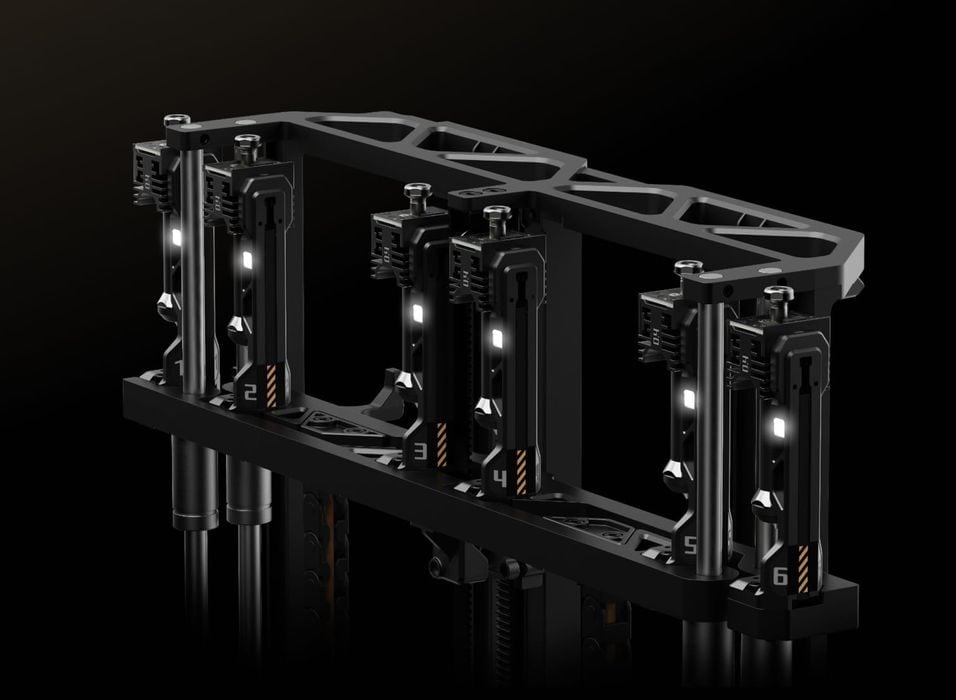
The company that made filament-swapping 3D printers global announced an entirely new technology they call Vortek. This system swaps out the hot end and nozzle in an easy fashion.
They intend on releasing their first Vortek system late this year with seven toolheads, the H2C, based on the H2D machine. It’s possible they may adapt Vortek technology for their other models in the future.
Creality
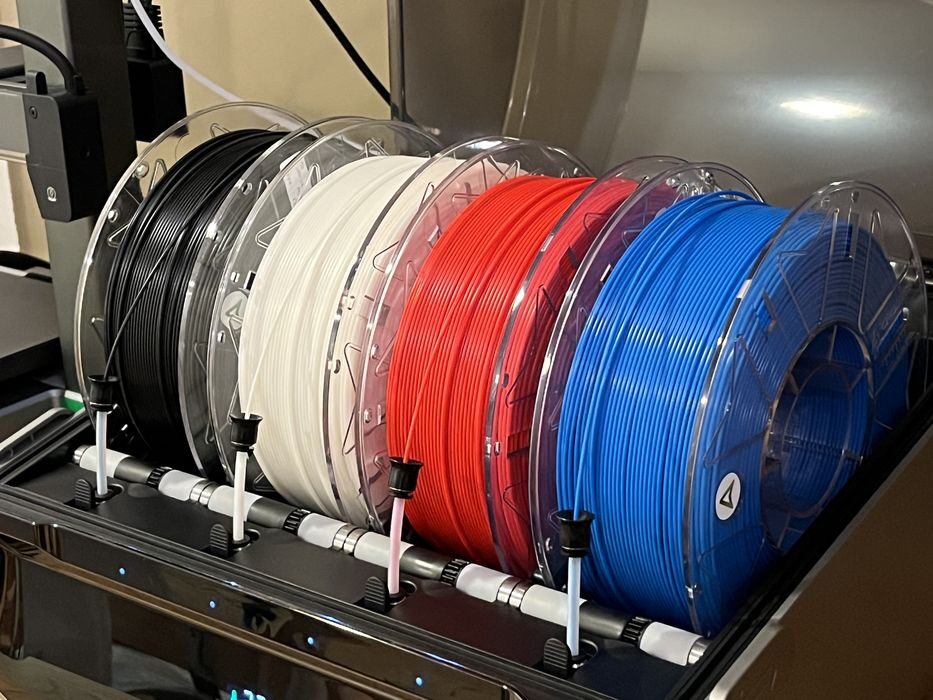
Earlier this year, they announced the CFS, a filament-swapping accessory that also performs filament drying. As of now, they have not announced a waste-free system.
Anycubic

Anycubic’s multicolor technology is currently the ACE Pro, a classic four-spool filament swapping system, which they released over a year ago. We haven’t heard much from the company in quite a while, and specifically nothing about a waste-free system for their equipment.
Elegoo
Elegoo’s most recent development was their revolutionary Carbon Centauri 3D printer. This machine has incredible capabilities, but is priced far, far lower than its competition. In a way, it has reset the price level expectations in the market for that type of machine.
They have apparently been working on a filament-swapping system, but have yet to release or announce anything. It’s possible they have a waste-free solution in the lab, but it’s also possible they have been building a classic filament-swapper like Creality and Anycubic. If so, they would be far behind the others.
Snapmaker
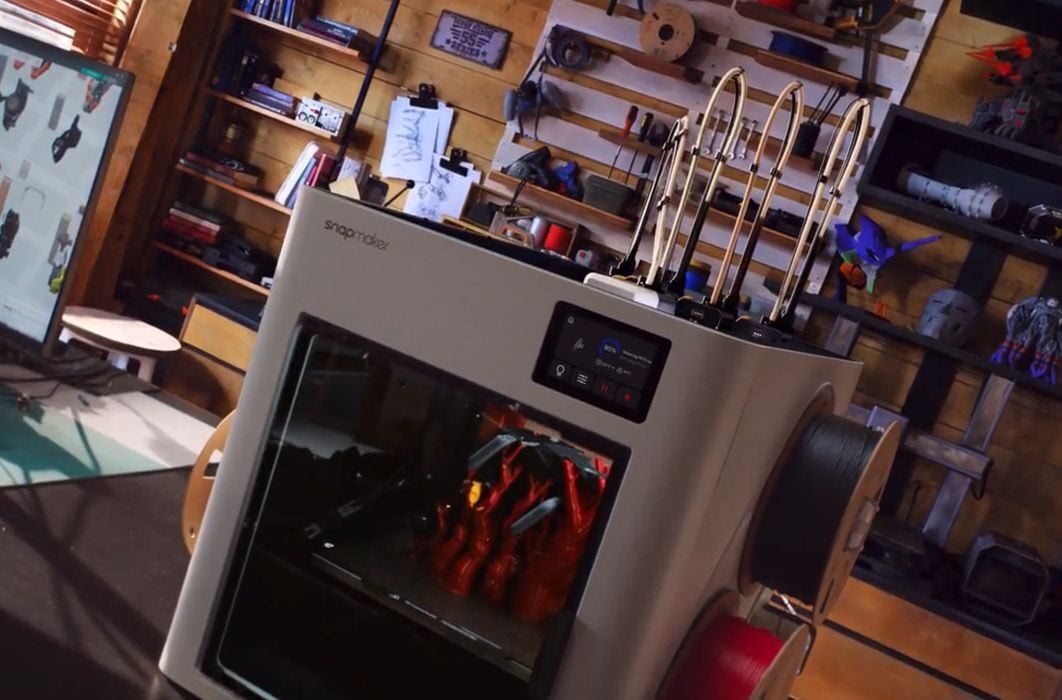
Snapmaker is to blame for all this. They launched the U1 on Kickstarter, which uses a toolchanging approach: the entire toolhead is swapped in and out as print jobs proceed. They priced the device at a level similar to filament swapping devices, making it a no-brainer to buy: you would save much more by not wasting filament. In fact, their campaign hit record levels, validating the demand in the market for waste-free solutions.
Atomform
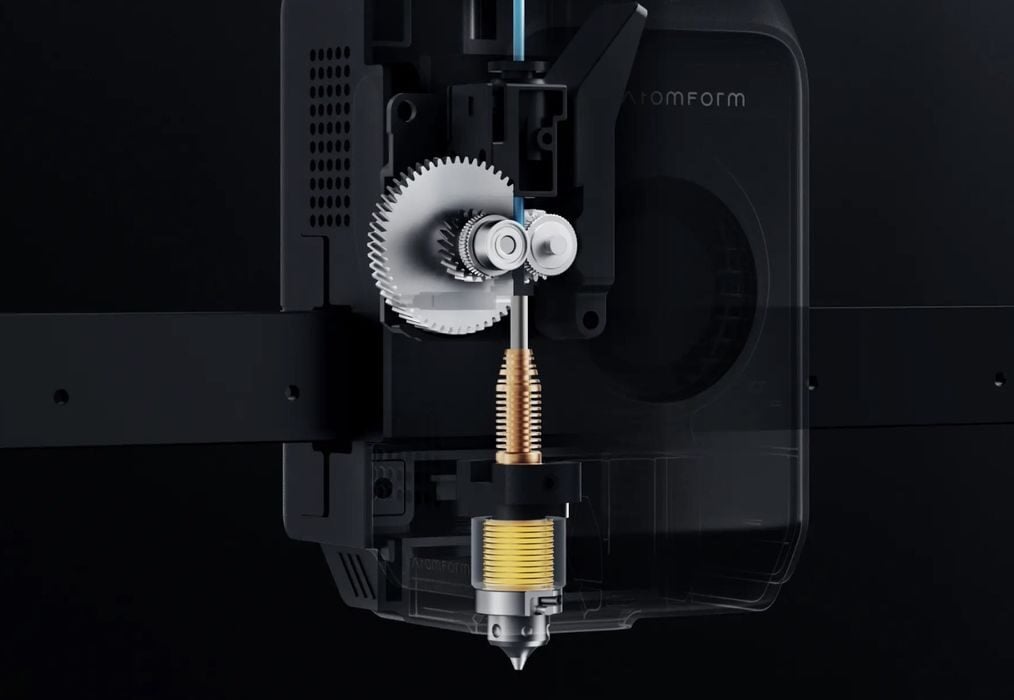
Atomform is a new player we haven’t previously heard of, but they announced the Palette 300. (The product name is unfortunately the same as Mosaic Manufacturing’s Palette filament swapping accessory, which has been discontinued.)
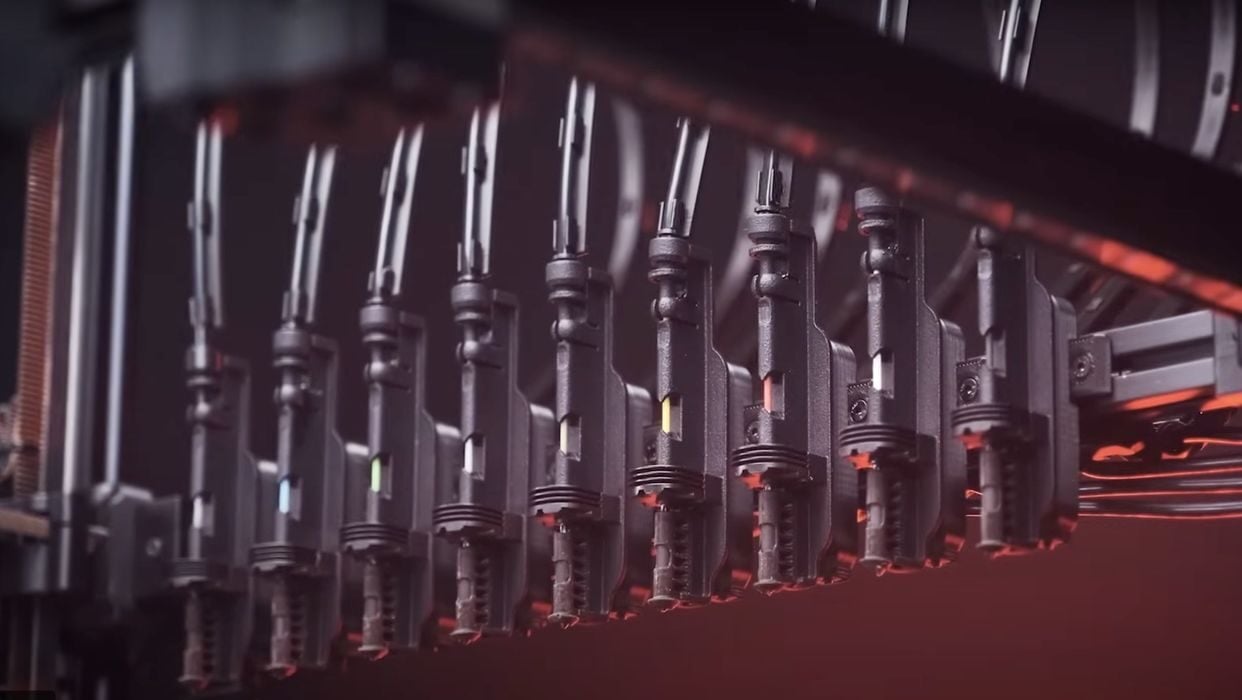
The Palette 300 swaps up to twelve nozzles in their waste-free concept. The system has a carousel of hot end/nozzles that are robotically mounted and unmounted, as seen in their animation. It does look quite a bit more mechanical than some of the other solutions. The Palette 300 is not yet available, like the others on the list.
Bondtech
Bondtech doesn’t make 3D printers, but they do make hot ends, nozzles, and extruders. They quietly announced INDX earlier this year, which is a hot end/nozzle swapping system. As they are a hardware provider, their goal is to partner with a 3D printer manufacturer to integrate INDX into their equipment.
They’ve priced the INDX hardware fairly low, as allowed by the straightforward design. Each swappable unit apparently costs only US$35.
Prusa Research
Finally, we have Prusa Research, which has been early into the multicolor 3D print business with their MMU. The MMU has undergone several revisions, but all require purging and therefore the MMU won’t be a player in the coming waste-free world.
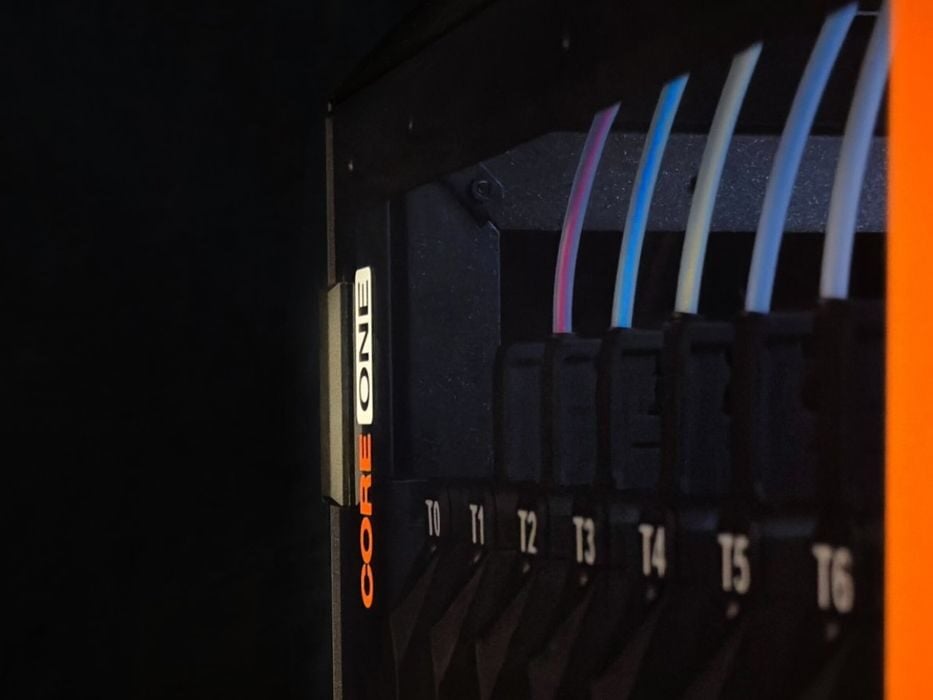
They have been hinting at a partnership with Bondtech to use the INDX technology in a future CORE One 3D printer (see image at top). An image of what seems to be a concept version of this configuration was posted recently, suggesting they may go ahead with the partnership.
This arrangement is not too surprising, as the sudden announcement of Vortek has caught many companies by surprise. Some companies may have literally no work done on waste-free solutions, and the only way to quickly stay relevant would be to use the “instant” solution that Bondtech developed over several years.
Situation Analysis
This is clearly a troubling situation for many 3D printer manufacturers, who suddenly find themselves with out-of-date technology. They have to find a way to quickly keep up, particularly with Bambu Lab’s end-of-the-year H2C shipments. That’s basically their deadline to come up with something to compete.
Between Bambu Lab’s Vortek, Bondtech’s INDX, and Atomform’s OmniElement, it’s a hardware competition: the winner will be the one that is least expensive and most reliable. I am concerned about the significant mechanical requirements for Atomform’s solution.
For Creality, Prusa Research, Elegoo, and Anycubic, they will each have to come up with something very, very quickly in order to meet the deadline. Prusa Research seems to be well on the way with a partnership with Bondtech, but the others have been silent so far.
It’s possible that the three Chinese companies may have something in the lab that can perform waste-free multicolor 3D printing, but is it ready for customer use? These systems are complex and require not only robust and reliable hardware design but also software to match.
Should any of them not come out with a waste-free solution or one that is significantly delayed, they will certainly find their market share decreasing.
It’s a race, and we don’t know how this will change these manufacturers over the next year.
