
TDK’s surprise acquisition of Fabric8Labs last week shows how applications truly drive the 3D printing industry.
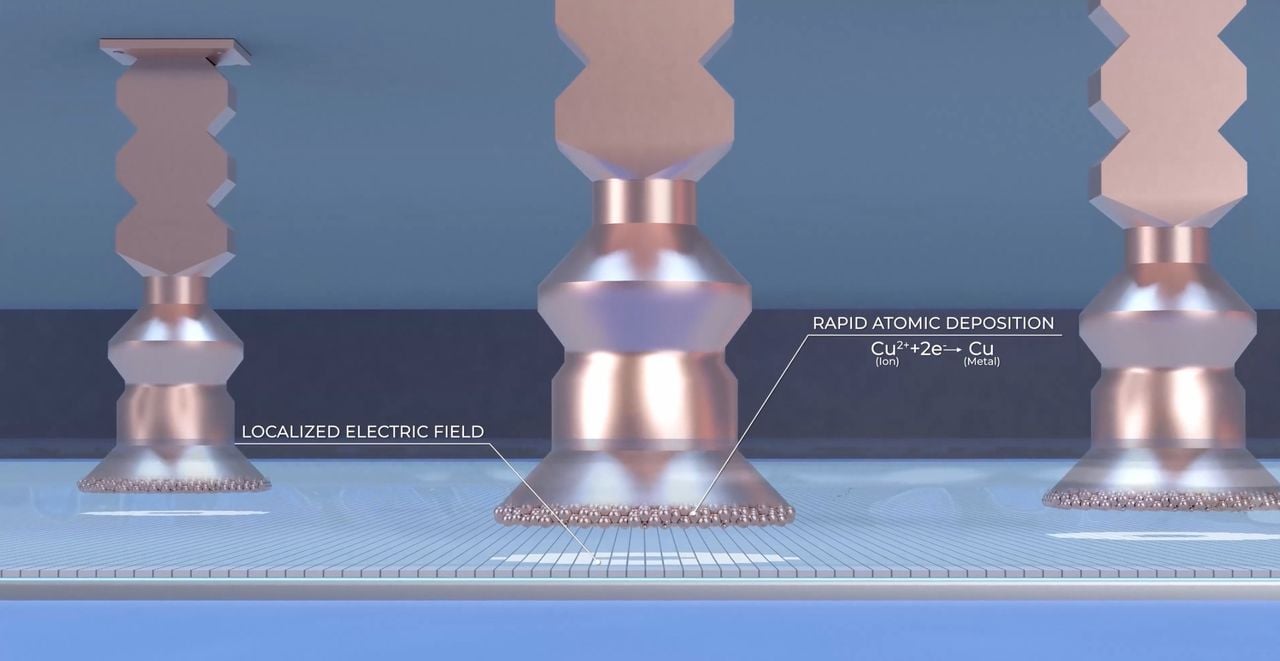
Background: Fabric8Labs was founded back in 2015 in San Diego, where they developed a very unique 3D printing process known as “ECAM”. Essentially, it is an electroplating process that’s adapted into printing objects layer by layer.
This process allowed ECAM operators to print very detailed metal objects that required little if any post-processing. However, there is a very big constraint: only metals that can be electroplated can be printed. That includes metals such as copper, nickel, tungsten, tin, gold, platinum, and palladium. Commonly 3D printed metals like aluminum, stainless steel, inconel, tool steel, etc., cannot be printed with ECAM.
TDK is a well-known brand name, but perhaps a bit different than you might remember. A few decades ago, TDK was a major supplier of consumer media, including videotape, CD-Rs, DVD media, etc. However, that business faded away as streaming took over. Since then, the company has shifted into being a major electronics component provider. Today, they produce batteries, sensors, capacitors, and other components.
The reason they acquired Fabric8Labs was to leverage the ECAM technology to produce highly effective thermal components. This is done by leveraging ECAM’s ability to produce complex geometries in very high resolution — just what you need to make complex heat sinks, for example.
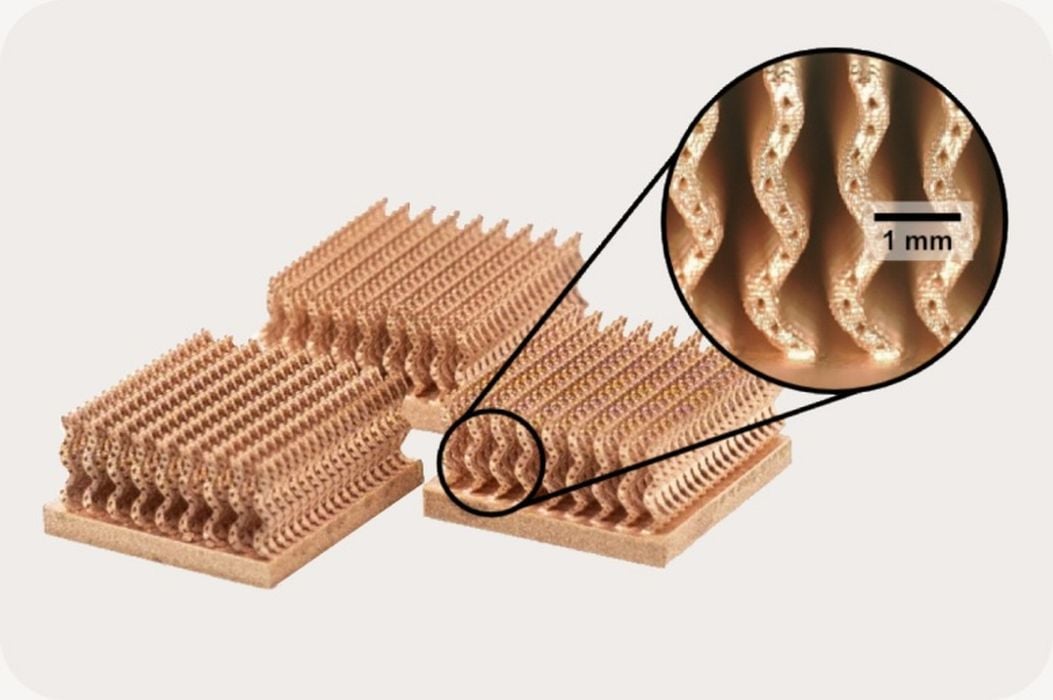
TDK apparently forecasts high demand for such components, and they’re not wrong: AI data centres planned over the next few years will have huge thermal issues, and any method of making heat transfer more efficient will be quite valuable.
Evidently, TDK had previously invested in Fabric8Labs and liked the technology so much that they eventually decided to take over the company entirely.
The deal is valued up to US$400M, but is composed of an unknown one-time amount, plus milestone-based earn-outs by the Fabric8Labs team. Fabric8Labs will have to hit certain specific business targets in order to get those payouts and achieve the full US$400M. In other words, TDK may actually acquire Fabric8Labs for a fair bit less than US$400M.
Reflecting on this deal shows us a possible path for the future of several 3D printing companies.
Historically, a 3D printer company would go through several stages:
- Produce a general-purpose 3D printer
- Try to sell it to everyone
- Discover that it’s really good only for certain specific applications
- Refocus on those specific markets
- Grow
Here we have a slightly different scenario. Instead of the 3D printer company finding the application, here we have the application finding the 3D printing process — and buying it outright.
I’m now wondering about all the other various 3D printer companies I’ve seen over the years. Many of them had various constraints, making them suitable only for specific applications. Could an exit strategy for them be a purchase by their major customer?
It’s basically impossible now for any 3D printer company to compete with the major players in the general-purpose 3D printer market. Any company finding themselves facing that competition had better figure out a different strategy, and the TDK deal shows what one of them could be.
Via TDK
