
While the war in Ukraine may be far away for many Fabbaloo readers, its shadow is covering many 3D print companies.
The war began in 2022, and has been underway ever since, with an increasing amount of casualties and damage every month. At first the conflict took on a more traditional battle, with tanks and artillery.
However, over time things have changed drastically. The maneuvering has effectively stopped, and there are now hard lines of engagement that don’t really move much. That’s because of changing tactics, and in particular, the use of drones.
Now the front is essentially blanketed with drones monitoring every movement and taking action when required. Neither side can do very much because of this.
However, that state persists only because of a constant supply of drones. Ukraine manufactures astounding numbers of the devices internally, but the fact that the technology truly works well in a war has implications elsewhere.
The conflict has become largely a contest of manufacturing — if one participant runs short of technology, it would be a bad day for them. This has drawn in a large number of Western manufacturing into this manufacturing frenzy.
Additive manufacturing is increasingly being seen as a viable approach to address this need. There are several reasons why:
- AM is able to immediately produce parts without the need to produce tooling
- Buyers are willing to pay higher prices for these types of parts
- AM can produce parts that are more suitable for drones by lightweighting
- AM can make traditional manufacturing approaches more efficient
That last point deserves a bit of an explanation.
There are ways to leverage 3D print technology to aid traditional molding processes. It’s possible to quickly 3D print molds that can be used with the desired end-use production part material, which speeds up the process.
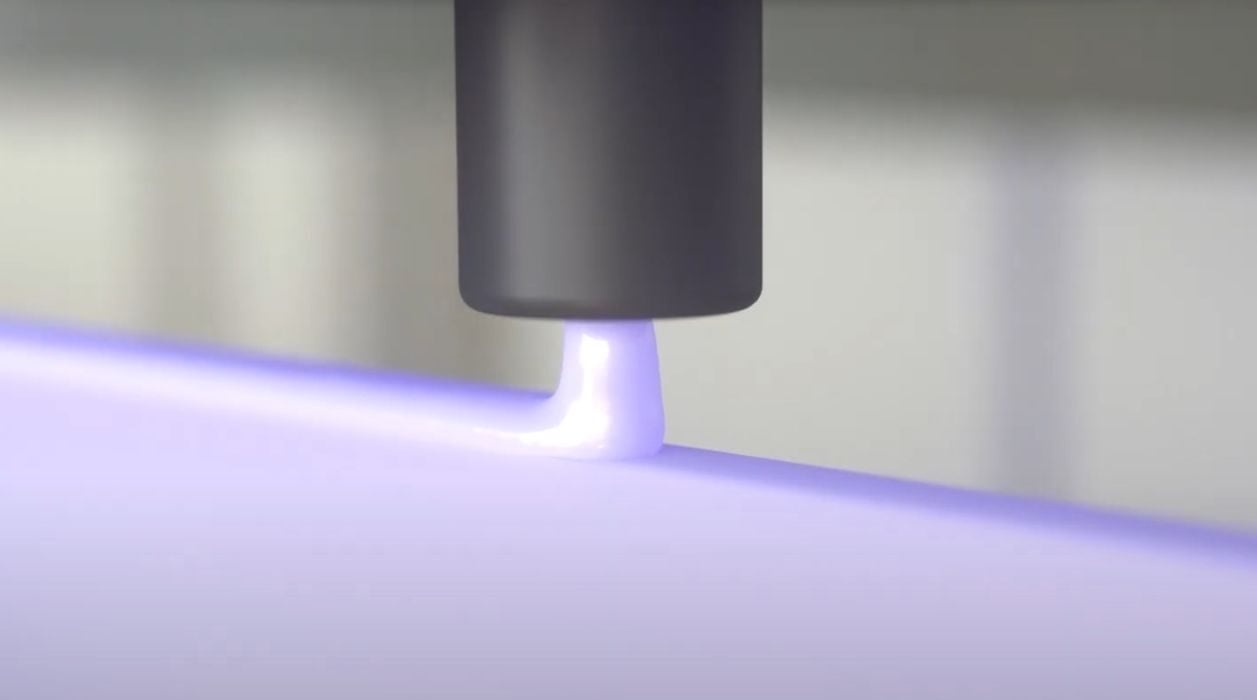
An example of this is Massivit. The Israeli company produces large volume 3D printers that use gel materials to create huge objects. Initially the company used the technology to produce advertising models, brand displays and similar.
However, along the way they realized they could use the same tech to produce efficient large molds for manufacturing. At first they used example products such as furniture, but earlier this year they shifted into the military realm.
In September they announced a deal to build an advanced manufacturing center for defence and aerospace industries. This center can very quickly produce molds for composite materials, and that’s ideal for the production of drones or other military components.
This is a case of an AM company going to where the money is located.
They are not alone.
Via Massivit
