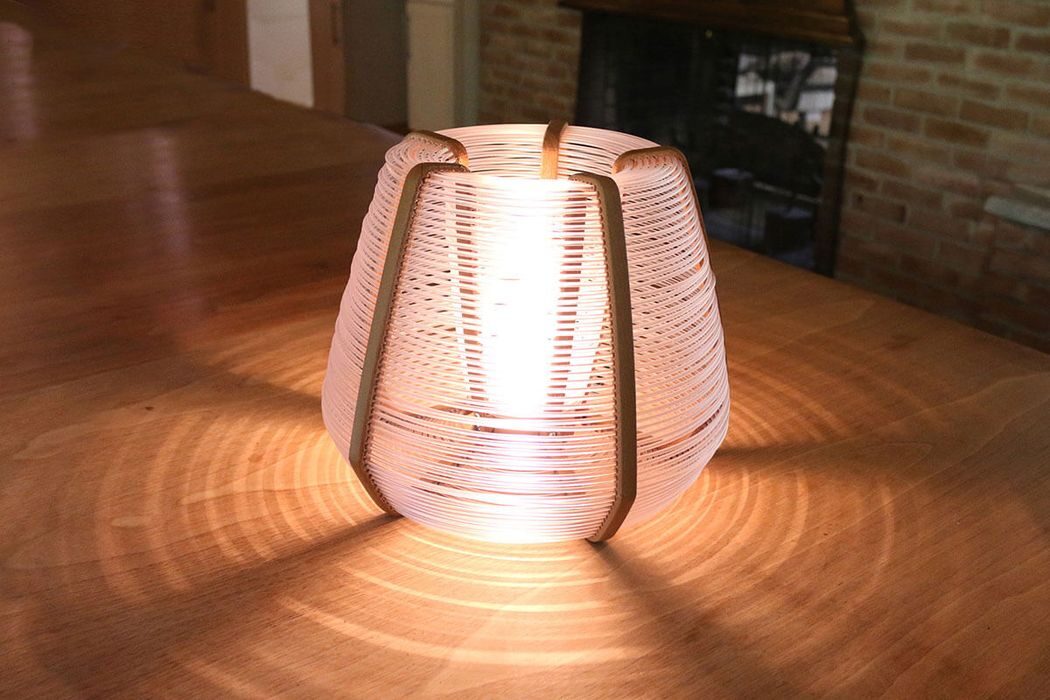
Charles R. Goulding and Preeti Sulibhavi spotlight RIT’s July 2025 additive manufacturing symposium, where cutting-edge 3D printing, interdisciplinary collaboration, and manufacturing legacy converge to shape the future.
This July 23 and 24, 2025, an event at Rochester Institute of Technology (RIT) promises to be a landmark gathering in advanced manufacturing. Hosted by RIT’s AMPrint Center, a state-designated hub for additive research, it offers a quality lineup of speakers and cutting‑edge presentations on 3D printing, materials science, and industrial applications. Registration and full agenda details are available online—this one’s not to be missed.
Leading Voices from RIT
RIT’s faculty and industry partners will lead deep dives into multifunctional additive manufacturing. Confirmed speakers include:
- Dr. Denis Cormier, the renowned Earl Brinkman Professor of Industrial & Systems Engineering and Director of the AMPrint Center, speaking on new high‑speed, multi‑nozzle molten metal jetting—and his leadership recently earned the prestigious FAME award in recognition of his contributions to additive manufacturing.
- Additional experts from RIT’s engineering, materials science, and design programs, addressing applications spanning aerospace, healthcare, ceramics, polymers, and emerging functional materials.
Honoring Earl Brinkman: A Legacy in Manufacturing
Central to the event is the recognition of Earl Brinkman, former president of Davenport Screw Machines and now, formerly an endowed professor at RIT. His legacy extends far beyond academia though.
Brinkman, affectionately known as “Mr. Davenport,” guided Davenport’s R&D through its acquisition by Dover Corporation—a pivotal partnership spanning over 25 years during which R&D tax credits supported continued innovation. His expertise in automating high‑speed screw machines helped cement their legacy in efficient mass production of everyday essentials like nuts, bolts, tire valves, and ammunition components.
Charles R. Goulding worked with Devenport on their R&D tax credit program for over 20 years.
Today’s CNC‑enhanced successors to these screw machines are nods to that legacy—and their influence continues in parallel with the advancements RIT will feature at the symposium.
The AMPrint Center: From Ceramics to Self‑Healing Polymers
RIT’s AMPrint Center isn’t just a venue—it’s a powerhouse in additive research. Recent highlights include:
Molten Glass 3D Printing
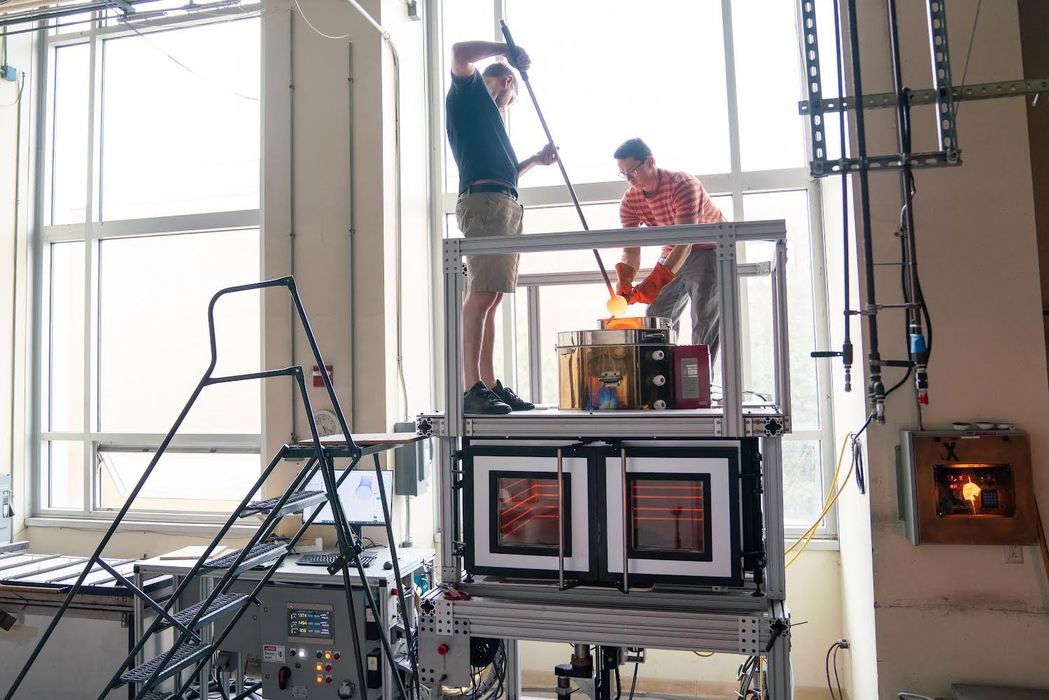
In 2023, RIT debuted the world’s first molten glass 3D printer, housed in the College of Art and Design’s “hot shop.” This innovation enables designers and engineers to collaborate on ceramic–glass sculptures, tablescapes, and architectural installations in courses like “Digital Glass,” co-taught by Michael Stern and Suzanne Peck.
Self‑Healing Photopolymers
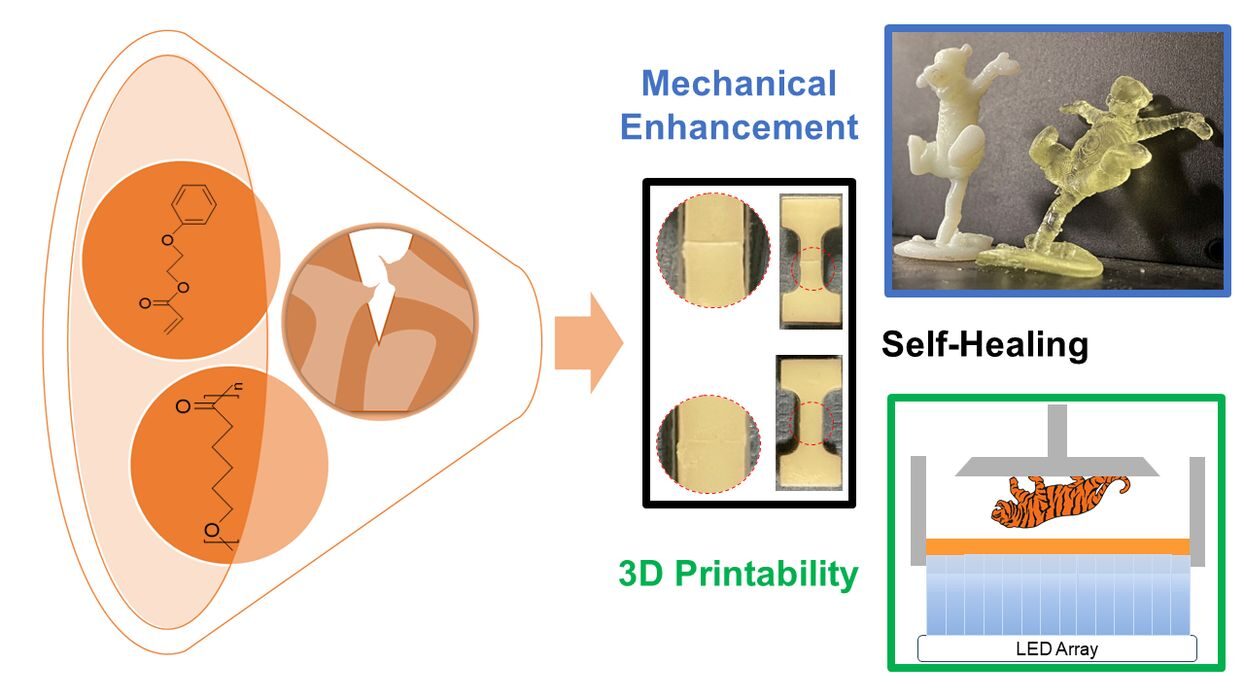
A standout 2025 study led by Vincent Mei, Kory Schimmelpfennig, and Prof. Christopher Lewis showcased photopolymers capable of repair after damage—ideal for sustainable 3D‑printed parts used in aerospace, biomedical devices, and electronics
High‑Throughput Molten Metal Jetting
Under Dr. Cormier, the AMPrint Center revealed a new high-throughput molten metal droplet jetting process at the SFF Symposium—an approach that could revolutionize industrial metal printing speeds and scalability.
RIT’s Fab Lab: A Full Spectrum of Additive Tools
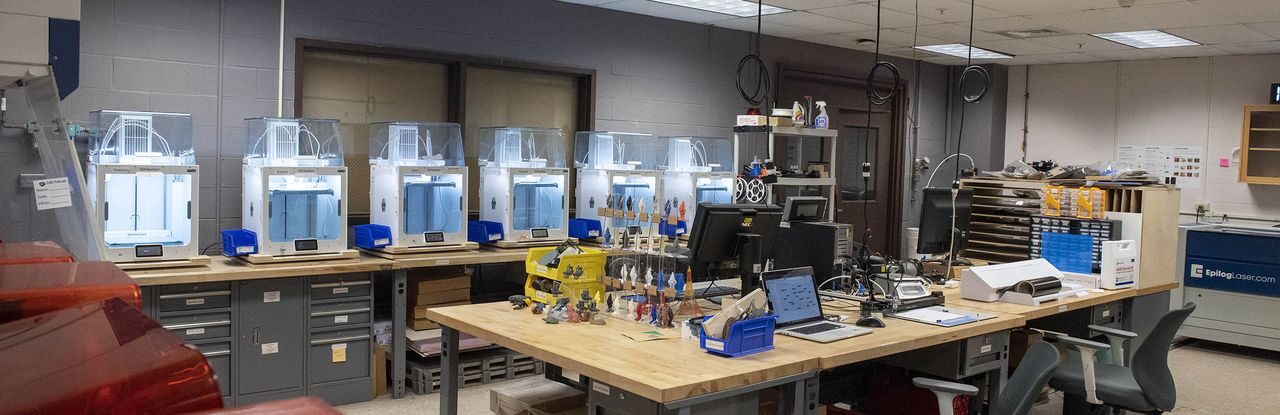
The RIT Fab Lab’s capabilities speak for themselves:
- Ultimaker S5 FDM, Formlabs SLA, Mark Two CF‑reinforced printing, CNC Plotter, Plasma Cutter, Laser Engraver, Waterjet, and CNC Mill.
- Ceramic 3D printing facilities, used in focused design workshops led by Prof. Peter Pincus and SUNY New Paltz’s Bryan Czibesz.
This broad swath of technology empowers both undergraduates and researchers to prototype with everything from glass and ceramics to composites and high‑performance polymers, making RIT a uniquely interdisciplinary environment.
RPI and 3D Printing for Electrical Lighting Applications
RPI has been featured extensively in our past articles on additive manufacturing for lighting. Here are some of the latest innovations:
- Recycled & Reimagined Lighting: Collaborative student- and industry-led projects produced lighting fixtures made from recycled materials, including CDs and polymers, using multi‑jet fusion and SLA printing methods.
- Complex Optic Structures: Using additive layering techniques and refractive-index-tuned photopolymers, RIT researchers designed light-diffusing surfaces that control LED output efficiently, ideal for architectural and task lighting.
- Embedded Electronics in Print: Through hybrid fabrication techniques, conductive traces and sensors are embedded directly into the print process—streamlining prototyping for smart lighting applications.
These case studies illustrate how RIT continues to push the boundaries of functional printing in everyday use cases.
Broader 3D Printing Commitment in New York
RIT isn’t alone. Several New York institutions are advancing additive manufacturing:
- Cornell University has a powerful additive materials group focusing on nanoscale composites, biomedical implants, and environmental sensors.
- Regional MEP centers (e.g., Stony Brook’s Manufacturing & Tech Resource Consortium) work with local firms to adopt 3D printing in everything from prototyping to production.
FuzeHub and the New York MEP Network
This event benefits from support by FuzeHub, the statewide hub connecting New York’s network of Manufacturing Extension Partnerships (MEPs). FuzeHub acts as the umbrella organization facilitating support, referrals, and tailored assistance to every regional MEP affiliate.
- FuzeHub helps promote events, ensure access to funding, and direct manufacturers to MEP technical resources statewide.
- The NY MEP network comprises 11 nonprofit centers, including NextCorps in Finger Lakes, Stony Brook’s MTRC on Long Island, and Mohawk Valley’s AIM.
- Together, they drive impactful change: over US$1.09 billion in sales/new investments, 6,555 jobs supported, more than US$37 million in cost savings in FY 2024.
Why This Event Matters
- Interdisciplinary Impact: By merging glass, metal, polymer, composite, and ceramic printing, RIT is bridging engineering and design.
- Industry Readiness: Featuring translation of research into real-world applications—like self-healing parts and high‑speed metal printing.
- Equitable Support: Thanks to FuzeHub and the NY MEP network, small manufacturers statewide gain access to technologies and grants that can scale local economies.
- Legacy & Innovation: Honoring pioneers like Earl Brinkman connects traditional machining roots to the avant-garde future of manufacturing.
Event Details & Registration
- When: July 2025 (exact dates listed online)
- Where: RIT’s AMPrint Center and Fab Lab, Rochester, NY
- Who should attend: Engineers, designers, manufacturers, researchers, and companies aiming to adopt additive technologies.
- What’s ahead:
- Keynotes from Dr. Cormier and multidisciplinary experts
- Sessions on molten glass, metal jetting, photopolymer innovations, and high-tech lighting creation
- Networking with firms, MEP representatives, and funding partners.
The Research & Development Tax Credit
The now permanent Research and Development (R&D) Tax Credit is available for companies developing new or improved products, processes and/or software.
3D printing can help boost a company’s R&D Tax Credits. Wages for technical employees creating, testing and revising 3D printed prototypes are typically eligible expenses toward the R&D Tax Credit. Similarly, when used as a method of improving a process, time spent integrating 3D printing hardware and software can also be an eligible R&D expense. Last, when used for modeling and preproduction, the costs of filaments consumed during the development process may also be recovered.
Whether it is used for creating and testing prototypes or for final production, 3D printing is a great indicator that R&D Credit-eligible activities are taking place. Companies implementing this technology at any point should consider taking advantage of R&D Tax Credits.
Conclusion
The July 2025 RIT additive symposium will serve as both a showcase and launchpad—spotlighting breakthroughs and connecting them with New York’s manufacturing ecosystem, powered by FuzeHub and its MEP affiliates.
By celebrating a legacy like Earl Brinkman’s and melding that heritage with next-gen manufacturing, this event embodies a full-cycle vision: from precision-machined past to digital-production future.
For those eager to explore advanced additive tech, scale their businesses, or collaborate with academic and public partners, this is the event to mark your calendar for.